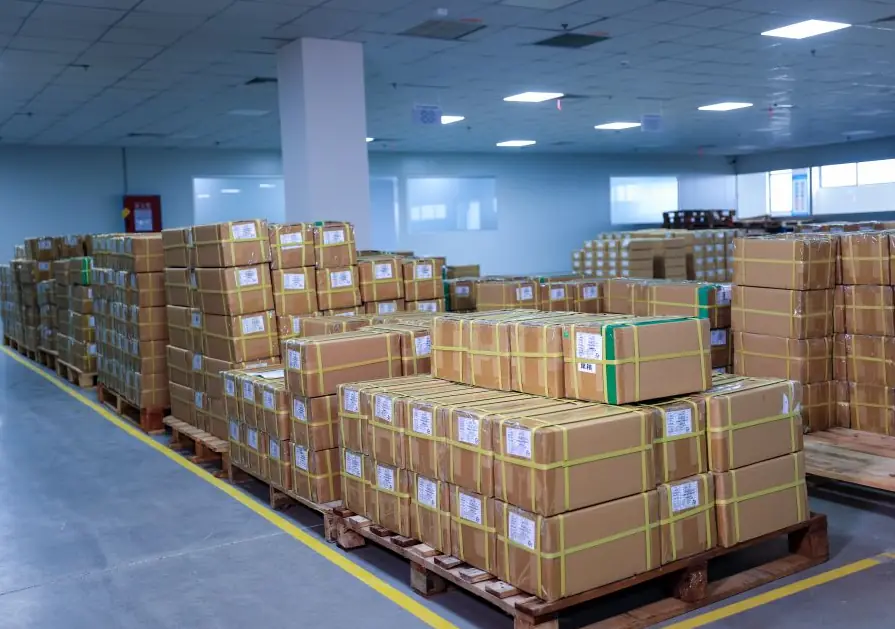
Why Choose PCBMASTER for Thermal Clad PCB Manufacturing?
At PCBMASTER, you can optimize your Thermal Clad PCB designs for efficient heat dissipation and reliable operation. Our engineering team evaluates power density, thermal loads, and operating temperatures to help you select suitable metal substrates and dielectric materials, supporting demanding thermal management requirements across various applications.
With a stable material supply system, you can benefit from consistent material availability and quality. We support customized Thermal Clad PCB fabrication with flexible options for copper thickness, board thickness, metal substrates, and dielectric layer configurations to meet your specific design requirements.
Your product quality is supported by PCBMASTER’s quality management systems, including ISO 9001 and IATF 16949, along with UL and RoHS certifications. Every PCB undergoes comprehensive testing before shipment to ensure consistent quality, electrical reliability, and compliance with applicable requirements.
From material selection and Design for Manufacturability (DFM) analysis to structural optimization, our professional engineers provide technical support throughout your project. With integrated production management, quality control, and delivery coordination, PCBMASTER helps you achieve reliable manufacturing, stable supply, and efficient project execution from prototype development to volume production.
ISO 9001
IATF 16949
UL
RoHS
Product Introduction
What Is Thermal Clad PCB
A Thermal Clad PCB is a metal-based printed circuit board designed to improve heat dissipation in electronic devices. Unlike conventional FR-4 PCBs , which primarily use glass-reinforced epoxy laminates, Thermal Clad PCBs incorporate a thermally conductive metal substrate to transfer heat away from power-generating components. This makes them particularly suitable for applications where excessive heat can compromise performance, component lifespan, or operational stability.
A typical Thermal Clad PCB consists of three fundamental layers: a copper circuit layer for electrical connections, a dielectric insulation layer for electrical isolation and heat transfer, and a metal base layer that distributes heat toward external cooling structures. Aluminum is commonly used for its lightweight properties and cost efficiency, while copper offers higher thermal conductivity for demanding applications.
When power components generate localized heat, the metal substrate helps reduce thermal accumulation and improve temperature distribution. Proper dielectric material selection, copper thickness, and substrate configuration are essential for balancing thermal performance, electrical insulation, and mechanical stability.
PCBMASTER provides customized Thermal Clad PCB manufacturing solutions based on your specific application requirements, supporting different material combinations, structural configurations, and technical specifications to help you achieve effective thermal management and dependable circuit performance.
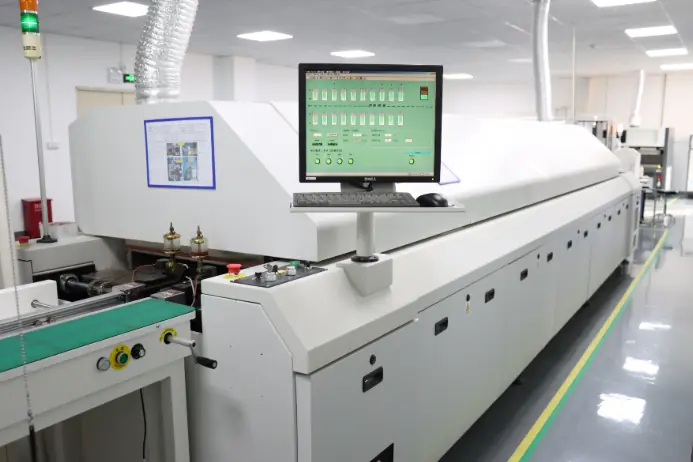
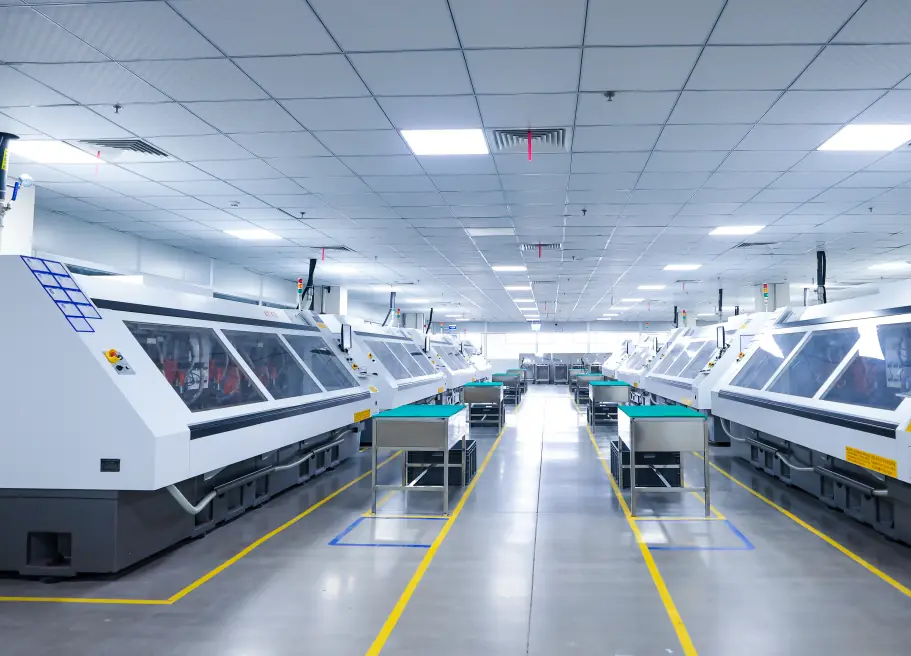
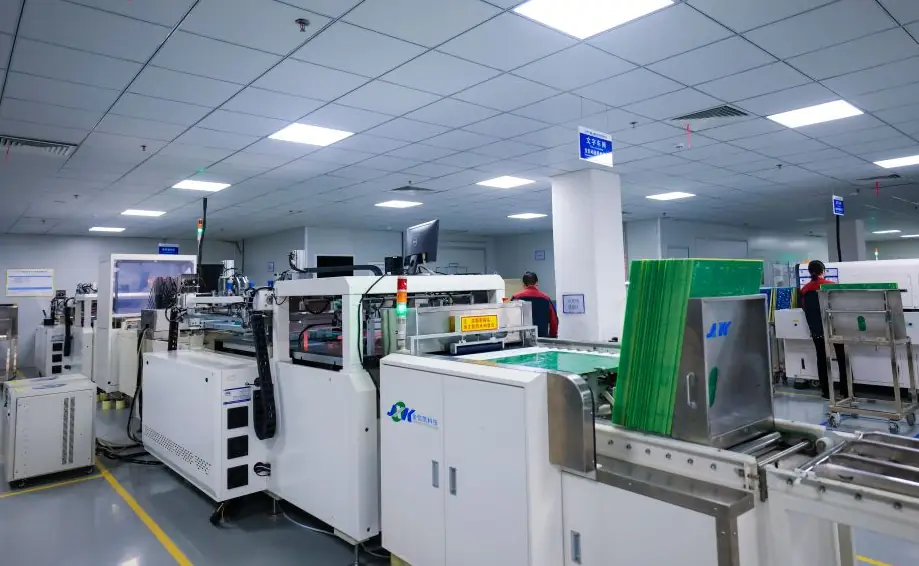
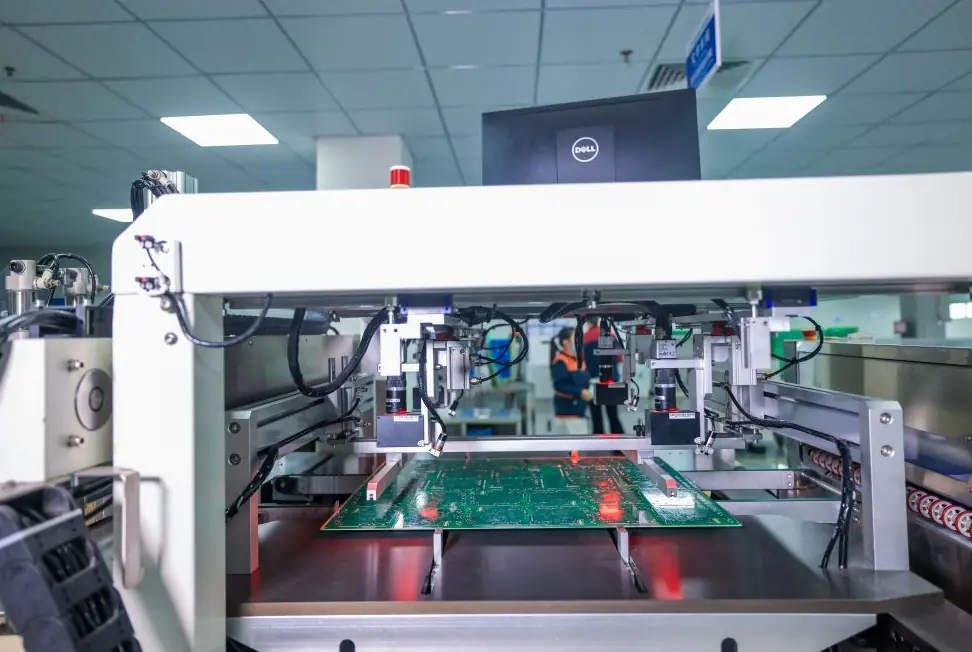
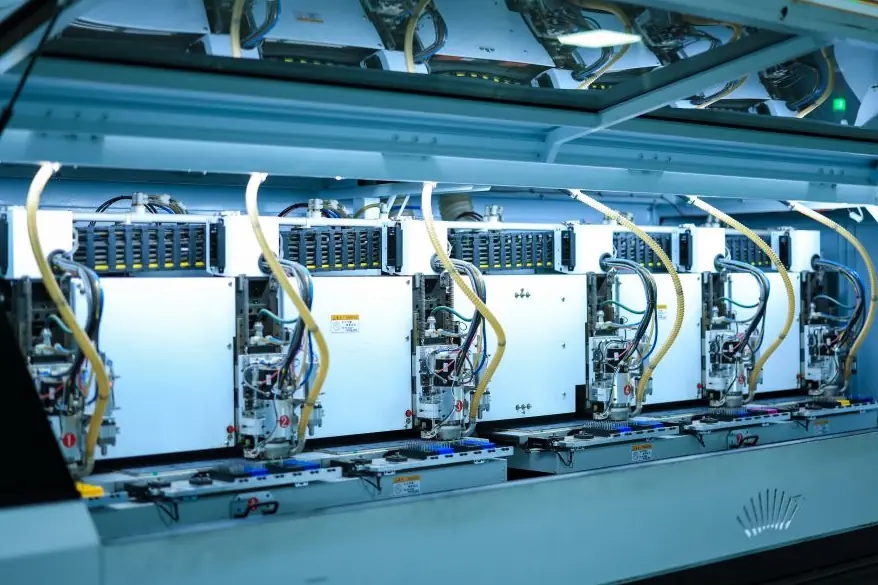
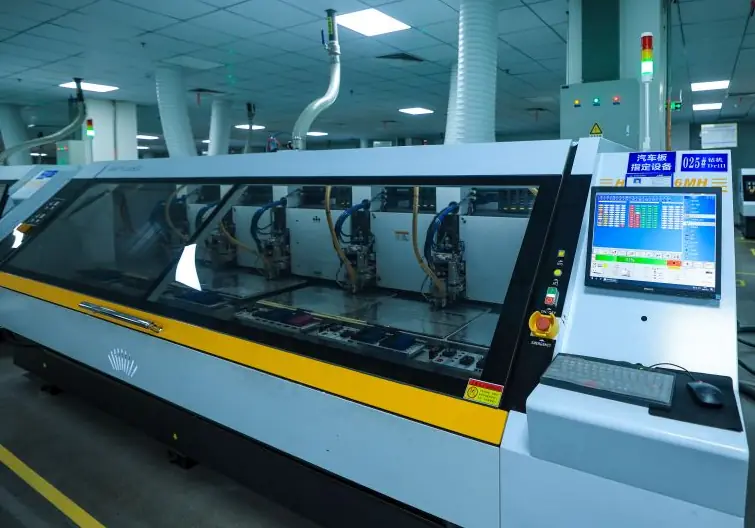
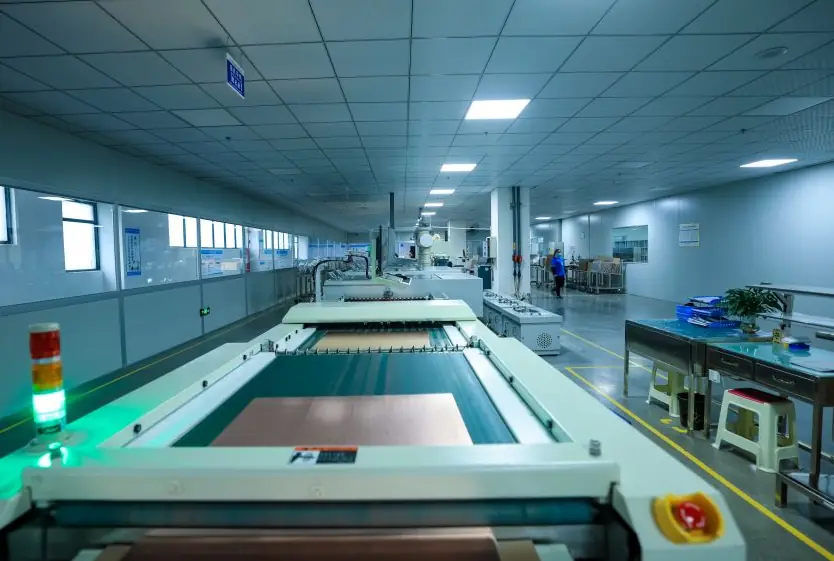
PCBMASTER operates an integrated production base covering laminate processing, circuit fabrication, dielectric lamination, and comprehensive inspection. Our controlled manufacturing environment and quality procedures help ensure consistent Thermal Clad PCB quality from prototype development to volume production.
Key Features
Key Thermal Clad PCB Features for Reliable Thermal Performance
Thermal Clad PCBs combine copper circuitry, an electrically insulating dielectric layer, and a metal substrate to support efficient heat transfer and reliable electrical performance. Their material and structural characteristics help manage heat, maintain circuit integrity, and meet the demands of power-intensive electronic applications.
Feature
Description
Metal-Based Structure
A conductive metal base facilitates heat transfer away from electronic components, helping manage thermal loads.
High Thermal Conductivity
Efficient heat transfer helps reduce excessive temperature buildup and supports stable component operation.
Electrical Insulation
The dielectric layer isolates copper circuits from the metal substrate, ensuring electrical separation and operational safety.
Rigid Substrate
A stable metal base provides mechanical support for mounted components and helps maintain structural integrity.
Copper Circuitry
Precisely formed copper circuits provide reliable electrical connections and current transmission for electronic devices.
Integrated Thermal Conduction Path
The layered structure creates a heat transfer path from components through the PCB toward external cooling systems.
Product Solutions
Explore Our Thermal Clad PCB Product Solutions
PCBMASTER offers a wide range of Thermal Clad PCB solutions with different materials, layer configurations, and specifications to meet your diverse thermal management and electrical requirements.
Product Category
Description
Aluminum Core Thermal Clad PCB
Lightweight aluminum substrates provide efficient heat dissipation while helping reduce board weight and material costs in your electronic designs.
Copper Core Thermal Clad PCB
High-conductivity copper substrates facilitate rapid heat transfer, helping you manage demanding thermal loads in power-intensive applications.
Single-Layer Thermal Clad PCB
Simplified single-sided circuitry offers a cost-effective solution for straightforward circuit layouts with reliable thermal management.
Double-Layer Thermal Clad PCB
Double-sided copper circuitry provides greater routing flexibility, allowing you to accommodate more complex circuit designs within compact spaces.
Multilayer Thermal Clad PCB
Multilayer configurations support increased circuit integration, helping you meet complex electrical requirements in advanced electronic systems.
High Thermal Conductivity Thermal Clad PCB
High-conductivity dielectric materials improve heat transfer efficiency, helping reduce thermal buildup around temperature-sensitive components.
Thick Copper Thermal Clad PCB
Thicker copper circuitry supports higher current carrying capacity, helping your power electronics handle demanding electrical loads.
LED Thermal Clad PCB
Metal-based substrates efficiently transfer heat from LED components, helping maintain lighting performance and extend component service life.
Automotive Thermal Clad PCB
Designed for automotive electronic applications, these boards support effective thermal management and reliable circuit operation under demanding conditions.
Thermal Clad PCB Applications Across Key Industries
Thermal Clad PCBs provide effective heat dissipation and electrical insulation for electronic systems across various industries. Their metal-based structure helps manage component temperatures, improve operational reliability, and support compact designs in demanding applications.
Application
Description
LED Lighting Systems
Dissipates heat from high-power LED chips, helping maintain luminous efficiency, color consistency, and longer service life.
Automotive Electronics
Manages heat in automotive power modules and control circuits, supporting stable operation under demanding temperature conditions.
Power Supply Units
Transfers heat away from power semiconductors and switching components, helping improve conversion efficiency and operational reliability.
Motor Drive Systems
Helps dissipate heat from power transistors and motor control circuits, supporting continuous operation under high electrical loads.
Industrial Automation
Controls heat in industrial power control boards, helping maintain reliable performance in demanding operating environments.
Renewable Energy Systems
Supports thermal management in solar inverters and power converters, helping maintain stable energy conversion under heavy loads.
Telecommunications Equipment
Dissipates heat from power amplifiers and communication modules, supporting stable signal processing and continuous system operation.
Medical Electronics
Helps manage heat in power control and imaging equipment, supporting thermal stability and reliable electronic performance.
Consumer Electronics
Reduces heat accumulation in compact, power-intensive devices, helping protect sensitive components and maintain consistent performance.
Built for Better Heat Dissipation. Engineered for Reliable Performance.
PCBMASTER delivers custom Thermal Clad PCB solutions combining material expertise, manufacturing precision, stable supply capabilities, and quality assurance to support your demanding thermal management requirements from prototype development to production.
Thermal Clad PCB Solutions for Real-World Applications
Explore how PCBMASTER’s Thermal Clad PCB solutions support projects across diverse industries. Discover how our customized designs address specific thermal management challenges and electrical performance requirements in different applications.
01
Thermal Clad PCB for High-Power LED Lighting
An industrial LED lighting manufacturer approached PCBMASTER for a 150W LED floodlight project. The LED chips generated concentrated heat during continuous operation, creating challenges in controlling board temperature and maintaining consistent lighting performance.
PCBMASTER manufactured an aluminum-core Thermal Clad PCB with a 1.5 mm aluminum substrate, 2 oz copper circuitry, and a 100 μm dielectric layer with a thermal conductivity of 2.0 W/m·K. The board structure provided a direct heat transfer path from the LED components to the aluminum base. PCBMASTER also controlled dielectric layer uniformity, copper adhesion, and dimensional accuracy during production to maintain consistent manufacturing quality.
The resulting PCB structure supported heat dissipation in the 150W lighting assembly and helped control thermal accumulation around the LED components.
02
Thermal Clad PCB for Automotive Power Electronics
For a 48V automotive auxiliary power control module, the customer needed a PCB capable of handling fluctuating electrical loads and localized heat generated by power MOSFETs. Electrical insulation, thermal management, and manufacturing consistency were essential to the project.
PCBMASTER manufactured an aluminum-core Thermal Clad PCB featuring a 2.0 mm aluminum substrate, 3 oz copper circuitry, and a 100 μm dielectric layer with a thermal conductivity of 2.0 W/m·K. The circuit structure accommodated the module's power connections, while the dielectric layer provided electrical isolation between the copper circuitry and aluminum base.
Manufacturing quality control covered copper thickness, circuit continuity, insulation resistance, and dielectric withstand testing. The finished PCB provided a metal-based thermal management structure for the automotive auxiliary power module.
03
Thermal Clad PCB for Industrial Motor Drives
A manufacturer of industrial motor drives required a PCB for a 3 kW motor control system. The switching stage generated substantial heat, while high-current paths placed additional demands on copper thickness and circuit reliability.
PCBMASTER produced a thick-copper Thermal Clad PCB using a 2.0 mm aluminum substrate, 4 oz copper circuitry, and a 100 μm dielectric layer with a thermal conductivity of 3.0 W/m·K. The power circuit layout incorporated designated high-current paths, with trace geometry designed around the operating current and thermal requirements.
During fabrication, PCBMASTER controlled copper thickness, circuit dimensions, dielectric integrity, and electrical continuity. The completed board combined thick copper conductors with an aluminum thermal base, supporting current transmission and heat dissipation in the motor drive system.
04
Thermal Clad PCB for Switching Power Supplies
An industrial power supply manufacturer required a PCB for a 500W switching power supply. Heat generated by switching MOSFETs and rectifier components needed to be managed within a relatively compact assembly, without compromising electrical insulation.
PCBMASTER manufactured an aluminum-core Thermal Clad PCB with a 1.5 mm aluminum substrate, 3 oz copper circuitry, and a 100 μm dielectric layer featuring a thermal conductivity of 2.5 W/m·K. Component placement and circuit routing were arranged to establish effective thermal conduction paths while maintaining the required electrical clearances.
Production inspection covered copper thickness, dimensional accuracy, circuit continuity, insulation resistance, and dielectric withstand performance. The completed PCB provided an integrated thermal management structure for the power supply, helping distribute heat from power components toward the aluminum base.
Customer Reviews
What Our Customers Say About PCBMASTER’s Thermal Clad PCB
Trusted by customers for reliable thermal performance, consistent quality, and responsive engineering support, PCBMASTER’s Thermal Clad PCB solutions deliver confidence across diverse applications.
Thermal Performance — LED Lighting
★★★★★
Heat management is always a major concern in high-power LED designs. We needed a Thermal Clad PCB that could handle continuous operation without creating additional thermal bottlenecks. PCBMASTER’s boards met our project requirements, and the thermal performance was consistent with our evaluation results. For us, that means fewer concerns during product validation and a more reliable foundation for our lighting systems.
Michael Anderson | Senior Electrical Engineer | LED Lighting | United StatesProduct Quality — Industrial Power Electronics
★★★★★
I don't judge a PCB supplier by the first batch alone. What really matters is whether the quality remains consistent when we reorder. Our experience with PCBMASTER’s Thermal Clad PCB has been satisfactory in terms of manufacturing quality and specification compliance. We appreciate the attention to detail because in industrial power electronics, even small inconsistencies can create unnecessary production problems.
Thomas Müller | Quality Assurance Manager | Industrial Power Electronics | GermanyEngineering Support — Power Supply Systems
★★★★★
Our project involved more than choosing an aluminum substrate. We had to balance dielectric thickness, copper distribution, and heat dissipation around several high-power components. The engineering team at PCBMASTER was willing to go through these details with us rather than simply process the files as submitted. Their DFM suggestions helped us refine the design before manufacturing. That kind of technical discussion makes a real difference during development.
Daniel Chen | Hardware Design Engineer | Power Supply Systems | SingaporeDelivery & Supply Stability — Automotive Electronics
★★★★★
When we source Thermal Clad PCB products for automotive electronics, timing and material availability are just as important as price. We need a supplier that understands our production schedule and communicates clearly when an order is in progress. PCBMASTER has been responsive in coordinating our requirements and keeping us updated. This makes planning repeat orders easier and helps us manage our supply chain with greater confidence.
Sophie Laurent | Strategic Sourcing Manager | Automotive Electronics | France
The required thermal conductivity depends on the heat generated by components, the available heat dissipation area, and the maximum allowable operating temperature. Higher thermal conductivity dielectric materials can reduce thermal resistance through the PCB, but they are not always necessary. When selecting a Thermal Clad PCB, consider the complete thermal path from the component junction to the ambient environment. A material with higher conductivity may provide limited improvement if the primary thermal bottleneck is elsewhere, such as the component interface or heatsink.
Aluminum-based and copper-based Thermal Clad PCBs differ mainly in thermal conductivity, weight, cost, and mechanical characteristics. Aluminum-based boards offer a base-metal thermal conductivity of approximately 150–220 W/m·K, lower weight, and generally lower material cost, making them suitable for LED lighting and power converters. Copper-based boards provide approximately 380–400 W/m·K, higher weight, and generally higher cost, but deliver excellent thermal spreading for high-power modules and demanding thermal applications. These values represent typical base-metal properties, not the effective thermal conductivity of the complete PCB, which also depends on dielectric thickness, copper layers, component layout, and the external cooling system.
Yes. Thermal Clad PCBs can be used in selected high-frequency applications, including RF power amplifiers and communication equipment that require heat dissipation. However, the dielectric layer must be evaluated for dielectric constant (Dk), dissipation factor (Df), thickness tolerance, and frequency-dependent behavior. The metal substrate can also influence electromagnetic fields, impedance, and grounding. For high-frequency designs, engineers should evaluate both thermal performance and signal integrity rather than selecting materials based solely on thermal conductivity.
Dielectric thickness directly affects thermal resistance and electrical isolation. A thinner dielectric layer generally reduces thermal resistance, allowing heat to transfer more efficiently from the copper circuit layer to the metal base. However, reducing thickness can compromise dielectric withstand voltage, insulation reliability, or manufacturing tolerance if the material is not suitable. The appropriate thickness should be determined by balancing thermal requirements, working voltage, insulation specifications, and fabrication capabilities.
Yes. Thermal Clad PCBs can accommodate through-hole components, but the metal base introduces additional fabrication constraints compared with conventional FR-4 boards. Since the aluminum or copper substrate is electrically conductive, through-holes must be designed to prevent unintended electrical contact with the metal base. Depending on the construction, this may require insulated holes, special drilling processes, or localized substrate clearance. When submitting a design, specify whether the board includes through-hole terminals, mounting holes, or plated connections that interact with the metal substrate.
Electrical insulation should be evaluated based on the application’s operating voltage, transient voltage conditions, environmental requirements, and applicable safety standards. Key parameters include dielectric withstand voltage, dielectric thickness, insulation resistance, dielectric breakdown strength, and leakage current under specified conditions. A higher dielectric withstand voltage does not automatically mean better thermal performance. Material selection should satisfy the required electrical safety margin while maintaining acceptable thermal resistance. For high-voltage applications, the PCB specification should clearly define the required insulation test conditions.
Yes, multilayer Thermal Clad PCB constructions are possible, but they are more complex than standard single-layer metal-core designs. Multilayer structures may be considered when the circuit requires additional routing density, power distribution, or electrical functionality. However, each additional layer introduces challenges related to lamination, interlayer insulation, thermal paths, and fabrication cost. Before selecting a multilayer structure, evaluate whether the additional routing layers are necessary or whether a single-layer or double-layer design can meet the electrical and thermal requirements more economically.
To obtain an accurate quotation, provide complete fabrication information rather than only the PCB outline or circuit layout. Recommended files and specifications include Gerber or ODB++ files (copper patterns, solder mask, board geometry), NC drill files (hole locations and sizes), PCB stack-up (copper, dielectric, and metal base construction), board dimensions, surface finish, electrical requirements, and quantity with delivery requirements. If the thermal dielectric material or metal substrate grade has not been finalized, indicate the target thermal and electrical requirements so the manufacturer can evaluate suitable options.
The metal base significantly affects heat transfer during soldering and component assembly because it acts as a large thermal mass. During SMT reflow, the metal substrate can influence the rate at which the board heats and cools, which may require adjustments to the reflow profile, especially for boards with large dimensions or substantial metal thickness. For mixed-technology assemblies involving SMT and through-hole components, the process should also account for component temperature limits, solder joint formation, and localized heat transfer. A properly developed assembly profile helps reduce risks such as insufficient soldering, uneven heating, and thermal stress on components.
When evaluating Thermal Clad PCB manufacturers, consider whether their technical capabilities align with your specific design requirements. Important criteria include material flexibility (suitable aluminum or copper substrates and dielectric materials), fabrication capability (specified copper thickness, dielectric thickness, board dimensions, and hole structures), thermal and electrical verification, engineering communication (DFM review and design constraint identification), production consistency (quality control procedures), and supply chain management (material availability and repeat-order support). The best manufacturer is not necessarily the one offering the lowest unit price, but one that meets technical requirements while supporting consistent production quality and dependable project execution.
Have more questions? Our technical team is ready to help.
Share your PCB design files and technical requirements with PCBMASTER. Our engineering team can help you evaluate material options, thermal performance requirements, and manufacturing feasibility.
We use necessary cookies to ensure basic site functionality (browsing, quotation, login) and optional analytics cookies to optimize our service.
Your data is strictly confidential and will never be sold or shared with any third party.
Your consent is voluntary and revocable.
We use necessary cookies to ensure basic site func...