✓Flexible Copper Base Thickness and Stack-Up Customization
✓Controlled Fabrication for High-Power Applications
✓Engineering Support from DFM Review to Production
High Thermal ConductivityElectrical IsolationCustom Copper ThicknessDFM Support
Why PCBMASTER
Why Choose PCBMASTER for Copper-Based PCB Manufacturing?
When you design high-power electronic circuits, efficient heat dissipation is essential for maintaining stable performance. PCBMASTER provides Copper-Based PCB manufacturing solutions that support demanding thermal management requirements, helping you address heat transfer and temperature control challenges in your applications.
You can customize copper base thickness, dielectric layers, copper foil, and board structures to meet your specific electrical, thermal, and mechanical requirements. Our professional engineering team provides DFM support to optimize manufacturability, thermal performance, and production reliability from the initial design review.
PCBMASTER implements strict quality control procedures, including manufacturing inspections and applicable electrical and dimensional testing, to ensure consistent product quality. Our established raw material supply capabilities help maintain material availability and support stable production.
Whether you need prototypes for product development and engineering validation or customized solutions for production orders, PCBMASTER offers flexible manufacturing services tailored to your project requirements.
Product Introduction
Copper-Based PCB Product Introduction
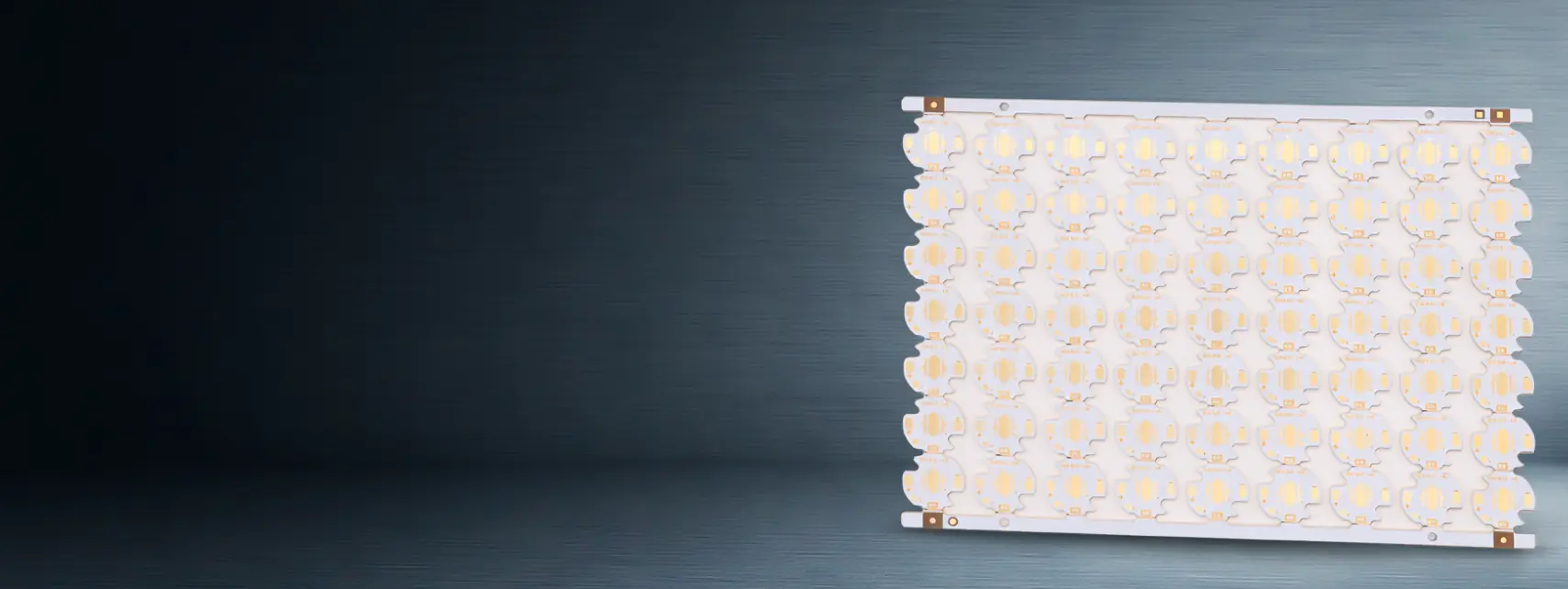
A Copper-Based PCB is a printed circuit board that uses copper as its metal substrate, combining a conductive circuit layer with an electrically insulating dielectric layer and a copper base. This structure provides a thermal pathway for transferring heat away from electronic components, making it suitable for applications where conventional PCB materials may not meet thermal management requirements.
Compared with traditional FR-4 PCBs , Copper-Based PCBs offer higher substrate thermal conductivity, while Aluminum-Based PCBs generally provide a lighter and more cost-effective metal base. The appropriate choice depends on thermal load, electrical insulation requirements, mechanical constraints, and operating conditions.
At PCBMASTER, you can obtain customized Copper-Based PCB solutions tailored to your application. Our manufacturing approach considers your power requirements, heat generation, operating environment, and structural specifications. By evaluating copper base thickness, dielectric properties, circuit copper thickness, and board configuration, we help you identify a suitable PCB structure for your design and application needs.
Copper-Based PCBs feature a copper metal substrate, a dielectric insulation layer, and conductive circuitry. Their material properties and layered construction provide a foundation for high-power electronic applications requiring thermal management, electrical isolation, and structural support.
Feature
Description
Copper Metal Substrate
Benefit from a copper base that provides a conductive thermal pathway for heat generated by electronic components.
High Thermal Conductivity
Transfer heat more efficiently through the copper substrate to help manage operating temperatures in high-power applications.
Electrical Insulation Layer
Maintain electrical isolation between circuit conductors and the copper base to support safe and stable circuit operation.
Layered PCB Structure
Integrate conductive circuitry, dielectric insulation, and a metal substrate into a compact structure for space-efficient electronic designs.
Rigid Structural Foundation
Utilize a solid copper base to provide mechanical support for components and maintain structural integrity in rigid PCB applications.
Product Categories
Copper-Based PCB Product Categories
PCBMASTER offers a diverse range of Copper-Based PCB solutions, covering different board structures and thermal performance requirements. Explore our product options to find the right solution for your circuit design, heat dissipation needs, and application requirements.
Product Title
Description
Single-Sided Copper-Based PCB
Features a single conductive layer on a copper substrate, offering a simple, space-efficient solution for your thermal management needs.
Double-Sided Copper-Based PCB
Incorporates conductive layers on both sides of the dielectric, giving you greater routing flexibility for more complex circuit designs.
Multilayer Copper-Based PCB
Integrates multiple conductive layers to accommodate complex circuits while helping you optimize PCB space in advanced electronic systems.
High-Thermal-Conductivity Copper-Based PCB
Uses high-thermal-conductivity dielectric materials to improve heat transfer and help you manage demanding thermal loads.
Thermoelectric Separation Copper-Based PCB
Provides a direct thermal path between selected components and the copper base, helping you reduce thermal resistance in high-power applications.
Copper-Based PCBs provide effective thermal management for electronic systems with high power density and demanding heat dissipation requirements. From LED lighting and automotive electronics to industrial power systems, they help you control operating temperatures, improve thermal performance, and support reliable equipment operation.
Application
Description
High-Power LED Lighting
Transfer heat away from high-power LED chips, helping you control junction temperatures and maintain lighting performance.
Automotive Power Electronics
Manage heat generated by automotive power circuits, supporting stable operation of vehicle electronic control systems.
Power Supply Units
Dissipate heat from power conversion components, helping you maintain stable performance under continuous electrical loads.
Industrial Motor Drives
Handle heat from power switching components, supporting reliable motor control and continuous industrial operation.
Renewable Energy Systems
Manage thermal loads in solar inverters and power conversion circuits, supporting consistent energy conversion performance.
Power Amplifiers
Transfer heat from high-power amplifier components, helping prevent excessive temperatures during continuous signal amplification.
Industrial Automation
Support thermal management in industrial control circuits, helping maintain stable operation in demanding equipment environments.
Telecommunications Equipment
Dissipate heat from power-intensive communication circuits, supporting stable operation in compact telecommunications equipment.
Power Modules
Provide an effective thermal pathway for power semiconductor devices, helping manage concentrated heat in compact assemblies.
Case Studies
Copper-Based PCB Case Studies
PCBMASTER has applied Copper-Based PCB solutions in projects across various industries, from LED lighting and automotive electronics to industrial power supplies and motor control systems.
01
Copper-Based PCB Solution for High-Power LED Lighting
PCBMASTER completed a Copper-Based PCB project for an LED lighting manufacturer developing a 150 W high-power LED module. The customer faced excessive heat accumulation around densely arranged LED chips, which could increase junction temperature, accelerate light output degradation, and shorten component service life.
After reviewing the LED layout and thermal requirements, our engineering team identified the dielectric layer as a critical part of the heat transfer path. We selected a 150 μm dielectric layer with a target thermal conductivity of 2.0 W/(m·K), together with a 2 oz copper circuit layer and a 1.5 mm copper base plate. The thin, thermally conductive dielectric reduced resistance to heat transfer, while the copper base helped spread heat toward the external heatsink. We also optimized the copper pattern beneath LED mounting areas to reduce localized heat concentration. During manufacturing, we controlled dielectric thickness uniformity and copper bonding integrity. The finished boards underwent electrical continuity, insulation resistance, and thermal performance inspections. The Copper-Based PCB provided electrical connections for the LED array while creating an efficient thermal conduction path to the heatsink.
02
Copper-Based PCB for Automotive Power Electronics
PCBMASTER completed a Copper-Based PCB project for an automotive electronics supplier developing an electric vehicle power electronics module. The customer's main concerns were localized heat accumulation around power semiconductor devices and maintaining electrical insulation under repeated temperature changes.
Our engineering team reviewed the component layout, operating voltage, and thermal distribution. We selected a 100 μm dielectric layer with a target thermal conductivity of 3.0 W/(m·K), a 2 oz copper circuit layer, and a 1.0 mm copper base plate. The thermally conductive dielectric facilitated heat transfer while maintaining electrical isolation. We also optimized high-current copper paths and component mounting areas to improve current distribution and heat spreading. Because thermal cycling can place stress on PCB materials and bonding interfaces, we focused on dielectric uniformity and copper-to-dielectric adhesion during fabrication. The completed boards underwent dielectric withstand, insulation resistance, and thermal cycling inspections. The Copper-Based PCB provided electrical interconnections for power components while transferring localized heat toward the external cooling structure.
03
Thermal Management Solution for Industrial Power Supply PCBs
PCBMASTER manufactured Copper-Based PCBs for a 3 kW switching power supply developed by an industrial power equipment manufacturer. The customer needed to address two problems: resistive heating in high-current traces and concentrated heat generated by power MOSFETs and rectifiers during continuous operation.
After reviewing the circuit's current requirements and component layout, our engineering team selected a 3 oz copper circuit layer to support high-current transmission and reduce trace resistance. We also used a 150 μm dielectric layer with a target thermal conductivity of 2.5 W/(m·K) and a 1.5 mm copper base plate. The thermally conductive dielectric facilitated heat transfer from power components toward the base, while the copper base helped distribute heat across a larger area. Trace widths were optimized according to current capacity and allowable temperature rise. During production, we controlled copper thickness, dielectric lamination quality, and base plate flatness. Finished boards underwent electrical continuity, insulation resistance, dielectric withstand, and thermal performance inspections. The Copper-Based PCB served as the main power circuit carrier, supporting high-current connections and transferring component heat toward the external cooling assembly.
04
Copper-Based PCB for Industrial Motor Control Systems
PCBMASTER completed a Copper-Based PCB project for an industrial automation manufacturer developing a 5.5 kW motor drive controller. The customer experienced thermal management challenges around power switching devices and needed reliable high-current connections for continuous motor operation.
Our engineering team analyzed the switching device arrangement and current distribution before finalizing the PCB structure. We selected a 2 oz copper circuit layer, a 100 μm dielectric layer with a target thermal conductivity of 3.0 W/(m·K), and a 1.2 mm copper base plate. The copper layout was optimized around switching devices to improve heat distribution, while trace widths were adjusted according to current requirements to limit resistive losses. The thermally conductive dielectric provided electrical isolation while facilitating heat transfer toward the copper base. During fabrication, we controlled dielectric thickness consistency, copper bonding integrity, and base plate flatness. The completed boards underwent electrical continuity, insulation resistance, dielectric withstand, and thermal cycling inspections. The finished Copper-Based PCB served as the electrical platform for the motor drive's power and control circuits, while its copper base provided a thermal conduction path toward the external cooling structure.
Customer Reviews
What Our Customers Say About PCBMASTER's Copper-Based PCB
Our customers’ experiences reflect their satisfaction with PCBMASTER’s Copper-Based PCB quality, engineering support, and overall service.
Engineering Support
★★★★★
Our power electronics design had some challenging thermal requirements, and the initial PCB layout needed a closer look from a manufacturing perspective. PCBMASTER's engineers identified several areas where the Copper-Based PCB layout could be improved, particularly around component placement and thermal paths. I appreciated that their feedback was technically specific rather than just a list of standard DFM comments. That kind of engineering input is valuable when you're trying to get a design right before production.
Michael Anderson · Senior Hardware Engineer · Automotive Electronics · GermanyProduct Quality
★★★★★
Copper thickness, dimensional tolerances, and insulation performance are all critical specifications in our LED lighting applications. When evaluating a Copper-Based PCB supplier, we look beyond whether a batch passes inspection; consistency matters just as much. PCBMASTER's boards have been manufactured against our specified requirements, and the attention to dimensional and electrical quality has been important to our evaluation. We take a data-driven approach to supplier quality, and that is how we assess our PCB partners.
David Miller · Quality Assurance Manager · LED Lighting · United StatesDelivery Reliability
★★★★★
Honestly, what matters most to our purchasing team is whether the boards arrive when we need them. A delay in Copper-Based PCB supply can affect the entire production schedule. PCBMASTER has been responsive to our order planning and material coordination requirements. We also appreciate having clear updates when an order moves through production. It makes our job easier and helps us plan procurement with fewer uncertainties.
Thomas Schneider · Supply Chain Manager · Industrial Power Electronics · NetherlandsCommunication
★★★★★
Projects rarely go exactly as planned, especially when there are technical details to clarify along the way. What I liked about working with PCBMASTER was that communication felt straightforward. Whether we were discussing Copper-Based PCB specifications, production progress, or a technical question, the team kept us informed and followed up without unnecessary back-and-forth. For me, good communication is not about sending more emails; it is about getting the right information at the right time.
James Wilson · Project Manager · Industrial Automation · United Kingdom
08Knowledge Base
More About Copper-Based PCB
Copper-Based PCBs are used in applications with demanding thermal and electrical requirements. Understanding their material characteristics, design considerations, and selection criteria can help you determine whether they are the right choice for your project.
Knowledge · 01
What is the difference between a Copper-Based PCB and an aluminum-based PCB?
A Copper-Based PCB uses copper as its metal base, while an aluminum-based PCB uses aluminum. Copper has higher thermal conductivity, making it suitable for applications with concentrated heat generation or demanding thermal management requirements. Aluminum-based PCBs are generally lighter and more cost-effective. The choice depends on heat dissipation needs, weight constraints, and project budget.
Knowledge · 02
Is a Copper-Based PCB suitable for high-current applications?
Yes. Copper-Based PCBs can support high-current applications due to copper's high electrical conductivity and ability to spread heat. However, current-carrying capacity also depends on copper thickness, circuit width, operating temperature, and thermal design. The PCB layout and electrical specifications should be evaluated together to ensure reliable operation.
Knowledge · 03
How does the dielectric layer affect Copper-Based PCB performance?
The dielectric layer electrically isolates the copper circuitry from the metal base while providing a thermal conduction path. Its thermal conductivity, thickness, dielectric strength, and insulation reliability directly influence PCB performance. A thinner dielectric layer with higher thermal conductivity can improve heat transfer, provided it meets the required electrical insulation standards.
Knowledge · 04
Can Copper-Based PCBs be used in high-temperature environments?
Copper-Based PCBs can be designed for high-temperature operating environments, but their temperature capability depends on the dielectric material, solder mask, surface finish, components, and overall construction. Copper's thermal conductivity helps distribute heat, but it does not independently determine the maximum operating temperature. Material selection should be based on the application's actual thermal conditions.
Knowledge · 05
Are Copper-Based PCBs compatible with SMT assembly?
Yes. Copper-Based PCBs can be used for SMT assembly, including applications involving power semiconductors, LEDs, and other heat-generating components. However, their metal base and thermal characteristics can affect soldering temperature profiles and heat distribution. Assembly parameters should be adjusted according to the PCB structure and component requirements.
Knowledge · 06
Can Copper-Based PCBs support double-sided component mounting?
Double-sided component mounting is possible depending on the Copper-Based PCB structure and manufacturing design. The thermal paths, electrical isolation, component placement, and assembly process must be carefully evaluated. For some applications, single-sided mounting may provide a more straightforward thermal design, while double-sided layouts can help meet space constraints.
Knowledge · 07
What factors influence the cost of a Copper-Based PCB?
Copper-Based PCB cost is influenced by several factors:
Copper base thickness and material grade
Dielectric material and thickness
PCB dimensions and panel utilization
Copper foil thickness
Circuit complexity and minimum trace width
Surface finish and required testing
Order quantity and production requirements
Knowledge · 08
How can I determine the appropriate copper base thickness for my application?
Copper base thickness should be determined by the application's thermal load, heat distribution requirements, mechanical constraints, and interface with the heat sink. A thicker copper base may provide greater heat-spreading capacity, but it can also increase weight, material cost, and overall PCB thickness. Thermal analysis and design validation can help identify a suitable specification.
Knowledge · 09
What design information should I provide when requesting a Copper-Based PCB quotation?
To obtain an accurate quotation, provide the following information whenever available:
PCB dimensions and required quantity
Gerber files or other fabrication data
Copper base material and thickness
Copper foil thickness
Dielectric thickness and thermal conductivity requirements
Surface finish
Electrical insulation requirements
Operating temperature and thermal load
Special testing or quality requirements
Looking for a Reliable Copper-Based PCB Manufacturing Partner?
Whether you need copper-based PCB prototypes or production orders, PCBMASTER provides customized manufacturing solutions, engineering support, and quality-focused production to meet your thermal management and electrical performance requirements.
We use necessary cookies to ensure basic site functionality (browsing, quotation, login) and optional analytics cookies to optimize our service.
Your data is strictly confidential and will never be sold or shared with any third party.
Your consent is voluntary and revocable.
We use necessary cookies to ensure basic site func...