








High Tg PCB Manufacturing
for Demanding Thermal Applications
Get High Tg PCB solutions engineered for lead-free assembly, multilayer fabrication, and demanding thermal environments—from rapid prototypes to production runs.
- ✓ Tg 150°C–260°C Material Options Matched to Your Thermal Requirements
- ✓ Controlled Z-Axis CTE to Help Reduce Thermal Stress on Plated-Through Holes
- ✓ Multilayer High Tg FR-4 Construction for Complex Circuit Designs
- ✓ Lead-Free Reflow Compatibility Based on Material Grade and Assembly Profile
Why Choose PCBMASTER for High Tg PCB Manufacturing?
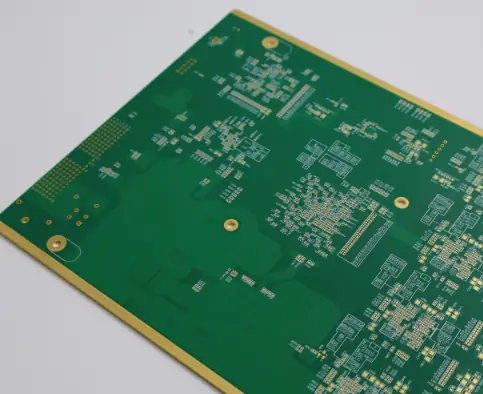
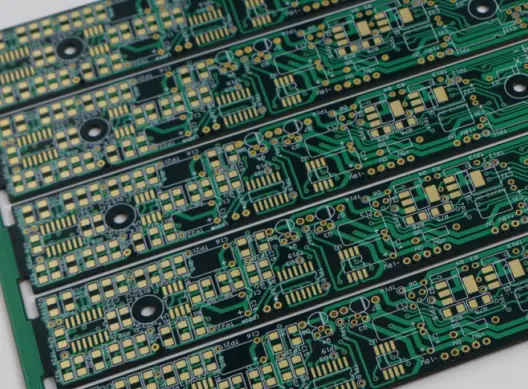
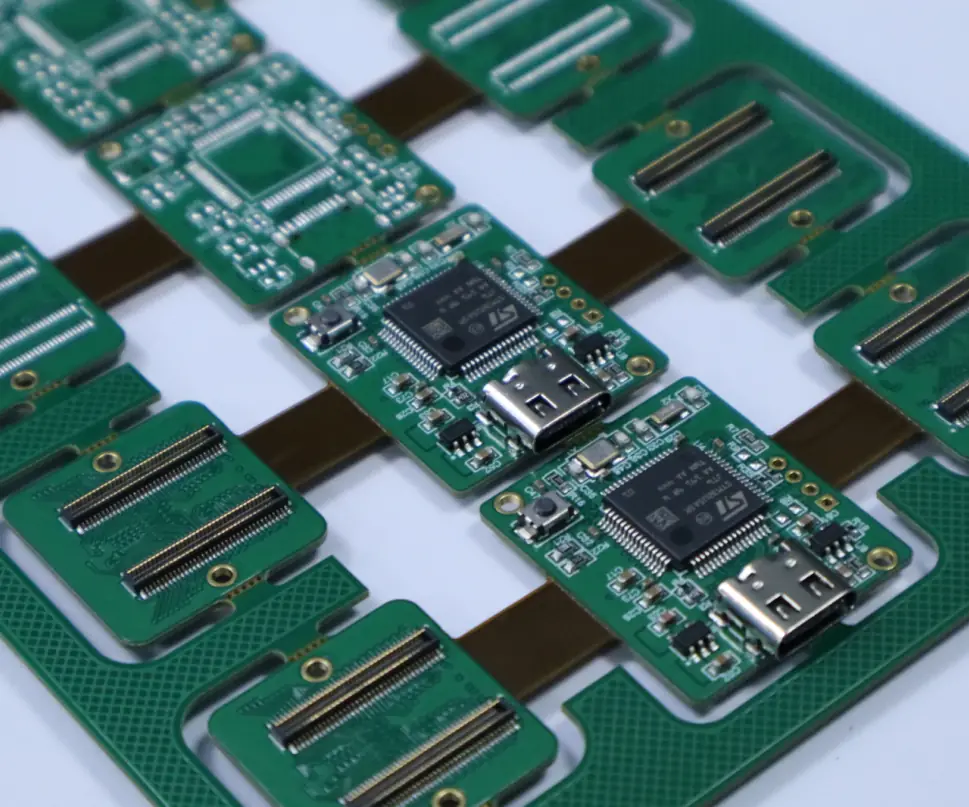
PCBMASTER provides custom High Tg PCB manufacturing solutions designed to meet the thermal and reliability requirements of demanding electronic applications. With High-Tg FR-4 Materials with Tg Values from 150°C to 260°C, you can select a suitable material based on your operating environment, thermal exposure, and project specifications. These materials help improve thermal stability and reduce the risk of deformation during high-temperature processing, supporting more reliable PCB performance.
From engineering review to fabrication and quality inspection, PCBMASTER helps identify potential manufacturing issues early and optimize designs for manufacturability and cost-effectiveness. Our manufacturing capabilities support customized layer counts, board thicknesses, and copper weights, providing the flexibility to meet specific project requirements. Supported by ISO 9001 and IATF 16949 quality management systems, UL certification, and RoHS compliance, PCBMASTER helps you achieve consistent quality and meet applicable environmental requirements. Whether you need prototypes or volume production, our engineering support and manufacturing services help streamline procurement and move your High Tg PCB project forward with greater confidence.
Our Manufacturing Facility


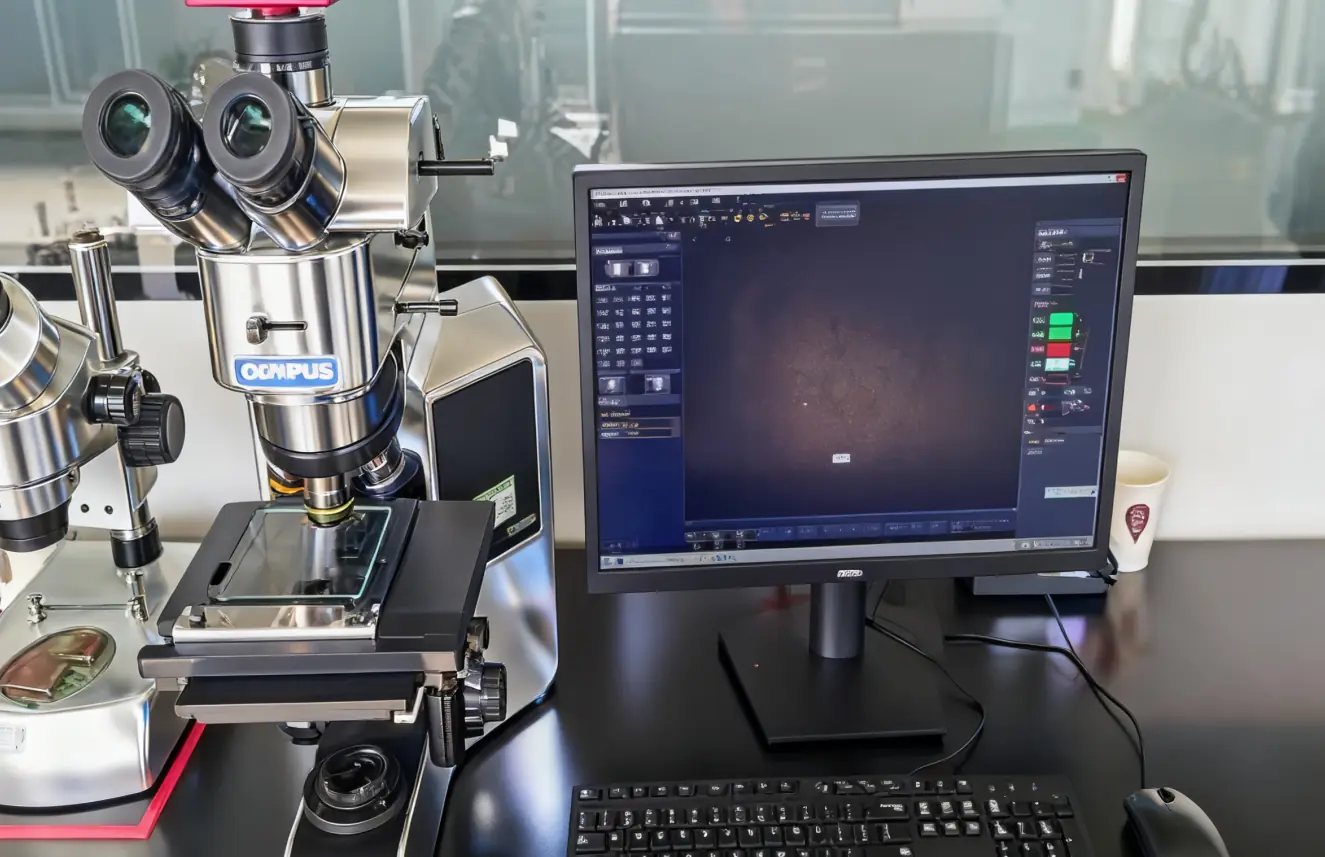
ISO 9001 & IATF 16949 certified facility with automated SMT lines and strict cleanroom inspection.
What Is High Tg PCB
A High Tg PCB is a printed circuit board manufactured using copper-clad laminate materials with a higher glass transition temperature (Tg) than standard FR-4 materials. These laminates offer improved dimensional stability as temperatures approach their glass transition point and help control Z-axis expansion and plated-through-hole stress during thermal cycling, supporting long-term reliability in demanding operating environments.
High Tg PCBs are particularly suitable for applications involving lead-free reflow soldering, multiple thermal processing cycles, repeated temperature fluctuations, or elevated operating temperatures. However, selecting the right material requires more than comparing Tg values. Decomposition temperature (Td), the coefficient of thermal expansion (CTE), resistance to delamination, layer count, board thickness, copper weight, and the actual assembly temperature profile should all be considered to achieve the required thermal reliability.
PCBMASTER provides High Tg PCB manufacturing and fabrication solutions tailored to your design files, thermal reliability requirements, order quantities, and delivery targets. From bare-board prototyping to production runs, you can evaluate material selection and manufacturability early in the process. PCB assembly (PCBA) and component sourcing options are also available to help streamline the transition from PCB fabrication to assembly and product validation.
Whether you are developing industrial control systems, automotive electronics, or other thermally demanding electronic products, PCBMASTER helps you identify suitable material options and manufacturing requirements for your project.
Discuss Your SpecificationsKey Material Parameters
Glass Transition Temperature (Tg)
Indicates the temperature at which laminate resin transitions from a rigid to a softer state.
Decomposition Temperature (Td)
Characterizes the material’s resistance to thermal decomposition.
Z-Axis CTE
Describes through-thickness expansion, affecting plated-through-hole reliability.
T260 / T288
Measures time to delamination under specified high-temperature test conditions.
Illustrative Tg Range
From standard FR-4 to specialized high-temperature laminates, matched to your assembly profile.
Key Features of High Tg PCB Materials
High Tg PCB materials help you manage thermal stress, maintain dimensional stability, and improve interconnect reliability in demanding applications. By selecting the right laminate grade, you can better accommodate high-temperature assembly, repeated thermal cycling, and the electrical and mechanical requirements of your PCB design.
| # | Feature | Description |
|---|---|---|
| 01 | Elevated Glass Transition Temperature | Choose laminate grades suited to your thermal requirements to help maintain PCB stability during high-temperature processing and operation. |
| 02 | Improved Dimensional Stability | Help minimize dimensional changes during elevated-temperature processing, supporting more consistent layer alignment and manufacturing accuracy. |
| 03 | Controlled Z-Axis Thermal Expansion | Reduce the risk of excessive expansion stress on plated-through-hole connections when the laminate is appropriately selected for your thermal requirements. |
| 04 | Lead-Free Assembly Compatibility | Select materials that meet your lead-free reflow profile to help withstand demanding soldering temperatures and multiple assembly cycles. |
| 05 | Multilayer Design Support | Meet complex routing and component integration requirements by selecting compatible laminate systems for your target layer count and board construction. |
| 06 | Thermal Cycling Reliability | Improve the potential for long-term reliability in applications exposed to repeated temperature changes through suitable material selection and PCB design. |
| 07 | Delamination Resistance | Choose laminates with suitable thermal resistance to help reduce the risk of layer separation during thermal processing and service. |
| 08 | Reliable Electrical Insulation | Match dielectric properties to your circuit requirements to support electrical isolation and consistent performance under specified operating conditions. |
High Tg PCB Specifications and Material Selection
Selecting the right High Tg PCB requires more than comparing glass transition temperatures. Review the key material properties and manufacturing specifications below to identify a suitable solution for your thermal, electrical, and structural requirements.
High Tg PCB Specifications
| Parameter | Specifications to Review | Why It Matters to You |
|---|---|---|
| Glass Transition Temperature (Tg) | Material grade, specified Tg value, and test method | Helps you select a laminate that meets your thermal requirements during assembly and operation. |
| Decomposition Temperature (Td) | Specified Td value and test conditions | Helps you evaluate the material's resistance to thermal decomposition during high-temperature exposure. |
| Z-Axis CTE | Thermal expansion coefficients below and above Tg | Helps you assess expansion stress on plated-through-hole connections and interlayer structures. |
| T260 / T288 | Time to delamination under the specified test conditions | Allows you to compare laminate resistance to thermal degradation and delamination. |
| Layer Count | Supported layer-count range | Helps you determine whether your circuit complexity and stack-up requirements can be accommodated. |
| Board Thickness | Available finished board thicknesses and tolerances | Ensures the PCB fits your mechanical dimensions and assembly requirements. |
| Copper Weight | Available copper weights for inner and outer layers | Helps you match conductor requirements to current capacity, thermal management, and fabrication constraints. |
| Surface Finish | Available finishes, such as ENIG, HASL, or OSP, where offered | Helps you select a finish compatible with your soldering process, component requirements, and assembly needs. |
| Impedance Control | Supported impedance tolerances and verification methods | Helps you meet specified impedance targets for high-speed and high-frequency circuit designs. |
| Quality Inspection | Available electrical testing, dimensional inspection, and other applicable checks | Helps you verify manufacturing conformity and establish appropriate quality documentation for your project. |
High Tg PCB Material Grade Comparison
Use this comparison as a starting point for material selection. Actual performance depends on the laminate formulation, manufacturer specifications, and test methods.
| Material Category | Typical Application Considerations | What You Need to Verify |
|---|---|---|
| Standard FR-4, Tg approximately 130–140°C | General-purpose electronic products with moderate thermal demands | Reflow profile, operating conditions, and thermal reliability requirements |
| High Tg FR-4, Tg approximately 150°C | Applications requiring elevated Tg and compatibility with qualified lead-free assembly processes | Actual Td, Z-axis CTE, and delamination resistance |
| High Tg FR-4, Tg approximately 170°C | Multilayer boards, lead-free assembly, and selected industrial applications | Thermal cycling performance, plated-through-hole reliability, and specific laminate grade |
| High Tg FR-4, Tg approximately 180°C | Projects requiring additional thermal margin | Verified thermal properties, fabrication compatibility, and material cost |
| Specialized High-Temperature Laminates | Applications with demanding thermal or specific electrical requirements | Resin system, dielectric properties, processing requirements, and material availability |
Explore High Tg PCB Types for Your Application
PCBMASTER offers a range of High Tg PCB options to meet different material, structural, and electrical requirements. Explore the product categories below to find the right solution for your application.
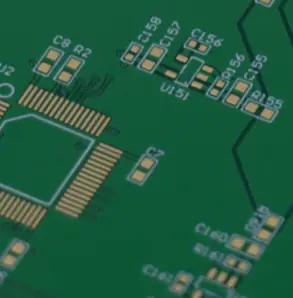
Tg150 FR-4 PCB
Meet your standard thermal requirements with a cost-effective laminate option suitable for qualified lead-free assembly processes.
Tg170 FR-4 PCB
Gain additional thermal margin for multilayer designs that require a balance of thermal performance, manufacturability, and material cost.
Tg180 FR-4 PCB
Address more demanding thermal requirements with a laminate grade selected to match your assembly profile and operating conditions.

Tg200+ High Tg PCB
Explore specialized high-temperature laminate options for applications with stringent thermal specifications and reliability requirements.
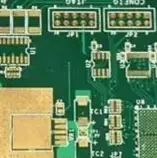
High Tg Multilayer PCB
Accommodate complex circuits and dense routing with a stack-up designed around your layer count and interconnect reliability needs.
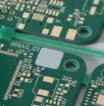
High Tg HDI PCB
Achieve higher component density and more compact layouts with suitable high-Tg materials and qualified HDI fabrication processes.
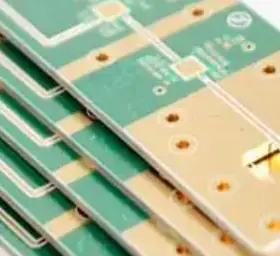
High Tg Heavy Copper PCB
Support demanding power applications by matching copper thickness and conductor design to your current-carrying and thermal management requirements.
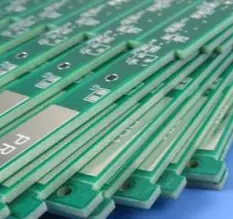
High Tg PCB with Controlled Impedance
Meet your signal integrity requirements through coordinated laminate selection, stack-up planning, and impedance control.
Material Strategy
The Right High Tg PCB Starts with the Right Material.
Get expert guidance on material selection, DFM, and PCB manufacturing to meet your thermal requirements and production goals.
High Tg PCB Applications Across Demanding Industries
High Tg PCBs help you meet the thermal stability and reliability requirements of demanding electronic applications. Explore how the right laminate selection can support your product’s performance across different industries.
Automotive Electronics
Improve dimensional stability during high-temperature assembly and help reduce thermal stress on plated-through-hole connections in automotive control electronics.
EV Battery Management Systems
Support reliable BMS circuit connections by controlling laminate expansion under temperature fluctuations, helping maintain performance during repeated thermal cycling.
Industrial Control
Help maintain PCB stability during high-temperature assembly and demanding operating conditions, supporting consistent performance in industrial automation and control systems.
Power Electronics
Support power conversion circuits exposed to thermal stress by combining suitable high-Tg laminates with appropriate copper thickness and thermal management.
Servers and Data Centers
Support multilayer PCB designs that undergo demanding assembly processes, helping maintain dimensional stability and interconnect reliability in complex electronic systems.
Communication Equipment
Help maintain PCB dimensional stability during assembly while allowing you to select dielectric properties suited to high-speed signal transmission requirements.
Medical Electronics
Support stable PCB construction in medical monitoring and diagnostic equipment through appropriate thermal material selection and manufacturing controls.
Industrial Instrumentation
Help limit temperature-related dimensional changes in measurement and sensing circuits, supporting consistent circuit construction in thermally demanding environments.
High Tg PCB Manufacturing Case Studies
With experience across diverse PCB projects, PCBMASTER delivers tailored solutions to complex manufacturing challenges. Explore how our engineering expertise helps customers overcome demanding requirements in the following cases.
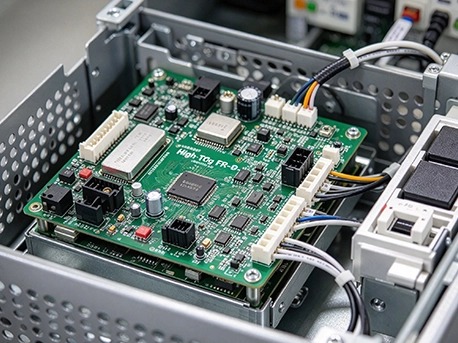
High Tg FR-4 PCB for an Industrial Motor Controller
An industrial automation manufacturer needed a six-layer PCB for a motor controller exposed to lead-free reflow and repeated temperature fluctuations. The primary concerns were board warpage and plated-through-hole reliability under thermal stress. PCBMASTER selected High Tg FR-4 with a Tg of 170°C and optimized copper distribution, stack-up construction, and plated-through-hole requirements to support manufacturability and interconnect reliability. The PCB integrated motor-drive, current-sensing, and processing circuits on a single platform, enabling coordinated motor control and current monitoring in factory automation equipment.
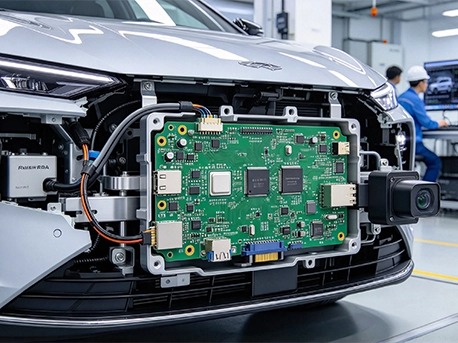
High-Frequency PCB for an Automotive Radar Control Module
Maintaining signal integrity in a compact automotive radar control module required careful material selection and impedance control. The customer needed a four-layer PCB that could limit signal loss at the target operating frequency while withstanding lead-free assembly. PCBMASTER evaluated the laminate's dielectric constant (Dk) and dissipation factor (Df) at the target frequency, selected a suitable high-frequency material, and designed the four-layer stack-up. Our engineers also calculated controlled-impedance trace dimensions and refined routing geometry to support the module's electrical requirements. The finished PCB provided the interconnection platform for the radar module's signal-processing and control circuits, supporting controlled signal transmission and integration within a compact design.
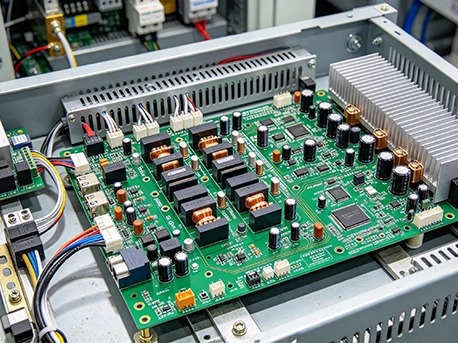
Halogen-Free High Tg PCB for an Industrial Power Converter
Eight layers were required to accommodate the industrial power converter's high-current paths, feedback monitoring, and protection circuits while meeting specified halogen-free material requirements and supporting lead-free assembly. PCBMASTER used halogen-free High Tg FR-4 with a Tg of 180°C and optimized copper distribution, conductor dimensions, and stack-up construction. Our engineers also reviewed plated-through-hole requirements to support interlayer connections across the power and control circuits. The resulting PCB served as the converter's core electrical platform, integrating power delivery, feedback monitoring, and protection functions on a single board. This enabled the converter's power and control circuits to operate as a coordinated system while addressing the project's thermal and material requirements.
What Customers Say About Our High Tg PCB Services
Customers choose PCBMASTER’s High Tg PCBs for different engineering challenges, from multilayer motor controllers to automotive electronics and power conversion systems.
Industrial Motor Controller
For our six-layer motor controller, PCBMASTER's Tg 170°C FR-4 PCB was a suitable option for our lead-free reflow requirements. We paid particular attention to stack-up balance and plated-through-hole reliability because the board had to connect the processor, motor-drive stage, and current-sensing circuits. The engineering review addressed those construction details before fabrication, which gave us a clearer basis for evaluating the board design.
 Michael Weber · Engineering Manager · Industrial Automation · Germany
Automotive Control Unit
We were sourcing a four-layer High Tg PCB for an automotive control unit, and I needed more than a price per board. PCBMASTER's quotation covered the material and fabrication requirements we needed to review, including finished-hole tolerances. That made the offer easier to compare against our specifications. For procurement, a quote is useful only when you can tell exactly what you are buying.
 Sarah Mitchell · Procurement Specialist · Automotive Electronics · United States
Power Controller
Our eight-layer power controller needed a High Tg PCB that could accommodate high-current power paths alongside sensitive feedback signals. We were also moving from prototype toward pilot production, so changing the approved routing was not something we wanted to do late in the project. PCBMASTER's review of copper distribution and the existing stack-up helped us address fabrication considerations while preserving the intended circuit layout. That was important for keeping the next validation stage on track.
 James Thompson · Project Manager · Power Electronics · United Kingdom
Industrial Power Equipment
For our industrial power equipment, PCBMASTER manufactured the High Tg multilayer PCB to our specified board thickness, copper construction, and plated-through-hole requirements. What stood out was the attention to fabrication tolerances and electrical testing—not just the Tg rating of the laminate. For a board carrying power and control circuits, that level of manufacturing control is essential to meeting our qualification requirements.
 David Chen · Quality Engineer · Industrial Electronics · Canada
FAQs High Tg PCB
Have more questions? Our technical team is ready to help.
Contact Technical SupportStart Your Project
Get a High Tg PCB Quote for Your Project
Need a High Tg PCB for lead-free assembly, multilayer fabrication, or demanding thermal conditions? Send us your design files and project specifications. Our team can review your requirements, assess material options, and help you evaluate the next steps for PCB fabrication and assembly.

