








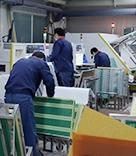
Fast Prototype Production
24-hour rapid prototyping helps you validate designs without delaying your development schedule.

From rapid PCB prototypes to high-volume production, PCBMASTER delivers engineered, tested, and quality-controlled PCBs from one manufacturing partner.
Why PCBMASTER
You need more than a PCB factory—you need the speed, technical capability, material support, production capacity, and quality control to move your project from prototype to production with confidence.
24-hour rapid prototyping helps you validate designs without delaying your development schedule.
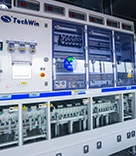
Support complex HDI, high-speed, high-frequency, rigid-flex, FPC and multilayer PCB production.

Built for prototype, low-volume, medium-volume and mass-production requirements.
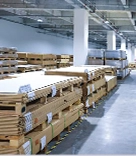
Stable access to FR-4, high-frequency laminates, flexible materials, copper and specialty substrates.
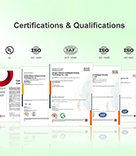
IATF 16949, ISO 9001, UL Certification, and RoHS Compliance support high-reliability PCB manufacturing.
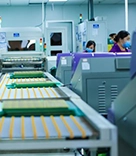
Inspection and testing throughout fabrication reduce defects before your boards reach assembly.
How It Works
PCB production transforms your design files and technical specifications into finished, tested circuit boards through a controlled manufacturing process. PCBMASTER integrates material preparation, precision fabrication, inspection, and testing to support consistent production from prototypes to mass production.
Our PCB Production Process
PCBMASTER supports multilayer, HDI, high-speed, high-frequency, FPC, rigid-flex, and heavy copper PCBs, with production processes tailored to your design, quality, and application requirements.
Ready to start your PCB production? Submit your Gerber files and specifications, and our engineers will help you move your design into production.
Submit Your PCB FilesPCB Types
PCBMASTER offers a wide range of PCB production types, covering standard, high-density, high-speed, flexible, and specialty PCB technologies for different technical requirements.
Standard FR-4 PCBs provide a reliable and cost-effective solution for general electronic designs.
PCBMASTER supports standard rigid PCB production from 1 to 64 layers, covering a wide range of circuit complexity and board structures.
Multilayer PCBs use multiple copper layers to increase routing density and integrate complex circuits into a compact board.
PCBMASTER supports up to 64-layer rigid PCBs 20-layer flexible PCBs for demanding interconnection and power-distribution requirements.
HDI PCBs use microvias, blind vias, buried vias, and fine-line structures to achieve higher interconnection density in limited space.
PCBMASTER supports HDI and Any-Layer HDI technologies for advanced compact PCB designs.
High-Speed PCBs are designed to maintain signal integrity at high data rates through controlled impedance, optimized stack-ups, and appropriate materials.
PCBMASTER supports specialized high-speed materials from suppliers such as Panasonic, Isola, and ITEQ.
High-Frequency PCBs use specialized low-loss materials and controlled electrical properties for RF and microwave circuits.
PCBMASTER works with materials from Rogers, AGC, and other suppliers for demanding high-frequency designs.
Flexible PCBs use thin, bendable materials to support lightweight and space-efficient circuit designs.
PCBMASTER supports 1–20 layer FPC production, providing flexible circuit structures for compact and mechanically constrained designs.
Rigid-Flex PCBs integrate rigid and flexible sections into one structure, supporting compact three-dimensional packaging and reducing interconnections.
PCBMASTER supports 30-layer rigid-flex PCBs, including HDI, impedance control, blind/buried vias, and stepped structures.
Ultra-Long PCBs are designed for extended circuit layouts that require longer board dimensions and fewer interconnections.
PCBMASTER supports up to 1,800 mm rigid and 2,500 mm flexible PCBs, with UL and IPC compliance.
Metal Core PCBs use metal substrates for efficient heat dissipation and thermal management.
PCBMASTER supports copper, aluminum, and copper-aluminum hybrid substrates, providing flexible solutions for different thermal and structural requirements.
Ceramic PCBs offer excellent thermal conductivity, electrical insulation, and high-temperature stability.
PCBMASTER supports alumina, aluminum nitride, silicon nitride, ZTA, and other ceramic materials for demanding thermal, power, and high-frequency designs.
IC substrates provide fine-line, high-density interconnections for advanced semiconductor packaging.
PCBMASTER supports mSAP, SAP, and ETS technologies, with 2–12 layers, 0.10 mm minimum thickness, and 0.05 mm minimum laser drilling.
Not sure which PCB technology fits your design?
Talk to an EngineerApplications
PCBMASTER provides application-specific PCB production for electronics that require reliable connectivity, signal integrity, thermal management, compact integration, and long-term stability.
PCBs support BMS, ADAS, infotainment, power management, and vehicle control systems, enabling reliable power distribution, signal processing, sensing, and real-time vehicle control.
High-speed and high-density PCBs support servers, AI hardware, and networking equipment, enabling high-speed data transmission, efficient power distribution, and reliable signal connectivity.
PCBs connect sensors, controllers, actuators, and communication interfaces, enabling precise monitoring, automated control, motor management, and real-time industrial operations.
High-frequency and high-speed PCBs support RF transmission, antennas, networking, and signal processing, enabling stable high-frequency communication, fast data transmission, and reliable signal connectivity.
PCBs support sensing, imaging, monitoring, and control circuits, enabling accurate signal acquisition, stable device operation, and reliable real-time monitoring.
Compact PCBs integrate processors, sensors, displays, power circuits, and connectivity, enabling smaller product designs, multifunctional integration, and reliable electronic operation.
High-current and thermally optimized PCBs support power conversion, battery systems, inverters, and power supplies, enabling efficient current handling, heat dissipation, and stable power management.
Metal-core and thermally efficient PCBs support LED power and control circuits, enabling effective heat dissipation, stable LED operation, and longer operating reliability.
Need the Right PCB for Your Application?
Talk to an EngineerMaterials
PCBMASTER supports a wide range of PCB materials, covering standard, high-speed, high-frequency, flexible, metal-core, ceramic, and specialty materials for diverse PCB production requirements.


Process Flow
From engineering review to final shipment, PCBMASTER controls every production stage to turn your design files into tested, production-ready PCBs.
Review your files for manufacturability, specifications, and potential production risks.
Select suitable laminates, copper, and materials based on your PCB requirements.
Transfer precise circuit patterns onto inner-layer copper using imaging technology.
Press copper layers and dielectric materials into a stable multilayer PCB structure.
Create precise through-holes, blind vias, buried vias, and microvias as required.
Deposit copper onto holes and board surfaces to establish reliable electrical connections.
Form the required outer-layer circuit patterns through imaging and controlled etching.
Apply solder mask to protect copper circuits and prevent unwanted solder bridging.
Apply ENIG, HASL, OSP, or other finishes to protect exposed copper surfaces.
Precisely shape finished PCBs according to your specified board dimensions and outlines.
Verify circuit continuity and isolation to identify potential electrical defects before shipment.
Inspect board appearance, circuits, dimensions, and workmanship against your requirements.
Protect qualified PCBs with appropriate packaging and prepare them for secure shipment.
Need a PCB production partner for your next project?
Talk to a PCB EngineerQuality Control
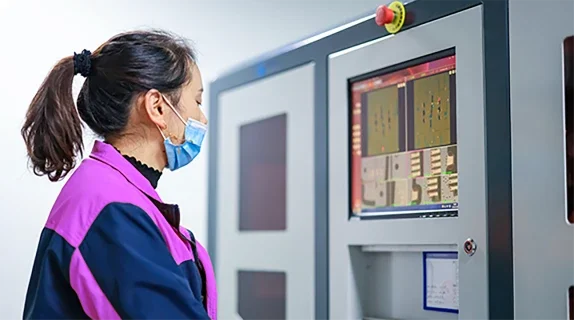
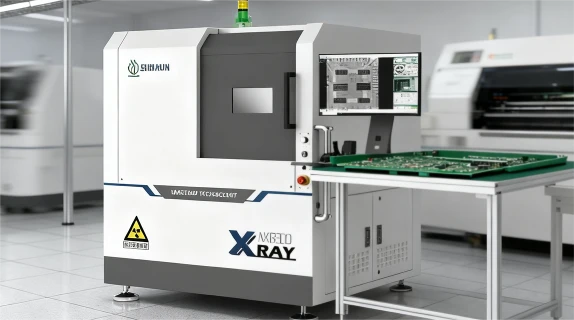
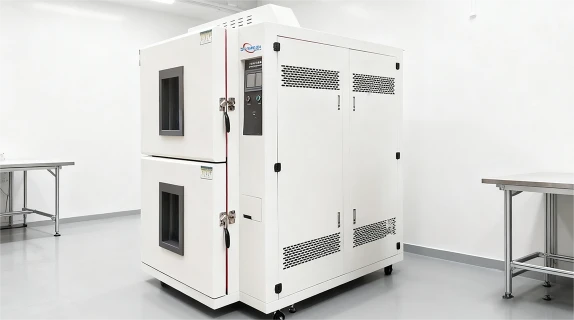
PCBMASTER places great importance on inspection and testing throughout the entire PCB production process. We implement comprehensive quality control measures—including incoming material inspection, Automated Optical Inspection (AOI), electrical testing, dimensional measurement, visual inspection, and final inspection—while incorporating additional inspection and testing methods tailored to specific PCB types and production requirements.
By combining diverse inspection methods with controlled manufacturing processes, we focus on detecting issues early, reducing defect rates, and ensuring that every finished PCB meets established quality and performance standards.
Certifications
PCBMASTER’s IATF 16949, ISO 9001, UL, and RoHS certifications demonstrate its commitment to consistent quality, product safety, and regulatory compliance across PCB production.

ISO 9001
Quality Management System

IATF 16949
Automotive Quality Management

UL
Recognized Safety Compliance

RoHS
Environmental Compliance
From quick-turn prototypes to complex, high-volume production, PCBMASTER delivers the right PCB technology, materials, and manufacturing expertise to support your project at every stage.
Talk to an EngineerCase Studies
Explore how PCBMASTER solves complex PCB production challenges with specialized materials, advanced manufacturing, and precision engineering.
7 Days. Special Material. Class 3.
A 4-layer PCB with CTI ≥600 had to be produced and delivered within just 7–8 days.
Hover to Explore →
A Polish customer needed a 4-layer PCB using FR-4 with CTI ≥600 for an application requiring IPC Class 3 reliability. The customer had only 7–8 days for the entire production and delivery cycle, but the specialized material was not readily available through the normal supply chain. The challenge was therefore not simply manufacturing the PCB—it was securing the right material without losing valuable production time.
PCBMASTER worked with its material supply network to expedite the required FR-4, while preparing the production process in parallel. After fabrication, the boards underwent electrical, dimensional, and heat-resistance testing to verify the required specifications. The PCB was ultimately completed and delivered in 7 days, meeting both the customer’s quality requirements and demanding schedule.
4 Layers · CTI ≥600 · IPC Class 3 · 7-Day Delivery
1,560 mm. One Continuous Board.
A custom LED display required an ultra-long PCB far beyond conventional board dimensions.
Hover to Explore →
The customer was developing a custom LED display and needed a single PCB measuring 1,560 mm in length. The unusual size immediately created a manufacturing challenge: conventional PCB equipment is not designed for such extended dimensions, while material handling, dimensional stability, thickness consistency, and electrical performance become more difficult to control as board length increases.
PCBMASTER used specialized equipment for ultra-long PCB production and strengthened process monitoring throughout manufacturing. The team paid particular attention to board length, thickness, and electrical performance to maintain consistency across the extended board. The result was a successfully manufactured 1,560 mm ultra-long PCB, completed within the customer’s required schedule.
1,560 mm Length · Ultra-Long PCB · LED Display · Specialized Equipment
77GHz. ±15 μm Precision.
An automotive radar PCB demanded specialized RF material and extremely tight control of its antenna and impedance characteristics.
Hover to Explore →
The customer needed a PCB for a 77GHz automotive radar system, where the PCB itself plays a critical role in RF signal transmission. At this frequency, even small variations in antenna geometry, drilling, or impedance can affect signal performance, making conventional PCB fabrication insufficient for the design requirements.
PCBMASTER selected Rogers RO3003, with Dk 3.0 and Df 0.0013, and controlled key manufacturing parameters throughout production. The process achieved 50–150 μm laser drilling, ±15 μm antenna-pattern tolerance, and ±0.013 mm impedance control. The finished 77GHz radar PCB passed reliability validation and met the required performance for automotive radar applications.
77GHz · Rogers RO3003 · 50–150 μm Laser Drilling · ±15 μm Pattern Tolerance · ±0.013 mm Impedance Control
Customer Voices
Different teams look for different things in a PCB manufacturing partner—from engineering feedback and production consistency to communication and project flexibility.
“I don’t expect a PCB supplier to redesign our board, but I do expect them to tell us when something is going to cause trouble in manufacturing. On our 10-layer motherboard, PCBMASTER caught a clearance issue around the BGA area before we released the order. That was exactly the kind of engineering feedback I wanted.”
“My biggest headache is batch-to-batch variation. A board can pass the first prototype and still become a problem when you start running hundreds or thousands of units. For our high-speed networking boards, PCBMASTER kept the stack-up and impedance requirements consistent across production batches, which made our validation work much easier.”
“When we moved from prototypes to around 5,000 boards per month, my concern wasn’t simply whether the factory had enough capacity. I needed to know whether the production process would remain predictable. PCBMASTER’s production planning and quality feedback gave our purchasing team much better visibility as the volume increased.”
“Development projects rarely stay frozen. We had several Gerber and mechanical drawing revisions before production, and I appreciated that the PCBMASTER team didn’t just say ‘file received’ and move on. They checked what had changed and whether those changes created manufacturing risks. That saved our team several rounds of unnecessary back-and-forth.”
Technical Guidance
PCB production involves materials, design requirements, manufacturing processes, testing, cost, and lead time. PCBMASTER helps you understand these key factors and prepare your project for a smoother production process.
PCB production is the process of turning your PCB design into a finished circuit board through material preparation, circuit fabrication, lamination, drilling, plating, surface finishing, routing, inspection, and testing.
PCB production builds the board layer by layer. Your circuit pattern is transferred onto copper layers, the layers are laminated into a single structure, and holes and vias are drilled and plated to create electrical connections. The board is then etched, finished, routed, inspected, and electrically tested before shipment.
Your PCB production cost depends on several technical and commercial factors:
You can often reduce unnecessary PCB production costs through better design and planning rather than simply choosing cheaper materials. Consider:
PCB production lead time depends on board complexity, quantity, materials, testing, and production requirements. Prototype production focuses on fast design validation, while small-batch production provides a transition toward repeatable manufacturing. Mass production requires additional planning for materials, capacity, quality control, and production scheduling.
Choose your PCB material according to electrical, thermal, mechanical, and environmental requirements rather than price alone.
Your required technology depends on your circuit density, signal speed, frequency, thermal requirements, mechanical structure, and application. PCBMASTER supports FR-4, multilayer, HDI, high-speed, high-frequency, FPC, rigid-flex, metal core, ceramic PCB, and IC substrate technologies.
Explore PCB Production Types →Providing complete and consistent production files helps reduce engineering clarification and manufacturing delays. Depending on your project, you may need:
Moving from prototype to mass production requires more than simply increasing order quantities. During NPI, you validate the design, materials, manufacturing process, testing requirements, and production parameters. Once the process is proven, production can be standardized and transferred to higher-volume manufacturing with controlled quality and repeatability.
Look beyond unit price when evaluating a PCB production partner. Check its technical capabilities, material availability, engineering support, quality system, testing capability, production capacity, certifications, lead-time performance, and experience with similar PCB technologies. A suitable partner should be able to support your project from initial design review and prototype production through stable volume manufacturing.
FAQ
PCBMASTER supports a broad range of PCB production technologies, including standard FR-4, multilayer, HDI, high-speed, high-frequency, FPC, rigid-flex, metal core, ceramic PCB, ultra-long PCB, and IC substrate. The available technology depends on your board structure, electrical requirements, thermal conditions, and application.
PCBMASTER can manufacture rigid PCBs with up to 64 layers. Layer capability varies by PCB type, structure, material, and manufacturing process, with different ranges available for FPC, rigid-flex, and other advanced PCB technologies.
PCBMASTER supports fine-line PCB production for applications requiring high routing density. Minimum trace width and spacing capabilities range from 3.0/3.0 mil to 1.0/1.0 mil, depending on the PCB type, copper thickness, material, layer structure, and manufacturing process. Advanced PCB technologies such as HDI and IC substrates enable finer geometries than conventional PCB structures.
PCBMASTER supports through-hole, blind via, buried via, and microvia technologies for different PCB structures. HDI manufacturing enables the use of microvias and other advanced interconnect structures to increase routing density and reduce board size.
Yes. PCBMASTER supports high-speed, high-frequency, and HDI PCB production for applications requiring controlled electrical performance, high routing density, and advanced interconnection structures. High-speed and high-frequency production can use specialized materials from suppliers including Panasonic, Rogers, Taconic, Isola, Nelco, ARLON, and ITEQ.
Yes. PCBMASTER supports specialty PCB production including rigid-flex, metal-core, ceramic, ultra-long, and IC substrate PCBs. These technologies address applications requiring specific mechanical structures, thermal performance, dimensional requirements, or high-density interconnections.
PCBMASTER supports copper thicknesses from 0.5 oz to 20 oz, depending on the PCB type, layer structure, and manufacturing requirements. Available surface finishes include HASL, Lead-Free HASL, ENIG, ENEPIG, OSP, Immersion Silver, and Immersion Tin, providing options for different soldering, electrical, reliability, and application requirements.
More Questions? Talk to a PCB Engineer
Contact Our Engineering TeamGet Started
PCBMASTER combines advanced manufacturing capabilities, reliable material supply, engineering expertise, and rigorous quality control to support PCB projects from prototype to volume production.
Send your Gerber files, specifications, quantity, and delivery requirements. Our engineering team can review your project and provide a PCB production solution and quotation.