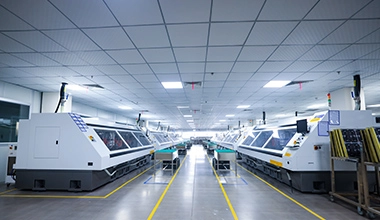
High-Performance Thick Copper PCBs for Demanding Power Applications
From specialized copper configurations to complex multilayer structures, we manufacture Thick Copper PCBs tailored to diverse electrical, thermal, and structural requirements.
✓Single-Sided, Double-Sided, and Multilayer Structures
✓Customized Copper Weight Combinations
✓Advanced Etching and Plating Technologies
Pourquoi PCBMASTER
Why Choose PCBMASTER as Your Thick Copper PCB Manufacturer?
PCBMASTER provides advanced thick copper PCB manufacturing capabilities to support your high-current and high-power applications. Whether you need single-sided, double-sided, or multilayer thick copper PCBs, we can accommodate different copper thicknesses, board structures, and design requirements to meet your electrical and thermal performance targets.
A stable copper-clad laminate supply helps ensure consistent material availability and manufacturing quality. With established material sourcing channels, PCBMASTER supports reliable production planning and material consistency across your PCB projects.
Our precision etching and copper plating processes are designed to address the challenges of heavy copper fabrication, including trace geometry control, copper thickness consistency, and reliable plated-through-hole connections. Process control throughout production helps maintain dimensional accuracy and repeatable manufacturing results.
Beyond bare board fabrication, PCBMASTER also provides Modèle : SMT Et PCBA assembly services, helping you simplify supplier coordination and production management. Our integrated manufacturing capabilities support your projects from PCB fabrication to assembled boards.
Quality is supported by IATF 16949 and ISO 9001 quality management systems, UL certification, and RoHS compliance. Every PCB undergoes applicable inspections and testing before shipment to verify product quality.
Our engineering team also provides DFM evaluation, material recommendations, stack-up optimization, and manufacturing guidance, helping you address design challenges and improve production readiness.
La norme ISO 9001
IATF 16949
L'UL
Modèle : RoHS
Présentation du produit
What Is a Thick Copper PCB?
A Thick Copper PCB is a printed circuit board manufactured with thicker copper layers than conventional PCBs, typically using copper weights of 2 oz or more. The increased copper thickness provides a larger conductive cross-sectional area, allowing the board to carry higher currents and handle greater electrical loads. Compared with standard PCBs, thick copper designs offer lower conductor resistance and improved heat distribution. The terms Thick Copper PCB and PCB de cuivre lourd are commonly used interchangeably to describe these boards, although specific copper thickness classifications may vary among manufacturers. By selecting appropriate copper weights, you can optimize current capacity, temperature rise, and thermal performance for your application.
With the right thick copper PCB solution, you can achieve more reliable high-current routing, greater flexibility in thermal management, consistent manufacturing quality, and better production repeatability.
4-Layer Thick Copper PCB Cross-Section — 6 oz Copper
At PCBMASTER, you can customize thick copper PCBs according to your required copper weight, layer count, substrate material, board dimensions, and electrical specifications. Our engineers evaluate your current and voltage requirements, operating temperatures, and application environment to help determine suitable board structures and manufacturing parameters. From design evaluation and prototype fabrication to volume production, we support different project stages with coordinated PCB, PCBA, and testing services.
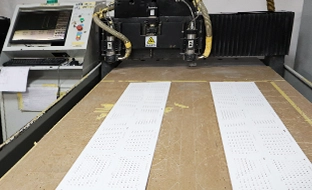
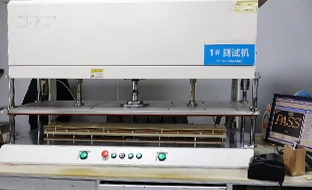
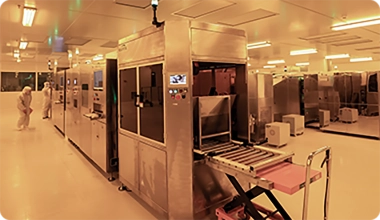
PCBMASTER operates an integrated production base covering thick copper etching, plating, multi-layer lamination under controlled pressure and temperature, and 100% electrical testing. Our controlled manufacturing environment and quality procedures help ensure consistent Thick Copper PCB quality from prototype development to volume production.
Caractéristiques principales
Key Features of Thick Copper PCB
Thick Copper PCBs feature increased copper thickness to enhance electrical performance and thermal management. With higher current-carrying capacity, lower conductor resistance, and improved heat transfer, you can build more reliable power circuits while addressing demanding electrical and thermal requirements.
Product Features
Descriptif
High Current Carrying Capacity
Carry higher current loads through increased copper cross-sectional areas, allowing you to meet demanding power requirements without relying solely on wider copper traces.
Low Conductor Resistance
Reduce resistance in copper conductors to minimize I²R power losses, limit unnecessary heat generation, and improve the energy efficiency of your power circuits.
Enhanced Thermal Conductivity
Transfer heat more effectively through thicker copper conductors, helping you distribute thermal energy and manage heat buildup around high-current paths.
Improved Thermal Management
Benefit from greater copper volume and heat-spreading capability, helping you reduce localized hot spots and manage temperature rise in power-intensive circuits.
Reduced Voltage Drop
Minimize voltage losses along copper traces, helping you maintain more consistent voltage levels and reliable power delivery to connected components.
Higher Thermal Mass
Take advantage of increased copper volume to absorb more thermal energy, helping moderate rapid temperature changes during transient operating conditions.
Solutions de produits
Explore Our Thick Copper PCB Types
PCBMASTER offers a comprehensive range of Thick Copper PCBs with different copper weights, board constructions, and specialized structures. Whether your project requires higher current capacity, flexible circuit configurations, or enhanced thermal management, we provide tailored PCB solutions to meet your specific electrical and mechanical requirements.
By Copper Weight
Produit
Descriptif
2 oz Thick Copper PCB
Improves current-carrying capacity and heat dissipation for power circuits without requiring excessively thick copper layers.
3–4 oz Thick Copper PCB
Provides greater current capacity and reduced conductor resistance for industrial power electronics and high-current control systems.
6–10 oz Thick Copper PCB
Handles demanding current loads and improves thermal performance in high-power applications.
12–20 oz Thick Copper PCB
Accommodates exceptionally high current requirements with robust copper conductors for specialized power applications.
By PCB Construction
Produit
Descriptif
Single-Sided Thick Copper PCB
Offers a straightforward, cost-effective solution for high-current circuits with simpler routing requirements.
Double-Sided Thick Copper PCB
Provides greater routing flexibility and circuit integration for compact power electronic designs.
Multilayer Thick Copper PCB
Enables complex power and signal routing within a compact board, supporting space-constrained and high-performance electronic systems.
By Special Structure
Produit
Descriptif
Embedded Copper Coin PCB
Creates a direct thermal pathway from high-power components to improve heat dissipation and help maintain reliable operating temperatures.
Mixed Copper Weight PCB
Combines different copper thicknesses across layers to optimize current-carrying capacity, routing density, and overall board performance.
Thick Copper PCBs provide robust current-carrying paths, reduced conductor resistance, and improved thermal performance for demanding power electronics. They support reliable power transmission, energy conversion, and electrical control across a wide range of industries.
Candidature
Role of Thick Copper PCB
Systèmes d 'alimentation électrique
Provides thick copper conductors for high-current input, output, and power distribution circuits, reducing resistance and supporting stable power delivery.
Electric Vehicles
Carries high currents between power components in onboard chargers, motor controllers, and DC-DC converters while improving electrical and thermal performance.
Énergies renouvelables
Provides high-current conductive paths in solar inverters and wind power converters, supporting efficient energy conversion and reliable power transmission.
Automatisation industrielle
Connects high-power components in motor drives, servo controllers, and industrial control systems, handling heavy current loads and reducing conductor losses.
Battery Management Systems
Supports high-current charging and discharging paths while connecting battery cells, protection circuits, and monitoring components in battery management assemblies.
Welding Equipment
Carries substantial welding currents through power switching and output circuits, helping reduce conductor resistance and withstand demanding electrical loads.
Power Inverters
Provides low-resistance copper paths for power semiconductor switching circuits, supporting high-current conversion and improved heat distribution across the PCB.
UPS Systems
Handles high charging and discharging currents in rectifier, inverter, and battery connection circuits to support reliable backup power operation.
Telecommunications Power Systems
Distributes high DC currents across rectifier modules and power distribution circuits, supporting stable power delivery to base stations and communication infrastructure.
Let’s Bring Your Thick Copper PCB Project to Life
Have a specific copper thickness, stack-up, or structural requirement in mind? Share your design specifications with PCBMASTER. Our engineering team is ready to help evaluate your requirements and develop a manufacturing solution that fits your project.
Thick Copper PCB Solutions for Real-World Applications
PCBMASTER provides customized Thick Copper PCB solutions for diverse industries and demanding applications, supporting projects with different current capacities, copper thicknesses, and structural requirements.
01
Electric Vehicle Power Distribution PCB
An electric vehicle power electronics manufacturer required a Thick Copper PCB for its 400 V battery power distribution unit, connecting the battery pack, onboard charger, and DC-DC converter. The project required continuous current handling of up to 120 A, compact board dimensions, and reliable electrical connections under vibration and thermal cycling.
The main challenges involved reducing voltage drop, managing heat generated by high-current paths, and maintaining reliable plated through-hole connections. PCBMASTER developed a 4-layer Thick Copper PCB using 4 oz copper on the outer power layers and 2 oz copper on the inner layers. High-Tg FR-4 material (Tg 170°C), a 2.0 mm finished board thickness, and 0.30 mm minimum finished hole diameter were specified. Wide copper traces, reinforced terminal areas, and thermal via arrays were incorporated to improve current distribution and heat dissipation.
The finished Thick Copper PCB provided robust current paths and improved thermal performance, supporting reliable power distribution within the vehicle's electrical system.
02
Industrial Motor Drive Thick Copper PCB
An industrial automation equipment manufacturer needed a Thick Copper PCB for a 15 kW three-phase motor drive operating from a 400 V AC input. The PCB had to handle continuous phase currents of up to 35 A, with higher transient currents during motor acceleration.
The primary challenges included handling high switching currents, limiting conductor losses, and managing localized heat around power semiconductor devices. PCBMASTER manufactured a 6-layer Thick Copper PCB with 4 oz copper on the power layers and 2 oz copper on the signal and control layers. The board featured high-Tg FR-4 material (Tg 170°C), a 2.0 mm finished thickness, and 0.25 mm minimum finished hole diameter. Dedicated power planes, enlarged copper regions, and thermal via arrays were incorporated around switching devices.
This Thick Copper PCB provided low-resistance power connections and improved heat distribution, helping the motor drive maintain stable operation under demanding industrial loads.
03
Solar Inverter Thick Copper PCB
A renewable energy equipment manufacturer required a Thick Copper PCB for a 10 kW three-phase solar inverter. The board needed to support high-current DC input circuits and AC output switching stages while maintaining reliable performance during continuous power conversion.
The main challenges involved managing high-current switching paths, reducing conduction losses, and controlling temperature rise during prolonged operation. PCBMASTER proposed a 4-layer Thick Copper PCB with 4 oz copper on the outer power layers and 2 oz copper on the inner layers. High-Tg FR-4 material (Tg 170°C), a 2.0 mm finished thickness, and 0.25 mm minimum finished hole diameter were selected. Wide copper paths, optimized power loop routing, and thermal via arrays were incorporated around power switching devices.
The resulting Thick Copper PCB supported high-current energy conversion, reduced resistive losses in power paths, and provided a reliable circuit platform for continuous solar inverter operation.
04
Battery Energy Storage System PCB
An energy storage system manufacturer required a Thick Copper PCB for a 100 kWh battery energy storage cabinet operating on a 400 V DC battery bus. The board needed to support battery current monitoring, power distribution, and connections between the battery management system and power conversion equipment.
The main challenges included carrying charging and discharging currents of up to 100 A, maintaining accurate current sensing, and separating high-current power paths from low-level monitoring signals. PCBMASTER developed a 4-layer Thick Copper PCB with 4 oz copper on the outer power layers and 2 oz copper on the inner signal layers. The design used high-Tg FR-4 material (Tg 170°C), a 2.0 mm finished thickness, and 0.30 mm minimum finished hole diameter. Dedicated current paths, Kelvin sensing connections, and optimized power and signal routing were incorporated.
The finished Thick Copper PCB provided reliable battery current distribution and supported accurate monitoring, helping maintain stable electrical operation during battery charging and discharging cycles.
What Customers Say About PCBMASTER’s Thick Copper PCB
PCBMASTER’s Thick Copper PCB solutions are trusted by customers across various industries for their consistent manufacturing quality, professional engineering support, reliable delivery, and stable production performance. We value every customer’s trust and strive to deliver dependable solutions for every project.
Consistent Copper Thickness and Manufacturing Quality
★★★★★
We paid close attention to copper thickness consistency when evaluating suppliers for our power electronics boards. With Thick Copper PCB designs, even small manufacturing variations can affect the final performance. PCBMASTER delivered boards that met our specified copper weight and dimensional requirements. The finished hole quality and overall workmanship were also satisfactory. That level of manufacturing control is important for our applications.
Michael Turner | Quality Assurance Manager | Power Electronics | GermanyPractical Engineering Support for Thick Copper PCB Design
★★★★★
I was particularly concerned about whether our original copper thickness and trace width specifications were suitable for manufacturing. PCBMASTER's engineers reviewed our design and pointed out several areas worth optimizing before production. Their DFM feedback was practical rather than just theoretical. It helped our team make better decisions about the Thick Copper PCB layout and avoid unnecessary design revisions.
Daniel Brooks | Senior Hardware Engineer | Industrial Automation | United StatesReliable Supply and On-Time Thick Copper PCB Delivery
★★★★★
The biggest thing for our purchasing team is knowing when materials will be ready. Thick Copper PCB orders can involve specific material and production requirements, so unexpected delays are a concern. PCBMASTER kept us updated throughout production and communicated schedule changes clearly. Their material supply coordination also made it easier for us to plan our next assembly run.
Emma Richardson | Strategic Sourcing Manager | Renewable Energy | FranceStable Quality Across Repeat Thick Copper PCB Orders
★★★★★
A good prototype is one thing. Getting the same quality in repeat production is another. We need Thick Copper PCBs with consistent copper thickness, dimensions, and finished quality across different batches. PCBMASTER has maintained good production consistency in our repeat orders. This makes incoming inspection and downstream assembly more predictable, which matters considerably in our production environment.
Robert Chen | Production Director | Energy Storage Systems | Canada
A standard PCB typically uses thinner copper layers for signal transmission and general electronic connections. A Thick Copper PCB uses thicker copper conductors to carry higher currents, reduce electrical resistance, and improve heat distribution. It is commonly selected for power electronics, motor drives, and other applications with demanding electrical loads.
Consider a Thick Copper PCB if your circuit carries high currents, experiences excessive conductor heating, or requires wider current paths within limited board space. However, thicker copper is not always necessary. You should evaluate operating current, allowable temperature rise, trace width, and available cooling conditions before selecting the copper weight.
Generally, yes. Increasing copper thickness provides a larger cross-sectional area for current flow, which reduces conductor resistance and can increase current-carrying capacity. However, actual capacity also depends on trace width, copper temperature, PCB layout, and cooling conditions. Thicker copper alone does not guarantee a specific current rating.
Copper thickness and trace width both determine the cross-sectional area of a conductive path. For the same current and temperature-rise limit, thicker copper may allow narrower traces. This can help save routing space, although the final trace dimensions must also satisfy manufacturing tolerances and electrical design requirements.
Yes, but they require careful manufacturing and layout planning. Thick copper etching can produce greater sidewall undercut and dimensional variation, making fine trace spacing more challenging. If your design combines heavy copper power circuits with fine-pitch components, discuss minimum line width, spacing, and copper thickness with your manufacturer before finalizing the layout.
Not necessarily. High-Tg FR-4 is suitable for many Thick Copper PCB applications. However, projects involving high operating temperatures, significant thermal cycling, or demanding mechanical conditions may require materials with suitable thermal and mechanical properties. Material selection should consider operating temperature, Tg, thermal expansion, and expected service conditions.
Yes. Thick Copper PCBs can be manufactured as single-sided, double-sided, or multilayer boards. Multilayer designs can distribute power and signal circuits across different layers. Some designs also use different copper weights on individual layers to balance current capacity, routing density, and manufacturing complexity.
Thicker copper generally increases manufacturing complexity and may raise production costs. Additional etching compensation, longer processing times, specialized plating controls, and more demanding material requirements can all contribute to the cost. The final price also depends on layer count, board dimensions, hole specifications, and production quantity.
To obtain an accurate quotation, prepare the following information: Gerber or ODB++ files for the PCB layout; drill files showing hole sizes and positions; stack-up information with copper weight for each layer; board dimensions and required thickness; surface finish and solder mask specifications; expected production quantity; and any special electrical, thermal, or mechanical requirements. If your design is still under development, preliminary specifications can help the manufacturer provide an initial engineering assessment.
Start by checking whether the manufacturer can meet your specified copper thickness, dimensional tolerances, and electrical requirements. You can also request relevant inspection and test records, including copper thickness measurements, microsection analysis for plated hole and copper thickness verification, electrical continuity and isolation test results, plated through-hole quality inspection, and solderability and surface finish inspection. For critical power applications, prototype evaluation under representative operating current and thermal conditions can provide additional confidence before mass production.
Vous avez d 'autres questions ? Notre équipe technique est prête à vous aider.
Ready to Move Forward with Your Thick Copper PCB Project?
Whether you are preparing for a new product launch or looking for a manufacturing partner for ongoing production, PCBMASTER is ready to support your next step. Connect with our team to discuss your project and explore how we can work together.
Nous utilisons des cookies nécessaires pour assurer les fonctionnalités de base du site ( navigation, devis, connexion) et des cookies analytiques optionnels pour optimiser notre service.
Vos données sont strictement confidentielles et ne seront jamais vendues ou partagées avec des tiers.
Votre consentement est volontaire et révocable.
Nous utilisons des cookies nécessaires pour assure...