







Comprehensive Guide to PCB Assembly Equipment: SMT, THT, and Industry Applications
Every electronic device owes its performance to the precision of its assembly. The machines that print solder, place microscopic components, and form solid joints are the quiet force behind reliability, speed, and product lifespan. As boards become denser and packages more complex, the demands on assembly equipment rise just as quickly. The difference between a stable product and a field failure often comes down to how well that equipment handles the details most people never see.
Introduction to PCB Assembly Equipment
What is PCB Assembly?
PCB assembly is the process of mounting electronic components onto a printed circuit board so the board can perform its intended electrical functions. This process turns a bare PCB into a functional electronic module used in devices such as servers, automotive control units, medical instruments, and consumer electronics. In simple terms, PCB assembly connects components to copper circuits so signals and power can flow correctly.
There are two main PCB assembly methods: SMT (Surface Mount Technology) and THT (Through-Hole Technology).
- SMT places components directly onto the surface of the board using solder paste and automated machines. It supports small, lightweight components and is used for high-density, high-speed electronics.
- THT inserts component leads into drilled holes and solders them from the opposite side, often using wave soldering. It provides stronger mechanical bonding and is preferred for connectors, high-power parts, and components exposed to stress.
Many modern production lines use a hybrid assembly approach, combining both SMT and THT in one workflow. SMT handles most components to achieve high density and speed, while THT is used as a supplement for components requiring mechanical strength or special handling. Hybrid lines allow manufacturers to balance reliability, cost, and performance in complex products.
Importance of High-Quality Equipment
High-quality PCB assembly equipment directly affects production speed, placement accuracy, and overall yield. Precise solder paste printers, stable pick-and-place machines, and well-controlled reflow ovens reduce errors such as misalignment, solder bridges, tombstoning, and voids. Even small improvements in accuracy can significantly raise output quality, especially in boards using BGA, QFN, or 01005-sized components.
Reliable equipment also plays a crucial role in meeting global industry standards. Standards such as IPC-A-610, ISO, IATF 16949, and AS9100 require manufacturers to maintain consistent workmanship, traceability, and defect control. For example, automotive and aerospace customers expect low failure rates and long-term reliability, making stable equipment performance essential. Using certified, well-maintained machines helps manufacturers pass audits, reduce rework, and ensure products meet safety and durability requirements.
High-quality assembly equipment supports consistent manufacturing results, lowers long-term costs, and enables companies to build electronics that perform reliably in demanding environments.
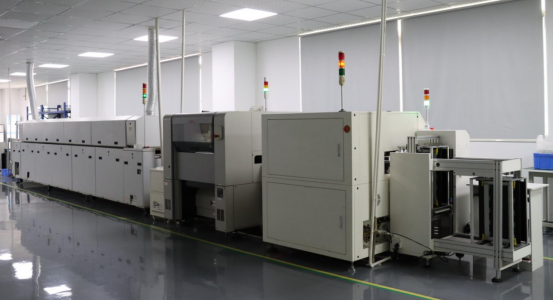
SMT (Surface Mount Technology) Equipment
Overview of the SMT Assembly Process
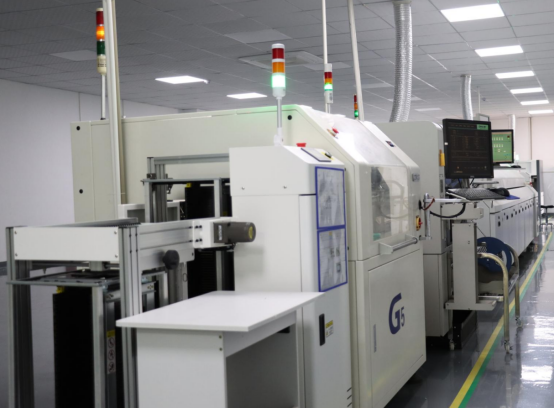
The SMT assembly process follows a well-defined sequence designed for speed, precision, and high-density electronics. The four main steps are solder paste printing, component placement, reflow soldering, and inspection. Each step prepares the PCB for the next, forming reliable electrical and mechanical connections.
- Solder paste printing applies solder paste onto copper pads using a stencil.
- Component placement machines pick components from feeders and set them onto the printed solder paste with high accuracy.
- Reflow soldering heats the PCB through controlled temperature zones so the paste melts and forms solid joints.
- Inspection systems—SPI, AOI, and AXI—verify that paste deposition, component placement, and solder joints meet quality requirements.
SMT is favored for high-density and high-speed products because it supports very small components, tight pitch packages, and automated production. Compared with traditional THT methods, SMT enables lighter designs, faster throughput, and greater layout flexibility.
Core SMT Equipment
Solder Paste Printer
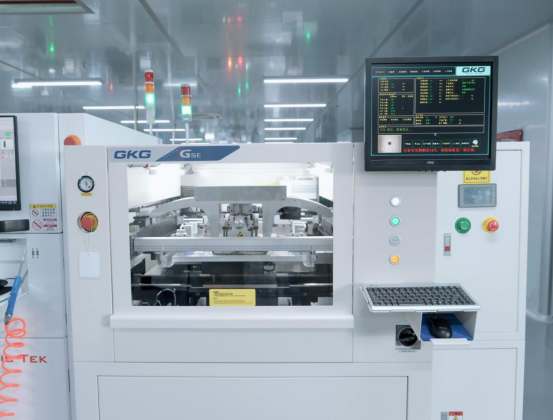
The solder paste printer applies solder paste onto the PCB with controlled thickness and alignment. Its core components include a stencil, squeegee, vision alignment system, and an automatic cleaning system. The stencil provides the pattern, the squeegee pushes paste into the apertures, and the vision system aligns the board and stencil with micrometer-level precision.
Key performance metrics include printing precision (±0.025 mm), repeatability, and printing speed. High accuracy at this stage is essential because most SMT defects originate from poor solder paste deposition. For example, insufficient paste can cause opens, while excess paste can lead to bridging.
Pick-and-Place Machine
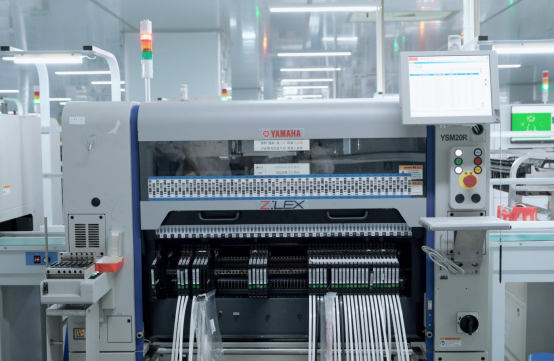
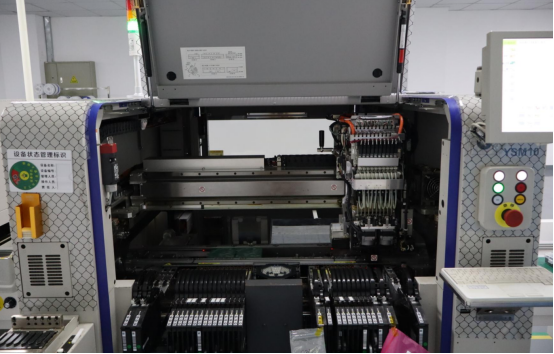
The pick-and-place machine is the heart of SMT production. It picks components from feeders and places them onto the PCB pads. There are three main types of PnP machines: Gantry, Turret, and Modular Parallel systems. Gantry machines are flexible, turret machines offer extremely high speed, and modular systems combine speed with scalability.
Key components include feeders, placement heads with multiple nozzles, a vision system for component and fiducial recognition, and motion control for fast, stable movement. Critical performance indicators include placement speed (measured in CPH—components per hour), placement accuracy, and a Cpk value greater than 1.33, which ensures stable and repeatable performance. A wide component range—from 01005 passives to large BGAs—adds flexibility for mixed-technology boards.
Reflow Soldering Oven
The reflow oven melts solder paste and forms solid, reliable solder joints. It uses a tunnel structure with multiple temperature zones: preheat, soak, reflow, and cooling. Each zone shapes the thermal profile to protect components while ensuring proper wetting.
Heating technologies include hot air convection, infrared (IR), vapor phase, and hybrid systems. Convection is the most common for mass production, while vapor phase is preferred for sensitive or high-reliability assemblies.
Key indicators include temperature uniformity (±1–2°C), nitrogen capability for reducing oxidation, and overall energy efficiency, which affects long-term operating cost. Good uniformity helps avoid defects like voids, tombstoning, and cold joints.
SMT Inspection Equipment
Inspection systems verify process quality and prevent defects from moving downstream.
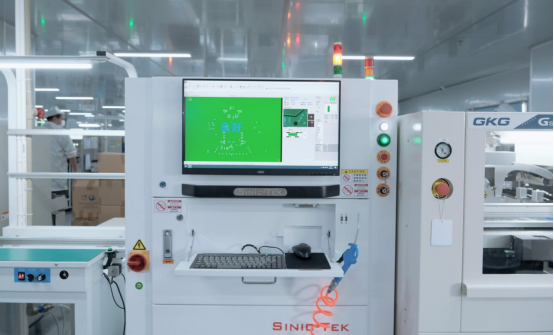
- SPI (Solder Paste Inspection) uses 3D measurement to analyze solder volume, height, and area before placement. It helps catch printing issues that cause most SMT defects.
- AOI (Automated Optical Inspection) uses multi-angle imaging to detect placement, polarity, solder, and bridging issues either before or after reflow.
- AXI (Automated X-ray Inspection) examines hidden joints, voids, and internal structures of components such as BGA, QFN, and power devices.
Together, these inspection tools support closed-loop control and higher yield.
Integration and Workflow
SMT equipment operates as a connected production line. Boards move from the printer to the pick-and-place machine, then through the reflow oven, and finally to inspection. When properly integrated, each machine shares data to adjust upstream or downstream processes—for example, SPI feedback can automatically adjust printer alignment.
A balanced SMT line typically includes loaders, unloaders, buffer conveyors, and inspection gates. Buffers help maintain continuous operation by absorbing timing differences between machines. For instance, if the pick-and-place machine slows due to feeder changes, the buffer prevents interruption at the printer.
An optimized workflow ensures stable throughput, reduces bottlenecks, and maintains consistent quality across large production runs.
THT (Through-Hole Technology) Equipment
Role of THT in Modern PCB Assembly
Through-Hole Technology remains essential in PCB assembly because some components require stronger mechanical support or higher current capacity than SMT can provide. THT is commonly used for connectors, high-power components, large capacitors, transformers, and special switches that experience physical stress or require robust bonding. THT joints pass through the PCB and are soldered from the opposite side, which creates a more durable electrical and mechanical connection.
In modern electronics, THT is often used alongside SMT in hybrid assembly. For example, a power supply board may use SMT for control ICs and sensors, while THT is reserved for heavy components such as terminal blocks or coil assemblies. This combination enables reliability where it matters most without sacrificing production speed.
Core THT Equipment
Auto Insertion Machine
An auto insertion machine automatically inserts through-hole components into pre-drilled PCB holes. It improves consistency compared with manual assembly and is used for components like resistors, capacitors, and small connectors. There are two main types of auto insertion machines:
- Sequential insertion , which inserts components one at a time in a programmed order.
- Simultaneous insertion , which places multiple components at once for higher productivity.
Key components include feeders for supplying taped parts, insertion heads that push leads through the PCB, and lead cutting/bending tools that shape and secure the leads before soldering. Consistent insertion force and alignment are essential to avoid hole damage or lead deformation.
Wave Soldering Machine
A wave soldering machine is used to solder many THT components at once. The PCB passes over a flowing “wave” of molten solder, which wets the exposed leads and pads. The wave soldering process has four steps: flux spraying, preheating, wave soldering, and cooling.
Key performance indicators include:
- Wave flatness , which ensures consistent solder contact.
- Low solder oxidation , which maintains good joint quality.
- Nitrogen protection , which reduces dross and improves reliability, especially for lead-free solder.
Wave soldering is ideal for boards with a high volume of THT components and is widely used in power electronics, appliances, and industrial products.
Selective Wave Soldering
Selective wave soldering provides localized soldering for boards that combine both SMT and THT components. Instead of flooding the whole underside of the PCB with solder, the selective machine uses a small, programmable solder nozzle to target specific pins or connector rows.
Key advantages include reduced thermal stress, lower solder consumption, and the ability to solder THT components without affecting nearby SMT components. This makes selective soldering ideal for hybrid boards, dense layouts, and assemblies with heat-sensitive parts.
Selective systems also improve repeatability because solder height, dwell time, and nozzle motion are software-controlled, reducing the variability often seen in manual touch-up.
Auxiliary Equipment for PCB Assembly
Pre- and Post-Assembly Tools
Auxiliary equipment supports the main SMT and THT processes by ensuring smooth board handling, accurate panel separation, proper cleaning, and high-quality finishing. These tools directly affect throughput, workmanship stability, and long-term reliability.
Loaders, unloaders, and buffer conveyors automate PCB movement between machines. A loader feeds bare boards into the production line, while an unloader collects finished boards. Buffer conveyors absorb timing differences between machines, preventing stoppages. For example, if a pick-and-place machine temporarily slows, the buffer keeps the printer and loader running without interruption.
Depaneling systems separate PCBs from multi-board panels.
- V-cut depanelers use blades to split along pre-scored grooves.
- Router depanelers cut complex shapes with minimal stress.
- Laser depanelers offer the highest precision and are ideal for delicate boards or fine-pitch components.
Depaneling accuracy is important because excessive stress can crack solder joints or damage components.
PCB cleaning systems remove flux residues, fingerprints, and particulates that can affect long-term reliability. Cleaning options include water-based, semi-aqueous, and solvent-based systems. Water-based systems are common for no-clean flux residues; solvent systems are used when tighter ionic contamination limits must be met, such as in aerospace or medical electronics.
Conformal coating equipment protects assembled boards from moisture, dust, and corrosion. Coating methods include spraying, dipping, and brushing, followed by curing ovens that harden the coating. For example, spraying is ideal for high-volume production, while dipping offers uniform thickness for rugged applications.
Rework and repair stations allow technicians to fix defective or sensitive components without damaging nearby parts. These stations use hot air or infrared (IR) heating, microscopes, and precision alignment systems to remove and replace ICs, connectors, or small passives. A well-equipped rework station is essential for maintaining yield and reducing scrap.
Ensuring Line Efficiency
Efficient PCB assembly lines rely on more than the core SMT and THT machines. Auxiliary processes such as inventory management, line balancing, and fast changeover techniques play a major role in maintaining consistent output.
Inventory management and material tracking ensure that feeders, solder paste, and components are available when needed. Many factories use barcode or RFID tracking to prevent shortages and mix-ups. Clear traceability also helps meet industry requirements for automotive, aerospace, and medical manufacturing.
Line balancing focuses on distributing workload evenly across machines to avoid bottlenecks. For example, adding a buffer before a slower placement machine prevents upstream equipment from idling. Eliminating bottlenecks improves throughput and reduces idle time.
Quick changeover techniques —often based on SMED (Single-Minute Exchange of Die) principles—allow the line to switch rapidly between product types. This includes presetting feeders offline, using standardized fixtures, and automating recipe loading. Quick changeover is essential for multi-variety production, where factories must build several product models in a single day.
Together, these auxiliary tools and efficiency practices help manufacturers maintain stable workflows, improve yield, reduce downtime, and meet the fast-changing demands of modern electronics production.
Equipment Selection and Optimization Strategies
Core Considerations
Choosing the right PCB assembly equipment starts with understanding the product itself. Product complexity drives many decisions. High component density, fine-pitch ICs, and large board sizes require machines with higher precision, more feeders, and stable motion control. Hybrid boards with both SMT and THT may need selective soldering or flexible handling to support mixed technologies.
Production volume is another key factor. Small-batch manufacturing benefits from equipment with quick setup, wide component compatibility, and strong software support. High-volume environments prioritize speed, repeatability, and the ability to run continuously with minimal downtime.
Quality requirements must match the intended application. Products built to IPC Class 2, automotive, medical, or aerospace standards typically need tighter process control, more advanced inspection, and better traceability. For example, automotive electronics often require full SPI+AOI coverage and highly stable reflow temperature control.
Budget considerations include both the initial investment and operating costs. Low-cost equipment may reduce upfront expenses but increase long-term costs through higher defect rates, lower uptime, or higher maintenance needs. Total cost of ownership (TCO) is a more reliable metric, especially for factories scaling production.
Detailed Equipment Selection Guidelines
Placement machines should be selected based on the balance between speed and flexibility. High-speed lines may require modular parallel systems, while R&D lines may prefer gantry-style machines with broad component support. Key metrics include placement accuracy, available nozzles, feeder capacity, and software capabilities such as offline programming, vision recognition, and closed-loop calibration.
For reflow ovens, the most important factors are the number of temperature zones, control precision, and heating technology. Uniformity across zones ensures consistent solder joints, especially for BGA, QFN, and high-power components. Nitrogen capability improves wetting and reduces oxidation for high-reliability products. Energy efficiency is valuable for long production cycles.
Inspection equipment should provide coverage that matches product risk levels. SPI is essential for solder paste control, AOI is necessary for placement and solder inspection, and AXI is recommended for hidden joints. Speed, defect detection accuracy, and analytical software—such as SPC charts or closed-loop feedback—determine how well the inspection system prevents defects rather than simply detecting them.
For solder paste printers, focus on alignment accuracy, table stability, and stencil tension control. Efficient cleaning systems and consistent paste deposition improve yield and reduce printing defects, which account for a high percentage of SMT failures.
Evaluating Suppliers
Selecting the right supplier is as important as selecting the equipment itself. A supplier’s brand reputation and market presence often reflect long-term reliability, availability of spare parts, and proven performance across industries. Established brands typically offer better software ecosystems and integration support.
Local technical support and service contracts ensure fast response times when maintenance or troubleshooting is required. This is especially critical for high-volume production lines where hours of downtime can lead to significant losses.
Training programs and long-term partnership potential should also be considered. A supplier that provides operator training, process optimization support, and regular software updates can help a factory continuously improve performance and adapt to new manufacturing requirements.
For manufacturers seeking reliable, high-performance PCB assembly equipment with strong global support, PCBMASTER is an excellent choice . With a reputation for advanced solutions, responsive service, and comprehensive technical guidance, PCBMASTER helps production lines maintain efficiency, quality, and scalability in both small-batch and mass-production environments.
Industry-Leading PCB Assembly Equipment Brands
SMT Equipment Brands
Several brands are recognized globally for high-performance SMT equipment:
- MPM Accela (USA) is known for high-speed solder paste printing and supports ultra-small 01005 components. Its precision and repeatability make it suitable for high-density consumer electronics and advanced industrial boards.
- Yamaha YSM20R (Japan) features a dual cantilever design with placement speeds up to 56,000 CPH, making it ideal for both automotive and consumer electronics applications. The dual cantilever improves accessibility and reduces line footprint.
- Hanwha SM481 (South Korea) is optimized for 5G and AI server applications, offering high-speed placement, flexible component handling, and advanced vision systems for ultra-fine pitch components.
These machines are designed to balance speed, accuracy, and flexibility, depending on production scale and product complexity.
Soldering Equipment Brands
High-quality soldering equipment ensures reliable joints for both THT and hybrid assemblies:
- BTU Pyramax (USA) combines infrared and hot-air convection for lead-free boards, often with nitrogen protection to minimize oxidation.
- Electrovert Vectra Elite (USA) offers robust wave soldering solutions, ideal for boards with a high volume of through-hole components and high reliability requirements.
- Pillarhouse Pilot (UK) provides selective soldering with energy-saving operation and precise local solder application, which is especially useful for hybrid boards with heat-sensitive SMT parts.
Performance in soldering equipment is measured by solder joint quality, process stability, and throughput, rather than just speed.
Inspection Equipment Brands
Inspection equipment detects defects and ensures high-yield assembly:
- Koh Young Aspire 3 delivers 3D AOI with multi-angle imaging, effectively identifying solder bridges, tombstoning, and misalignment on complex boards.
- Nordson DAGE Quadra 5 provides X-ray inspection (AXI) for hidden joints, voids, and BGA/QFN packages, which is essential for high-reliability electronics.
These systems reduce rework, prevent defects from reaching customers, and support closed-loop process control.
Comparative Advantages
Different regional brands offer unique advantages:
- Japanese and South Korean brands excel in precision, reliability, and fine-pitch component handling.
- European and American brands often focus on robust engineering, energy efficiency, and specialized processes such as selective soldering or vapor-phase reflow.
- Chinese brands increasingly provide cost-effective solutions with good performance for small- to medium-volume production.
When evaluating equipment, manufacturers should weigh performance versus cost, considering speed, accuracy, uptime, and long-term service support. A balanced choice ensures both efficiency and consistent quality, particularly for high-density, high-reliability PCBs.
Maintenance, Upgrades, and Cost Optimization
Daily and Preventive Maintenance
Regular maintenance is essential to keep PCB assembly equipment running efficiently and to prevent defects. For placement machines, operators should check nozzles for wear or clogging, clean and lubricate guide rails, and monitor vacuum oil levels to maintain stable suction. Worn or dirty nozzles can lead to misplacement or component damage, reducing yield.
Reflow ovens require inspection and maintenance of solder dross, temperature sensors, and nitrogen flow systems. Removing dross prevents uneven solder distribution, while sensor calibration ensures consistent temperature profiles for reliable solder joints. Maintaining proper nitrogen levels reduces oxidation and improves long-term solder joint reliability.
Automated Optical Inspection (AOI) machines need routine lens cleaning to maintain imaging clarity and regular defect database updates to reflect new component types or layout changes. Accurate AOI reduces false rejects and ensures early detection of defects, supporting overall line efficiency.
Software and Hardware Upgrades
Upgrading equipment helps manufacturers keep pace with evolving technologies. Firmware updates improve machine stability and add features, while AI-enabled inspection software can enhance defect detection accuracy, reduce false positives, and support predictive maintenance. Vision system retrofits can enable machines to handle smaller components, tighter pitches, or new packaging types like 01005, Flip Chip, or WLP.
Integrating hardware and software upgrades ensures that machines remain compatible with modern high-density PCBs and maintain high throughput without additional capital investment in entirely new systems.
Cost Optimization Strategies
Optimizing cost involves more than purchase price. Manufacturers should consider leasing versus purchasing equipment, the use of refurbished machines, and the total cost of ownership (TCO), which includes maintenance, energy use, downtime, and consumables.
Long-term ROI considerations include:
- Energy efficiency: modern ovens and pick-and-place machines with optimized power consumption reduce operating costs.
- Defect reduction: reliable equipment and regular maintenance minimize rework and scrap, improving yield.
- Maintenance costs: predictable preventive maintenance schedules and accessible spare parts reduce unexpected downtime and repair expenses.
By combining regular maintenance, targeted upgrades, and strategic cost planning, manufacturers can extend equipment life, maintain high-quality output, and achieve measurable savings across the production line.
Future Trends in PCB Assembly Equipment
Smart Manufacturing
The next generation of PCB assembly lines is powered by IoT-enabled sensors and real-time data collection, which allow operators to monitor machine status, production speed, and quality metrics continuously. Digital twins—virtual replicas of the production line—enable simulation, process optimization, and predictive troubleshooting before changes are applied to physical equipment. Integration with Manufacturing Execution Systems (MES) ensures seamless communication between machines, inventory, and production schedules, reducing errors and downtime.
Flexible and Modular Production
Modern assembly lines prioritize rapid reconfiguration to accommodate different product types without long downtime. Collaborative robots (cobots) assist with material handling, rework, or hybrid assembly, working safely alongside human operators. This modular approach allows manufacturers to adapt quickly to small-batch production or specialized orders, maintaining efficiency while reducing setup time.
Intelligent Inspection
Inspection technology is evolving with AI-driven AOI and AXI systems, capable of multi-angle and multi-modal defect analysis. These systems detect solder bridges, voids, misalignments, and hidden joint defects more accurately than traditional methods. When combined with closed-loop Statistical Process Control (SPC), inspection data can automatically adjust upstream processes, improving yield and minimizing human intervention.
Precision, Miniaturization, and Advanced Packaging
PCB assembly continues to push toward smaller, denser components, including 01005 passives and ultra-fine pitch ICs. Advanced packaging technologies such as Flip Chip, Wafer-Level Packaging (WLP), and 2.5D/3D integration demand highly precise placement, soldering, and inspection. Equipment capable of handling these components is essential for high-performance computing, 5G devices, and next-generation electronics.
Green and Sustainable Manufacturing
Environmental considerations are increasingly influencing PCB assembly. Energy-efficient reflow ovens, no-clean flux, lead-free solders, and solvent reduction help reduce waste, emissions, and operational costs. Sustainable practices not only meet regulatory requirements but also improve corporate responsibility and reduce the environmental footprint of high-volume electronics manufacturing.
Conclusion
Modern PCB assembly relies on a combination of SMT and THT equipment, supported by auxiliary tools, inspection systems, and rework stations. Solder paste printers, pick-and-place machines, reflow ovens, wave and selective soldering systems, as well as AOI and AXI inspection equipment, all play distinct roles in creating high-quality, reliable boards. Each type of equipment contributes to accuracy, speed, and yield, ensuring that both simple and complex PCBs meet design specifications.
Strategic equipment selection, regular maintenance, and timely upgrades are essential for maximizing line efficiency and product quality. Choosing the right machines for component density, production volume, and quality standards, while implementing preventive maintenance and software or hardware improvements, helps manufacturers reduce defects, lower costs, and maintain consistent output.
The ongoing integration of AI, automation, and smart manufacturing technologies is transforming PCB assembly. AI-driven inspection, predictive maintenance, modular production lines, and green manufacturing practices not only improve yield and throughput but also reduce energy consumption and environmental impact. By embracing these trends, manufacturers can stay competitive, deliver higher-quality electronics, and prepare their production lines for the next generation of miniaturized, high-performance PCBs.
FAQs
What are the main differences between SMT and THT PCB assembly technologies?
SMT (Surface Mount Technology) places components directly on the surface of the PCB using solder paste and automated machines. It supports small, lightweight, and high-density components, allowing for faster production and more compact board designs. THT (Through-Hole Technology) inserts component leads into pre-drilled holes and solders them from the opposite side. THT provides stronger mechanical connections, making it ideal for connectors, high-power components, and parts exposed to mechanical stress. Modern assembly lines often use a hybrid approach, combining SMT for most components and THT for specialized parts.
How do pick-and-place machines improve PCB assembly accuracy and speed?
Pick-and-place machines automatically pick components from feeders and place them on the PCB pads with high precision. They use vision systems for alignment and motion control for stable, rapid placement. By handling thousands of components per hour with consistent accuracy, these machines reduce human error, prevent misplacement, and enable high-density assemblies, which significantly increases production speed and yield.
Which reflow soldering techniques are best for high-reliability products?
High-reliability products often benefit from controlled reflow processes with uniform temperature profiles and minimal oxidation. Techniques include nitrogen-assisted convection ovens, which reduce solder oxidation, and vapor-phase reflow, which provides precise thermal control and protects sensitive components. Maintaining consistent preheat, soak, reflow, and cooling zones ensures strong, defect-free solder joints for critical applications such as automotive, aerospace, and medical electronics.
How can AI improve PCB inspection accuracy and reduce defects?
AI-driven inspection systems, including AOI (Automated Optical Inspection) and AXI (Automated X-ray Inspection), use machine learning algorithms to detect subtle defects like misalignment, solder bridges, voids, and hidden joint issues. AI can also analyze patterns across production batches, reduce false positives, and enable closed-loop feedback to upstream equipment, which prevents defects before they occur, improves yield, and lowers rework costs.
What factors should be considered when selecting PCB assembly equipment for small-batch production?
For small-batch manufacturing, equipment should prioritize flexibility, fast setup, and broad component compatibility. Key factors include:
- Speed vs. flexibility: Machines should handle diverse component sizes without long reconfiguration times.
- Software capabilities: Offline programming, vision recognition, and quick recipe switching save time.
- Accuracy and repeatability: Even small batches require consistent placement and soldering quality.
- Maintenance and support: Easy access to spare parts, service contracts, and training ensures minimal downtime during frequent product changes.
About the Author

Carol Luo
PCB Design EngineerI'm Carol, a PCB Engineer at PCBMASTER with experience in PCB design and manufacturing engineering since 2018. I focus on translating engineering requirements into reliable PCB solutions, with expertise in stack-up design, material selection, and design-for-manufacturing (DFM). I share practical engineering insights from real-world PCB design and production experience.
Visit Carol Luo's Profile