








SMT Assembly Line: Complete Guide to Manufacturing Process and Techniques
Surface-Mount Technology (SMT) is a modern method for assembling electronic circuits on printed circuit boards (PCBs) . Compared to traditional through-hole techniques, SMT places tiny components directly onto the surface of a PCB, which enables faster production, higher component density, and more reliable connections. Because of these advantages, SMT is widely used in smartphones, computers, and other high-tech devices where precision and speed are crucial.
To bring these benefits to life in real-world production, manufacturers need both advanced equipment and experienced teams to manage every step of the process. This is where PCBMASTER comes in . With years of expertise in PCB and PCBA manufacturing, we deliver reliable assemblies for projects of all sizes. By combining advanced machinery with strict quality controls, PCBMASTER ensures that every board meets high standards, from sourcing components to final testing.
This guide is designed to help readers understand SMT assembly lines in detail, including workflows, key techniques, and practical tips. Throughout the article, we will share examples and insights from PCBMASTER’s production lines, so you can see exactly how modern electronics are efficiently assembled.
What is an SMT Assembly Line and Why Is It Important for PCB Manufacturing?
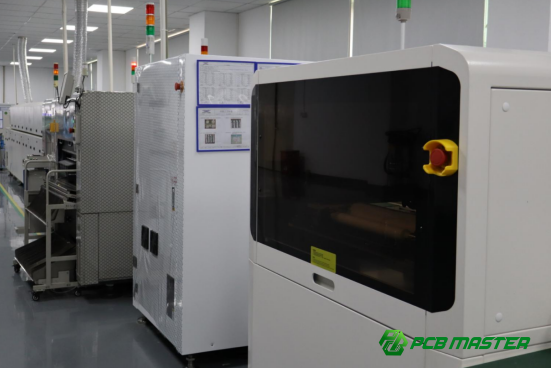
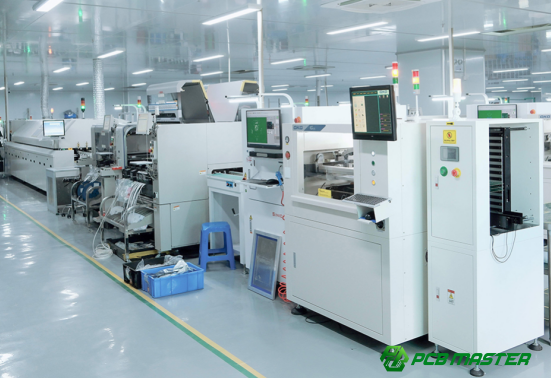
An SMT assembly line is a production setup designed to assemble electronic components onto PCBs efficiently, accurately, and at high volume. It combines automated machines, conveyors, and inspection systems to produce consistent, high-quality circuit boards.
Definition of SMT Assembly Line
An SMT assembly line is a carefully arranged sequence of machines and stations that work together to place electronic components onto a PCB. Key components include:
- Conveyors: These move PCBs from one station to the next smoothly and quickly.
- Pick-and-Place Machines: Automated robots that pick tiny components and place them precisely on the board.
- Soldering Stations: Usually reflow ovens, which melt solder paste to fix components securely.
- Inspection Equipment: Systems like Automated Optical Inspection (AOI) and X-ray machines detect misaligned components or solder defects.
Example: In a typical PCBMASTER production line, PCBs travel along conveyors through stencil printing, component placement, reflow soldering, and final inspection without manual intervention, which reduces errors and increases speed.
Importance of SMT Lines in Modern Electronics
SMT assembly lines are critical for modern electronics because they allow high-volume manufacturing and precise component placement.
- High-Volume Efficiency: Automated lines can produce thousands of PCBs per day, which is essential for consumer electronics and industrial devices.
- Precision: SMT machines can place components as small as 01005 size accurately, which would be impossible manually.
Comparison: Manual assembly is slow and prone to errors, while a properly tuned SMT line maintains consistent quality and reduces waste. This efficiency is why smartphones, laptops, and IoT devices rely on SMT manufacturing.
PCBMASTER Perspective
At PCBMASTER, we optimize SMT assembly lines for reliability and consistency.
- Process Optimization: Every station is calibrated for speed and accuracy to minimize defects.
- Quality Control Integration: Inline inspections catch errors early, preventing defective boards from moving further down the line.
- Real-Life Application: For example, in our high-volume IoT board production, using synchronized pick-and-place machines and AOI inspections ensures 99% first-pass yield.
Result: PCBMASTER’s approach ensures clients receive high-quality, reliable PCBs quickly, whether for prototypes or mass production.
How Does the SMT Manufacturing Process Work Step by Step?
The SMT manufacturing process involves a series of precise steps to assemble electronic components onto PCBs. These steps include solder paste application, component placement, reflow soldering, inspection, and final testing, ensuring high-quality, reliable boards.
Step 1 – Solder Paste Application
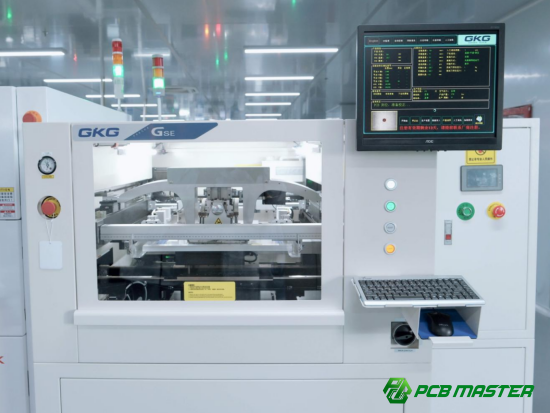
Solder paste application is the first step in SMT assembly. Screen printing is commonly used, where solder paste is spread over a stencil that matches the PCB pads. The paste sticks only to the intended areas.
Importance: Precise deposition is critical because too much or too little paste can cause poor solder joints, component misalignment, or defects.
PCBMASTER Example: PCBMASTER uses automated stencil printers to ensure consistent solder paste thickness and placement. This reduces errors and prepares boards for accurate component placement downstream.
Step 2 – Component Placement (Pick-and-Place Machines)
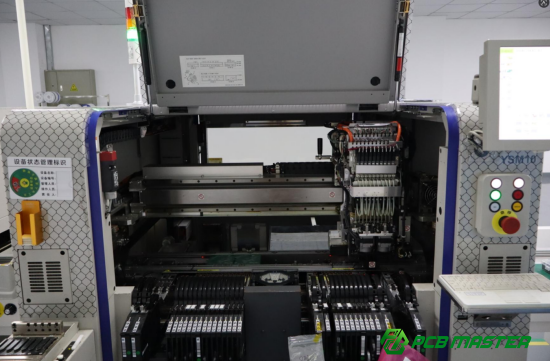
After solder paste application, components are placed on the PCB using pick-and-place machines. These robots pick tiny electronic parts from reels or trays and place them on the soldered pads.
Types: High-speed multi-head machines for mass production and smaller, precise machines for fine-pitch components.
Accuracy and Speed: Modern pick-and-place machines can place components as small as 01005 with micrometer accuracy, ensuring fast production without sacrificing quality.
PCBMASTER Workflow: PCBs move along conveyors to synchronized pick-and-place stations. Components are automatically placed and verified by cameras to ensure perfect alignment before soldering.
Step 3 – Reflow Soldering
Reflow soldering fixes components to the PCB by melting the solder paste. PCBs pass through a reflow oven with controlled temperature zones.
Temperature Profiling: The board gradually heats, peaks, and then cools down. Proper profiling ensures strong solder joints without damaging sensitive components.
Importance: Incorrect temperature profiles can cause cold solder joints, component warping, or solder bridging. PCBMASTER carefully programs ovens for each board type to achieve consistent, reliable soldering.
Step 4 – Inspection and Quality Control
After soldering, every PCB is inspected to detect defects. Automated Optical Inspection (AOI) checks for misaligned components, missing parts, and solder defects. For hidden solder joints, like Ball Grid Array (BGA) , X-ray inspection is used.
PCBMASTER Standards: Inline inspections and end-of-line checks ensure boards meet strict quality standards. Defective boards are flagged immediately for repair, maintaining high first-pass yield.
Step 5 – Final Testing and Packaging
The last step is functional testing and packaging. Functional testing checks if the PCB works as intended, simulating real-world operating conditions.
Packaging: SMT components are delicate, so boards are packed in anti-static trays or protective foam to prevent damage during shipment.
PCBMASTER Example: After testing, boards are carefully packed and labeled for delivery, ensuring clients receive fully functional PCBs ready for integration.
What Are the Key Machines and Equipment in an SMT Assembly Line?
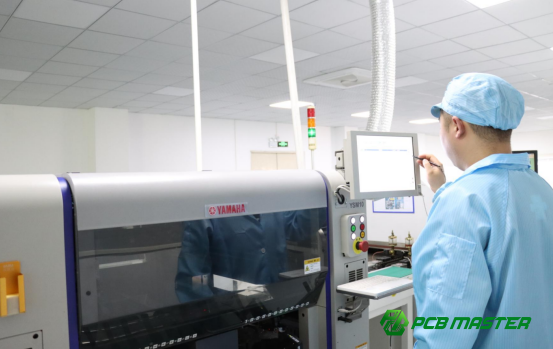
An SMT assembly line relies on several specialized machines to place, solder, and inspect components efficiently and accurately. Key equipment includes pick-and-place machines, reflow ovens, solder paste printers, and inspection systems. Each machine plays a critical role in ensuring high-quality PCB assembly.
Pick-and-Place Machines
Pick-and-place machines are the heart of an SMT assembly line. They pick electronic components from reels or trays and place them accurately on PCB pads.
Features: Modern machines have multiple heads, high-speed placement, and vision systems to verify component orientation.
Speed and Precision: Machines can place thousands of components per hour with micrometer-level accuracy, even for ultra-small parts like 01005 resistors.
PCBMASTER Example: In our production lines, pick-and-place machines are synchronized across stations, ensuring fast throughput while maintaining precise alignment, which reduces rework and improves yield.
Reflow Oven
Reflow ovens solder the components onto the PCB by melting the solder paste.
Conveyor Types: Continuous conveyor ovens move PCBs steadily through heat zones, while batch ovens process boards in groups.
Heat Zones and Reflow Profiles: Ovens have multiple zones—preheat, soak, reflow, and cooling. Each zone is carefully programmed to ensure solder melts correctly without damaging components.
PCBMASTER Practice: Ovens are profiled specifically for each board type, achieving consistent solder joints and minimizing thermal stress on sensitive components.
Solder Paste Printer
Solder paste printers apply paste to PCB pads before components are placed.
Types: Manual printers are slower and require human operation. Automated printers use stencils and robotic control for precise deposition.
Accuracy Considerations: Even a small variation in paste thickness can lead to poor solder joints or bridging. PCBMASTER uses automated stencil printers to maintain consistent paste layers and prepare boards for accurate pick-and-place placement.
Inspection Systems
Inspection systems ensure defects are caught early. Common systems include Automated Optical Inspection (AOI) , Solder Paste Inspection (SPI) and X-ray Inspection:
| Inspection System | Purpose | Key Features / Details | PCBMASTER Application |
| Automated Optical Inspection (AOI) | Detects missing, misaligned, or incorrect components | Uses high-resolution cameras to scan PCBs automatically; identifies visual defects | PCBMASTER uses AOI inline after component placement to catch defects early and reduce rework |
| Solder Paste Inspection (SPI) | Verifies correct paste volume and placement | Measures solder paste thickness and alignment before components are placed | PCBMASTER employs SPI to ensure consistent solder paste deposition, improving solder joint reliability |
| X-ray Inspection | Checks hidden joints such as Ball Grid Array (BGA) connections | Uses X-rays to inspect solder joints not visible to cameras; detects voids or misalignment | PCBMASTER integrates X-ray inspection for complex boards to ensure high-quality |
PCBMASTER Standards: Inline and end-of-line inspections allow defective boards to be corrected immediately. This multi-level inspection approach ensures minimal defects and maintains high first-pass yield.
How Does PCBMASTER Ensure Quality in SMT Assembly Lines?
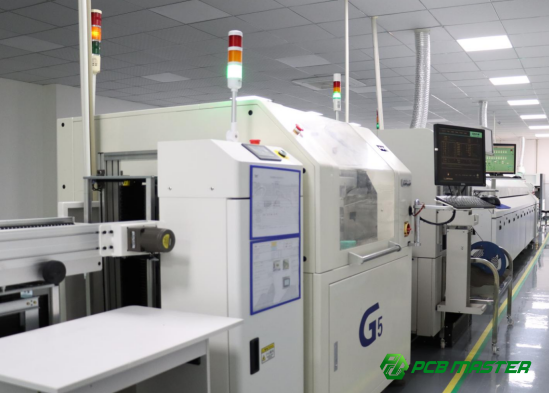
PCBMASTER ensures quality in SMT assembly lines through standardized processes, careful component handling, continuous monitoring, and skilled personnel. These measures reduce defects, improve consistency, and deliver reliable PCBs for all types of projects.
Process Standardization
Standard operating procedures (SOPs) are the foundation of quality in SMT assembly. Each step, from solder paste printing to final inspection, follows a documented protocol to ensure consistency.
Importance: SOPs reduce variation, minimize errors, and make it easier to train new operators.
PCBMASTER Example: Every SMT line at PCBMASTER follows step-by-step SOPs, including precise paste thickness, component placement verification, and reflow oven profiling. This standardization ensures boards meet exact client specifications every time.
Component Handling and Storage
Proper handling and storage of components are critical, especially for Moisture-Sensitive Devices (MSDs) . Exposure to moisture can damage components during reflow soldering, causing failures.
Best Practices: Components are stored in controlled humidity cabinets or sealed packaging until use. Humidity indicators and baking processes prevent moisture-related defects.
PCBMASTER Practice: PCBMASTER maintains strict MSD protocols to protect sensitive parts, ensuring boards are assembled with reliable components.
Continuous Monitoring and Feedback Loops
Quality is maintained through inline inspections and real-time defect tracking. Automated Optical Inspection (AOI), Solder Paste Inspection (SPI), and X-ray inspection provide immediate feedback.
Importance: Continuous monitoring catches defects early, allowing corrections before boards proceed further.
PCBMASTER Approach: Data from inspections is logged and analyzed to identify trends, optimize processes, and prevent recurring issues, maintaining a high first-pass yield.
Training and Expertise
Skilled operators and technicians are essential for maintaining quality. Even with automation, human oversight ensures machines are correctly calibrated, components are handled properly, and unusual issues are resolved.
PCBMASTER Example: PCBMASTER invests in ongoing training programs for SMT operators, combining hands-on practice with theory on soldering, placement accuracy, and defect detection. This expertise ensures every board meets high-quality standards.
What Are Common Challenges in SMT Assembly and How Can They Be Overcome?
SMT assembly can face challenges like solder defects, component placement errors, thermal issues, and supply chain problems. These challenges can be mitigated with careful process control, high-quality materials, and experienced operators.
Solder Defects
Solder defects are common issues that affect joint reliability. Examples include:
- Tombstoning: One end of a component lifts off the pad during soldering.
- Solder Bridging: Excess solder creates a short between adjacent pads.
- Insufficient Wetting: Poor solder flow results in weak connections.
PCBMASTER Mitigation Strategies: Careful solder paste application, precise pick-and-place alignment, and controlled reflow profiles reduce these defects. Inline AOI and SPI inspections catch issues early, allowing corrections before boards proceed further.
Component Placement Errors
Errors in component placement can occur due to misalignment, vibration of the line, or inaccurate feeders in pick-and-place machines.
Impact: Misplaced components can cause open circuits, shorts, or rework, reducing yield.
PCBMASTER Approach: Machines are regularly calibrated, and vibration is minimized through stable assembly lines. High-quality feeders and continuous operator monitoring ensure components are placed accurately every time.
Thermal Issues
Thermal problems arise from poor reflow profiles, uneven heating, or overheating, which can lead to solder joint failures or warped PCBs.
PCBMASTER Solution: Each board type is programmed with a specific reflow temperature profile. Temperature zones in ovens are monitored closely to prevent overheating, ensuring reliable soldering without damaging components.
Supply Chain and Material Quality
Reliable component sourcing is essential to maintain high yield. Poor-quality or counterfeit components can lead to frequent failures, even if assembly processes are perfect.
PCBMASTER Practice: Components are sourced from verified suppliers, and incoming inspection checks for authenticity and quality. This ensures that only reliable parts enter the SMT assembly line, reducing defects and increasing first-pass yield.
How Can Businesses Optimize SMT Assembly Line Efficiency?
SMT assembly line efficiency can be improved through automation, line balancing, preventive maintenance, and adopting best practices. Optimizing these factors reduces defects, increases throughput, and ensures consistent PCB quality.
Automation vs Manual Processes
Automation is most beneficial for high-volume production or complex boards with tiny components. Automated machines handle repetitive tasks like pick-and-place, solder paste application, and inspection faster and more accurately than manual processes.
When Manual Work is Useful: Small-batch production, prototyping, or boards with unusual components may still require human handling to maintain flexibility.
PCBMASTER Practice: PCBMASTER combines automation for large-scale production with selective manual intervention for specialized boards, ensuring efficiency without sacrificing quality.
Line Balancing
Line balancing ensures that each station in the SMT assembly line operates at a matched pace, preventing bottlenecks.
Importance: If one machine is slower than others, it delays the entire production, reducing throughput. Conversely, over-speeding can cause errors.
PCBMASTER Example: Conveyor speed, pick-and-place rate, and reflow oven cycle are synchronized to create smooth, continuous flow, minimizing idle time and maximizing output.
Preventive Maintenance
Regular maintenance prevents unexpected downtime and prolongs equipment life.
Key Practices: Scheduled cleaning, calibration, and replacement of worn parts reduce the risk of machine failure.
PCBMASTER Strategy: SMT machines are maintained according to a preventive schedule, with real-time monitoring for early warning signs. This approach keeps lines running efficiently and ensures consistent product quality.
PCBMASTER Recommendations
Businesses can improve SMT assembly efficiency by:
- Using automated machines for repetitive tasks while reserving manual work for complex boards.
- Monitoring line balance and adjusting speeds to avoid bottlenecks.
- Implementing preventive maintenance programs to reduce downtime.
- Following quality-focused SOPs for each SMT process.
PCBMASTER Insight: Adopting these strategies has helped our clients achieve higher first-pass yields, faster delivery, and lower production costs.
What Are the Latest Trends in SMT Assembly Technology?
SMT assembly technology is evolving with AI-driven defect detection, advanced miniaturized components, IoT-enabled smart lines, and integration of emerging tools by manufacturers like PCBMASTER to improve quality, speed, and efficiency.
AI and Machine Learning in Defect Detection
Artificial intelligence (AI) and machine learning are being used to enhance defect detection in SMT assembly.
How it works: Machine vision systems analyze thousands of images in real time, learning to identify misaligned components, solder bridges, or missing parts more accurately than traditional inspection methods.
Benefits: AI reduces false positives, speeds up inspection, and improves first-pass yield.
PCBMASTER Example: Our AOI systems are being upgraded with machine learning algorithms that automatically flag unusual patterns, allowing operators to address issues before they affect production quality.
Advanced Component Miniaturization
The industry is moving toward ultra-small components, including 01005 resistors and capacitors.
Handling Challenges: Smaller components are harder to place accurately and require high-precision pick-and-place machines, controlled solder paste deposition, and careful thermal profiling.
PCBMASTER Practice: PCBMASTER uses advanced placement machines and optimized reflow profiles to handle miniaturized components reliably, allowing high-density PCB designs without compromising yield.
Smart SMT Lines
IoT-enabled smart SMT lines use sensors and real-time data collection to monitor equipment and production.
Applications: Predictive maintenance alerts operators before machines fail, reducing downtime. Energy usage and throughput are tracked for continuous optimization.
PCBMASTER Example: By implementing IoT sensors on our SMT lines, PCBMASTER can detect anomalies early, schedule maintenance proactively, and maintain high production efficiency.
PCBMASTER Insights
To stay ahead, PCBMASTER integrates emerging technologies into its SMT assembly process.
Practical Integration: AI inspection, high-precision placement for miniaturized components, and smart line monitoring are combined with strict SOPs and skilled operators.
Result: These innovations improve quality, reduce defects, accelerate throughput, and allow PCBMASTER to support advanced, high-density PCB designs for clients across industries.
Conclusion
SMT assembly lines are vital for producing high-quality, reliable PCBs efficiently. From solder paste application and precise component placement to reflow soldering, inspection, and final testing, every step contributes to consistent performance and high yield. Optimizing SMT processes through automation, line balancing, preventive maintenance, and emerging technologies like AI and smart IoT monitoring can significantly enhance productivity and reduce defects.
PCBMASTER combines years of experience with advanced SMT assembly techniques, strict process standardization, and skilled operators to deliver superior PCBs and PCBAs. By integrating precise equipment, inline inspections, and innovative technologies, PCBMASTER ensures each board meets exacting quality standards while supporting high-density, complex designs.
For businesses seeking reliable PCB assembly solutions, PCBMASTER offers professional support, tailored manufacturing strategies, and cutting-edge SMT capabilities. Contact PCBMASTER to leverage expertise in PCB and PCBA production and ensure your electronics projects achieve the highest performance and reliability.
FAQs About SMT Assembly Lines
1. What is the difference between SMT and through-hole assembly?
SMT (Surface-Mount Technology) places components directly on the surface of a PCB, while through-hole assembly inserts component leads into drilled holes. SMT allows higher component density, smaller board sizes, and faster automated production, whereas through-hole provides stronger mechanical connections, often used for heavy or high-stress components.
2. How long does it take to assemble a PCB using an SMT line?
Assembly time depends on PCB complexity, component count, and automation level. Standard SMT lines can place thousands of components per hour, and reflow soldering typically takes several minutes per board. PCBMASTER optimizes line speed and workflow, allowing high-volume production without compromising quality.
3. Can small businesses benefit from SMT assembly lines?
Yes, small businesses can benefit by outsourcing SMT assembly to experienced manufacturers like PCBMASTER. This allows access to high-quality, automated assembly without investing in expensive machinery, ensuring faster turnaround and consistent board quality for prototypes or low-to-medium volume production.
4. What factors affect the quality of an SMT assembly?
Key factors include solder paste application accuracy, component placement precision, reflow temperature profiles, component handling (especially moisture-sensitive devices), inspection protocols, and operator skill. PCBMASTER ensures quality by following strict SOPs, using advanced equipment, and conducting multi-level inspections.
5. How does PCBMASTER handle urgent or high-volume SMT orders?
PCBMASTER manages urgent or large orders by prioritizing workflow, leveraging automated pick-and-place machines, optimized line balancing, and predictive maintenance to prevent delays. Experienced operators and scalable production lines allow rapid turnaround without sacrificing first-pass yield or product reliability.
About the Author

Carol Luo
PCB Design EngineerI'm Carol, a PCB Engineer at PCBMASTER with experience in PCB design and manufacturing engineering since 2018. I focus on translating engineering requirements into reliable PCB solutions, with expertise in stack-up design, material selection, and design-for-manufacturing (DFM). I share practical engineering insights from real-world PCB design and production experience.
Visit Carol Luo's Profile