








Solder Mask PCB Guide: Types, Manufacturing Process and Applications
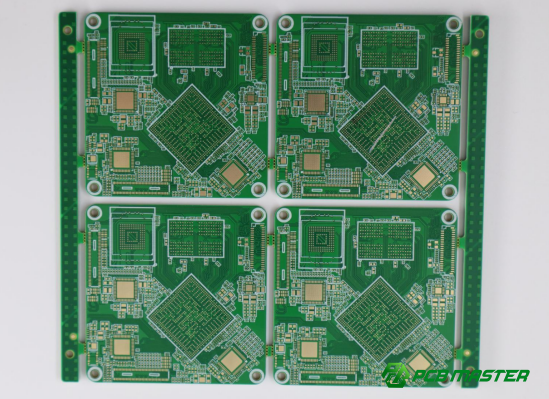
Solder mask is a critical protective layer in printed circuit board (PCB ) manufacturing that defines soldering areas, prevents electrical shorts, and enhances long-term circuit reliability. It is widely used across industries involving PCB, PCBA, and SMT assembly , including automotive electronics, industrial control, telecommunications, and consumer devices. With different material systems such as LPI, epoxy, and dry film, solder masks directly influence manufacturability, thermal stability, and defect rates. Modern high-reliability manufacturers such as PCBMASTER , certified under ISO 9001, IATF 16949, UL, and RoHS, integrate advanced solder mask processes with high-volume production capabilities (up to 100,000 ㎡/M for rigid-flex PCB) to ensure consistent performance, fast delivery, and industrial-grade quality assurance for global electronics supply chains.
What Is a Solder Mask in PCB Technology?
A solder mask is a thin, polymer-based protective coating applied over a printed circuit board after copper etching. Its primary function is to selectively cover non-soldering areas while exposing pads where components will be mounted.
In PCB engineering terms, it acts as:
- An electrical insulation barrier
- A solder flow control layer
- A surface protection coating
Without solder mask, molten solder during reflow or wave soldering could easily bridge adjacent traces, leading to short circuits and catastrophic board failure.
In high-reliability manufacturing environments such as those operated by PCBMASTER, solder mask application is tightly controlled using automated inspection and multi-stage curing processes to ensure zero-defect solderability.
Core Functions of Solder Mask in PCB Systems
Solder mask is not just a coating—it is a functional design layer that directly affects PCB performance.
Key functional roles:
- Electrical insulation: Prevents unintended conduction between copper traces
- Short-circuit prevention: Controls solder flow during assembly
- Environmental protection: Shields copper from oxidation, moisture, and contaminants
- Assembly precision: Defines solderable regions for SMT components
- Mechanical durability: Reduces wear during handling and rework
Types of Solder Mask Materials and Processes
Different solder mask technologies are selected based on thermal, chemical, and manufacturing requirements.
Comparison of Main Solder Mask Types
| Type | Structure | Advantages | Limitations | Typical Applications |
| Epoxy Liquid | Thermoset polymer coating | Strong adhesion, cost-effective | Lower fine-line precision | General consumer |
| LPI (Liquid Photo Imageable) | UV-patterned liquid resin | High resolution, precise geometry | Sensitive process control | HDI, multilayer PCBs |
| DFSM (Dry Film Solder Mask) | Laminated photosensitive film | Uniform thickness, clean process | Less flexible for complex shapes | High-volume standardized boards |
Industrial Insight
Among modern PCB fabrication systems, LPI solder mask dominates high-density designs due to its superior patterning accuracy and compatibility with microvia and HDI structures.
Key Properties That Define Solder Mask Performance
A high-quality solder mask must meet strict electrical, thermal, and mechanical requirements:
1. Chemical Resistance
Must withstand flux agents, cleaning solvents, and environmental exposure.
2. Adhesion Strength
Strong bonding to copper prevents peeling during thermal cycling.
3. Dielectric Strength
Ensures electrical isolation between densely packed traces.
4. Thermal Stability
Maintains integrity under reflow soldering temperatures.
5. Color Stability
Resists discoloration under UV and heat exposure.
In certified manufacturing environments like PCBMASTER, these properties are validated through strict quality inspection aligned with ISO 9001 and IATF 16949 systems.
How Solder Mask Is Applied in PCB Manufacturing
The solder mask process is a multi-stage controlled manufacturing sequence:
Step 1: Surface Preparation
- Degreasing removes oils and contaminants
- Micro-etching improves copper adhesion
- Cleaning ensures surface uniformity
Step 2: Application Process
Two primary methods:
- Screen printing (liquid mask deposition)
- Lamination (dry film bonding)
Step 3: UV Exposure & Pattern Development
- Photolithography defines solderable and non-solderable zones
- Unexposed areas are removed to create precise openings
Step 4: Curing
- Thermal or UV curing solidifies polymer structure
- Ensures mechanical and chemical stability
Step 5: Inspection (AOI)
Automated Optical Inspection detects:
- pinholes
- misalignment
- voids
- incomplete coverage
Solder Mask Design Guidelines (Engineering Perspective)
Proper design is essential to ensure manufacturability and yield.
Critical design rules:
- Maintain clearance between pads and mask edges
- Avoid sharp internal corners in openings
- Control solder mask expansion to prevent bridging
- Ensure uniform thickness across board surface
Common Engineering Mistakes:
- Over-tight pad spacing without mask expansion allowance
- Improper via tenting leading to solder leakage
- Inconsistent thickness causing thermal stress points
Common Solder Mask Defects and Causes
| Defect Type | Root Cause | Impact on PCB |
| Pinholes | Contamination or poor curing | Copper exposure, oxidation |
| Delamination | Weak adhesion | Layer separation, failure risk |
| Solder bridging | Excess solder or poor clearance | Electrical short circuit |
| Missing mask zones | Printing or exposure error | Unprotected copper areas |
Manufacturers with advanced AOI systems such as PCBMASTER significantly reduce these defects through multi-stage inspection and process control.
PCBMASTER Industrial-Grade Solder Mask Manufacturing Capability
As a global PCB/PCBA/SMT manufacturing provider, PCBMASTER integrates solder mask processing into a fully automated production ecosystem.
Industrial strengths:
- High-volume PCB production: up to 50,000 items/month (quick-turn prototypes)
- HDI capability: 50,000㎡/month
- Rigid-flex PCB: 100,000㎡/month
- Full compliance: ISO 9001 / IATF 16949 / UL / RoHS
Engineering value delivered:
- Free DFM (Design for Manufacturability) file review
- 24-hour engineering response system
- 99.59% on-time delivery rate
- Multi-layer quality inspection process
These capabilities ensure solder mask accuracy is maintained even in complex multilayer and high-frequency PCB structures.
Application Impact: Why Solder Mask Matters in Real Electronics
Solder mask directly influences:
- Signal integrity in high-speed circuits
- Yield rate in SMT assembly
- Reliability in automotive and industrial systems
- Lifecycle durability of electronic products
Example Application Scenarios:
- Automotive ECU control boards
- 5G communication modules
- Industrial automation controllers
- Consumer electronics motherboards
Future Trends in Solder Mask Technology
The evolution of solder mask technology is driven by:
- Miniaturization of electronic components
- HDI and microvia expansion
- Higher thermal density requirements
- Automated optical inspection advancements
Emerging directions:
- Ultra-thin high-resolution LPI materials
- Environmentally safer photoresists
- AI-driven defect detection systems
- Higher-frequency compatible insulating coatings
Conclusion
Solder mask is a foundational yet often underestimated layer in PCB engineering. It defines solder accuracy, ensures electrical safety, and directly impacts manufacturing yield and long-term reliability.
With industrial-scale capabilities and certified quality systems, PCBMASTER provides advanced PCB fabrication solutions where solder mask precision is tightly integrated into every production stage—from prototype to mass manufacturing.
For modern electronics development, selecting the right solder mask system is not optional—it is a core engineering decision that determines product success.
Tags
#PCB #SolderMask #PCBLayer #PCBFabrication #PCBA #SMT #HDI #RigidFlexPCB #ElectronicsManufacturing #PCBMASTER
About the Author

Carol Luo
PCB Design EngineerI'm Carol, a PCB Engineer at PCBMASTER with experience in PCB design and manufacturing engineering since 2018. I focus on translating engineering requirements into reliable PCB solutions, with expertise in stack-up design, material selection, and design-for-manufacturing (DFM). I share practical engineering insights from real-world PCB design and production experience.
Visit Carol Luo's Profile