







LED PCB: A Complete Guide to Types, Materials, Design, Assembly and Applications
LED PCBs (Light Emitting Diode Printed Circuit Boards) have become the backbone of modern lighting and smart electronic systems due to their exceptional energy efficiency, compact form factor, and superior thermal performance. From automotive lighting and medical equipment to IoT devices and industrial automation, selecting the right LED PCB design directly impacts reliability, lifespan, and cost-effectiveness. This guide explores LED PCB structures, materials, board types, assembly methods, design considerations, common defects, and emerging industry trends. It also highlights how PCBMASTER leverages advanced manufacturing capabilities, international certifications, and rapid production services to support global customers in developing high-performance LED solutions.
What Is an LED PCB?
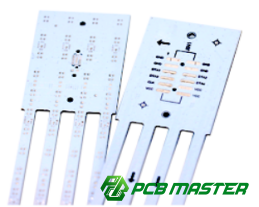
An LED PCB (Light Emitting Diode Printed Circuit Board) is a specialized PCB designed to support and electrically connect LEDs while efficiently managing the heat generated during operation.
Unlike traditional lighting technologies, LEDs are semiconductor devices that convert electrical energy directly into visible light. Because LEDs produce concentrated heat at the junction level, thermal management becomes one of the most critical aspects of LED PCB design.
A typical LED PCB structure includes:
- Metal Core/Base Layer: Usually aluminum for heat dissipation
- Dielectric Layer: Electrical insulation with thermal conductivity
- Copper Circuit Layer: Current transmission pathways
- Solder Mask: Protection against oxidation and short circuits
The combination of efficient heat transfer and compact design allows LEDs to be integrated into products ranging from smartphones to industrial lighting systems.
Why LED PCB Technology Has Transformed Modern Lighting
Compared with conventional incandescent lighting, LED technology offers significant advantages:
- Converts a much larger proportion of electrical energy into usable light.
- Generates substantially less wasted heat.
- Supports miniaturized and customized product designs.
- Delivers longer operational lifespans.
- Reduces maintenance and replacement costs.
- Enables integration into intelligent control systems.
As industries increasingly pursue sustainability, energy efficiency, and smart automation, LED PCBs have become the preferred lighting platform.
LED PCB Structure and Material Selection
Selecting the appropriate PCB substrate is essential to achieving optimal performance.
FR-4 LED PCB
FR-4 remains one of the most widely used PCB materials.
Composition:
- Glass fiber
- Epoxy resin
- Copper foil
Advantages:
- Cost-effective
- Mature manufacturing process
- Excellent mechanical strength
- Suitable for low-to-medium thermal applications
Limitations:
- Lower thermal conductivity
- Less effective heat dissipation compared with metal-core alternatives
FR-4 is often suitable for LED applications with relatively modest thermal demands.
Aluminum LED PCB
Aluminum-based PCBs are the industry standard for many LED products.
Advantages:
- Excellent thermal conductivity
- Superior heat dissipation
- Good electrical insulation
- Cost-effective metal-core solution
- Improved reliability under continuous operation
Because thermal performance directly influences LED lifespan and brightness stability, aluminum PCBs are often the first recommendation for professional lighting applications.
Epoxy LED PCB
Although epoxy materials are common in standard PCB production, they are less frequently used in LED applications.
Advantages:
- Economical material option
Limitations:
- Lower mechanical robustness
- More susceptible to cracking
- Inferior thermal characteristics
For most LED projects, aluminum or FR-4 alternatives are preferred.
Types of LED PCB Boards
Different LED applications require different board structures.
Single-Layer LED PCB
Single-layer boards feature the simplest architecture.
Suitable for:
- Low-power LED products
- Indicator lights
- Basic lighting modules
Benefits:
- Low manufacturing cost
- Simplified assembly
- High versatility
Flexible Aluminum LED PCB
Flexible LED PCBs combine thermal performance with bending capability.
Common Applications:
- LED strips
- Wearable devices
- Curved installations
- Space-constrained products
Advantages:
- Excellent adaptability
- Lightweight construction
- Enhanced design freedom
Challenges:
- Higher manufacturing costs
- More complex repairs
- Greater sensitivity to mechanical stress
Hybrid LED PCB
Hybrid structures integrate multiple substrate materials, typically combining FR-4 with aluminum.
Benefits:
- Enhanced durability
- Improved thermal management
- Lower overall cost than full metal solutions
- Better manufacturability for complex designs
Multilayer LED PCB
Multilayer designs support sophisticated circuitry and advanced functionality.
Suitable for:
- Smart lighting systems
- Automotive electronics
- Industrial control devices
- Medical equipment
Advantages:
- Higher circuit density
- Improved signal routing
- Excellent thermal performance
- Greater functional integration
Key Advantages of LED PCB
Energy Efficiency
Traditional incandescent bulbs dissipate most of their energy as heat.
LED systems significantly improve energy utilization by converting a much higher percentage of power into illumination, reducing electricity consumption and operating expenses.
Superior Thermal Dissipation
Effective thermal management protects LEDs from premature degradation.
Metal-core structures efficiently transfer heat away from sensitive components, helping maintain stable performance.
Broad Compatibility
LED PCBs integrate seamlessly into:
- Consumer electronics
- Industrial equipment
- Smart home systems
- Automotive platforms
- Medical devices
Their compact profiles simplify integration without increasing product size or weight.
Compact and Innovative Design
LED boards support:
- Miniaturization
- Custom form factors
- Lightweight construction
- Diverse color and performance options
These characteristics enable innovative product development.
Long-Term Cost Savings
LED PCB solutions offer:
- Reduced maintenance
- Extended service life
- Lower replacement frequency
- Lower total ownership cost
Environmental Sustainability
LED technology supports environmentally responsible manufacturing through:
- Mercury-free operation
- Reduced energy consumption
- Lower carbon footprint
- Resistance to moisture and dust
Many systems can achieve enhanced environmental protection ratings for demanding environments.
LED Lighting Industry Analysis and Future Trends
The global lighting market continues transitioning toward LED-based solutions.
Several factors are accelerating adoption:
- Growing awareness of energy conservation
- Government efficiency initiatives
- Expansion of smart cities
- Rapid IoT deployment
- Increasing demand for connected devices
- Advancements in wireless control technologies
Emerging Industry Trends
Smart Lighting Integration
Modern LED systems increasingly connect with:
- Smartphones
- Voice assistants
- Wireless networks
- Building automation systems
Human-Centric Lighting
Adaptive lighting designed around human comfort and productivity is becoming increasingly popular.
Features include:
- Adjustable brightness
- Tunable color temperatures
- Circadian rhythm optimization
Sustainable Infrastructure
LED technology enables affordable lighting deployment in regions with limited access to traditional electrical infrastructure, particularly when integrated with renewable energy systems.
Applications of LED PCB
LED PCBs support an extraordinary range of industries.
Consumer and Commercial Lighting
- Residential lighting
- Commercial buildings
- Decorative lighting
- Architectural illumination
Automotive Electronics
- Headlights
- Brake lights
- Dashboard indicators
- Interior ambient lighting
Medical Equipment
- Diagnostic systems
- Imaging equipment
- Examination devices
- Surgical lighting
Industrial and Infrastructure
- Traffic signals
- Emergency lighting
- Street lighting
- Tunnel illumination
Telecommunications and Data Communication
- Status indicators
- Display systems
- Visible light communication technologies
Consumer Electronics and IoT
- Smart home products
- Wearables
- Portable electronics
- Connected devices
Additional Applications
- Renewable energy products
- Aviation systems
- Transportation infrastructure
- Robotics
- Entertainment equipment
Critical Design Considerations for LED PCB
Successful LED PCB development requires balancing performance, reliability, and manufacturability.
Component Placement
Designers should:
- Maintain organized signal paths.
- Optimize current flow.
- Avoid placing components too close to board edges.
- Minimize thermal concentration.
Proper layout significantly improves reliability.
Material Selection
Material choice should align with application requirements.
| Requirement | Recommended Material |
| Lowest cost | FR-4 |
| High thermal conductivity | Aluminum |
| Flexible installations | Flexible PCB |
| Complex integrated systems | Hybrid/Multilayer |
Thermal Management
Thermal control is fundamental.
Design strategies include:
- Metal-core substrates
- Heat sinks
- Thermal vias
- Increased board thickness
- Thermal insulation layers
Poor thermal design can dramatically shorten LED lifespan.
PCB Routing and Tracking
Effective routing ensures:
- Stable current delivery
- Reduced voltage drop
- Improved heat distribution
- Elimination of shorts and opens
Advanced CAD tools assist designers in optimizing performance.
Surface Finishing
Proper finishing improves:
- Solderability
- Corrosion resistance
- Environmental durability
- Long-term reliability
Protective coatings further enhance robustness.
LED PCB Assembly Technologies
LED PCB assembly quality directly affects final product performance.
SMT Assembly
Surface Mount Technology remains the dominant assembly method.
Advantages:
- Highly automated
- Excellent production efficiency
- Suitable for mass manufacturing
- Consistent placement accuracy
SMT enables thousands of boards to be assembled daily.
THT Assembly
Through-Hole Technology involves inserting components into drilled holes.
Advantages:
- Strong mechanical connections
- Suitable for certain large components
Limitations:
- Lower efficiency
- Greater labor requirements
- Increased defect potential
Hybrid Assembly
Complex products often require both SMT and THT.
The typical process sequence is:
- SMT component placement.
- Reflow soldering.
- Through-hole insertion.
- Manual or wave soldering.
This approach balances automation with functionality.
Common LED PCB Defects and Solutions
Frequent Manufacturing Challenges
| Dimension | Conventional Industry Practice | PCBMASTER Best Practice |
| Engineering Review | Basic file verification | Free manufacturability review by professional technicians |
| Thermal Reliability | Limited optimization | Design recommendations focused on heat dissipation and efficiency |
| Quality Inspection | Random or sampling inspection | Advanced AOI + 3-stage quality inspection |
| Product Yield | Standard manufacturing yield | 99.5% product yield rate |
| Delivery Performance | Variable lead times | 99.59% on-time delivery |
| Technical Support | Business-hour assistance | 24-hour engineering response |
| Pricing | Potential hidden charges | Transparent instant quotation system |
Common Issues and Mitigation Strategies
Short or Open Circuits
Cause:
- Improper solder paste application.
Solution:
- Controlled paste deposition.
- Professional process optimization.
Solder Bridging
Cause:
- Component misalignment.
Solution:
- Improved stencil control.
- Optimized pick-and-place settings.
- Additional solder mask protection.
Component Burnout
Cause:
- Excessive heat.
- Poor spacing.
- Defective components.
Solution:
- Comprehensive thermal validation.
- Strict incoming quality control.
Corrosion and Environmental Damage
Cause:
- Moisture exposure.
- Dust contamination.
- Harsh environments.
Solution:
- Conformal coating.
- Protective enclosures.
- Enhanced surface finishes.
Electromagnetic Interference
Cause:
- Inadequate grounding.
Solution:
- Larger ground planes.
- Shielding techniques.
- EMC optimization.
Functional Degradation
Cause:
- Undetected failures.
Solution:
- Routine diagnostics.
- Comprehensive testing procedures.
PCBMASTER's Industry Practices and LED Solutions
As a professional manufacturer deeply involved in the PCB and PCBA industry, PCBMASTER provides comprehensive LED PCB solutions from prototype development to mass production.
Leveraging its 80,000㎡ self-owned manufacturing facility , PCBMASTER delivers integrated services covering PCB fabrication, SMT assembly, component sourcing, engineering support, and quality assurance.
Global Certifications and Quality Assurance
PCBMASTER operates under internationally recognized standards, including:
· ISO 9001
· IATF 16949
· UL Certification
· RoHS Compliance
Every shipment undergoes strict inspection procedures before delivery.
Core Advantages
PCBMASTER supports global LED innovators through:
· 24-hour rapid PCB prototyping
· 5–7 day small-batch production
· Advanced AOI inspection
· Three-stage quality control
· 99.5% yield rate
· 99.59% on-time delivery
· Free engineering document review
· Transparent pricing with no hidden costs
· 24-hour technical support from a team of over 50 engineers
· Flexible payment options
· Instant online quotation
Practical Success Scenario
For customers developing LED products under aggressive launch schedules, PCBMASTER's rapid-turn manufacturing capability enables accelerated validation and production cycles without compromising quality.
Through manufacturability optimization and early engineering reviews, customers can reduce redesign risks, improve cost-effectiveness, and shorten time-to-market.
Why Global Customers Choose PCBMASTER
Trusted by more than 300,000 customers worldwide , PCBMASTER supports industries including:
· Automotive electronics
· Industrial control
· Telecommunications
· Consumer electronics
· Medical devices
· Smart technologies
Its one-stop service model simplifies complex LED projects while ensuring compliance with international quality standards.
Conclusion: The Future of LED PCB Technology
LED PCBs have evolved far beyond simple lighting substrates. Today, they serve as critical enablers of intelligent, connected, and sustainable electronic systems.
Their outstanding thermal performance, compact structures, energy efficiency, and adaptability position them at the center of emerging innovations across industries. As smart lighting, IoT ecosystems, and human-centric technologies continue to expand, the demand for reliable LED PCB solutions will only accelerate.
Selecting an experienced manufacturing partner is equally important as selecting the right design. By combining advanced production capabilities, rigorous quality systems, rapid turnaround, and engineering expertise, PCBMASTER helps transform innovative LED concepts into dependable products ready for global markets.
Tags: #LEDPcb #LEDCircuitBoard #LEDPCBAssembly #PCBManufacturing #PCBA #SMTAssembly #AluminumPCB #PCBMASTER #LightingTechnology #IndustryInsights
About the Author

Carol Luo
PCB Design EngineerI'm Carol, a PCB Engineer at PCBMASTER with experience in PCB design and manufacturing engineering since 2018. I focus on translating engineering requirements into reliable PCB solutions, with expertise in stack-up design, material selection, and design-for-manufacturing (DFM). I share practical engineering insights from real-world PCB design and production experience.
Visit Carol Luo's Profile