








M4 to M9 PCB Materials Explained: High-Speed Evolution for 112G and 224G AI Servers
AI servers are pushing signal transmission into an entirely new regime, where 112G and even 224G interconnects are no longer experimental targets but engineering realities. At this level, traditional PCB material selection is no longer sufficient—every parameter, from dielectric stability to copper surface morphology, directly impacts system performance.
As data rates climb, losses that were once negligible begin to dominate channel behavior. Subtle variations in resin chemistry, glass weave structure, or copper roughness can determine whether a high-speed link meets its eye diagram margin or fails compliance entirely. Consequently, PCB substrate materials have evolved into tightly engineered systems rather than general-purpose laminates.
To keep pace with these demands, the industry has developed a progressive material roadmap from M4 through M9, each generation introducing refinements in electrical performance, thermal stability, and manufacturability. This evolution is not incremental in impact—it defines whether next-generation AI infrastructure can reliably scale.
The following sections break down how each material tier advances performance boundaries, and why manufacturing precision has become just as critical as material innovation itself.
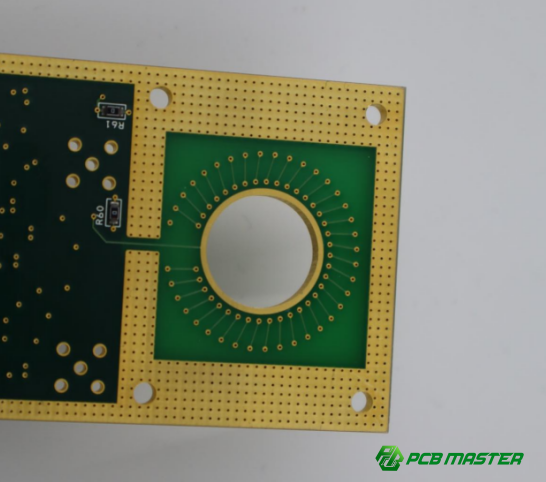
How does M4 material support large-scale adoption of 25G/50G data center PCBs?
M4 material enables stable, cost-efficient, and manufacturable PCB performance for 25G/50G data center systems by balancing electrical loss control, process stability, and production scalability.
M4 is widely used as a baseline high-speed PCB material for data center infrastructure, especially where 25G and 50G SerDes links dominate. Its key value is not extreme performance, but high manufacturing yield and predictable signal behavior at scale, which is essential for mass production systems like servers and switches.
What are the material system and performance characteristics of M4?
M4 is built on a modified epoxy resin system with stable glass fiber reinforcement, designed to support moderate-loss high-speed signal transmission up to 50G.
- Modified epoxy resin system (balanced electrical + cost performance)
M4 uses an improved epoxy resin formulation that reduces signal loss compared to traditional FR-4.
- Lower dielectric variation improves signal consistency
- Cost remains manageable for large-scale production
Example: In 25G Ethernet server boards, M4 materials help maintain stable signal transmission without moving to high-cost low-loss laminates.
- Stable glass fiber weave structure (dimensional consistency)
The glass fiber reinforcement in M4 is optimized for uniform resin distribution.
- Reduces impedance fluctuation caused by uneven weave patterns
- Improves mechanical stability during lamination
Simple explanation: It is like using a tightly woven fabric so the PCB does not “stretch unevenly” under heat and pressure.
- Medium-loss control (suitable for 25G/50G SerDes)
M4 provides a balanced dielectric loss level that is sufficient for medium-high speed signals.
- Supports short to medium reach high-speed channels
- Not optimized for extreme 112G/224G environments
Example: Used in 50G switch interconnects where trace length is controlled and signal loss is still acceptable.
What are the typical application scenarios of M4 in data centers?
M4 is mainly used in mainstream data center hardware where 25G/50G speed is required but cost efficiency and mass production stability are more important than extreme performance.
- Switch backplanes (data routing infrastructure)
M4 is commonly used in network switch backplanes, where multiple high-speed ports connect internal routing fabrics.
- Supports stable 25G/50G data switching
- Ensures consistent impedance across long PCB traces
Example: Cloud data center Ethernet switches rely on M4-based backplanes for stable traffic distribution.
- General-purpose server motherboards
M4 is widely used in standard enterprise server boards.
- Balances performance and cost
- Supports CPU-to-memory and CPU-to-NIC communication
Example: Rack servers in enterprise data centers often use M4 laminates for PCIe and Ethernet connectivity.
- Mixed-signal systems (low + mid high-speed integration)
M4 supports systems combining analog, digital, and moderate-speed signals.
- Suitable for power management + communication hybrid boards
- Maintains stable grounding and signal separation
Example: A server power control board with both control signals and 25G data lines.
What are the key manufacturing process control points for M4?
M4 manufacturing focuses on impedance consistency, layer alignment accuracy, and baseline reliability such as CAF resistance and thermal stability.
- Impedance control consistency management
Impedance control ensures signals travel without reflection or distortion.
- Requires tight control of trace width and dielectric thickness
- Ensures predictable 50Ω or 100Ω differential impedance
Example: In 25G Ethernet lanes, impedance mismatch can cause bit errors; M4 process control ensures stable channel performance.
- Lamination alignment accuracy control
Multilayer PCBs require precise stacking during lamination.
- Misalignment leads to signal skew and via mismatch
- Controlled pressure and temperature cycles are critical
Simple explanation: It is like stacking many thin sheets of paper—if slightly off, the entire structure becomes unstable.
- Basic reliability (CAF and thermal stability)
M4 must meet long-term reliability requirements in data center environments.
- CAF (Conductive Anodic Filament) resistance prevents internal short circuits
- Thermal cycling stability ensures performance under continuous operation
Example: In 24/7 cloud servers, PCB materials must withstand continuous heat cycles without degradation or leakage paths forming.
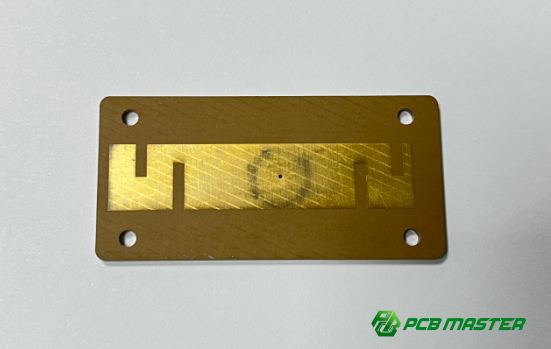
What key upgrades does M5 bring compared to M4 in high-speed PCB signal loss optimization?
M5 improves over M4 mainly by reducing high-frequency signal loss through smoother copper foil, lower-loss resin systems, and tighter manufacturing control, enabling more stable 25G–50G high-speed performance.
M5 is not a completely new generation material; it is a performance-optimized upgrade of M4, focused on improving signal integrity in higher-frequency environments. The goal is simple: less signal loss, cleaner eye diagrams, and more stable high-speed channels in dense PCB structures used in advanced communication systems.
What is the significance of introducing low-roughness RTF copper foil?
Low-roughness RTF copper foil reduces surface scattering loss and significantly improves high-frequency signal transmission quality.
- Reducing skin effect loss (key high-frequency improvement)
At high speeds like 25G–50G, current flows mostly on the copper surface instead of inside it. This is called the skin effect.
- Rough copper surface increases resistance
- Smooth copper reduces signal energy loss
M5 uses Reverse Treated Foil (RTF) with lower surface roughness to minimize this effect.
Example: In a 50G Ethernet backplane, smoother copper reduces signal attenuation over long trace distances, improving link stability.
- Improving high-frequency insertion loss (Insertion Loss)
Insertion loss is the total signal power lost along a transmission path.
- Rough copper increases scattering and signal reflection
- RTF copper improves signal “clean flow” along traces
Simple explanation: It is like comparing a rough road vs a smooth highway—the smoother surface allows faster and more stable “signal travel.”
Result: M5 PCBs show better eye diagram opening compared to M4 in high-speed channel testing.
How does resin system optimization improve performance in M5?
M5 improves signal integrity by using lower Df resin systems, which reduce energy loss and stabilize high-speed signal transmission.
- Lower Df material system (reduced dielectric loss)
Df (Dissipation Factor) measures how much signal energy is lost as heat inside the material.
- Lower Df = less signal attenuation
- More stable high-frequency transmission
M5 uses improved resin chemistry compared to M4, reducing dielectric loss in high-speed channels.
Example: In dense switch boards, lower Df helps maintain signal strength across multiple PCB layers.
- Improved signal integrity (SI) performance
Signal Integrity refers to how clean and undistorted a signal remains during transmission.
- Reduced reflection and distortion
- Better timing accuracy in high-speed digital systems
Simple explanation: If M4 is “clear enough,” M5 makes the signal “cleaner and more stable,” especially under 50G operation.
Result: Fewer bit errors in high-speed data transmission between network chips and modules.
What are the key manufacturing process adjustments in M5?
M5 requires tighter manufacturing control in etching, surface treatment, and impedance testing to ensure stable high-frequency performance.
- Improved inner-layer etching precision
Etching defines copper circuit patterns inside the PCB.
- Higher precision reduces line width variation
- Improves impedance consistency across layers
Example: In 50G signal routing, even small width deviations can affect impedance matching, leading to signal reflection.
- Optimized brown oxidation process (preventing over-etching)
Brown oxide (or oxidation treatment) improves copper adhesion during lamination.
- Over-etching can damage low-roughness copper foil
- M5 process carefully controls chemical strength and exposure time
Simple explanation: It is like cleaning a delicate surface—you must avoid scratching while improving bonding strength.
- Upgraded high-frequency impedance testing
M5 requires more accurate impedance measurement methods.
- Higher test frequency for better simulation of real operation
- Detects small variations that affect 25G–50G signals
Example: Ensures each PCB batch maintains consistent 100Ω differential impedance for high-speed channels.
What are the typical application boundaries of M5 materials?
M5 is mainly used in 25G–50G high-speed backplanes and communication systems requiring higher reliability and better signal integrity than M4.
- 25G–50G high-speed backplanes (core application)
M5 is widely used in network switching and routing backplanes.
- Supports stable medium-high speed data transfer
- Better performance than M4 in long trace routing
Example: Enterprise and hyperscale data center switches using 50G interconnects often adopt M5 laminates for improved signal quality.
- High-reliability communication equipment
M5 is also used in telecom and industrial-grade systems.
- Better thermal and signal stability
- Suitable for long operational lifetimes
Example: 5G base station backhaul boards rely on M5 materials to ensure continuous 24/7 operation without signal degradation.
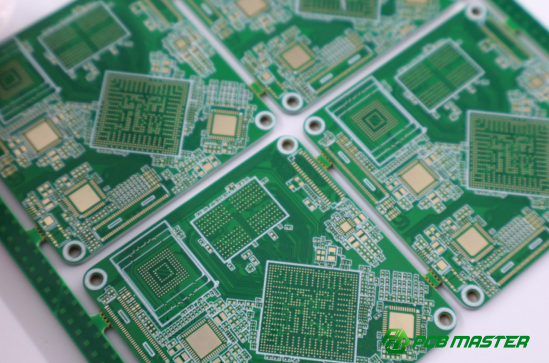
Why has M6 become the mainstream material for 112G AI server high-speed PCBs?
M6 becomes the mainstream choice for 112G AI server PCBs because it significantly reduces signal loss through ultra-low-loss resin systems and smooth copper foils, while still maintaining manufacturability at scale for complex multilayer AI boards.
M6 sits at a critical turning point in the M4–M9 material evolution roadmap. It is the first material level widely optimized for 112G SerDes high-speed interconnects, where signal integrity is extremely sensitive to even small material imperfections. Compared with M4 and M5, M6 focuses on ultra-low dielectric loss, copper interface control, and tighter manufacturing precision, making it the backbone material for modern AI infrastructure.
What is the role of low-loss resin systems (hydrocarbon / acenaphthene-based) in M6?
Low-loss resin systems in M6 reduce dielectric energy loss and improve signal attenuation control in 112G high-speed channels.
- Significant reduction of Df value (dielectric loss factor)
Df (Dissipation Factor) measures how much signal energy is lost as heat inside the PCB material.
- M6 uses hydrocarbon and acenaphthene-based resin systems
- These materials have much lower polarization loss compared to epoxy systems
Result:
- Lower Df = less signal attenuation over long traces
- More stable high-speed transmission at 112G data rates
Example: In AI server backplanes, M6 reduces signal weakening across long PCB routing between GPU clusters.
- Improved signal attenuation control in high-speed channels
At 112G speeds, even small energy losses cause waveform distortion.
- M6 resin stabilizes dielectric behavior across frequency ranges
- Reduces jitter and improves eye diagram opening
Simple explanation: It is like sending a message through a clearer pipe—less energy is absorbed by the material, so the signal arrives stronger and cleaner.
Practical impact: Better bit error rate (BER) performance in AI switching and compute interconnects.
How do low-roughness copper foils improve signal integrity in M6?
HVLP (Very Low Profile) copper foils reduce surface scattering loss and significantly improve 112G SerDes signal stability.
- HVLP copper reduces surface scattering loss
At high frequency, current flows mainly on the surface of copper (skin effect).
- Rough copper increases resistance and scattering
- HVLP copper has smoother surface profile
Result:
- Reduced conductor loss
- Lower insertion loss in high-speed channels
Example: Compared to M4/M5 copper, M6 HVLP copper provides smoother signal transmission in dense AI routing layers.
- Improved stability of 112G SerDes links
SerDes (Serializer/Deserializer) links are extremely sensitive to noise and loss.
- M6 reduces impedance variation caused by copper surface irregularity
- Ensures consistent signal timing and amplitude
Simple explanation: If the signal is a high-speed train, HVLP copper is the perfectly smooth rail track that prevents vibration and delay.
Practical outcome: Stable 112G connections between GPU, CPU, and high-speed switch chips in AI servers.
What are the extreme manufacturing precision requirements of M6?
M6 requires much tighter control in lamination, drilling, and stack-up consistency because even small deviations can affect 112G signal integrity and yield rates.
- Tighter control of lamination expansion and shrinkage
Multilayer AI server PCBs often exceed 18–30 layers.
- Resin flow behavior becomes harder to control
- Thermal expansion mismatch must be minimized
Result:
- Precise alignment between layers
- Reduced signal skew and impedance mismatch
Example: A slight misalignment in a 24-layer AI board can degrade high-speed differential pairs, causing signal failure at 112G speeds.
- Narrower drilling process window
M6 materials contain advanced fillers and low-loss resins.
lHarder and more abrasive to drill
lDrill wear increases significantly
Required adjustments:
lOptimized drill speed and feed rate
lReduced stack height per drilling cycle
Simple explanation: Drilling M6 is like drilling hardened composite material—tool control must be extremely precise to avoid damage.
3. Stack-up consistency directly impacts yield
In M6 boards, electrical performance depends heavily on layer uniformity.
lThickness variation affects impedance control
lSmall deviations reduce production yield
Example: In AI accelerator boards, inconsistent dielectric thickness can cause channel mismatch between identical signal paths.
What are the typical applications of M6 in AI servers?
M6 is mainly used in GPU/CPU high-speed interconnect boards and AI accelerator or switch backplanes where 112G signal integrity is critical.
1. GPU/CPU high-speed interconnect motherboards
M6 is widely used in AI compute motherboards connecting CPUs and GPUs.
lSupports PCIe Gen5/Gen6 and high-speed SerDes links
lEnsures low-loss communication between compute units
Example: In AI training servers, M6 helps maintain stable data exchange between multiple GPUs during parallel processing workloads.
2. AI accelerator cards and switch backplanes
M6 is also used in high-density AI accelerator modules and network switching systems.
lSupports high bandwidth data routing
lReduces signal degradation in dense layouts
Example: In AI inference clusters, M6-based switch backplanes ensure consistent 112G data flow between multiple compute nodes.
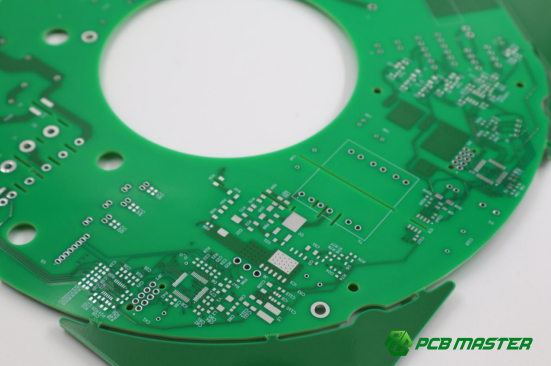
Where does M7 improve and complement M6 in high-performance PCB materials?
M7 improves over M6 by enhancing dielectric stability, thermal-mechanical balance, and signal consistency, making it more suitable for wideband, high-precision, and mixed high-speed AI applications.
M7 is not a replacement for M6, but a performance-stability optimization layer in the M-series roadmap. While M6 focuses on enabling 112G signal transmission, M7 focuses on making signal behavior more stable across temperature changes, frequency ranges, and long-term operation, which is critical for advanced AI and RF-hybrid systems.
What are the structural characteristics of the M7 material system?
M7 uses PPO-modified or hydrocarbon hybrid resin systems to improve dielectric stability (Dk/Df consistency) under high-speed operating conditions.
1. PPO-modified or hydrocarbon hybrid resin system
M7 combines PPO (Polyphenylene Oxide) modification with hydrocarbon resin systems to improve material balance.
lPPO improves thermal resistance and rigidity
lHydrocarbon resins reduce dielectric loss
Result:
lBetter balance between low loss and mechanical strength
lMore stable performance in high-frequency environments
Example: In AI networking hardware, M7 reduces signal drift in long-duration high-load operation compared to M6.
2. Enhanced Dk/Df stability (dielectric consistency)
Dk (dielectric constant) and Df (loss factor) stability means the material behaves consistently under different conditions.
lLess variation under heat and humidity
lMore predictable signal propagation speed
Simple explanation: It is like using a road where the surface never changes, so the signal “speed” stays the same everywhere.
Practical benefit: Improved reliability in 112G+ systems where timing accuracy is critical.
How does filler engineering improve thermal and mechanical performance in M7?
M7 uses spherical silica fillers to optimize CTE (thermal expansion) and improve structural rigidity and dimensional stability.
1. Spherical silica for CTE control
CTE (Coefficient of Thermal Expansion) measures how much a material expands when heated.
lM7 uses spherical silicon dioxide (SiO₂) fillers
lThese fillers reduce expansion mismatch between layers
Result:
lLower stress during heating and cooling cycles
lImproved reliability in multilayer PCB stacks
Example: In 24–32 layer AI boards, controlled CTE prevents layer misalignment during thermal cycling.
2. Improved rigidity and dimensional stability
Fillers also strengthen the physical structure of the PCB material.
lReduces warping during lamination
lImproves flatness during high-layer stacking
Simple explanation: It is like adding tiny “support balls” inside the material to keep it from bending or shrinking unevenly.
Practical outcome: Higher yield rates in precision multilayer PCB manufacturing for AI systems.
What are the advantages of M7 in high-speed wideband applications?
M7 provides better phase stability and signal consistency across wide frequency ranges, making it suitable for precision high-speed and mixed-signal systems.
1. Improved phase stability
Phase stability means the signal maintains correct timing relationships across different frequencies.
lReduces timing skew in high-speed channels
lEnsures synchronized data transmission
Example: In AI clusters, stable phase ensures multiple GPUs can process data in sync without timing errors.
2. Better high-frequency signal consistency
Signal consistency refers to uniform behavior of signals across different paths and frequencies.
lLess distortion in wideband transmission
lMore reliable high-speed data integrity
Simple explanation: All signals “behave the same way,” even when frequencies change or paths become longer.
Practical benefit: Critical for systems combining 112G digital signals and RF-like high-frequency components.
What are the manufacturing challenges and process requirements of M7?
M7 introduces higher manufacturing difficulty due to increased tool wear, narrower process windows, and more complex dimensional compensation requirements.
1. Increased drill wear (abrasive filler impact)
M7 contains harder filler materials like silica.
lDrill bits wear out faster
lRequires more frequent tool replacement
Result:
lHigher manufacturing cost
lNeed for optimized drilling parameters
Example: Compared to M6, drill lifespan can decrease significantly in high-layer M7 boards.
2. Narrower desmear (resin removal) process window
Desmear removes resin residue inside drilled holes.
lM7 resin is more chemically stable
lHarder to remove cleanly
Required adjustment:
lPrecise chemical concentration control
lStrict timing of plasma or chemical etching
Simple explanation: Cleaning inside holes becomes more difficult and must be carefully controlled.
3. More complex shrinkage prediction and compensation
M7 materials behave differently under heat and pressure.
lMore difficult to predict dimensional changes
lRequires advanced simulation and compensation models
Example: In multilayer AI boards, slight shrinkage variation can misalign via connections and degrade signal performance.
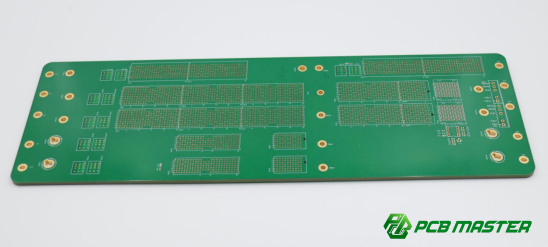
How do M8 and M9 drive 224G and ultra-low-loss PCB technology into the extreme-performance era?
M8 and M9 materials push PCB technology toward extreme low-loss and high-frequency stability by combining advanced resin systems, ultra-smooth copper foils, and precision manufacturing processes required for 224G AI interconnects.
M8 and M9 represent the final-stage evolution in the M-series PCB material roadmap, designed for 224G SerDes and beyond. At this level, performance is no longer just about reducing loss—it becomes about controlling every microscopic interaction between signal, copper, resin, and glass structure to ensure system-level stability in AI-scale computing.
What is the design logic of M8 hybrid resin systems?
M8 uses a balanced PPO and hydrocarbon hybrid resin system combined with high filler loading to improve thermal stability and support transition to 112G+ applications.
1. PPO/hydrocarbon hybrid ratio design (about 2:1 balance)
M8 uses a controlled blend of PPO (Polyphenylene Oxide) and hydrocarbon resin.
lPPO increases heat resistance and mechanical strength
lHydrocarbon resin reduces dielectric loss (Df)
Result:
lBalanced electrical + thermal performance
lStable operation under high-speed stress
Example: In advanced AI server backplanes, M8 ensures stable performance during long-duration 112G data processing workloads.
2. High filler system improves thermal stability
M8 incorporates a high filler content design (e.g., silica-based particles).
lReduces thermal expansion mismatch
lImproves dimensional stability during lamination
Simple explanation: Fillers act like internal “anchors” that stop the material from expanding or shrinking too much when heated.
Practical benefit: Higher reliability in multilayer PCB stacks used in AI infrastructure.
3. Positioned as a transition material for late 112G systems
M8 is not the final performance limit but a bridge material toward 224G technology.
lSupports advanced 112G designs
lPrepares structure for ultra-low-loss 224G systems
Example: Used in high-end AI accelerator platforms where 112G is still dominant but next-gen upgrades are expected.
What is the extreme-performance design direction of M9 materials?
M9 is designed for ultra-low-loss 224G systems using reversed resin ratios, ultra-smooth copper foils, and advanced glass fiber structures.
1. Reversed resin ratio (hydrocarbon/ PPO ≈ 2:1)
M9 flips the M8 balance to prioritize electrical performance.
lHydrocarbon resin becomes dominant (lower loss)
lPPO is used for structural reinforcement
Result:
lExtremely low dielectric loss (Df)
lOptimized for 224G signal transmission
Example: In next-gen AI switch fabrics, M9 supports ultra-high bandwidth interconnects with minimal attenuation.
2. HVLP 4 ultra-low profile copper foil
M9 uses HVLP 4 (Very High Level Profile 4) copper foil, which is extremely smooth.
lMinimizes surface scattering loss
lReduces skin effect resistance at high frequency
Simple explanation: The copper surface becomes almost mirror-like, allowing signals to travel with minimal disturbance.
Practical impact: Essential for maintaining clean eye diagrams at 224G speeds.
3. ODK glass fiber or quartz fabric structure
M9 introduces advanced reinforcement materials like ODK glass or quartz cloth.
lExtremely stable dielectric behavior
lVery low signal distortion across frequency ranges
Example: Used in ultra-high-speed AI interconnect boards where signal timing precision is critical at sub-nanosecond levels.
How does M9 meet 224G signal integrity requirements?
M9 ensures 224G signal integrity through ultra-low insertion loss, wideband phase stability, and system-level signal consistency.
1. Ultra-low insertion loss control
Insertion loss is the reduction of signal strength during transmission.
lM9 minimizes dielectric and conductor losses
lEnables long-distance 224G signal routing
Example: In AI data centers, M9 helps maintain signal strength across long backplane routes between compute nodes.
2. Wideband phase stability
Phase stability ensures signals maintain correct timing across frequencies.
lPrevents waveform distortion
lMaintains synchronization in high-speed systems
Simple explanation: Signals arrive “in sync,” even at extremely high speeds like 224G.
3. System-level signal consistency
At 224G, individual trace quality is not enough—entire system consistency matters.
lAll channels must behave uniformly
lMinimizes jitter and timing mismatch
Example: In AI training clusters, consistent signaling ensures multiple GPUs work together without communication delays.
What advanced manufacturing technologies are required for M9?
M9 requires mSAP fine-line patterning, semi-additive processes, and semiconductor-grade cleanroom manufacturing to achieve extreme precision.
1. mSAP ultra-fine line technology (≤10μm)
mSAP (modified Semi-Additive Process) enables extremely fine circuit patterns.
lLine width/spacing can go below 10 microns
lEssential for 224G high-density routing
Example: Used in AI accelerator boards where space is extremely limited but bandwidth demand is extremely high.
2. Semi-additive process integration
Semi-additive manufacturing allows precise copper pattern formation.
lReduces etching variability
lImproves line edge quality
Simple explanation: Instead of carving copper away, circuits are “built up” for higher precision.
3. Semiconductor-grade clean manufacturing environment
M9 requires extremely clean production conditions.
lPrevents micro-contamination defects
lImproves yield in ultra-fine circuits
Example: Similar to semiconductor fabs, where even tiny particles can cause signal failure in high-speed PCB layers.
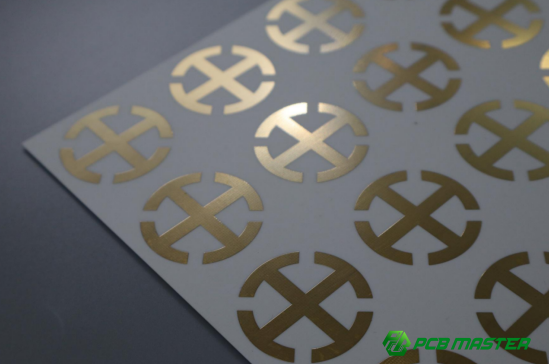
Why has PCB manufacturing evolved from “process control” to “precision engineering” from M4 to M9?
From M4 to M9, PCB manufacturing shifts from basic process control to precision engineering because higher-speed signals (up to 224G) require extremely tight control over layer alignment, impedance, and material behavior at microscopic levels.
In M4-era production, PCB manufacturing focused mainly on yield and basic electrical compliance. However, in M6–M9 systems used for AI servers, even micron-level deviations can cause signal failure, making manufacturing a precision-driven engineering discipline similar to semiconductor fabrication.
Why does lamination and stack-up accuracy become exponentially more difficult?
Because increasing layer counts (18–44 layers) and different resin behaviors amplify small alignment errors and increase deformation risk during lamination.
1. Multi-layer structure error amplification (18–44 layers)
In high-end AI server PCBs, layer counts can reach 44 layers.
lEach layer adds small alignment tolerance
lThese small errors accumulate across the stack
Result:
lSignal misalignment in high-speed differential pairs
lIncreased risk of impedance mismatch
Example: In a 32-layer AI accelerator board, even a 10–20 micron misalignment can degrade 112G signal integrity.
2. Resin flow differences increase deformation risk
Different M-series materials (M4 to M9) have different resin viscosities.
lLow-loss resins flow differently during lamination
lUneven flow causes warping or thickness variation
Simple explanation: It is like baking a layered cake where each layer expands differently under heat, causing uneven structure.
Result: Reduced dimensional stability and lower production yield.
What are the challenges in mechanical drilling and tool life?
High filler materials in advanced PCB laminates cause rapid drill wear and make it difficult to maintain consistent hole quality.
1. Drill wear increases due to high filler content
M6–M9 materials contain silica and advanced fillers.
lThese materials are harder than traditional epoxy systems
lThey accelerate drill bit wear
Result:
lShorter tool lifespan
lMore frequent tool replacement
lHigher manufacturing cost
Example: Compared to M4, M8 drilling cycles may require significantly more frequent drill maintenance in AI server production lines.
2. Difficulty in maintaining consistent hole wall quality
High-speed PCBs require perfectly smooth vias for signal integrity.
lUneven drilling causes rough hole walls
lRough vias increase signal reflection and loss
Simple explanation : If a tunnel wall is uneven, the signal “bounces” instead of flowing smoothly.
Result: Reduced reliability in high-speed interconnects like 112G/224G SerDes links.
Why does impedance and line precision control become more critical?
Because higher data rates require tighter impedance tolerance and ultra-fine line width control enabled by mSAP technology.
1. Narrower impedance tolerance at high frequencies
At 112G–224G speeds:
lEven small impedance deviation causes signal reflection
lTolerance windows become extremely tight (e.g., ±5% or less)
Example: In AI switch boards, impedance mismatch can lead to eye diagram collapse and increased bit error rates.
2. mSAP enables micron-level line width control
mSAP (Modified Semi-Additive Process) is used for ultra-fine PCB patterns.
lEnables line widths below 10 microns
lImproves routing density for AI chips
Simple explanation: Instead of carving thick copper traces, circuits are “grown” layer by layer for extreme precision.
Result: Essential for 224G signal routing in compact AI accelerator boards.
Why do environmental and cleanliness requirements increase?
Because microscopic contamination can disrupt high-frequency signals, requiring semiconductor-level cleanroom manufacturing conditions.
1. Micro-particle contamination affects signal integrity
At ultra-high frequencies:
lEven tiny dust particles can affect impedance
lContamination causes signal reflection or leakage
Example: A microscopic particle trapped in a via can distort 224G signal transmission.
2. Trend toward semiconductor-grade manufacturing environments
Advanced M8/M9 production increasingly adopts:
lClass-level cleanrooms similar to semiconductor fabs
lStrict particle control and humidity regulation
Simple explanation: PCB manufacturing is becoming as clean and controlled as chip manufacturing.
Result: Higher yield, better consistency, and improved long-term reliability for AI server boards.
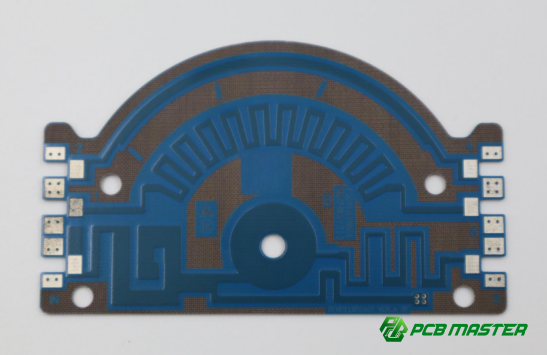
Core technical comparison of M4 to M9 PCB materials (quick difference overview)
M4 to M9 differ in dielectric loss, copper roughness, thermal stability, and supported signal rate, forming a stepwise evolution from 25G to 224G AI server interconnects.
The M-series represents a progressive high-speed PCB material roadmap, where each generation reduces signal loss and improves manufacturing precision. The key shift is from “good enough for networking” to “precision-engineered for AI-scale interconnects.”
What are the key comparison dimensions of M4 to M9 materials?
The key dimensions are Dk/Df performance, copper roughness, thermal expansion control (CTE), and supported signal speed.
Core performance evolution (M4 → M9)
| Dimension | M4 | M5 | M6 | M7 | M8 | M9 |
| Dk / Df trend | Medium loss | Lower loss | Low loss | Stable low loss | Ultra-low loss | Extreme ultra-low loss |
| Copper roughness | Standard treated foil | RTF copper | HVLP copper | HVLP improved | HVLP+ low profile | HVLP4 ultra-smooth |
| CTE (thermal stability) | Basic control | Improved | Tight control | Stabilized | High stability | Extreme stability |
| Signal speed support | 25G–50G | 50G | 112G | 112G stable | 112G → 224G transition | Full 224G |
1. Dk / Df evolution trend (dielectric performance)
Df reduction is the core driver of high-speed evolution.
lLower Df = less energy loss in resin
lCritical for 112G+ signal integrity
Example: M9 significantly reduces dielectric loss to support 224G AI interconnects with minimal signal distortion.
2. Copper roughness evolution (skin effect control)
Copper surface roughness directly affects high-frequency loss.
lRough surface → more scattering loss
lSmooth surface → cleaner signal transmission
Example: HVLP4 copper in M9 behaves like a “mirror surface” for electrical signals, reducing insertion loss in AI switch backplanes.
3. Thermal-mechanical stability (CTE control)
CTE determines how materials expand under heat.
lLower CTE = better multilayer alignment
lCritical for 18–44 layer AI server PCBs
Example: M8/M9 use advanced fillers to prevent misalignment during thermal cycling in high-power AI systems.
4. Supported signal speed scaling
Signal speed capability defines application boundaries.
Trend:
lM4 → 25G–50G (data centers)
lM5 → optimized 50G
lM6/M7 → 112G mainstream AI
lM8 → 112G → 224G transition
lM9 → full 224G systems
How are M4 to M9 materials classified by capability level?
Each material level corresponds to a specific role in the high-speed PCB ecosystem, from mass production base materials to extreme-performance AI interconnect systems.
Capability positioning of M4–M9
| Material | Capability role | Key focus | Typical application |
| M4 | Base scalable material | Cost + manufacturability | Standard servers, switches |
| M5 | Low-loss upgrade | Copper + dielectric improvement | 50G networking systems |
| M6 | 112G mainstream material | Ultra-low loss + HVLP copper | AI GPU/CPU interconnect boards |
| M7 | Stability optimized material | Phase + thermal stability | Long-duration AI workloads |
| M8 | Transition high-performance material | Hybrid resin + high filler | Early 224G-ready systems |
| M9 | Extreme-performance material | Ultra-low loss + mSAP compatibility | 224G AI supercomputing |
Key interpretation (simple engineering view)
lM4–M5 = scalable networking era
lM6–M7 = AI 112G mainstream era
lM8–M9 = 224G + extreme-performance era
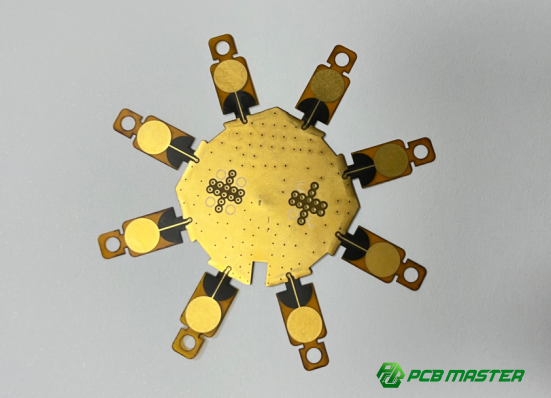
What are the future development trends of M4 to M9 materials in AI server high-speed PCBs?
The future of M4 to M9 materials is driven by higher SerDes speeds (224G/448G), tighter material interface control, advanced packaging integration, and semiconductor-level PCB manufacturing precision.
As AI computing continues to scale, PCB materials are no longer only about reducing loss. They are evolving into system-level enablers for ultra-high-speed interconnects, where electrical, mechanical, and manufacturing boundaries are all pushed to their limits.
How do 224G/448G SerDes drive further material extreme optimization?
Higher SerDes speeds force materials to achieve even lower dielectric loss (Df) and more precise copper–resin interface control to maintain signal integrity.
1. Continuous reduction of Df (dielectric loss factor)
As signal speeds increase from 112G → 224G → 448G:
lSignal frequency becomes higher
lEnergy loss in materials becomes more critical
lDf requirements continue to decrease
Result:
lM8/M9 materials must evolve toward ultra-ultra-low loss resin systems
lEven small dielectric fluctuations can cause signal failure
Example: In 224G AI switch backplanes, small increases in Df can close eye diagrams and reduce data reliability.
2. Increasing importance of copper–resin interface engineering
At extreme high frequencies, the interface between copper and resin becomes a key loss source.
lSignal scattering occurs at material boundaries
lAdhesion quality directly affects insertion loss
Simple explanation: It is like a road where not only the surface matters, but also how tightly the road layers are bonded underneath.
Trend: Future M9+ materials will focus heavily on interface smoothing and bonding control to reduce high-frequency losses.
Why is PCB evolving toward packaging integration and Chiplet architecture?
PCB is evolving from a standalone board into a system-level interconnect platform that works closely with advanced packaging and Chiplet technology.
1. Chiplet and advanced packaging collaboration
Modern AI systems use Chiplet-based architecture, where multiple small chips work together.
lRequires ultra-high-speed interconnect between chips
lPCB must support packaging-level signal density
Example: AI processors in data centers connect multiple compute Chiplets using high-bandwidth interconnects requiring M8/M9-class materials.
2. PCB evolving into system-level substrates
Traditional PCB is no longer just a carrier board.
lIt now acts as a system integration platform
lMust support power, signal, and high-speed interconnect simultaneously
Simple explanation: PCB is becoming more like a “system foundation layer” rather than just wiring.
Result: Future M-series materials must support both PCB-level and package-level performance requirements.
Why is PCB manufacturing moving closer to semiconductor processes?
Because ultra-high-speed signals require cleaner environments and much higher patterning precision, similar to semiconductor fabrication standards.
1. Higher cleanliness requirements (semiconductor-grade environment)
At 224G/448G speeds:
lEven microscopic particles can affect signal quality
lContamination leads to impedance variation and defects
Example: A tiny dust particle in a via can disrupt high-speed signal transmission in AI server boards.
Trend: PCB fabs are increasingly adopting cleanroom standards similar to semiconductor fabs.
2. Higher precision pattern control (mSAP evolution)
Advanced manufacturing requires extremely fine circuit patterns.
lmSAP enables line widths below 10 microns
lEssential for dense routing in AI systems
Simple explanation: Instead of carving thick copper paths, circuits are built with “microscopic precision drawing.”
Result: Supports ultra-dense routing needed for 224G and future 448G interconnect designs.
Conclusion
As AI computing continues to push toward 224G and even 448G interconnect speeds, PCB materials are no longer just passive substrates—they have become critical enablers of system performance, signal integrity, and long-term reliability. From M4 to M9, each generation reflects a deeper level of engineering precision, where improvements in dielectric loss, copper interface control, and manufacturing accuracy directly determine the limits of next-generation AI infrastructure.
At this stage, success is no longer defined by material selection alone, but by the ability to integrate advanced materials with highly controlled manufacturing processes and system-level design understanding. As a result, collaboration between material innovation and precision fabrication has become the key to unlocking scalable high-speed computing.
In this evolving landscape, experienced manufacturing partners play a decisive role. PCBMASTER, as a seasoned PCB and PCBA supplier , supports customers in translating advanced material requirements into stable, high-yield production solutions for complex AI server and high-speed interconnect applications. By combining engineering expertise with manufacturing discipline, it helps bridge the gap between next-generation material capabilities and real-world system performance.
Ultimately, the future of high-speed PCB development will be shaped by how effectively materials, design, and manufacturing converge into a unified engineering ecosystem.
FAQs
What is the most fundamental difference between M4 and M6?
The core difference lies in loss control capability and supported signal speed levels (50G vs 112G).
M4 is designed for cost-efficient 25G–50G data center applications, where moderate signal loss is acceptable. In contrast, M6 is engineered for low-loss 112G AI server interconnects, where signal integrity becomes highly sensitive to dielectric and conductor losses. The key upgrade is a significant reduction in Df and copper roughness, enabling much higher transmission performance.
Why does copper foil roughness affect high-speed signals?
Because surface roughness increases skin effect losses, which directly increases high-frequency signal attenuation.
At high frequencies, electrical current flows mainly on the surface of the copper (skin effect). If the copper surface is rough, the signal path becomes longer and more irregular, causing:
lHigher resistance
lIncreased signal scattering
lGreater insertion loss
In simple terms: a rough copper surface “slows down and weakens” high-speed signals, especially in 112G/224G PCB designs.
Why can’t M7 fully replace M6?
Because M7 focuses on stability improvement rather than being a full performance upgrade over M6.
M6 is optimized for low-loss 112G signal transmission, while M7 is designed to enhance:
lDk/Df stability consistency
lThermal-mechanical reliability
lPhase stability in wideband applications
In practice, M7 is used as a specialized optimization material, not a direct performance successor to M6. Therefore, both materials coexist depending on application requirements.
Is M9 already in mass production?
M9 is not yet in large-scale mass production and remains in high-end early adoption stages due to cost and yield constraints.
M9 is designed for 224G AI server and ultra-high-speed interconnect systems, but it faces challenges such as:
lExtremely tight manufacturing tolerances
lHigher material cost
lLower initial production yield
As a result, M9 is currently used mainly in advanced AI computing platforms and pilot-scale deployments, rather than fully scaled commercial production.
What direction will M10 likely evolve toward in the future?
M10 is expected to focus on ultra-low loss materials, deeper integration with advanced packaging, and support for even higher frequencies beyond 224G.
Future trends likely include:
lFurther reduction in dielectric loss (Df)
lStronger PCB–package co-design (Chiplet integration)
lSupport for >224G / potential 448G+ signaling
lMore semiconductor-like manufacturing precision
In simple terms: M10 will push PCB materials closer to system-level semiconductor interconnect technology, rather than traditional circuit board design.
About the Author

Carol Luo
PCB Design EngineerI'm Carol, a PCB Engineer at PCBMASTER with experience in PCB design and manufacturing engineering since 2018. I focus on translating engineering requirements into reliable PCB solutions, with expertise in stack-up design, material selection, and design-for-manufacturing (DFM). I share practical engineering insights from real-world PCB design and production experience.
Visit Carol Luo's Profile