








AI PCB Designer: How Artificial Intelligence is Revolutionizing PCB Design
PCBMASTER has been a trusted provider of high-quality printed circuit boards (PCBs) and PCB assemblies for years, serving engineers and designers across a wide range of industries. Our experience ensures that every board meets strict standards for reliability, performance, and manufacturability. As technology evolves, so does the way PCBs are designed, and artificial intelligence (AI) is now transforming the entire PCB design process.
AI PCB designer tools use advanced algorithms to automate complex tasks such as component placement, routing, and error checking. This AI-driven PCB design approach reduces human errors, speeds up development, and optimizes designs for efficiency and manufacturability. Designers no longer need to manually test every layout; AI can simulate and improve designs automatically, making PCB production faster and more reliable.
The purpose of this article is to introduce engineers and designers to AI-assisted PCB design methods and tools. We will explain how AI can improve layout efficiency, reduce costs, and enhance design accuracy. Using clear examples and practical steps, this guide shows how PCB automation can streamline workflows and support modern electronics development. By understanding AI PCB designers, you can leverage these tools to create high-performance boards faster and smarter.
What Is an AI PCB Designer and How Does It Work?
An AI PCB designer is a software tool that uses artificial intelligence to automate PCB layout tasks such as component placement, routing, and signal integrity optimization. It helps engineers design boards faster, more accurately, and with fewer errors than traditional CAD methods.
Definition and Core Functions of an AI PCB Designer
AI PCB designers assist engineers by automating several key tasks:
- Component Placement: Automatically positions components to minimize space, reduce interference, and improve thermal performance.
- Routing: Connects components with copper traces in the most efficient layout, saving time and materials.
- Signal Integrity Optimization: Ensures electrical signals travel correctly without interference or delay.
Comparison to Traditional CAD:
| Feature / Aspect | Traditional CAD | AI-Driven PCB Design |
| Design Approach | Relies heavily on manual input and designer experience | Uses AI algorithms to predict optimal layouts automatically |
| Trial-and-Error | High; designers often test multiple layouts manually | Reduced; AI suggests efficient layouts with minimal iterations |
| Speed | Slow; routing complex multi-layer boards can take days | Fast; AI can generate optimized layouts in hours |
| Error Handling | Depends on human skill; errors are common | Minimizes errors through automated checking and intelligent suggestions |
| Optimization | Limited; relies on designer’s expertise | High; AI optimizes placement, routing, and signal integrity |
Key Technologies Behind AI PCB Design
AI PCB designers leverage advanced technologies to optimize PCB layouts:
- Machine Learning Algorithms: Analyze previous designs and predict the best layout for new boards. The system improves over time as it learns from past patterns.
- Neural Networks: Recognize patterns in schematics and suggest efficient placements or routing paths, similar to human visual pattern recognition.
- Automated Design Rule Checking (DRC): Automatically identifies violations of electrical and manufacturing rules, such as spacing errors or incorrect trace widths, preventing costly mistakes before production.
Benefits Over Conventional PCB Design Methods
Using AI PCB designers provides measurable advantages:
- Faster Design Process: AI can reduce weeks of manual work to hours.
- Higher Accuracy: Minimizes human errors that could lead to board failures.
- Optimized Layouts: Creates efficient designs that reduce material use and improve electrical performance.
Practical Example:
- For a complex 8-layer PCB, AI-assisted routing can cut routing time by up to 70%.
- AI ensures cleaner traces and fewer signal integrity issues compared to manual designs.
How Can AI PCB Designer Improve PCB Layout Efficiency?
AI PCB designers improve layout efficiency by automating component placement, optimizing routing paths, predicting errors, and providing simulation-based insights. This reduces manual work, minimizes design mistakes, and speeds up PCB development.
Automated Component Placement
AI optimizes component placement using step-by-step logic:
- Step 1: Analyze Circuit Schematic: AI reads the schematic and identifies connections between components.
- Step 2: Evaluate Constraints: It considers factors like spacing rules, thermal limits, and manufacturability.
- Step 3:Optimize Placement: Components are positioned to minimize trace lengths, reduce interference, and balance heat distribution.
- Step 4: Iterative Improvement: AI tests multiple arrangements and selects the most efficient layout automatically.
This automated approach saves hours of manual placement and ensures that high-density boards are both functional and manufacturable. For example, placing heat-sensitive components away from high-power traces prevents overheating and signal interference.
Intelligent Routing Algorithms
AI PCB designers use intelligent routing to connect components efficiently:
- Auto-Routing: AI generates optimal paths for traces based on connectivity and board rules.
- Adaptive Trace Widths: It adjusts trace widths automatically to handle current loads and maintain signal quality.
- Impedance Control: AI predicts and adjusts for signal impedance, preventing reflections or signal loss in high-speed circuits.
Compared to manual routing, this approach reduces errors, saves time, and ensures better performance for complex multi-layer PCBs.
Simulation and Error Prediction
AI tools simulate board performance before production:
- Electrical Issues: AI checks for short circuits, crosstalk, and potential signal integrity problems.
- Thermal Hotspots: It identifies areas that may overheat and suggests component adjustments.
- Real-Time Feedback: Designers can instantly see potential issues and correct them, reducing costly post-production fixes.
This predictive capability ensures that the PCB works correctly the first time, improving both reliability and manufacturing efficiency.
Real-World Case Example by PCBMASTER
At PCBMASTER, we applied AI PCB design for a multi-layer industrial control board:
- Challenge: Complex 6-layer board with high-density components and critical signal paths.
- AI Solution: Automated component placement and AI routing reduced trace length and optimized layer stacking.
- Result: Design time decreased by 60%, with improved thermal distribution and zero layout errors in production.
This demonstrates how AI PCB designers can streamline the design process while maintaining high-quality standards for demanding applications.
Which AI PCB Designer Tools Are Leading the Industry?
The leading AI PCB designer tools combine advanced automation, intelligent routing, and predictive analysis to streamline PCB design. Top software includes Altium Designer with AI features, Autodesk Fusion 360’s AI modules, and other specialized AI-driven PCB platforms.
Overview of Top AI PCB Design Software
- Altium Designer AI Features: Integrates machine learning for component placement and routing optimization. Offers predictive design rule checking and auto-simulation tools for high-density boards.
- Autodesk Fusion 360 with AI Modules: Provides AI-assisted PCB layout, automatic routing, and signal integrity checks. Suitable for mechanical-electrical co-design projects.
- Other Notable Tools: OrCAD AI modules, KiCAD with AI plugins, and Mentor Graphics’ AI-enhanced PCB tools. Each platform focuses on optimizing layout efficiency, reducing errors, and improving manufacturing readiness.
These tools allow engineers to reduce manual work while improving design quality, making them essential for modern AI-driven PCB design workflows.
Comparison of Features for Different PCB Complexity Levels
AI PCB designer tools vary depending on the project complexity:
| PCB Complexity Level | AI Features & Capabilities | Benefits / Purpose |
| Single-Layer PCBs | Basic auto-routing, component placement optimization | Minimizes trace lengths, ensures compliance with simple design rules |
| Multi-Layer PCBs | Advanced layer stacking optimization, high-speed signal path management, thermal management, complex routing | Reduces trial-and-error, improves efficiency and design reliability |
| High-Speed & IoT Boards | Impedance control, signal integrity analysis, crosstalk reduction, EMI simulation | Ensures reliable operation in sensitive electronics, prevents signal errorsr |
By matching the tool’s capabilities to PCB complexity, designers achieve faster turnaround and higher-quality designs.
How PCBMASTER Integrates AI Tools for Client Projects
At PCBMASTER, AI tools are integrated into our workflow to ensure high-quality PCB production:
- Step 1: Design Analysis: AI evaluates schematic and layout requirements, suggesting optimal component placement and routing.
- Step 2: Automated Optimization: AI tools adjust traces, layer stacking, and spacing to meet electrical and thermal standards.
- Step 3:Simulation and Verification: AI predicts potential issues, including signal integrity problems and thermal hotspots, before production.
- Step 4:Production-Ready Output: The final design is automatically converted into manufacturable Gerber files with minimal errors, reducing revisions and lead time.
This integration allows PCBMASTER to deliver efficient, reliable, and cost-effective PCB solutions for clients with complex and high-performance requirements.
What Are the Key Benefits of Using AI in PCB Design for Manufacturers?
AI in PCB design provides manufacturers with faster design cycles, reduced costs, higher accuracy, and scalability for complex projects. These benefits improve production efficiency and ensure high-quality PCBs for demanding applications.
Reduced Design Cycle Time
AI-assisted PCB design significantly shortens the time required to complete layouts.
- AI automates component placement and routing, tasks that traditionally take days or weeks.
- Design rule checks and simulations are performed automatically, eliminating manual review steps.
- Typical Improvement: For a 6-layer high-density PCB, AI can reduce the design cycle by 50–70%, allowing faster prototyping and market-ready production.
This acceleration helps manufacturers respond quickly to customer demands and reduces overall project timelines.
Cost Optimization
AI reduces manufacturing costs by minimizing errors and waste:
- Automatic verification prevents layout mistakes that could require expensive rework.
- Optimized component placement and trace routing reduce PCB material usage.
- Prototype errors are caught early during simulation, lowering the number of iterations required.
For example, using AI, a manufacturer producing high-volume IoT boards can reduce scrap and prototyping costs by up to 30%, improving overall project profitability.
Enhanced Design Accuracy and Reliability
AI improves design quality and board reliability:
- Signal integrity analysis and predictive checks reduce electrical failures, especially in high-density PCBs.
- AI automatically adjusts routing for impedance control and thermal distribution, reducing the risk of performance issues.
Case Example: At PCBMASTER, AI-assisted design of a multi-layer industrial board resulted in zero electrical failures during testing, compared to previous manual layouts with a 5% failure rate.
This ensures that PCBs perform reliably in demanding applications.
Scalability for Complex Projects
AI enables manufacturers to handle large-scale or complex projects efficiently:
- Multi-board systems and advanced electronics often require intricate routing and strict timing controls.
- AI can optimize multiple boards simultaneously, ensuring proper layer stacking, thermal management, and signal integrity.
- This scalability allows PCB manufacturers to take on high-complexity projects without increasing manual labor or design errors.
Using AI in complex PCB projects ensures consistent quality, faster delivery, and the ability to handle diverse electronic systems efficiently.
How Does AI PCB Design Ensure High-Quality PCB Production at PCBMASTER?
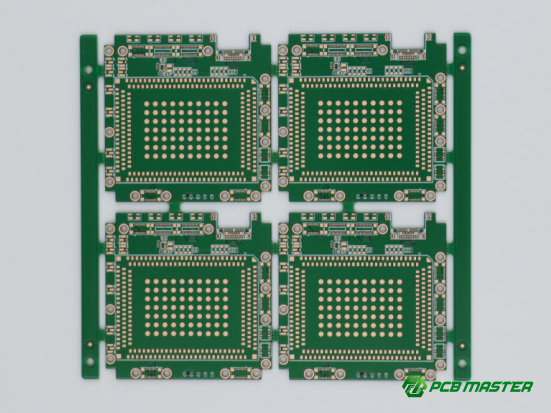
AI PCB design ensures high-quality PCB production at PCBMASTER by integrating design data with manufacturing processes, performing predictive quality checks, and enhancing overall customer satisfaction. These processes reduce errors, improve reliability, and speed up delivery.
Integration with Manufacturing Data
AI tools at PCBMASTER automatically convert designs into production-ready files:
- Gerber File Generation: AI produces precise Gerber files, which are the standard for PCB manufacturing, reducing human errors.
- Design-to-Production Accuracy: Automated checks verify layer alignment, trace widths, and drill patterns before sending files to the production line.
- Efficiency: By minimizing manual adjustments, AI ensures that designs move seamlessly from layout to manufacturing.
Example: A high-density multi-layer PCB for industrial control systems was processed with AI-generated Gerber files, resulting in zero errors during initial fabrication.
Quality Checks and Predictive Analysis
AI predicts potential manufacturing and performance issues before production:
- Crosstalk and Signal Integrity: AI identifies traces that may interfere with each other and adjusts layouts accordingly.
- Thermal Problems: Hotspots are detected and components are repositioned to improve heat distribution.
- Assembly Difficulties: AI analyzes component spacing and solder pad access, preventing assembly errors.
Example: During a high-speed PCB project, AI detected a potential thermal hotspot near a power regulator. The layout was adjusted, preventing overheating issues in the final product.
Enhancing Customer Satisfaction
AI improves delivery speed, reduces revisions, and ensures reliable end products:
- Faster Delivery: Automated processes shorten design-to-production time.
- Fewer Revisions: Predictive analysis prevents layout errors, reducing the need for corrections.
- High Reliability: Optimized PCB designs lead to fewer failures during testing and operation, improving customer confidence.
Case Study: A client ordering IoT boards from PCBMASTER received their first batch without requiring redesigns. AI-assisted layout and error prediction ensured the boards met performance specifications on the first try, leading to repeat business and strong client satisfaction.
What Challenges Should Designers Expect When Adopting AI PCB Tools?
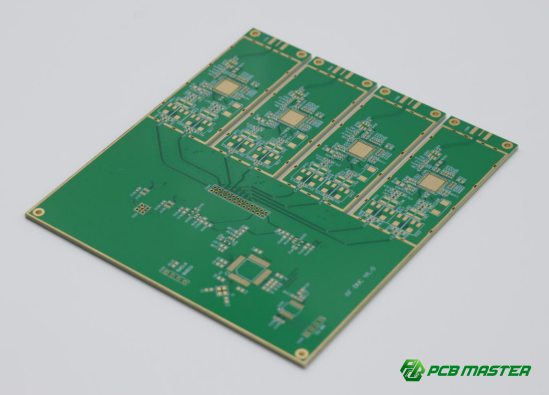
While AI PCB tools improve efficiency and accuracy, designers may face challenges such as a learning curve, workflow integration issues, AI limitations, and cost considerations. Understanding these challenges helps teams adopt AI effectively.
Learning Curve and Skill Requirements
Transitioning from traditional CAD to AI-assisted PCB design requires training and adaptation:
- Designers must understand how AI algorithms make routing and placement decisions.
- Learning to interpret AI suggestions and modify designs appropriately is critical.
- Example: An engineer accustomed to manual routing may initially rely too heavily on AI-generated layouts without checking signal integrity, requiring guidance and practice.
With proper training, the learning curve is manageable, and designers quickly gain proficiency in leveraging AI to improve efficiency.
Integration with Existing Workflows
AI tools must fit within established design and manufacturing processes:
- Some legacy CAD systems or company workflows may not fully support AI modules.
- Designers need to ensure compatibility with file formats, design rules, and manufacturing outputs.
- Example: PCBMASTER integrates AI-assisted routing into its existing Gerber workflow, ensuring AI designs are directly production-ready without disrupting the standard process.
Proper planning ensures AI complements rather than disrupts existing workflows.
Limitations of AI Decision-Making
AI does not replace human judgment entirely:
- Complex decisions, such as unusual high-speed routing or unique component layouts, may still require manual oversight.
- AI may not anticipate every design nuance, particularly in custom or experimental boards.
- Example: For a multi-layer RF board, engineers reviewed AI-generated layouts to adjust critical impedance traces manually, ensuring performance standards were met.
Human supervision ensures that AI recommendations enhance, rather than compromise, design quality.
Cost vs. Benefit Considerations
Adopting AI PCB tools requires balancing initial investment against long-term gains:
- Software licenses and training can be costly upfront.
- Long-term benefits include faster design cycles, reduced errors, and fewer prototypes.
- Example: A manufacturer investing in AI tools for high-volume IoT boards recovered costs within a year due to fewer redesigns and faster production times.
Understanding the return on investment (ROI) helps companies make informed decisions about adopting AI in PCB design.
Conclusion
AI is transforming PCB design by automating complex tasks like component placement, routing, and signal integrity analysis. These AI-driven PCB design tools reduce human errors, shorten design cycles, and optimize layouts for performance and manufacturability. Designers can now focus on innovation while AI handles repetitive and high-precision tasks, making PCB development faster, smarter, and more reliable.
At PCBMASTER , we leverage AI to deliver high-quality, production-ready PCBs efficiently. By integrating AI into our workflow, we ensure accurate Gerber file generation, predictive error analysis, and optimized layouts for both simple and complex boards. Our approach reduces revisions, minimizes material waste, and enhances thermal and electrical performance, ensuring that clients receive reliable PCBs on time and within budget.
For engineers and businesses looking to benefit from AI-assisted PCB design, PCBMASTER provides a trusted solution that combines advanced AI technology with decades of manufacturing expertise. Explore our AI-driven PCB services to streamline your design process, reduce costs, and bring high-performance electronic products to market faster.
FAQs About AI PCB Designer
Can AI PCB designers replace human PCB engineers completely?
No. AI PCB designers assist engineers by automating tasks like routing, placement, and error checking, but human oversight remains essential. Engineers handle complex design decisions, unusual layouts, and critical signal integrity considerations that AI alone cannot fully manage.
How secure is my design data when using AI PCB software?
Design data security depends on the software and workflow. Most professional AI PCB tools use encryption and secure cloud storage. At PCBMASTER, we follow strict data protection protocols to ensure client designs remain confidential throughout the design and production process.
Are AI PCB designers suitable for both prototypes and mass production?
Yes. AI PCB tools optimize layouts for both small-scale prototypes and high-volume production. They reduce errors, improve manufacturability, and generate production-ready files, making them effective for boards of any complexity or volume.
How much faster can AI tools make my PCB design process?
AI can reduce design time by 50–70% for complex multi-layer boards. Automated component placement, intelligent routing, and predictive error checking allow faster iteration and fewer revisions compared to traditional manual CAD workflows.
Does PCBMASTER provide AI-assisted PCB design services directly?
Yes. PCBMASTER integrates AI PCB design tools into our workflow to deliver accurate, production-ready PCBs. Our services combine AI efficiency with expert human oversight, ensuring high-quality, reliable boards for both prototypes and mass production.
About the Author

Carol Luo
PCB Design EngineerI'm Carol, a PCB Engineer at PCBMASTER with experience in PCB design and manufacturing engineering since 2018. I focus on translating engineering requirements into reliable PCB solutions, with expertise in stack-up design, material selection, and design-for-manufacturing (DFM). I share practical engineering insights from real-world PCB design and production experience.
Visit Carol Luo's Profile