








Rigid-Flex PCB Design Challenges: Top 3 Problems and Proven Solutions
Rigid-Flex PCBs combine the advantages of rigid and flexible circuits, enabling compact designs, improved reliability, reduced weight, and enhanced design flexibility. However, their complex structure introduces unique design and manufacturing challenges that can significantly impact product performance and reliability. The most critical issues typically involve bend area design , interlayer connection reliability , and material compatibility . By following industry best practices and collaborating with experienced manufacturers such as PCBMASTER , engineers can avoid costly redesigns, improve manufacturability, and ensure long-term product reliability in demanding applications such as automotive electronics, medical devices, industrial control systems, aerospace, and telecommunications.
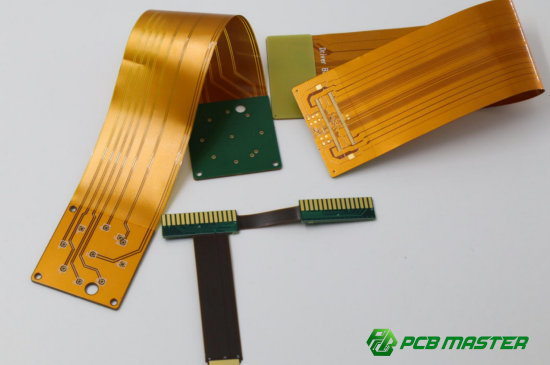
Why Rigid-Flex PCB Design Requires Special Attention
Unlike conventional rigid PCBs or flexible circuits, Rigid-Flex PCBs combine multiple material systems and manufacturing processes into a single structure. This integration creates challenges related to mechanical stress, thermal expansion, signal integrity, and manufacturing precision.
Design mistakes that may seem minor during the layout stage can result in:
- Copper trace fractures
- Delamination between rigid and flexible sections
- Via failures
- Signal integrity degradation
- Reduced product lifespan
- Increased production costs
Understanding the most common design pitfalls is essential for achieving a successful Rigid-Flex PCB project.
Challenge #1: Bend Area Design Errors
The bend area is the most mechanically sensitive section of a Rigid-Flex PCB. Improper design can quickly lead to cracking, conductor failure, or material separation.
Common Problems
Bend Radius Too Small
When the bend radius falls below the material's minimum allowable limit, excessive stress is applied to both the copper conductors and flexible substrate.
Potential consequences:
- Copper trace cracking
- Polyimide substrate tearing
- Layer separation
- Reduced flex life
Improper Component Placement
Designers sometimes place vias, connectors, components, stiffener edges, or coverlay openings too close to the bending zone.
These structures create stress concentration points during repeated flexing.
Incorrect Trace Routing Direction
Routing traces parallel to the bend axis significantly increases mechanical strain on the conductors.
Recommended Solutions
- Follow IPC-2223 bend radius recommendations.
- Clearly communicate bend angle, bend frequency, and bend direction to the PCB manufacturer.
- Keep bend zones completely free of:
• Through holes
• Components
• Connectors
• Stiffeners - Route traces perpendicular to the bend axis.
- Use curved trace routing instead of sharp corners.
- Distribute traces symmetrically around the neutral bend axis whenever possible.
- Ensure coverlay protection fully covers the flex region.
Bend Area Design Comparison
| Design Factor | Typical Industry Practice | PCBMASTER Recommended Practice |
| Bend Radius | Basic calculation only | IPC-compliant bend radius verification |
| Component Placement | Near transition area | No components inside bend zones |
| Trace Routing | Mixed directions | Perpendicular routing with smooth curves |
| Coverlay Design | Standard openings | Optimized openings with manufacturing margins |
| Reliability | Moderate | Long-term flex durability |
Challenge #2: Via Reliability in Transition Areas
One of the most common causes of Rigid-Flex PCB failure occurs at the rigid-to-flex transition zone.
Why It Happens
Through-holes crossing rigid and flexible sections experience constant stress during:
- Bending cycles
- Thermal expansion
- Reflow soldering
- Vibration exposure
This stress can cause:
- Barrel cracking
- Copper fatigue
- Electrical discontinuity
- Intermittent failures
Recommended Solutions
Avoid Vias in Transition Zones
This is considered one of the most important design rules.
Whenever possible:
- Place vias entirely within rigid sections.
- Place vias entirely within flexible sections.
- Avoid placing vias directly across the rigid-flex interface.
Use Blind or Buried Vias
For complex designs requiring interlayer connections:
- Blind vias
- Buried vias
- Staggered via structures
provide significantly better reliability than traditional through-holes.
Increase Transition Length
If vias must be located near the transition area, maximize the distance between the via and the bend point.
Best Practice Comparison
| Design Aspect | Common Approach | PCBMASTER Engineering Recommendation |
| Via Placement | Near transition area | Away from flex-rigid interface |
| Via Structure | Through-hole | Blind/Buried via preferred |
| Transition Length | Minimal | Extended stress-relief area |
| Reliability | Medium | High |
Challenge #3: Material Compatibility and Thermal Stress
Rigid-Flex PCB performance depends heavily on selecting compatible materials.
The Problem
Rigid sections typically use FR-4 materials, while flexible sections commonly use Polyimide (PI) .
These materials have different:
- Coefficients of Thermal Expansion (CTE)
- Mechanical properties
- Moisture absorption characteristics
During soldering or thermal cycling, these differences generate internal stress that may lead to:
- Delamination
- Cracking
- Warpage
- Reduced reliability
Recommended Solutions
Select Compatible Material Systems
Choose rigid and flexible materials with closely matched thermal properties whenever possible.
Optimize Lamination Structures
A well-designed stack-up minimizes stress accumulation during temperature fluctuations.
Control Assembly Temperatures
Proper reflow profiles reduce thermal shock and improve long-term reliability.
Use High-Quality Adhesive Systems
Adhesives should provide:
- Strong bonding strength
- Heat resistance
- Flexibility
- Low moisture absorption
Material Selection Comparison
| Parameter | Standard Material Selection | PCBMASTER Best Practice |
| Material Compatibility | Basic matching | CTE-optimized combinations |
| Adhesive Selection | Standard adhesive | High-reliability adhesive systems |
| Thermal Performance | Moderate | Enhanced thermal stability |
| Long-Term Reliability | Variable | Consistent performance |
Practical Design Tips to Avoid Costly Rigid-Flex PCB Failures
Based on industry experience, the following practices dramatically improve project success rates:
Design for Manufacturability (DFM) Early
Engage your PCB manufacturer during the initial design phase to review:
- Stack-up structure
- Material selection
- Bend area design
- Via strategy
- Manufacturing tolerances
Perform Reliability Validation
Before volume production, conduct:
- Bend cycle testing
- Thermal cycling testing
- Vibration testing
- Environmental stress testing
Provide Complete Manufacturing Documentation
Include:
- Bend locations
- Bend directions
- Bend radius specifications
- Coverlay details
- Stiffener information
- Assembly requirements
Clear documentation reduces production risks and accelerates project execution.
PCBMASTER's Rigid-Flex PCB Manufacturing Expertise
As a professional PCB and PCBA manufacturer serving customers worldwide, PCBMASTER provides comprehensive Rigid-Flex PCB solutions from prototyping to mass production.
With certifications including IATF 16949, ISO 9001, UL, and RoHS , PCBMASTER maintains strict quality standards throughout every production stage.
Key Advantages
- 80,000㎡ self-owned manufacturing facility
- Up to 100,000㎡/month Rigid-Flex PCB production capacity
- Free engineering file review for every order
- More than 50 professional PCB engineers
- Advanced AOI inspection and 3-stage quality control
- 99.5% product yield rate
- 99.59% on-time delivery performance
- 24-hour rapid prototyping capability
Through early DFM support and one-on-one engineering consultation, PCBMASTER helps customers identify potential Rigid-Flex PCB design risks before production begins, reducing development costs and accelerating time-to-market.
For complex applications requiring high-reliability Rigid-Flex PCB solutions, PCBMASTER serves as a trusted manufacturing partner throughout the entire product lifecycle.
Conclusion
Rigid-Flex PCB technology offers significant advantages for modern electronic products, but its success depends on careful attention to design and manufacturing details.
The three most critical areas to focus on are:
- Bend area design
- Via reliability in transition zones
- Material compatibility and thermal management
By applying proven engineering principles, conducting thorough validation testing, and collaborating closely with experienced manufacturers such as PCBMASTER , engineers can significantly improve reliability, reduce production risks, and achieve optimal performance in even the most demanding applications.
Tags: #RigidFlexPCB #PCBDesign #FlexiblePCB #PCBManufacturing #PCBA #PCBMASTER #ElectronicsEngineering #DFM #HighReliabilityPCB #PCBAssembly #IndustrialElectronics#AutomotiveElectronics #IndustryInsights
About the Author

Carol Luo
PCB Design EngineerI'm Carol, a PCB Engineer at PCBMASTER with experience in PCB design and manufacturing engineering since 2018. I focus on translating engineering requirements into reliable PCB solutions, with expertise in stack-up design, material selection, and design-for-manufacturing (DFM). I share practical engineering insights from real-world PCB design and production experience.
Visit Carol Luo's Profile