







How Rigid-Flex PCB Enables Compact and Reliable AI Smart Glasses
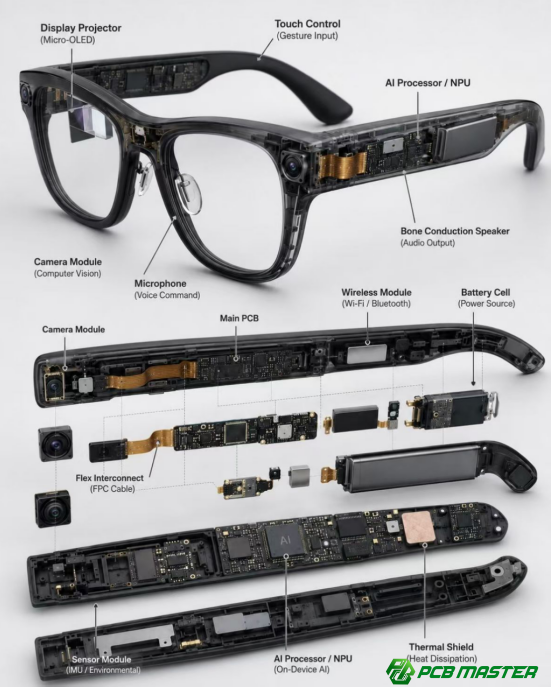
AI smart glasses are changing the way people interact with technology, offering features like augmented reality, voice commands, and real-time data display directly in front of your eyes. As these devices become smaller and more powerful, designing electronics that fit within slim frames while remaining reliable becomes a real challenge. This is where rigid-flex PCB technology makes a difference. By combining rigid sections for stability and flexible sections that bend and fold, engineers can integrate batteries, sensors, cameras, and AI chips into compact, durable designs. Companies that specialize in wearable PCBs, such as PCBMASTER, provide the expertise and high-quality circuit boards needed to turn these designs into real, reliable smart glasses. With precise fabrication and assembly, smart glasses can stay lightweight, strong, and ready for both consumer and industrial applications.
What Makes Rigid-Flex PCB Ideal for AI Smart Glasses Design?
Rigid-flex PCBs combine the stability of rigid boards with the flexibility of bendable circuits, making them perfect for compact, lightweight, and reliable AI smart glasses.
Definition and Composition of Rigid-Flex PCB
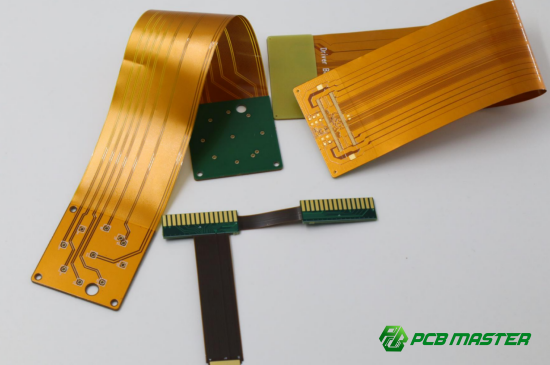
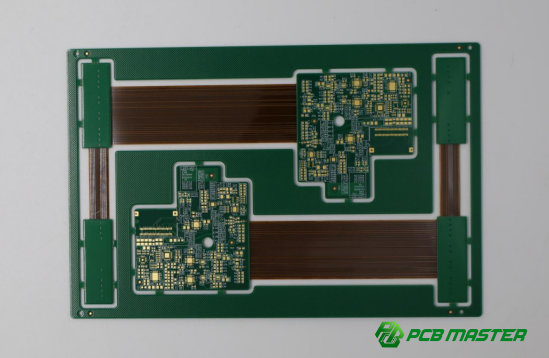
A rigid-flex PCB is a type of circuit board that integrates both rigid and flexible sections in a single design. The rigid parts, usually made of FR-4 , provide a solid platform for mounting heavy components like AI chips and cameras. The flexible parts, often made of polyimide , allow the board to bend, fold, or twist without breaking. This combination enables circuits to fit into small, complex shapes, such as the narrow frames and temples of smart glasses. For example, flexible sections can connect the camera module in the frame to the main processing unit in the temple while maintaining signal integrity. This structure allows engineers to save space and design lightweight, compact wearables.
Advantages Over Traditional Rigid PCBs in Wearables
Rigid-flex PCBs offer several advantages compared to traditional rigid boards in wearable devices. They allow space-saving layouts by bending and folding in ways that rigid PCBs cannot. They also provide improved reliability under mechanical stress, such as repeated bending or twisting, which is common in glasses frames.
| Feature | Traditional Rigid PCB | Rigid-Flex PCB |
| Flexibility | None | High – can bend/fold |
| Space Efficiency | Limited | Optimized for compact designs |
| Reliability Under Stress | Moderate – may crack | High – withstands repeated bending |
| Integration | Requires multiple boards | Combines rigid and flexible sections |
PCBMASTER’s Expertise in Rigid-Flex Design
PCBMASTER has years of experience in precision rigid-flex PCB fabrication for wearable electronics. Our team specializes in designing boards that fit slim glasses frames while supporting complex components like sensors, batteries, and AI chips. Using advanced assembly techniques, we ensure that rigid-flex PCBs meet high standards for signal integrity, durability, and thermal performance. For instance, we helped a smart glasses manufacturer integrate an AI camera, microphone, and battery on a single board without increasing device thickness, reducing both assembly complexity and failure points. Our capabilities ensure that wearable PCBs are not only functional but also reliable and ready for mass production.
How Does Rigid-Flex PCB Improve Compactness in AI Smart Glasses?
Rigid-flex PCBs help AI smart glasses become smaller, lighter, and more functional by allowing bending, folding, and high-density integration of multiple components on a single board.
Space Optimization in Small Form Factors
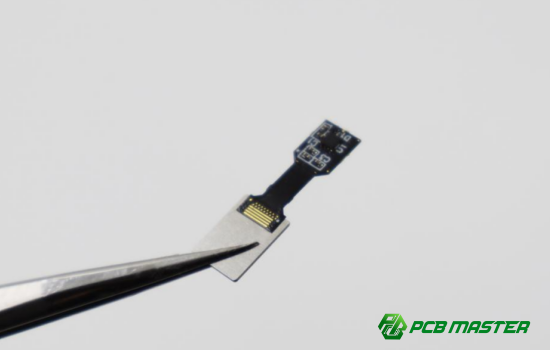
Rigid-flex PCBs allow engineers to fold and bend boards to fit narrow frames and temples. Instead of using separate boards for each module, designers can integrate multiple components, including batteries, sensors, cameras, and processors, on one board.
Example: A flexible section can fold around the hinge to connect a temple-mounted battery to the camera module in the frame. This design eliminates extra wires, optimizes space inside the glasses, reduces weight, and keeps the device compact.
Layered Design for High-Density Integration
Rigid-flex PCBs often use multilayer stackups, where circuits are layered to fit more components in limited space. This allows engineers to place AI chips, antennas, and display drivers close together while keeping the glasses slim.
Example of layered integration:
- AI processing layer
- Signal routing layer
- Power distribution layer
This design supports complex functions like real-time image processing and wireless communication without increasing device size.
Minimizing Interconnects and Wiring
Rigid-flex PCBs reduce bulky connectors and extra flex cables, which usually take up space and can fail over time.
Step-by-step connection:
- Mount sensors on the flexible section.
- Route signals through the flexible traces.
- Connect to the rigid section holding the processor and battery.
This approach reduces wiring, saves space, and improves durability while keeping the glasses lightweight and compact.
How Does Rigid-Flex PCB Enhance Reliability in AI Smart Glasses?
Rigid-flex PCBs improve the reliability of AI smart glasses by resisting mechanical stress, managing heat effectively, and maintaining clean signal integrity for critical electronics.
Resistance to Mechanical Stress and Repeated Bending
Rigid-flex PCBs are more durable than traditional rigid PCBs because they can bend without breaking. Traditional rigid boards often crack when exposed to repeated stress, such as the folding and flexing of glasses frames. Rigid-flex PCBs combine flexible sections that absorb mechanical strain with rigid sections that securely hold heavy components.
Comparison example:
- Traditional PCB: Cracks after ~100 bending cycles, risking circuit failure.
- Rigid-Flex PCB: Can withstand thousands of bending cycles without damage, maintaining connections for cameras, sensors, and processors.
This makes rigid-flex PCBs ideal for wearables that are repeatedly handled, folded, or adjusted.
Improved Thermal Management
AI chips in smart glasses generate heat, which can affect performance and lifespan. Rigid-flex PCBs improve thermal management by:
- Placing heat-sensitive components on rigid areas that provide better heat dissipation.
- Using copper layers and thermal vias to spread heat efficiently.
- Designing flexible sections to avoid trapping heat in tight bends.
Example: A smart glasses AI camera module mounted on a rigid section can operate continuously without overheating, while flexible connections maintain compact design and reliability.
Reduced Signal Interference
High-frequency signals in smart glasses, like wireless communication, camera data, and microphones, are sensitive to interference. Rigid-flex PCBs improve signal integrity by separating critical signal paths and minimizing unwanted crosstalk.
Example:
- The camera module transmits high-speed video signals through controlled trace paths.
- Microphone audio signals use isolated flexible traces to avoid interference from nearby wireless circuits.
- Wireless antennas are routed on rigid sections with minimal bends to maintain signal strength.
This design ensures reliable performance of AI smart glasses even in compact, high-density layouts.
What Design Considerations Should Be Made When Using Rigid-Flex PCB in Smart Glasses?
Designing rigid-flex PCBs for smart glasses requires careful planning of flex zones, strategic component placement, and attention to manufacturing constraints to ensure compactness, reliability, and manufacturability.
Optimizing Flex Zones
Flex zones are the areas of the PCB that bend or fold. Proper placement is crucial to avoid mechanical failure over time. Engineers should:
- Design bend lines where there is minimal stress from user handling.
- Keep traces away from sharp corners and avoid placing heavy components in flexible sections.
- Ensure that flexible sections can bend smoothly without stretching copper traces.
Example: In glasses frames, the hinge area often experiences repeated folding. Placing the flex zone here with no heavy chips ensures the board survives thousands of cycles without cracking or losing connectivity.
Component Placement Strategies
Heavy or heat-sensitive components should be located on rigid sections to maintain stability and prevent overheating. Components like AI chips, cameras, batteries, or wireless modules benefit from:
- Rigid mounting to reduce mechanical strain
- Proximity to thermal vias or heat sinks for better heat dissipation
- Strategic placement to minimize trace lengths for high-frequency signals
Example: A smart glasses design may place the AI processor in the temple’s rigid section while routing sensor connections through flexible areas to maintain a slim, foldable frame.
Manufacturing and Assembly Constraints
Rigid-flex PCBs require specialized fabrication and assembly processes. PCBMASTER offers advanced solutions for wearable devices, including:
- Controlled bending and layer alignment for reliable flex zones
- Precision component placement and soldering for small, dense circuits
- Testing protocols that simulate repeated bending, thermal cycles, and real-world use
Case study: PCBMASTER worked with a smart glasses manufacturer to produce a rigid-flex board integrating sensors, battery, and camera modules in a slim frame. The board passed thousands of bend cycles and thermal tests, ensuring long-term reliability.
Can Rigid-Flex PCB Reduce Production Complexity for AI Smart Glasses?
Rigid-flex PCBs simplify the production of AI smart glasses by integrating multiple modules, reducing wiring, and enabling easier testing and maintenance, which improves assembly efficiency and device reliability.
Integration of Multiple Modules on a Single Board
Rigid-flex PCBs allow multiple components—such as AI processors, sensors, cameras, batteries, and antennas—to be integrated on one board. This reduces the need for separate boards and complex connections, which simplifies assembly.
Benefits for assembly line efficiency:
- Fewer separate parts reduce handling and placement errors
- Streamlined soldering and inspection processes
- Reduced assembly time, lowering production costs
Example: A smart glasses manufacturer used a rigid-flex board to combine a camera module, motion sensor, and battery connection. The assembly process was faster and required fewer connectors, improving production speed without compromising quality.
Eliminating Excessive Wiring Harnesses
Rigid-flex boards reduce or eliminate bulky wiring harnesses that are often required to connect multiple separate boards.
Advantages:
- Lower material cost due to fewer wires and connectors
- Fewer potential points of failure, improving reliability
- Smaller, lighter device design
Example: Flexible traces routed directly between the camera, microphone, and processor replace multiple separate cables. This simplifies the internal structure and reduces mechanical stress during use.
Simplified Testing and Maintenance
Rigid-flex PCBs enable modular testing, allowing engineers to check individual components or sections without disassembling the entire device.
How it works:
- Sensors on the flexible section are tested separately from the rigid processing section
- Thermal and signal integrity checks can be performed on each module
- Faulty sections can be replaced or repaired without scrapping the full device
Case study: PCBMASTER helped a smart glasses client implement modular testing protocols using rigid-flex PCBs. This reduced production errors, improved quality control, and shortened time-to-market.
Conclusion
Rigid-flex PCB technology is essential for AI smart glasses, allowing devices to be both compact and reliable. By combining rigid sections for stability with flexible areas that bend and fold, engineers can integrate multiple components—such as AI chips, sensors, cameras, and batteries—into slim, lightweight frames without sacrificing durability. This approach also reduces wiring complexity, improves thermal management, and maintains signal integrity, ensuring that smart glasses perform consistently under repeated use.
PCBMASTER brings extensive experience in designing and supplying high-quality rigid-flex PCBs for wearable electronics. Our expertise ensures precise fabrication, optimal flex-zone design, and reliable assembly, helping manufacturers create smart glasses that meet modern performance and durability standards. Case studies demonstrate that our solutions enable compact, foldable, and high-performance devices ready for both consumer and industrial applications.
For anyone developing AI smart glasses, consulting PCBMASTER provides access to advanced rigid-flex PCB solutions tailored to wearable electronics. From space-saving designs to modular testing and efficient assembly, our services support innovative smart glasses projects from concept to production, ensuring high quality, reliability, and cutting-edge performance.
FAQ – Rigid-Flex PCB in AI Smart Glasses
How does rigid-flex PCB compare with flexible PCB only for smart glasses?
Rigid-flex PCBs combine rigid sections with flexible areas, offering better structural stability than flexible-only PCBs. The rigid sections provide secure mounting for heavy or heat-sensitive components like AI chips and cameras, while flexible sections allow bending in narrow frames. This integration reduces the number of separate boards and wiring, enabling compact, reliable designs that flexible-only PCBs cannot achieve.
What is the typical lifespan of a rigid-flex PCB in wearable devices?
Rigid-flex PCBs are highly durable and designed to withstand repeated bending. They can survive thousands of bending cycles without cracking or losing electrical connectivity, significantly outlasting traditional rigid PCBs. Their lifespan depends on usage and environmental factors but generally supports several years of daily wearable use, making them ideal for smart glasses.
Can rigid-flex PCBs handle high-speed AI processing in smart glasses?
Yes. Rigid-flex PCBs support high-speed AI processing by maintaining signal integrity through careful trace routing, controlling crosstalk, and using multi-layer designs. They also improve thermal management with rigid sections and copper layers to dissipate heat from AI chips. This ensures stable performance for camera modules, sensors, and wireless communication even in compact wearable devices.
How does PCBMASTER ensure quality in rigid-flex PCBs for smart glasses?
PCBMASTER follows rigorous practices including design-for-manufacturing, precision fabrication, and modular testing. Each rigid-flex board undergoes inspection for trace continuity, flex-zone durability, and thermal performance. Advanced assembly techniques and stress tests simulate real-world use, ensuring every board meets reliability standards for smart glasses.
Are rigid-flex PCBs more expensive than traditional PCBs for wearables?
Rigid-flex PCBs typically have higher upfront costs due to complex materials and fabrication. However, the cost-benefit trade-off is favorable: they reduce assembly complexity, minimize wiring, support miniaturization, and enhance durability. For AI smart glasses, the improved reliability and compact design justify the additional expense.
About the Author

Carol Luo
PCB Design EngineerI'm Carol, a PCB Engineer at PCBMASTER with experience in PCB design and manufacturing engineering since 2018. I focus on translating engineering requirements into reliable PCB solutions, with expertise in stack-up design, material selection, and design-for-manufacturing (DFM). I share practical engineering insights from real-world PCB design and production experience.
Visit Carol Luo's Profile