







PCB Laminate Substitution Guide: Validated Alternatives for Material Shortages
Supply chain disruptions have turned PCB laminate availability into a critical challenge for electronics manufacturers. A material specified at the design stage may suddenly face extended lead times, allocation constraints, or unexpected discontinuation, putting project schedules and product launches at risk.
However, replacing a PCB material is rarely a simple one-to-one switch. Electrical performance, manufacturing compatibility, reliability requirements, and qualification standards all need to be considered before an alternative can be approved. The right decision requires balancing performance targets with sourcing flexibility while minimizing engineering and production risks.
For procurement teams, the priority is securing supply without compromising delivery commitments. For design engineers, the focus is maintaining signal integrity, impedance control, and long-term reliability. Bridging these priorities demands a structured approach to material substitution.
The following guide outlines practical PCB laminate substitution strategies for both high-speed and RF applications, highlighting validated alternative paths, key evaluation criteria, and the verification steps needed to support confident decision-making during material shortages.
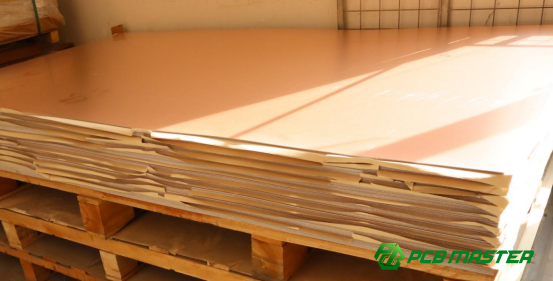
Which High-Speed PCB Materials Are Commonly Used in Modern Electronics?
High-speed PCB materials are selected based on how much signal loss they introduce at high frequencies. Modern applications such as AI servers, switches, storage systems, and networking equipment typically use Low Loss, Very Low Loss, or Ultra Low Loss laminates depending on data rate and channel length requirements.
How are high-speed PCB materials categorized by loss performance?
High-speed laminates are generally grouped by their dissipation factor (Df) . The lower the Df value, the less signal energy is lost as heat, making the material more suitable for faster data transmission.
Low Loss laminates
Low Loss materials are commonly used in systems that require reliable high-speed performance without the extreme demands of advanced AI or networking platforms. Typical applications include industrial control equipment, enterprise storage, telecommunications boards, and mid-range networking products.
A typical Low Loss laminate has a Df value of approximately 0.006 to 0.010 at 10 GHz . This performance level is often sufficient for designs using moderate-speed interfaces and shorter signal paths.
Common applications include:
- Industrial computing systems
- Enterprise storage controllers
- Conventional telecom equipment
- Mid-speed network switches
Practical example:
A 25G Ethernet switch with relatively short trace lengths may perform well using a Low Loss material, allowing manufacturers to balance electrical performance and material cost.
Very Low Loss laminates
Very Low Loss laminates have become the mainstream choice for modern data infrastructure. They offer lower signal attenuation, making them suitable for higher data rates and longer transmission distances.
These materials typically feature a Df value of approximately 0.002 to 0.005 at 10 GHz . They are widely used in AI servers, cloud computing hardware, and high-speed networking equipment.
Common applications include:
- AI training and inference servers
- 56G and 112G networking equipment
- High-performance computing platforms
- Data center switches
Project example:
Many AI accelerator boards require Very Low Loss laminates to maintain signal quality between processors, memory modules, and high-speed connectors. Materials such as Megtron 6 and EM-525 are frequently specified for these designs.
Ultra Low Loss laminates
Ultra Low Loss laminates are designed for the most demanding digital applications. They minimize insertion loss and help maintain signal integrity across extremely high-speed channels.
Typical Df values are below 0.002 at 10 GHz , making these materials suitable for next-generation systems with very tight performance margins.
Common applications include:
- 112G and 224G SerDes channels
- Long backplane architectures
- Advanced AI clusters
- Future high-speed interconnect platforms
Real-world example:
A large AI server chassis may contain multiple boards connected through long backplane traces. Ultra Low Loss materials help preserve signal quality over these longer transmission paths and reduce the need for additional signal conditioning.
What are the mainstream high-speed PCB laminate brands and series?
Several laminate manufacturers dominate the high-speed PCB market. Their products have been widely adopted in production environments and are often specified by OEMs and system designers.
Panasonic Megtron series
Panasonic's Megtron family is one of the best-known high-speed PCB laminate platforms in the industry.
Megtron 6 (M6/M6G) is widely used in AI servers, networking systems, and high-speed computing applications. It delivers Very Low Loss performance and has extensive field-proven reliability.
Megtron 7 (M7/M7N) offers even lower transmission loss and targets next-generation designs with more demanding signal integrity requirements.
Typical use cases:
- AI accelerator cards
- Data center switches
- High-speed server motherboards
EMC high-speed laminates
EMC has become a major supplier of advanced laminate materials for networking and computing markets.
EM-525 is commonly used as a Very Low Loss solution for mainstream high-speed designs.
EM-825 supports higher-performance requirements and is frequently evaluated alongside premium laminates.
EM-888 targets applications that demand even lower loss characteristics.
Typical use cases:
- Cloud infrastructure
- Enterprise servers
- High-density networking platforms
ITEQ laminate systems
ITEQ materials are widely recognized in the PCB industry and often serve as validated alternatives in high-speed projects.
IT-968 provides Very Low Loss performance and has been adopted in many production environments.
IT-988G supports more advanced applications requiring enhanced electrical characteristics.
Typical use cases:
- Server motherboards
- High-speed communication equipment
- Storage networking systems
TUC high-speed materials
TUC offers laminate systems designed for demanding digital applications.
TU-872 SLK/SP is commonly associated with Very Low Loss designs and is frequently evaluated as an alternative in supply-constrained situations.
TU-933+ targets more advanced performance requirements and supports next-generation architectures.
Typical use cases:
- Enterprise networking
- High-performance computing
- AI server infrastructure
Isola laminate solutions
Isola has a long history of supplying advanced PCB materials to global electronics manufacturers.
I-Speed provides dependable performance for a wide range of high-speed applications.
I-Tera MT40 is often selected for projects requiring lower loss and enhanced signal integrity.
Typical use cases:
- Telecommunications equipment
- Networking products
- Computing platforms
Practical note:
Because Isola materials have extensive manufacturing history, they are often considered during PCB material substitution and supply chain planning.
Which electrical and reliability properties should engineers compare?
Engineers should compare both electrical performance and manufacturing reliability. Choosing a PCB material based only on Df or cost can lead to signal problems, production difficulties, or reduced product life.
Dielectric constant (Dk)
Dk describes how fast electrical signals travel through the laminate.
A stable Dk helps maintain controlled impedance and predictable signal timing.
Why it matters:
- Supports impedance control
- Reduces timing variation
- Improves simulation accuracy
Example:
Changing to a material with a significantly different Dk may require redesigning trace widths to maintain target impedance.
Dissipation factor (Df)
Df measures how much signal energy is lost as it moves through the PCB material.
Lower Df values generally result in lower insertion loss.
Why it matters:
- Preserves signal quality
- Supports higher data rates
- Enables longer transmission distances
Example:
A lower Df material may allow a server designer to meet channel loss budgets without adding expensive retimers.
Copper roughness
Copper surfaces are not perfectly smooth. Rougher copper increases conductor loss at high frequencies.
Why it matters:
- Influences insertion loss
- Affects high-frequency performance
- Impacts simulation accuracy
Project consideration:
Two laminates with similar Df values can still perform differently if their copper foil treatments vary.
Glass transition temperature (Tg)
Tg indicates the temperature at which the laminate begins to soften.
Higher Tg materials generally tolerate thermal stress better.
Why it matters:
- Supports assembly reliability
- Reduces dimensional instability
- Improves durability during soldering
Thermal decomposition temperature (Td)
Td measures the temperature at which the material begins to chemically break down.
Why it matters:
- Influences long-term reliability
- Supports lead-free assembly processes
- Helps prevent material degradation
CAF resistance
CAF, or Conductive Anodic Filament resistance, indicates the material's ability to resist conductive growth between vias and conductors.
Why it matters:
- Improves field reliability
- Reduces risk of electrical failure
- Supports harsh operating environments
Resin content compatibility
Resin content affects how the laminate behaves during multilayer lamination.
Why it matters:
- Influences layer bonding
- Affects board thickness control
- Supports manufacturing consistency
Example:
A substitute material with different resin flow characteristics may require adjustments to the stack-up design.
Stack-up suitability
Even when two laminates have similar specifications, they may not fit seamlessly into the same PCB stack-up.
Engineers should verify that the replacement material supports the intended layer structure, copper weights, prepreg combinations, and impedance targets.
Why it matters:
- Reduces redesign effort
- Improves manufacturability
- Minimizes qualification risk
Best practice:
Before approving any PCB material alternative, review the complete stack-up and confirm performance through simulation and engineering validation.
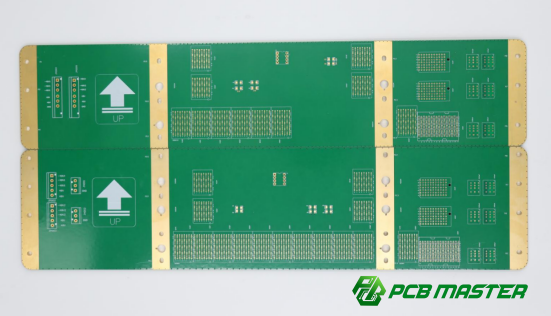
How Should You Choose High-Speed PCB Material Alternatives During Shortages?
You should choose high-speed PCB material alternatives by matching the original material’s loss level (Df class), verifying electrical compatibility, and selecting options that are already proven in production environments.
When a shortage occurs in high-speed PCB materials, the main risk is not availability—it is performance mismatch. A good substitution strategy always starts from loss category alignment , then moves to real production validation , and finally to engineering verification (SI/PI and stack-up check) . This structured approach reduces redesign risk and avoids unexpected signal integrity failures.
A practical PCB material substitution guide should always follow this rule: Same loss class → Similar Dk/Df range → Proven production usage → Full validation
What are the recommended alternatives to Megtron 6?
Megtron 6 (M6/M6G) is a Very Low Loss material, and it is typically replaced by other Very Low Loss laminates such as IT-968, TU-872 SLK, S7439, I-Speed, and EM-525, depending on availability and design constraints.
Primary Material → Validated Alternative Sequence
| Primary Material | Validated Alternative Sequence |
| Megtron 6 | IT-968 → TU-872 SLK → S7439 → I-Speed → EM-525 |
Similar loss category considerations
Megtron 6 belongs to the Very Low Loss (VLL) PCB laminate category , typically used in AI servers and high-speed networking systems.
All recommended alternatives also fall into the same loss class or very close range, with Df values generally around 0.002–0.005 at 10GHz . This ensures minimal signal degradation.
Example: A 100G Ethernet switch using Megtron 6 can often switch to IT-968 or TU-872 SLK without major architecture changes, as long as impedance and stack-up are re-validated.
Typical use cases
Megtron 6 and its alternatives are commonly used in:
- AI server GPU interconnect boards
- 100G / 200G network switches
- High-speed storage backplanes
- High-performance compute motherboards
These applications require stable insertion loss control and consistent impedance performance.
Verification requirements
Before switching from Megtron 6 to an alternative PCB laminate, engineers should always perform:
- SI simulation (eye diagram, insertion loss check)
- Impedance re-calculation
- Stack-up adjustment review
- Thermal reliability check (Tg/Td compatibility)
Key rule: Even “same class” materials are not drop-in replacements without validation.
What are the recommended alternatives to Megtron 7?
Megtron 7 is an Ultra Low Loss or top-tier Very Low Loss material, typically replaced by IT-988G, TU-933+, I-Tera MT40, and EM-825 depending on performance and supply availability.
Primary Material → Validated Alternative Sequence
| Primary Material | Validated Alternative Sequence |
| Megtron 7 | IT-988G → TU-933+ → I-Tera MT40 → EM-825 |
Megtron 7 is used in next-generation high-speed interconnects , where signal loss budget is extremely tight. Therefore, substitutes must be carefully selected with very close electrical matching.
Example: In a 224G SerDes backplane design, even small differences in Df can affect link margin. That is why IT-988G or TU-933+ are usually preferred first-choice substitutes.
Key consideration
When replacing Megtron 7:
- Df matching is more critical than cost
- Copper roughness becomes a major factor
- Simulation-driven validation is mandatory
How can EM-525 shortages be addressed?
EM-525 can be replaced by S7439, IT-968, Megtron 4/6, or TU-872 SLK depending on whether the priority is cost, performance, or availability.
Primary Material → Validated Alternative Sequence
| Primary Material | Validated Alternative Sequence |
| EM-525 | S7439 → IT-968 → Megtron 4/6 → TU-872 SLK |
EM-525 is widely used in Very Low Loss networking and server designs , making it one of the most commonly substituted materials during shortages.
Example: A cloud server motherboard originally using EM-525 may switch to S7439 with minimal electrical impact, provided stack-up and impedance are re-optimized.
Practical substitution logic
- S7439 → closest performance match in many cases
- IT-968 → balanced cost and performance option
- Megtron 6 → fallback when premium supply is needed
- TU-872 SLK → widely validated alternative in production
What alternatives are available for IT-968 and similar laminates?
IT-968 is typically replaced by TU-872 SLK, S7439, I-Speed, and EM-525, which all belong to the same Very Low Loss performance group.
IT-968 substitution path
- TU-872 SLK
- S7439
- I-Speed
- EM-525
Example: IT-968 is often used in AI server backplanes. TU-872 SLK is frequently chosen as a drop-in alternative after impedance re-check and validation.
S7439 substitution path
- IT-968
- TU-872 SLK
- EM-525
S7439 is often considered a balanced Very Low Loss material , meaning it can act as both a source and target for substitution depending on supply conditions.
What principles should guide high-speed laminate substitution?
High-speed PCB material substitution should always follow electrical equivalence, proven usage history, and engineering validation rules to avoid performance degradation.
Prioritize similar loss classes
Always match the same Df category first (Low Loss / Very Low Loss / Ultra Low Loss).
Why it matters: Loss class directly affects signal integrity, especially at 56G–224G data rates.
Favor proven production materials
Choose materials that already have:
- Mass production records
- Known stack-up configurations
- Verified SI performance
Example: IT-968 is often preferred over untested alternatives because it has established usage in server platforms.
Use previously qualified solutions when possible
If a material has already been qualified in similar projects, reuse it.
Benefit:
- Reduces validation time
- Lowers engineering risk
- Improves time-to-market
Avoid cross-tier substitutions without validation
Never replace:
- Very Low Loss → Low Loss
- Ultra Low Loss → Very Low Loss
without full SI/PI and system-level verification.
Risk example: Replacing Megtron 7 with a lower-tier laminate may cause eye diagram closure in 224G channels.
Summary insight
High-speed PCB material substitution is not a simple “equivalent list” decision. It is a structured engineering process that balances:
- Electrical performance
- Supply chain availability
- Proven manufacturing reliability
- Full system-level validation
This is why validated substitution paths are essential in AI server, networking, and high-speed computing designs.
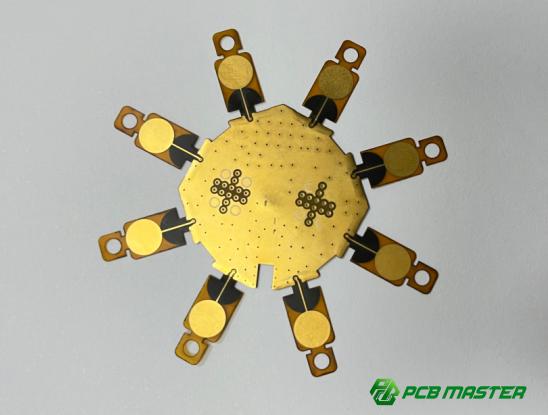
Which High-Frequency PCB Materials Are Most Commonly Specified for RF Designs?
High-frequency PCB materials used in RF designs are mainly PTFE-based or hydrocarbon-based laminates engineered to minimize signal loss at microwave and millimeter-wave frequencies. The most commonly specified materials come from Rogers, Taconic, Arlon, and a few other specialized global suppliers.
RF (radio frequency) PCB design focuses on stable signal transmission at high frequencies such as 1 GHz to 77 GHz and beyond. At these frequencies, even small material differences can significantly affect signal loss, impedance stability, and antenna performance. That is why RF engineers rely on a small group of proven laminate technologies with well-characterized electrical behavior.
What are the two dominant high-frequency laminate technologies?
The RF PCB industry is mainly built on two laminate technologies: hydrocarbon ceramic systems and PTFE ceramic systems. They differ mainly in processing complexity, cost, and ultra-high-frequency performance.
Hydrocarbon ceramic systems
Hydrocarbon ceramic laminates use a hydrocarbon resin base combined with ceramic fillers. This structure provides a good balance between performance and manufacturability.
Manufacturing advantages
Hydrocarbon ceramic materials are easier to process compared to pure PTFE. They can be manufactured using standard PCB fabrication processes, including drilling, plating, and multilayer lamination.
Key benefit: They reduce manufacturing complexity and improve production yield.
Cost considerations
These materials are generally more cost-effective than PTFE-based laminates. They are often chosen for mid-to-high frequency RF designs where cost control is important.
Typical advantage: Lower total system cost while maintaining stable RF performance.
Typical RF applications
Hydrocarbon ceramic systems are widely used in:
- 5G base station antennas
- RF front-end modules
- Automotive radar (lower GHz range)
- Satellite communication sub-systems
Example: RO4350B is frequently used in 5G antenna arrays due to its balance of performance and manufacturability.
PTFE ceramic systems
PTFE (Polytetrafluoroethylene) ceramic systems are designed for extremely low signal loss and are considered premium RF materials.
Extremely low loss characteristics
PTFE-based laminates offer the lowest dielectric loss (Df) among mainstream PCB materials.
Key benefit: They minimize signal attenuation, making them ideal for sensitive RF and microwave circuits.
Millimeter-wave suitability
These materials perform well in very high-frequency environments such as 24 GHz, 77 GHz, and even higher.
Typical applications:
- Automotive radar systems
- Satellite transceivers
- Advanced phased-array antennas
Example: RT5880 is widely used in millimeter-wave radar systems due to its ultra-low loss performance.
Processing requirements
PTFE materials are more difficult to manufacture. They require special handling during drilling, plating, and lamination.
Key challenge: Higher fabrication cost and stricter process control requirements.
Which international high-frequency PCB materials are widely recognized?
The most widely recognized RF PCB materials come from Rogers, Taconic, Arlon, and a few additional global suppliers that specialize in high-performance microwave laminates.
These materials are industry standards because their electrical properties are well documented and widely validated in real RF systems.
Rogers RO4000 series
The RO4000 series is one of the most commonly used RF laminate families in the world.
RO4350B
RO4350B is a hydrocarbon ceramic laminate with stable dielectric performance and relatively easy manufacturability.
Typical dielectric constant (Dk): ~3.48 Typical loss factor (Df): ~0.0037 at 10 GHz
Common applications
RO4350B is widely used in:
- 5G base station antenna arrays
- RF power amplifiers
- Microwave filters
- Mixed digital-RF PCB designs
Example: A 5G macro base station antenna panel often uses RO4350B due to its balance of cost, performance, and scalability.
Rogers RT/duroid series
The RT/duroid family represents high-end PTFE-based RF materials.
RT5880
RT5880 is known for its extremely low dielectric loss and stable performance at very high frequencies.
Key characteristic: Ultra-low Df, typically around 0.0009.
Millimeter-wave usage
RT5880 is widely used in:
- 77 GHz automotive radar
- Satellite communication systems
- High-frequency test equipment
- Phased array antenna modules
Example: In automotive radar sensors, RT5880 helps maintain signal integrity at 77 GHz where even minor losses can degrade detection accuracy.
Taconic solutions
Taconic specializes in PTFE and hydrocarbon-based RF laminates designed for high-frequency stability.
TLY-5
TLY-5 is a PTFE-based laminate known for stable dielectric properties in RF applications.
Typical RF implementations
TLY-5 is used in:
- RF power amplifiers
- Antenna systems
- Microwave filters
- Military communication devices
Example: A satellite communication antenna feed network may use TLY-5 for stable phase performance under high-frequency operation.
Arlon laminates
Arlon produces high-performance RF materials optimized for specialized applications.
AD255
AD255 is a low-loss laminate designed for controlled impedance and stable RF behavior.
Specialized use cases
AD255 is often used in:
- Defense electronics
- Aerospace RF modules
- High-reliability microwave circuits
Example: Radar signal distribution boards may use AD255 due to its stability under harsh environmental conditions.
Additional high-performance options
Beyond Rogers, Taconic, and Arlon, several other manufacturers provide RF-capable materials for specialized or hybrid applications.
Panasonic
Panasonic offers RF-capable laminates that combine manufacturability with moderate RF performance, often used in integrated RF + digital systems.
Isola
Isola provides high-performance laminates that support mixed-signal and RF applications, especially in communication infrastructure.
Hybrid constructions
Hybrid PCB stack-ups combine different materials in one board, such as:
- High-speed digital layers using Megtron-type materials
- RF layers using PTFE or hydrocarbon laminates
Example: A 5G base station board may combine digital processing layers with RF antenna layers using different material systems in one stack-up.
Summary insight
High-frequency PCB materials are selected based on a balance between:
- Frequency range (GHz level requirement)
- Signal loss tolerance (Df performance)
- Manufacturing complexity
- Cost constraints
Hydrocarbon ceramic materials are typically preferred for scalable RF production, while PTFE-based materials dominate ultra-high-frequency and millimeter-wave applications where performance is the top priority.
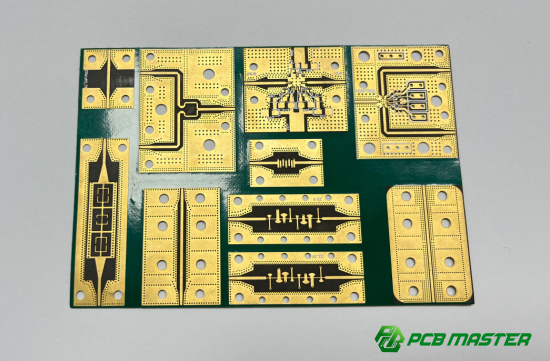
How Can RF Engineers Identify Suitable High-Frequency PCB Alternatives?
RF engineers identify suitable PCB material alternatives by matching dielectric constant (Dk), minimizing loss factor (Df) deviation, and validating performance through RF simulation and real-world qualification testing.
In RF PCB design, material substitution is not based on brand similarity but on electrical behavior equivalence . Even small changes in Dk or Df can shift impedance, detune antennas, or reduce signal efficiency. Therefore, RF engineers follow a structured comparison process: electrical matching → simulation → prototype validation → production approval.
A practical RF PCB material substitution guide always combines material data + system-level RF testing , especially for applications above 1 GHz.
What alternatives can be considered for Rogers RO4350B?
Rogers RO4350B can be replaced by S7136H, ZYC series, or H5000 series materials, depending on required electrical performance and manufacturing constraints.
Specified Material → Evaluated Alternative Options
| Primary Material | Alternative Options |
| RO4350B | S7136H → ZYC Series → H5000 Series |
Matching Dk requirements
RO4350B has a typical Dk of ~3.48 , which is critical for controlled impedance RF design.
When selecting alternatives:
- Dk must stay within a tight tolerance (typically ±0.05–0.1)
- Even small Dk shifts can change antenna resonance frequency
Example: In a 5G antenna array, a 0.1 Dk deviation may shift beam direction slightly, affecting coverage consistency.
Df considerations
RO4350B has a relatively low Df (~0.0037 at 10 GHz) .
When substituting:
- Lower Df = lower insertion loss
- Higher Df = reduced RF efficiency
Key rule: For RF PCB material replacement, Df mismatch affects signal attenuation more than cost difference.
Qualification process
Before final approval, engineers should:
- Run RF simulation (S-parameters, return loss)
- Build test coupons for impedance verification
- Measure real insertion loss at target frequency
- Validate antenna performance (if applicable)
Case example: A base station antenna design switching from RO4350B to S7136H typically requires at least one full prototype validation cycle before mass production approval.
What alternatives are available for RT5880?
RT5880 can be replaced by SCGA-500 GF220, ZYF series, or F4B materials, mainly in millimeter-wave or ultra-low loss RF applications.
Specified Material → Evaluated Alternative Options
| Primary Material | Alternative Options |
| RT5880 | SCGA-500 GF220 → ZYF Series → F4B |
RT5880 is a PTFE-based ultra-low loss laminate , widely used in 77 GHz radar and satellite systems. Therefore, substitutes must closely match both dielectric stability and ultra-low loss behavior.
Example: In 77 GHz automotive radar, even a small increase in Df can reduce detection range, so only carefully validated alternatives like SCGA-500 GF220 are considered first.
How can Taconic TLY-5 shortages be managed?
TLY-5 shortages are typically managed using SCGA-500 GF220, ZYF series, or WL-PTFE series materials with similar PTFE-based RF performance.
Specified Material → Evaluated Alternative Options
| Primary Material | Alternative Options |
| TLY-5 | SCGA-500 GF220 → ZYF Series → WL-PTFE Series |
TLY-5 is a stable PTFE RF material used in microwave and antenna systems. Substitution focuses on dielectric stability under frequency and temperature variation rather than only nominal Dk values.
Example: In satellite communication feed networks, WL-PTFE series may be used as an alternative when long-term phase stability is confirmed through testing.
What alternatives may be evaluated for Arlon AD255?
Arlon AD255 can be replaced by S7136 or H5000 series materials, depending on required RF stability and system-level performance.
Specified Material → Evaluated Alternative Options
| Primary Material | Alternative Options |
| AD255 | S7136 → H5000 Series |
AD255 is used in specialized RF and defense-grade applications , so replacement is usually conservative and validation-heavy.
Example: In radar signal distribution boards, engineers may first test S7136 for impedance consistency before moving to production qualification.
Which technical criteria determine RF material compatibility?
RF material compatibility is determined by Dk matching, Df performance, thermal stability, fabrication capability, and project-specific RF validation results.
Dk matching within acceptable tolerance
Dielectric constant (Dk) controls signal speed and impedance.
- Small Dk change → frequency shift
- Large Dk change → antenna detuning
Rule of thumb: Keep Dk variation within ±0.05–0.1 for most RF designs.
Df suitability for link budget targets
Df determines how much signal energy is lost.
- Lower Df = better RF efficiency
- Higher Df = shorter transmission distance
Example: In satellite links, Df increase directly reduces usable signal range.
Thermal performance requirements
RF systems often operate in harsh environments.
Engineers must check:
- Glass transition stability (Tg)
- Thermal decomposition temperature (Td)
- Long-term material stability
Fabrication capability alignment
Even if electrical properties match, manufacturing must be feasible.
Key checks include:
- Drill quality on PTFE materials
- Copper adhesion stability
- Multilayer lamination behavior
Project-specific qualification criteria
Final approval always depends on system requirements such as:
- Frequency range (GHz level target)
- Environmental reliability standards
- Regulatory compliance (telecom / automotive / aerospace)
- Customer-specific RF performance benchmarks
Final insight: RF PCB material substitution is not a simple “equivalent swap”—it is a controlled engineering validation process combining electrical, mechanical, and system-level testing.
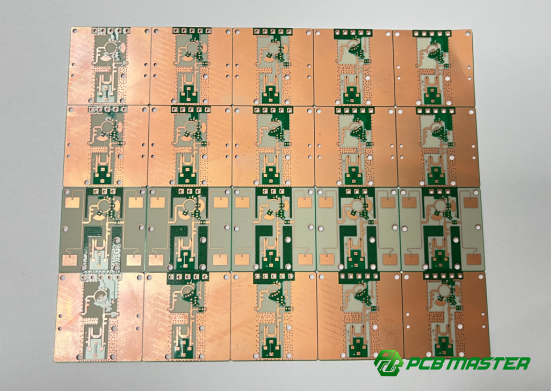
What Validation Steps Are Required Before Approving a PCB Material Alternative?
PCB material alternatives must be validated through a structured process covering signal integrity (SI) , power integrity (PI) , impedance recalculation, manufacturing feasibility, and long-term reliability testing before approval.
When a PCB material substitution is proposed (for example, switching from Megtron or Rogers to a validated alternative laminate), the goal is not only electrical similarity but also system-level performance stability . A complete validation workflow ensures the new PCB material does not introduce hidden risks in high-speed or RF applications.
A typical PCB material validation process flow is:SI verification → PI review → impedance recalculation → manufacturing check → reliability testing.
How should signal integrity performance be verified?
Signal integrity is verified by checking how well high-speed signals travel through the new PCB material without distortion, loss, or timing errors.
Signal integrity (SI) testing is a core step in PCB material substitution, especially for high-speed PCB laminate alternatives used in AI servers, networking switches, and RF digital hybrid boards.
Insertion loss analysis
Insertion loss measures how much signal strength is lost as it travels through the PCB trace.
- Lower loss = better material performance
- Higher loss = reduced signal reach
Example: In a 100G Ethernet channel, replacing a low-loss laminate with a higher-loss alternative may reduce eye opening margin.
Return loss assessment
Return loss checks how much signal is reflected back due to impedance mismatch.
- Good return loss = stable transmission
- Poor return loss = signal reflection and jitter
Practical insight: Even if Dk is similar, different materials may cause small impedance changes that increase reflection.
Eye diagram simulation
Eye diagrams visually show signal quality over time.
- Open eye = good signal integrity
- Closed eye = timing or noise issues
Use case: Used in 56G/112G SerDes validation when switching PCB materials like Megtron 6 alternatives.
Crosstalk evaluation
Crosstalk measures unwanted signal coupling between adjacent traces.
- Higher dielectric loss materials may increase interference
- Layout + material interaction must be tested together
Example: In dense AI server PCBs, poor material selection can increase adjacent channel noise.
How should power integrity be reassessed?
Power integrity is reassessed by analyzing how stable the power delivery network remains after switching PCB materials.
Power integrity (PI) ensures stable voltage delivery to high-speed chips such as CPUs, GPUs, and ASICs. A PCB material change can affect PDN behavior due to dielectric and structural differences.
PDN impedance analysis
PDN impedance shows how clean the power delivery path is across frequencies.
- Low impedance = stable power
- High impedance peaks = voltage noise risk
Example: Switching laminate materials may shift resonant frequencies in the PDN.
Decoupling optimization
Decoupling capacitors reduce noise in power lines.
When changing PCB material:
- Capacitor placement may need adjustment
- Frequency response may shift
Key point: Material dielectric properties affect how decoupling capacitors behave in real circuits.
Voltage stability review
This step checks whether voltage remains stable under load transients.
- CPU/GPU load switching scenarios are tested
- Voltage droop must stay within limits
Practical example: AI server boards require strict voltage stability during GPU peak switching events.
Why should impedance calculations be updated?
Impedance calculations must be updated because PCB material changes affect signal speed and trace behavior, which directly impacts controlled impedance design.
Even small differences in dielectric constant (Dk) or stack-up structure can change impedance values, making recalculation essential in any PCB laminate substitution project .
Stack-up reconstruction
Stack-up defines PCB layer structure.
When materials change:
- Layer thickness may differ
- Dielectric spacing changes
Example: Replacing Megtron 6 with another laminate may require redesigning layer thickness to maintain 50Ω impedance.
Trace width adjustments
Impedance depends on trace geometry and material properties.
- Different Dk → different trace width requirement
- Adjustments ensure signal consistency
Simple explanation: Same signal needs different “wire width” depending on material used.
Tolerance confirmation
Manufacturing variation must be checked.
- Etching tolerance
- Lamination thickness variation
- Copper roughness impact
Key point: Even correct theoretical impedance can fail if manufacturing tolerance is not considered.
What manufacturing reviews should be completed?
Manufacturing reviews ensure the new PCB material can be reliably produced without process issues or yield loss.
Material substitution is not only electrical—it must also be manufacturable at scale.
Lamination process compatibility
Different materials behave differently under heat and pressure.
- Resin flow must match press cycle
- Layer bonding must be stable
Example: PTFE-based materials require different lamination settings than hydrocarbon laminates.
Drilling performance assessment
Drilling affects via quality and reliability.
- Glass fiber density impacts drill wear
- PTFE materials require special drilling parameters
Risk: Poor drilling compatibility can cause via cracks or rough hole walls.
Copper foil interaction review
Copper type affects high-frequency loss.
- Smooth copper = lower loss
- Rough copper = better adhesion but higher loss
Key insight: Material + copper foil combination defines real RF performance.
Which reliability tests should be considered?
Reliability tests confirm that the new PCB material can survive real-world temperature, humidity, and mechanical stress conditions.
These tests are critical for high-speed PCB material qualification in automotive, telecom, and AI systems.
Thermal shock testing
Checks material behavior under rapid temperature changes.
- Prevents cracking and delamination
- Simulates real operating stress
Example: Server boards cycling between high load and idle conditions.
CAF testing
CAF (Conductive Anodic Filament) testing evaluates electrical failure risk inside the PCB.
- Important for high-density multilayer boards
- Prevents internal short circuits
Thermal cycling evaluation
Tests long-term durability under repeated heating and cooling.
- Ensures stable performance over product lifetime
- Used in automotive and telecom qualification
Peel strength assessment
Measures copper adhesion strength.
- Ensures trace reliability
- Prevents delamination under stress
Example: High-current AI GPU boards require strong copper bonding to prevent failure during thermal expansion.
Summary insight
A valid PCB material alternative is only approved after passing a full engineering workflow:
- Signal integrity validation
- Power integrity stability check
- Impedance recalculation
- Manufacturing feasibility review
- Reliability testing
This ensures that PCB laminate substitution is not just a material swap, but a fully qualified engineering decision supporting long-term product stability and performance.
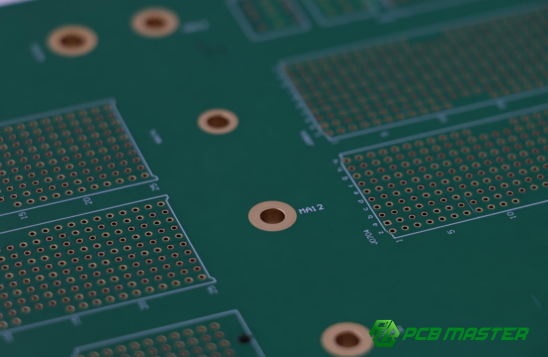
How Can OEMs and EMS Providers Build a Reliable PCB Material Risk Mitigation Strategy?
OEMs and EMS providers can build a reliable PCB material risk mitigation strategy by creating structured material databases, maintaining an approved vendor list, preparing alternative designs early, and aligning procurement with engineering through continuous communication.
A strong PCB material risk management strategy is not reactive. It is a proactive system that ensures production stability even when key laminates such as Megtron, Rogers, or other high-performance materials face shortages. The goal is to reduce downtime, avoid redesign delays, and secure supply chain continuity for high-speed and RF PCB projects.
A complete strategy typically includes four pillars: data, suppliers, design preparation, and cross-functional coordination.
How can approved material databases improve responsiveness?
Approved material databases improve responsiveness by centralizing material properties, validated alternatives, and historical performance data, allowing faster decision-making during shortages.
A PCB material substitution database acts as a “technical memory system” for engineering and procurement teams. Instead of starting analysis from scratch, teams can quickly identify validated replacement options.
Material parameter libraries
Material parameter libraries store key electrical and mechanical properties.
Typical stored parameters include:
- Dielectric constant (Dk)
- Dissipation factor (Df)
- Tg and Td values
- Copper compatibility
- Thickness and stack-up data
Example: When a designer needs a Megtron 6 alternative, the system immediately shows IT-968 or TU-872 SLK with matching Dk/Df range.
Alternative relationship mapping
This maps “equivalent materials” based on real engineering validation.
- One-to-many substitution mapping
- Loss class grouping (Low / Very Low / Ultra Low loss)
- RF and high-speed segmentation
Key benefit: Engineers can quickly identify PCB laminate substitution options without redoing full material research.
Historical validation records
Stores previous successful substitution cases.
- SI/PI simulation results
- Production yield data
- Customer approval history
Example: If IT-988G was previously validated as a Megtron 7 replacement, future projects can reuse the same qualification path.
Why is an Approved Vendor List (AVL) essential?
An AVL is essential because it ensures multiple qualified suppliers are available for each critical PCB material, reducing supply chain disruption risk.
A well-maintained PCB material AVL (Approved Vendor List) is a core supply chain risk control tool for OEMs and EMS companies.
Primary suppliers
Primary suppliers are the first-choice sources for production materials.
- Best price-performance balance
- Stable long-term supply agreements
- Preferred for high-volume production
Example: Megtron or Rogers may be listed as primary suppliers for RF and high-speed designs.
Secondary suppliers
Secondary suppliers act as validated backup sources.
- Used during shortages
- Must pass qualification tests
- Often include equivalent laminate alternatives
Key point: Secondary suppliers are not “cheaper options,” but risk-controlled backup materials .
Regional sourcing flexibility
Different suppliers may be used based on geography.
- Asia-based supply for fast delivery
- US/EU suppliers for local compliance
- Multi-region sourcing reduces lead-time risk
Example: A global EMS provider may source ITEQ materials in Asia and Isola materials in North America depending on production location.
How can designers prepare for future shortages?
Designers can prepare for shortages by defining backup materials early, validating alternative stack-ups in advance, and setting impedance design windows during the design phase.
This approach is known as Design for Supply Chain Resilience (DfSCR) in PCB engineering.
Define backup materials during design
Designers should not rely on a single PCB laminate.
- Select 1–2 validated alternatives during design stage
- Ensure similar Dk and Df ranges
- Document substitution rules early
Example: A design using RO4350B may also pre-approve S7136H as a backup option.
Pre-validate alternative stack-ups
Stack-up is often the most sensitive part of PCB design.
- Pre-simulate multiple material combinations
- Validate impedance and loss behavior early
- Reduce redesign time during shortages
Key benefit: Avoids last-minute engineering changes when materials become unavailable.
Establish impedance windows early
Instead of fixed impedance values, define acceptable ranges.
- Example: 50Ω ±5% tolerance window
- Allows material flexibility
- Reduces redesign frequency
Simple explanation: Think of it as allowing “safe variation” instead of a single rigid value.
How should procurement and engineering teams collaborate?
Procurement and engineering teams must work together through early warning systems, structured engineering change processes, and regular cross-functional risk reviews.
Effective PCB material supply chain management depends on communication, not isolated decision-making.
Early shortage alerts
Procurement should inform engineering early about risks.
- Lead time increases
- Allocation risks
- EOL (end-of-life) notifications
Example: If Megtron 6 lead time increases from 6 weeks to 20 weeks, engineering must immediately evaluate alternatives.
ECO management procedures
ECO (Engineering Change Order) ensures controlled material changes.
- Formal approval workflow
- SI/PI re-validation requirement
- Documentation of substitution impact
Key point: No material change should bypass engineering approval.
Cross-functional risk reviews
Regular meetings between procurement and engineering teams.
- Review material availability trends
- Evaluate approved alternatives
- Update AVL and substitution database
Example: Monthly reviews help identify when IT-968 or TU-872 SLK should be pre-qualified before shortages occur.
Summary insight
A strong PCB material risk mitigation strategy is built on four layers:
- Data system (material database + substitution mapping)
- Supply chain structure (AVL strategy)
- Design preparation (early backup planning)
- Cross-team collaboration (engineering + procurement alignment)
Together, these ensure OEMs and EMS providers can maintain stable production even under global PCB material shortages, especially for high-speed and RF applications.
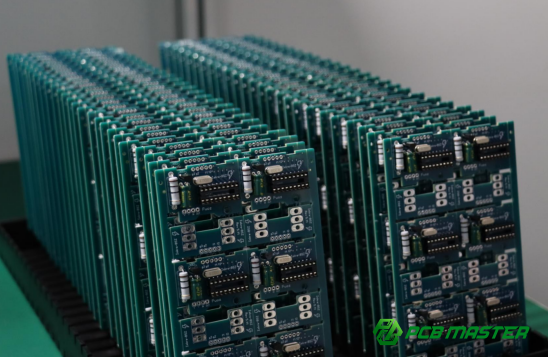
Why Do Global Customers Choose PCBMASTER for PCB Material Substitution Support?
Global customers choose PCBMASTER because it combines stable global laminate sourcing, strong engineering validation capability, and proven experience in managing PCB material substitutions for high-speed and RF applications.
In modern electronics manufacturing, PCB material substitution support is not only about finding alternatives. It is about ensuring the replacement material maintains electrical performance, reliability, and delivery stability. PCBMASTER supports this end-to-end requirement through integrated supply chain and engineering services.
How does PCBMASTER ensure stable access to laminate materials?
PCBMASTER ensures stable material access through long-term supplier partnerships, diversified sourcing networks, and strategic inventory planning for high-demand PCB laminates.
Reliable PCB production depends heavily on consistent access to materials such as Megtron, ITEQ, Rogers, EMC, and Isola laminates. PCBMASTER builds resilience at the supply chain level to reduce shortage risks.
Established relationships with major laminate suppliers
PCBMASTER works closely with globally recognized PCB laminate manufacturers.
- Long-term cooperation with mainstream material brands
- Priority access during allocation periods
- Faster response to urgent procurement needs
Example: During Megtron 6 allocation constraints, PCBMASTER can prioritize verified sourcing channels to secure production continuity.
Mature and diversified sourcing channels
Instead of relying on a single supply route, PCBMASTER uses multiple procurement paths.
- Global distributor network
- Direct factory sourcing channels
- Regional supply balancing (Asia, Europe, North America)
Key benefit: Reduces dependency risk and improves material availability during shortages.
Strategic inventory planning
PCBMASTER maintains planned stock for frequently used PCB laminates.
- Buffer inventory for high-speed materials
- Forecast-based purchasing strategy
- Project-driven material reservation
Example: For AI server projects, critical laminates like Very Low Loss materials can be pre-reserved to avoid production delays.
What engineering support does PCBMASTER provide?
PCBMASTER provides engineering-level support including stack-up optimization, SI/PI analysis assistance, and PCB material compatibility evaluation to ensure safe substitution.
Unlike basic suppliers, PCBMASTER focuses on engineering-validated PCB material substitution , not just material delivery.
Stack-up optimization recommendations
PCBMASTER helps redesign or adjust PCB stack-ups when material changes are required.
- Layer structure adjustment for impedance control
- Thickness balancing for manufacturability
- Dielectric alignment for signal stability
Example: Switching from Megtron 6 to a substitute laminate may require stack-up tuning to maintain 50Ω impedance.
SI/PI evaluation assistance
Signal integrity (SI) and power integrity (PI) analysis is critical for high-speed designs.
- Insertion loss and return loss review
- PDN impedance stability checks
- Eye diagram performance evaluation
Key benefit: Ensures PCB material substitution does not degrade system performance in AI or networking applications.
Material compatibility reviews
PCBMASTER evaluates whether the new laminate is compatible with:
- Copper foil type
- Lamination process
- Via reliability requirements
Simple explanation: Even if two materials look similar on paper, they may behave differently during manufacturing.
How does PCBMASTER reduce qualification risks?
PCBMASTER reduces qualification risks by applying cross-industry experience, structured engineering change processes, and complete technical documentation support.
PCB material qualification is often the most time-consuming part of substitution. PCBMASTER helps shorten this cycle by providing proven validation pathways.
Experience across AI, networking, industrial and RF applications
PCBMASTER supports multiple high-demand industries:
- AI servers and GPU computing boards
- High-speed networking switches
- Industrial control systems
- RF and microwave communication modules
Example: A substitution strategy used in AI server boards can be reused for similar high-speed networking designs, reducing validation time.
Structured change management processes
PCBMASTER uses controlled processes for every material change.
- Engineering Change Order (ECO) workflow
- Pre-approved substitution lists
- SI/PI re-validation checkpoints
Key point: No material substitution is applied without formal engineering review.
Documentation support for customer approval
PCBMASTER provides full technical documentation needed for qualification.
- Material comparison reports (Dk/Df/Tg/Td)
- Stack-up adjustment files
- Test and validation summaries
Benefit: Helps customers quickly pass internal approval processes.
How does PCBMASTER help customers maintain on-time delivery?
PCBMASTER ensures on-time delivery through proactive supply chain planning, rapid response to shortages, and strict quality control systems.
In PCB manufacturing, delivery delays are often caused by material shortages. PCBMASTER reduces this risk through proactive management.
Supply chain resilience planning
PCBMASTER builds resilience into every project.
- Multi-source material planning
- Backup laminate qualification
- Demand forecasting for key materials
Example: If Rogers or Megtron materials face delays, validated alternatives are already prepared.
Fast response to material shortages
PCBMASTER can quickly switch to approved alternative materials.
- Pre-qualified substitution database
- Engineering-verified alternatives ready
- Rapid decision-making process
Key benefit: Reduces project downtime during global supply fluctuations.
Consistent quality control systems
Quality consistency ensures reliable PCB performance after substitution.
- Incoming material inspection
- Process control during fabrication
- Final electrical testing
Simple explanation: Even if the material changes, PCB performance must remain stable and predictable.
Summary insight
PCBMASTER supports global customers through a complete PCB material substitution ecosystem:
- Stable laminate supply chain network
- Engineering-driven validation support
- Risk-controlled qualification process
- Reliable on-time delivery assurance
By combining PCB material substitution expertise with global sourcing capability , PCBMASTER helps OEMs and EMS providers maintain performance continuity in high-speed and RF PCB applications while minimizing supply chain disruption risks.
Conclusion
As electronic systems continue to push toward higher data rates, higher frequencies, and greater integration, PCB material selection has become a critical part of overall system reliability. From high-speed digital backplanes to RF and millimeter-wave applications, even small differences in laminate properties can significantly impact performance, stability, and product lifecycle success.
Effective PCB material substitution is no longer just about finding an “equivalent” material. It requires a structured engineering approach that combines electrical matching, simulation validation, manufacturing feasibility, and long-term reliability assurance. When this process is done correctly, supply chain challenges can be managed without compromising system performance.
With the right substitution strategy in place, OEMs and EMS providers can respond faster to material shortages, reduce qualification risks, and maintain consistent production schedules across global projects. At the same time, engineers gain more flexibility in design without sacrificing signal integrity or RF performance.
PCBMASTER supports this process by integrating global material sourcing with engineering-level validation and production experience. By aligning supply chain resilience with technical verification, customers can confidently navigate PCB laminate shortages while keeping their high-speed and RF designs on track for reliable mass production.
FAQs
Can Megtron 6 be replaced without redesigning the PCB?
Under limited circumstances, yes—but full electrical verification is still required.
In some cases, Megtron 6 (a very common very low loss PCB laminate ) can be replaced with a closely matched alternative if the substitute has similar Dk/Df values and stack-up compatibility . However, this does not guarantee a true “drop-in replacement.”
Even when the electrical class is similar, engineers should still perform:
- SI (Signal Integrity) verification
- PI (Power Integrity) check
- Impedance re-calculation
Example: A server backplane using Megtron 6 may switch to IT-968, but trace impedance and loss budget must still be revalidated before production.
How closely should Dk values match during RF material substitution?
The closer the Dk match, the lower the design risk and redesign effort.
For RF PCB material substitution , dielectric constant (Dk) directly affects signal speed, impedance, and resonance frequency. Therefore, tight matching is critical.
General guidance:
- RF antennas: very tight Dk matching required
- Microwave circuits: moderate tolerance possible
- Lower frequency RF: slightly wider tolerance allowed
Rule of thumb: A deviation within ±0.05 to ±0.1 is typically acceptable, but it depends on frequency and layout sensitivity.
Example: In a 5G antenna design, even small Dk variation can shift resonance frequency and affect coverage performance.
Does every laminate substitution require requalification?
Yes, critical high-speed and RF applications always require formal requalification.
Even if a material is listed as a validated PCB laminate alternative , final approval must consider system-level behavior.
Requalification usually includes:
- Electrical testing (insertion loss, return loss)
- SI/PI simulation
- Impedance validation
- Reliability testing (thermal, CAF, etc.)
Key insight: Material similarity does not eliminate system-level validation needs.
Example: Switching from Megtron 7 to another ultra-low loss material still requires full signal integrity validation in 224G SerDes systems.
How can companies prepare for future PCB material shortages?
Companies should proactively build backup material strategies and maintain a qualified AVL system.
To reduce risk from PCB laminate shortages , companies should implement:
- Pre-approved alternative materials during design phase
- Approved Vendor List (AVL) management
- Early validation of substitute stack-ups
- Material database with historical performance records
Example: An AI server OEM may pre-qualify both Megtron 6 and IT-968 to avoid production delays during supply fluctuations.
Key benefit: Faster response time when shortages occur and reduced redesign cycles.
Should procurement prioritize cost or electrical performance when selecting alternatives?
Neither should dominate—material selection must balance performance, risk, lead time, and total system impact.
In PCB material substitution decisions , focusing only on cost can lead to performance failure, while focusing only on performance can create supply risk.
A balanced decision considers:
- Electrical performance (Dk, Df, signal integrity)
- Supply availability and lead time
- Qualification effort and risk
- Total system cost impact
Example: A slightly more expensive but validated laminate may reduce redesign cost and avoid production delays, making it the better overall choice.
Key principle: The best PCB material is not the cheapest or the highest-performing—it is the one that ensures stable production and system reliability.
About the Author

Carol Luo
PCB Design EngineerI'm Carol, a PCB Engineer at PCBMASTER with experience in PCB design and manufacturing engineering since 2018. I focus on translating engineering requirements into reliable PCB solutions, with expertise in stack-up design, material selection, and design-for-manufacturing (DFM). I share practical engineering insights from real-world PCB design and production experience.
Visit Carol Luo's Profile