








How to Prevent Ink Residue in Small NPTH Holes: Root Causes, Prevention Methods, and IPC Guidelines
Ink residue inside Non-Plated Through Holes (NPTH) is a common solder mask defect in PCB manufacturing, particularly in NPTH holes with diameters of ≤1.0 mm . During the solder mask process, ink can enter these holes and become trapped due to capillary action, restricted developer exchange, and improper process parameters. If not effectively controlled, residual ink may affect dimensional compliance, inspection acceptance, and final product quality. Through optimized solder mask design, process adjustments, and secondary drilling strategies, manufacturers can significantly reduce this defect and ensure compliance with IPC-A-600 Class 2 and Class 3 requirements.
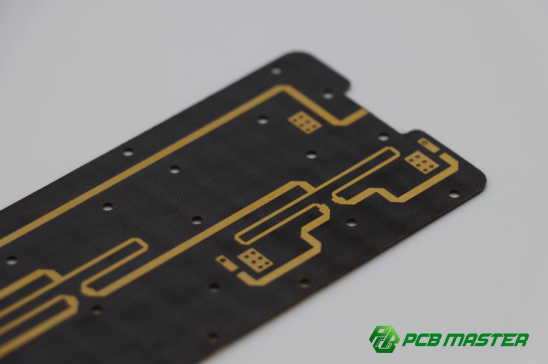
Why Are Small NPTH Holes More Prone to Ink Residue?
NPTH holes differ from plated holes because their inner walls consist of exposed fiberglass and resin substrates rather than copper surfaces. These materials interact differently with solder mask ink and can make residue removal more challenging.
Several factors contribute to this phenomenon:
1. Capillary Action
The smaller the hole diameter, the stronger the capillary effect.
Solder mask ink is more easily drawn into narrow openings and becomes difficult to evacuate before curing.
2. Restricted Developer Flow
During the developing process, fresh developer solution must continuously replace the liquid inside the hole.
In very small NPTH holes, this liquid exchange becomes inefficient, reducing the developer's ability to remove uncured ink.
3. Solder Mask Ink Characteristics
Photosensitive solder mask begins partial polymerization during pre-baking.
If excessive ink accumulates inside the hole, the developer cannot completely dissolve the partially cured material.
4. Process Design Choices
Some manufacturers use open-screen printing methods to simplify production and reduce tooling costs.
Without localized solder mask blocking, large amounts of ink may enter NPTH holes directly.
Factors Affecting Ink Residue Formation
Several process variables influence the likelihood of residual ink.
Common Influencing Factors
| Factor | Typical Industry Condition | Optimized Practice / PCBMASTER Approach |
| NPTH Hole Diameter | Residue risk increases dramatically below 1.0 mm | Design recommendation of ≥1.5 mm whenever possible |
| Board Thickness | Thicker boards hinder developer exchange | Process adjustments based on aspect ratio |
| Ink Viscosity | High viscosity reduces ink evacuation | Controlled viscosity optimization |
| Pre-bake Parameters | Excessive temperature/time causes partial curing | Optimized low-temperature pre-baking |
| Developing Pressure | Low pressure leaves trapped ink | Enhanced spray pressure and nozzle movement |
| Mask Printing Method | Open-screen printing may flood holes | Localized solder mask blocking techniques |
| Air Entrapment | Bubble accumulation creates localized buildup | Strict process monitoring and equipment control |
Key Observation: The combination of small hole diameter and improper solder mask processing is the primary root cause of NPTH ink residue.
Practical Solutions and Preventive Measures
Design Stage Recommendations
Design optimization remains the most effective preventive strategy.
Increase NPTH Hole Diameter
Whenever possible, NPTH holes should be designed at ≥1.5 mm.
Larger holes reduce capillary effects and improve developer circulation.
Consider Secondary Drilling for Ultra-Small Holes
If the application requires NPTH holes below 0.5 mm , designers may consider drilling these holes during a later process stage.
However, the potential impact on positional tolerance should be evaluated with the end customer.
Solder Mask Process Optimization
Process control is essential for minimizing ink residue during production.
Use Localized Ink Blocking
Implementing solder mask blocking patterns (dam structures) around NPTH locations can significantly reduce direct ink intrusion.
Compared with conventional open-screen printing, this method improves yield consistency.
Optimize Ink Viscosity
Appropriate dilution can improve ink flow characteristics.
However, excessive reduction may cause solder mask bleeding into adjacent features.
Process validation is therefore critical.
Adjust Pre-Bake Parameters
Reducing pre-bake temperature and shortening bake duration allows trapped ink to remain more developable.
The objective is to prevent premature polymerization.
Improve Developing Performance
Recommended adjustments include:
- Increasing developer spray pressure;
- Utilizing oscillating upper and lower spray manifolds;
- Enhancing solution exchange inside small holes;
- Extending developing time appropriately.
This combination often produces substantial improvements without increasing production costs.
Secondary Drilling: The Final Corrective Option
When conventional optimization methods fail, secondary drilling after solder mask curing becomes an effective solution.
Process Method
The manufacturing sequence is as follows:
- Complete the solder mask process normally;
- Allow the solder mask to fully cure;
- Re-drill the affected NPTH holes;
- Use a drill diameter approximately 0.05–0.10 mm larger than the original hole size.
This operation removes residual ink and a thin layer of contaminated substrate material.
Advantages
- Reliable removal of residual ink;
- Improved compliance with customer acceptance standards;
- Suitable for difficult designs with ultra-small NPTH holes.
Limitations
- Additional drilling cost;
- Increased processing time;
- Possible minor hole deformation;
- Careful evaluation of positional tolerance requirements is necessary.
Common Misconceptions to Avoid
"Ink residue is only a cosmetic issue."
This is incorrect.
Residual ink may:
- Affect dimensional inspection;
- Restrict mechanical clearance;
- Trigger customer quality concerns;
- Lead to rejection during final acceptance.
"Increasing developing time alone solves the problem."
Excessive developing may adversely affect solder mask quality elsewhere on the panel.
A balanced process approach is required.
"All small NPTH holes require secondary drilling."
Not necessarily.
Many cases can be effectively controlled through proper solder mask design and optimized process parameters.
PCBMASTER's Manufacturing Practices for NPTH Quality Control
As a professional provider of PCB, PCBA, and SMT solutions , PCBMASTER integrates quality assurance into every stage of PCB production.
Supported by internationally recognized certifications including IATF 16949, ISO 9001, UL Certification, and RoHS compliance , PCBMASTER applies rigorous process controls to minimize solder mask defects in demanding applications.
PCBMASTER's Key Advantages
- Free engineering document review to identify manufacturability risks before production;
- A team of 50+ professional engineers providing one-on-one technical support;
- Advanced AOI inspection systems and three-stage quality inspections;
- 99.5% product yield rate supported by standardized manufacturing procedures;
- 24-hour rapid prototyping capabilities for urgent projects;
- An impressive 99.59% on-time delivery rate across more than 3,000 orders processed daily.
For NPTH-related manufacturability concerns, PCBMASTER's engineering team works closely with customers to recommend optimal solutions, whether through design modifications, solder mask optimization, or secondary drilling strategies.
Industry Standards and Acceptance Criteria
According to IPC-A-600 Class 2 and Class 3 acceptance requirements:
NPTH holes should not contain visible solder mask residue that obstructs the intended hole function.
Minor ring-shaped traces that do not reduce the effective hole diameter may be acceptable depending on the specified acceptance class and customer requirements.
Therefore, manufacturers should always confirm the applicable inspection criteria with end users before defining corrective actions.
Conclusion: Choosing the Right Strategy for Small NPTH Holes
Ink residue inside small NPTH holes remains one of the most common challenges in PCB solder mask processing.
In high-volume production environments, the recommended priority is:
- Localized solder mask blocking;
- Low-temperature, controlled pre-baking;
- Enhanced high-pressure developing;
- Secondary drilling when necessary.
By combining thoughtful PCB design with robust manufacturing controls, defects can be minimized without sacrificing efficiency or cost competitiveness.
With extensive expertise in PCB fabrication and assembly, PCBMASTER continues to help global customers overcome manufacturability challenges and deliver reliable electronic products that meet stringent international quality standards.
Tags: #PCBManufacturing #NPTH #SolderMask #PCBA #SMT #PCBMASTER #IPC600 #DesignForManufacturing #QualityControl #ElectronicsManufacturing #PCBEngineering
About the Author

Carol Luo
PCB Design EngineerI'm Carol, a PCB Engineer at PCBMASTER with experience in PCB design and manufacturing engineering since 2018. I focus on translating engineering requirements into reliable PCB solutions, with expertise in stack-up design, material selection, and design-for-manufacturing (DFM). I share practical engineering insights from real-world PCB design and production experience.
Visit Carol Luo's Profile