








Why Do Optical Module PCBs Use ENEPIG (Nickel Palladium Gold) Surface Finish for Wire Bonding?
In modern optical transceivers and high-speed optoelectronic packaging, ENEPIG (Electroless Nickel Electroless Palladium Immersion Gold) , commonly referred to as Ni/Pd/Au (Nickel Palladium Gold) , has become the preferred PCB surface finish for wire bonding applications. It is widely used in COB, TOSA, ROSA, BOSA, Driver IC, TIA IC, EML, and VCSEL packaging because it provides an optimal balance of wire bondability, corrosion resistance, long-term reliability, solderability, and cost efficiency .
For optical modules deployed in data centers, telecommunications networks, and outdoor environments, reliability requirements often exceed 10–25 years of service life . Under such demanding conditions, standard finishes may not provide sufficient protection, making ENEPIG one of the industry's most trusted solutions for high-reliability optical applications.
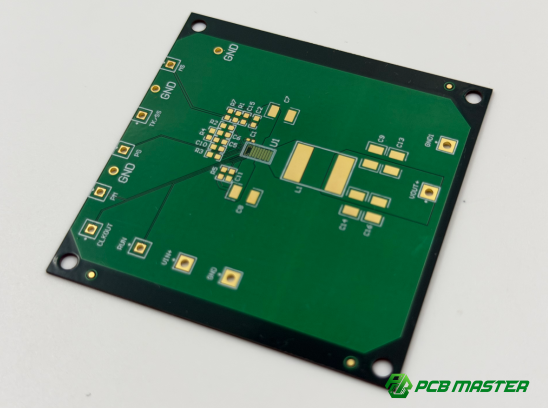
Understanding the ENEPIG Structure
A typical ENEPIG surface finish consists of three functional metal layers:
| Layer | Typical Thickness | Primary Function |
| Nickel (Ni) | 3–7 μm | Diffusion barrier and structural support |
| Palladium (Pd) | 0.05–0.15 μm | Oxidation protection and reliability enhancement |
| Gold (Au) | 0.03–0.10 μm | Wire bonding interface and corrosion resistance |
Recommended Stack for High-Speed Optical Modules
For 100G, 400G, and 800G optical transceivers, a common specification is:
| Layer | Typical Thickness |
| Nickel | 5 μm |
| Palladium | 0.1 μm |
| Gold | 0.05 μm |
The Function of Each Layer
Nickel Layer (Ni): The Critical Barrier Layer
The nickel layer serves as the foundation of the ENEPIG structure.
Its primary functions include:
- Preventing copper diffusion to the surface
- Reducing excessive formation of Au-Cu intermetallic compounds
- Providing mechanical strength for wire bonding
- Improving corrosion resistance
- Supporting long-term reliability
Without a nickel barrier, copper can migrate toward the surface and oxidize over time, resulting in:
- Reduced bond pull strength
- Increased contact resistance
- Lower bonding yields
- Reliability degradation during field operation
For long-life optical modules, nickel is indispensable for maintaining stable electrical and mechanical performance.
Palladium Layer (Pd): The Reliability Protector
The palladium layer acts as a protective intermediary between nickel and gold.
Its key functions include:
- Preventing nickel oxidation
- Protecting the nickel surface during storage and assembly
- Reducing the risk of Black Pad defects
- Improving wire bond consistency
- Enhancing long-term environmental reliability
When nickel is exposed to air, it can form nickel oxides such as:
- NiO
- Ni₂O₃
These oxide layers can negatively affect gold ball formation and reduce ball shear strength.
The palladium layer serves as an oxygen barrier, significantly lowering oxidation-related failures.
Compared with conventional ENIG finishes, ENEPIG greatly reduces the risk of:
- Black Pad formation
- Bond lift failures
- Brittle solder joints
- Nickel-phosphorus corrosion
This is one of the primary reasons ENEPIG is widely adopted in telecom-grade and datacenter optical modules.
Gold Layer (Au): The Wire Bonding Surface
The outer gold layer provides the direct bonding interface for gold wire.
Advantages include:
- Excellent oxidation resistance
- Stable electrical conductivity
- Low contact resistance
- Wide process window for wire bonding
- Consistent gold ball formation
However, thicker gold layers are not always beneficial.
Excessive gold thickness may:
- Increase manufacturing cost
- Promote thicker intermetallic compound formation
- Affect long-term bond reliability
Therefore, ENEPIG typically uses only a very thin immersion gold layer to achieve optimal bonding performance while controlling cost.
Why Optical Modules Particularly Favor ENEPIG
Optical transceivers operate in some of the most demanding electronic environments.
Typical deployment scenarios include:
- Data centers
- Telecommunications infrastructure
- 5G networks
- Outdoor communication equipment
- Industrial optical communication systems
These products are expected to withstand:
- High temperature operation
- High humidity exposure
- Sulfur-containing atmospheres
- Salt fog environments
- Thermal cycling
- Long-term continuous operation
Service life requirements often range from 10 to 25 years .
Under these conditions, standard surface finishes such as ENIG or immersion gold may not provide sufficient protection against long-term degradation.
ENEPIG offers:
- Superior wire bond reliability
- Better corrosion resistance
- Lower Black Pad risk
- Enhanced environmental durability
- Stable performance over extended lifecycles
As a result, ENEPIG has become a mainstream surface finish for high-performance optical modules.
Corrosion and Reliability Tests for Wire Bonding Applications
To verify long-term performance, optical module manufacturers commonly conduct the following reliability tests.
High Temperature & High Humidity Test
Typical condition:
85°C / 85% RH for 1,000 hours
Evaluation items:
- Bond pull force
- Ball shear strength
- Contact resistance
- Surface corrosion
Salt Spray Test
Typical condition:
5% NaCl at 35°C
Evaluation items:
- Gold layer integrity
- Nickel exposure
- Corrosion resistance
- Surface discoloration
Sulfur Corrosion Test
Typical gases:
- H₂S
- SO₂
Evaluation items:
- Wire corrosion resistance
- Contact degradation
- Surface contamination
Silver wire is generally more susceptible to sulfur attack, while gold wire offers significantly better stability.
Electrochemical Migration Test
Under high humidity conditions, metal ions may migrate and cause:
- Leakage current
- Short circuits
- Signal degradation
The Ni/Pd/Au structure effectively minimizes metal migration and improves insulation reliability.
Common Gold Wire Sizes Used in Optical Modules
Gold wire diameter depends on:
- Current carrying requirements
- Signal frequency
- Pad pitch
- Die size
- Packaging architecture
Typical specifications include:
| Gold Wire Diameter | Equivalent | Typical Application |
| 0.8 mil | 20 μm | Driver IC, TIA IC, EML Driver |
| 1.0 mil | 25 μm | Standard optical transceivers |
| 1.2 mil | 30 μm | Higher-current applications |
Among these options, 1.0 mil (25 μm) gold wire remains the most widely used specification in commercial optical modules.
Telecom-Grade ENEPIG Configuration for Long-Term Reliability
For optical modules designed to meet Telcordia GR-468 reliability requirements, a commonly adopted configuration is:
| Parameter | Typical Value |
| Nickel Thickness | 3–5 μm |
| Palladium Thickness | 0.08–0.15 μm |
| Gold Thickness | 0.03–0.08 μm |
| Gold Wire Diameter | 0.8–1.0 mil |
This combination provides:
- High wire bonding yield
- Excellent corrosion resistance
- Stable electrical performance
- Robust environmental durability
- Long-term reliability exceeding 20 years
PCBMASTER's ENEPIG Capability for Optical Module Applications
As optical communication technologies continue evolving toward 100G, 400G, 800G, and future 1.6T architectures , PCB surface finish quality becomes increasingly critical to overall module reliability.
With advanced PCB manufacturing capabilities, PCBMASTER supports high-reliability ENEPIG surface finishes for demanding optical communication applications, including:
- High-speed optical transceivers
- TOSA/ROSA assemblies
- BOSA modules
- VCSEL-based optical engines
- Driver IC and TIA IC packaging
- COB and chip-level optoelectronic packaging
Backed by IATF 16949, ISO 9001, UL, and RoHS certifications , PCBMASTER combines strict process control, advanced inspection systems, and comprehensive quality management to help customers achieve consistent wire bonding performance and long-term field reliability.
Conclusion
ENEPIG (Ni/Pd/Au) is widely regarded as one of the most reliable PCB surface finishes for optical module wire bonding applications. By combining the diffusion barrier properties of nickel, the oxidation protection of palladium, and the superior bondability of gold, ENEPIG delivers exceptional performance in harsh operating environments.
For modern optical transceivers requiring long service life, high reliability, and stable wire bond performance, ENEPIG remains the preferred solution for achieving both manufacturing efficiency and long-term product durability.
Tags: #OpticalModules #ENEPIG #NickelPalladiumGold #WireBonding #PCBManufacturing #HighSpeedPCB #Optoelectronics #TOSA #ROSA #VCSEL #TelecomElectronics #PCBMASTER #PCBA #SurfaceFinish #OpticalTransceiver #800GOptics #DataCenterNetworking
About the Author

Carol Luo
PCB Design EngineerI'm Carol, a PCB Engineer at PCBMASTER with experience in PCB design and manufacturing engineering since 2018. I focus on translating engineering requirements into reliable PCB solutions, with expertise in stack-up design, material selection, and design-for-manufacturing (DFM). I share practical engineering insights from real-world PCB design and production experience.
Visit Carol Luo's Profile