








IPC Standards for PCB: Classes, IPC-A-600 & IPC-A-610
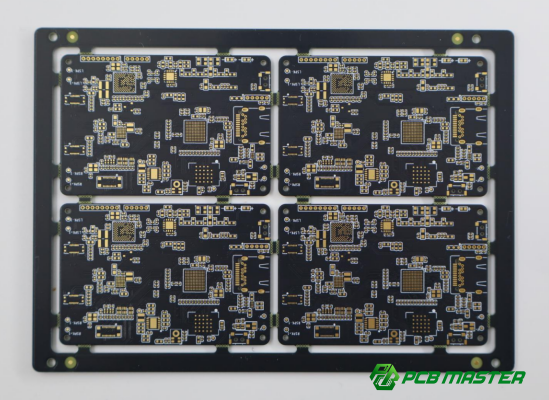
As global electronics manufacturing becomes more complex, IPC standards have become the universal language for PCB and PCBA production. From PCB design rules and assembly quality to inspection criteria and high-reliability manufacturing, IPC standards ensure consistency, manufacturability, safety, and long-term product performance. For companies sourcing PCB and PCBA globally, working with an IPC-compliant manufacturer like PCBMASTER helps reduce defects, accelerate production cycles, and guarantee stable quality across automotive, industrial, telecommunications, medical, and consumer electronics applications. With certifications including IATF 16949, ISO 9001, UL, and RoHS, PCBMASTER delivers IPC-driven manufacturing solutions supported by advanced inspection systems, 24-hour engineering response, and a 99.59% on-time delivery rate.
What Are IPC Standards in PCB Manufacturing?
IPC standards are globally recognized guidelines developed by the Institute for Interconnecting and Packaging Electronic Circuits (IPC) to standardize PCB design, fabrication, assembly, inspection, and testing processes.
Established in 1957, IPC has evolved into one of the most influential organizations in the electronics manufacturing industry. Today, IPC standards are used by PCB manufacturers, EMS providers, OEMs, automotive suppliers, aerospace contractors, and electronics designers worldwide.
The core purpose of IPC standards is to create a unified framework that improves:
- PCB manufacturing consistency
- Cross-border engineering communication
- Product reliability and safety
- Production efficiency and yield
- Supply chain compatibility
- Inspection and quality assurance
Without IPC standards, global electronics manufacturing would suffer from incompatible specifications, inconsistent quality benchmarks, and higher production risks.
For modern PCB and PCBA suppliers, IPC compliance is no longer optional — it is a baseline requirement for participating in international electronics manufacturing.
Why IPC Standards Matter in Modern PCB and PCBA Production
As PCB structures become more advanced — including HDI boards, rigid-flex PCBs, high-frequency materials, and fine-pitch surface-mount technology (SMT) assembly — manufacturing tolerances become increasingly critical.
IPC standards provide the engineering discipline necessary to maintain consistent product quality across complex production environments.
Key Benefits of IPC Standards
Improved Reliability
IPC-defined manufacturing tolerances help ensure long-term electrical and mechanical reliability, especially in harsh operating environments such as automotive electronics, industrial control systems, and medical devices.
Better Global Collaboration
Standardized documentation enables seamless communication between PCB designers, manufacturers, assemblers, and suppliers located in different countries.
Higher Manufacturing Yield
IPC-compliant DFM (Design for Manufacturability) rules reduce fabrication defects, soldering failures, and rework rates.
Enhanced Product Safety
IPC guidelines include strict criteria for insulation spacing, solder integrity, ESD protection, and thermal reliability.
Faster Product Development
When engineering files follow IPC documentation standards, manufacturers can accelerate quoting, engineering review, and production setup.
At PCBMASTER , all PCB and PCBA projects undergo free engineering file review to ensure manufacturability, IPC compliance, and optimized production efficiency before fabrication begins.
Evolution of IPC Standards: From Basic PCB Rules to Advanced Electronics Manufacturing
IPC standards have continuously evolved alongside the electronics industry itself.
1950s–1970s: Foundation of PCB Manufacturing Standards
The first IPC standards focused on:
- Printed circuit board design rules
- Material specifications
- Inspection requirements
- Basic manufacturing terminology
A milestone during this period was the introduction of IPC-A-600, which established PCB acceptability criteria still widely used today.
1980s–2000s: SMT and High-Density Electronics
As SMT emerged, IPC introduced standards covering:
- Fine-pitch component placement
- Soldering quality
- Thermal reliability
- Lead-free manufacturing
- Automated assembly processes
These standards enabled the rapid miniaturization of electronics.
2000s–Present: Advanced PCB Technologies
Modern IPC standards now address:
- HDI PCB structures
- Flexible and rigid-flex PCBs
- Automotive electronics reliability
- Aerospace-grade PCB requirements
- Additive electronics manufacturing
- Sustainable manufacturing practices
Today, IPC maintains hundreds of active standards supporting the global electronics ecosystem.
The Most Important IPC Standards for PCB and PCBA Manufacturing
Different IPC standards focus on specific areas of PCB fabrication, assembly, inspection, and reliability.
Below are the most important IPC standards widely used in the industry.
| IPC Standard | Primary Function | Industry Importance |
| IPC-A-600 | PCB acceptability criteria | Bare board inspection standard |
| IPC-A-610 | Electronic assembly acceptability | SMT and soldering inspection |
| IPC-2221 | Generic PCB design standard | Core PCB design rules |
| IPC-6012 | Qualification for rigid PCBs | Performance validation |
| IPC J-STD-001 | Soldering requirements | Solder process quality |
| IPC-1791 | High-reliability PCB design | Aerospace & medical applications |
| IPC/WHMA-A-620 | Cable & wire harness standards | Assembly reliability |
| IPC-D-275 | Rigid PCB design standard | Manufacturability optimization |
IPC-A-600: Acceptability of Printed Boards
IPC-A-600 defines the visual acceptance criteria for bare PCBs.
It evaluates:
- Hole wall quality
- Copper plating thickness
- Annular ring integrity
- Surface finish quality
- Layer registration
- Solder mask condition
- Mechanical defects
This standard acts as the “visual benchmark” for PCB quality inspection worldwide.
Common IPC-A-600 Inspection Areas
| Inspection Item | Standard Requirement | PCBMASTER Quality Practice |
| Copper plating | Uniform and defect-free | Advanced AOI + 3-time inspection |
| Hole integrity | No cracks or voids | Fully tested before shipment |
| Solder mask | No contamination or peeling | High-precision coating control |
| Layer alignment | Controlled registration tolerance | Automated imaging systems |
IPC-A-610: Electronic Assembly Acceptability
IPC-A-610 focuses on PCBA assembly quality.
It evaluates:
- Solder joint quality
- SMT component alignment
- Through-hole soldering
- Flux residue
- Assembly cleanliness
- Mechanical workmanship
This standard is especially important in:
- Automotive electronics
- Medical equipment
- Telecommunications hardware
- Industrial automation systems
At PCBMASTER, all PCBA assemblies follow strict IPC-based quality inspection procedures supported by AOI testing and multi-stage quality verification.
Understanding IPC Classes: Class 1 vs Class 2 vs Class 3
IPC categorizes electronics products into three reliability classes.
IPC Class Comparison
| IPC Class | Application Type | Reliability Requirement |
| Class 1 | Consumer electronics | Basic functionality |
| Class 2 | Industrial & commercial products | Extended reliability |
| Class 3 | Aerospace, medical | Maximum reliability |
IPC Class 1
Used for low-cost consumer products where occasional failures are acceptable.
Examples:
- Toys
- Basic household electronics
Disposable devices
IPC Class 2
Designed for products requiring stable long-term operation.
Examples:
- Industrial controllers
- Communication equipment
- Consumer electronics
- Smart home systems
IPC Class 3
Reserved for mission-critical electronics.
Examples:
- Aerospace systems
- Automotive safety electronics
- Medical life-support devices
- Defense equipment
PCBMASTER supports advanced PCB manufacturing processes suitable for high-reliability applications requiring strict IPC Class 2 and Class 3 production standards.
IPC Terminology Every PCB Buyer and Engineer Should Know
Understanding IPC terminology improves communication between PCB designers and manufacturers.
Key IPC Terms
Netlist
Defines all electrical connections between components within a PCB design.
Trace
Copper conductive pathways carrying electrical signals.
PTH (Plated Through Hole)
Conductive holes connecting PCB layers vertically.
Advanced interconnect structures used in HDI PCBs.
Annular Ring
Copper ring surrounding a plated hole.
Solder Mask
Protective insulating layer preventing short circuits.
Solder Joint
Electrical and mechanical connection formed during soldering.
Conformal Coating
Protective coating used for moisture and environmental resistance.
AOI (Automated Optical Inspection)
Automated imaging technology used for PCB defect detection.
Common Challenges in IPC-Compliant PCB Manufacturing
Although IPC standards provide clear guidance, achieving consistent compliance requires advanced manufacturing capability.
Typical Manufacturing Challenges
| Challenge | Industry Risk | PCBMASTER Solution |
| HDI drilling precision | Signal failure | Advanced microvia processing |
| Fine-pitch SMT alignment | Assembly defects | Automated AOI inspection |
| Multi-layer registration | Open circuits | High-precision imaging |
| Fast-turn production | Quality instability | Standardized QC workflow |
| Global delivery pressure | Delayed launches | 99.59% on-time delivery |
PCBMASTER’s IPC-Driven Manufacturing Advantage
As a global PCB and PCBA manufacturer, PCBMASTER integrates IPC standards into every stage of manufacturing.
Certified Quality Management
PCBMASTER operates under:
- IATF 16949
- ISO 9001:2015
- UL Certification
- RoHS Compliance
These certifications ensure full alignment with international electronics manufacturing requirements.
Advanced Manufacturing Capability
PCBMASTER supports:
- 1–4L quick-turn PCB prototypes
- HDI PCB manufacturing
- High-frequency PCB production
- Flexible and rigid-flex PCB fabrication
- Metal core PCB manufacturing
- Full SMT and PCBA assembly
Engineering Support
Customers benefit from:
- Free engineering file review
- 24-hour online engineering response
- DFM optimization support
- Transparent online quotation system
Production Performance
PCBMASTER delivers:
- 99.5% product yield rate
- 99.59% on-time delivery
- 24-hour PCB prototyping
- 5–7 day small-batch production
- 3000+ daily orders processed
Global Manufacturing Trust
With over 300,000 global customers, PCBMASTER supports industries including:
- Automotive electronics
- Telecommunications
- Industrial automation
- Consumer electronics
- Medical systems
- IoT hardware
Best Practices for Choosing an IPC-Compliant PCB Manufacturer
When selecting a PCB supplier, buyers should evaluate more than pricing alone.
Critical Evaluation Criteria
- IPC certification capability
- Quality management systems
- AOI and testing processes
- Engineering support responsiveness
- HDI and advanced PCB expertise
- Delivery consistency
- Transparent pricing structure
- Assembly and sourcing integration
Manufacturers with strong IPC process discipline typically deliver lower defect rates, better consistency, and shorter development cycles.
Future Trends in IPC Standards and PCB Manufacturing
As electronics continue evolving, IPC standards are adapting to support next-generation technologies.
Emerging IPC Focus Areas
- AI hardware PCB reliability
- Automotive autonomous systems
- High-speed signal integrity
- 5G and RF PCB design
- Flexible hybrid electronics
- Sustainable PCB manufacturing
- Additive manufacturing technologies
Future PCB suppliers will need stronger engineering integration, smarter automation, and tighter process control to remain competitive.
Manufacturers like PCBMASTER are investing in advanced manufacturing systems, rapid prototyping capability, and IPC-driven quality management to support these future demands.
Conclusion
IPC standards are the backbone of modern PCB and PCBA manufacturing. They provide the common engineering framework necessary for reliability, manufacturability, safety, and global collaboration.
Whether developing consumer electronics, industrial systems, automotive products, or aerospace hardware, choosing an IPC-compliant manufacturing partner is essential for long-term product success.
With internationally recognized certifications, advanced manufacturing capability, rigorous inspection systems, and fast-turn production capacity, PCBMASTER continues to help global customers achieve high-quality PCB and PCBA production aligned with the latest IPC standards.
For companies seeking reliable, scalable, and standards-driven PCB manufacturing, IPC compliance is not just a requirement — it is a competitive advantage.
Tags:
#PCB #PCBA #IPCStandards #PCBManufacturing #SMTAssembly #HDIPCB #RigidFlexPCB #ElectronicsManufacturing #PCBMASTER #IATF16949 #ISO9001 #PCBDesign #ElectronicsIndustry
FAQs
What is IPC in PCB?
IPC stands for the Institute for Interconnecting and Packaging Electronic Circuits, a global organization that develops standards for PCB design, manufacturing, assembly, and inspection.
IPC standards help ensure PCB quality, reliability, and consistency across the electronics industry worldwide.
Manufacturers like PCBMASTER follow IPC standards together with ISO 9001 and IATF 16949 certifications to ensure high-quality PCB and PCBA production.
What is IPC Class 2 vs Class 3?
IPC Class 2 and Class 3 define different PCB reliability levels.
| IPC Class | Application | Reliability Level |
| Class 2 | Consumer & industrial electronics | High |
| Class 3 | Aerospace, medical | Maximum |
Class 3 requires stricter inspection, tighter tolerances, and higher manufacturing quality than Class 2.
What is IPC-A-600?
IPC-A-600 is the industry standard for PCB acceptability.
It defines the visual inspection requirements for bare PCBs, including:
- Hole quality
- Copper plating
- Solder mask
- Surface defects
- Layer alignment
PCB manufacturers use IPC-A-600 to ensure boards meet international quality standards.
Why are IPC standards important?
IPC standards are important because they improve:
- PCB reliability
- Manufacturing consistency
- Product safety
- Production efficiency
- Global compatibility
They help reduce defects, improve quality control, and ensure stable PCB and PCBA performance across different industries and applications.
About the Author

Carol Luo
PCB Design EngineerI'm Carol, a PCB Engineer at PCBMASTER with experience in PCB design and manufacturing engineering since 2018. I focus on translating engineering requirements into reliable PCB solutions, with expertise in stack-up design, material selection, and design-for-manufacturing (DFM). I share practical engineering insights from real-world PCB design and production experience.
Visit Carol Luo's Profile