








Dry Film vs. Liquid Photoresist: Key Differences and Applications in PCB Manufacturing
Photoresists play a crucial role in modern PCB (Printed Circuit Board) manufacturing, enabling the creation of precise circuit patterns on copper surfaces. They act like stencils, protecting selected areas while exposing others to etching or plating processes. Choosing the right photoresist is essential for high-quality and reliable circuits.
Two main types are widely used: dry film and liquid photoresist.
- Dry film is a solid sheet with a polyester backing, applied to the board through lamination.
- Liquid photoresist, typically epoxy- or acrylic-based, is coated as a liquid and baked to form a uniform film. Each type offers unique advantages and limitations, impacting resolution, coverage, cost, and production complexity.
This article provides a detailed comparison of dry film and liquid photoresist, covering physical characteristics, processing methods, coverage, environmental factors, and typical applications. Real-world examples and practical guidance are included to help PCB designers and manufacturers select the optimal photoresist for standard boards, HDI boards, or multilayer PCBs.
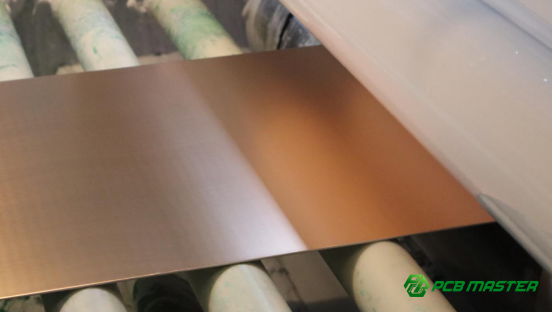
Dry Film vs. Liquid Photoresist: What Are Their Main Physical Properties?
Dry film and liquid photoresist differ in material form, thickness control, and resolution. Dry film is solid and stable, while liquid photoresist is fluid and adaptable, offering higher resolution for fine PCB lines.
Material Form and Composition
Dry film is a solid photoresist sheet that comes with a polyester (Mylar) backing and a polyethylene (PE) protective cover. This structure allows it to be laminated directly onto a copper board. Because it is pre-made, the composition is consistent, making it reliable for large-scale, standard PCB production.
Liquid photoresist , on the other hand, is applied as a liquid. It is usually based on epoxy or acrylic resins, which flow freely and conform to the copper surface. This liquid nature allows it to cover uneven surfaces or fill small pits, which is particularly useful for high-density interconnect (HDI) boards or boards with irregular copper features.
Example: A manufacturer producing 6-layer HDI PCBs may choose liquid photoresist for inner layers to achieve fine, precise lines that dry film cannot cover reliably.
Film Thickness Uniformity and Stability
Dry film thickness is pre-defined by the manufacturer, commonly ranging from 1.0 to 2.0 mils. This fixed thickness ensures high uniformity across the board and stable process results, making it ideal for repeatable production.
Liquid photoresis t thickness can be adjusted by changing coating speed, gap settings, or viscosity. This flexibility allows customization for ultra-fine lines or varying board requirements. However, its uniformity depends heavily on equipment precision and process stability. Small deviations in temperature, spin speed, or environmental conditions can affect the final thickness.
Comparison: Dry film provides consistent thickness without extra equipment calibration, while liquid photoresist offers flexibility at the cost of tighter process control.
Resolution and Line Width Capability
Dry film generally supports stable production of conventional circuit lines, typically 3/3 mil (0.075 mm/0.075 mm) and above. Its pre-formed structure limits ultra-fine patterning but ensures reliable results for standard PCB designs.
Liquid photoresist can achieve extremely high resolution, making it suitable for ultra-fine lines and high-density boards. Its direct contact with the copper surface reduces distortion, allowing inner-layer circuits on HDI or microvia boards to be produced with line widths below 3 mil.
Example: For a board with 2 mil inner-layer traces, liquid photoresist would be the preferred choice due to its superior resolution and adhesion to the copper surface.
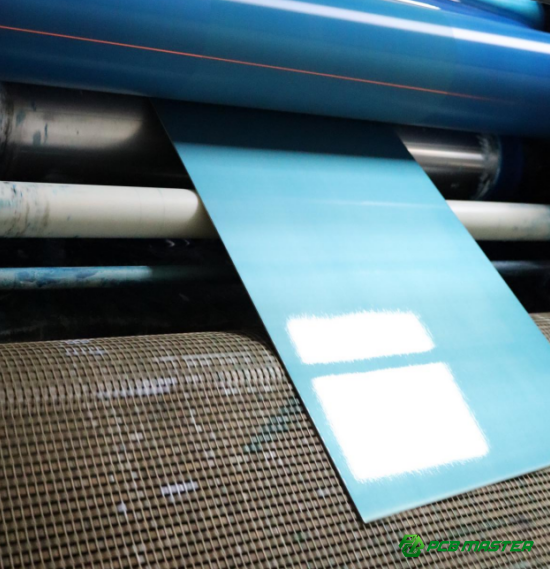
Dry Film vs. Liquid Photoresist: How Do Their Process Workflows Differ?
Dry film and liquid photoresist use distinct workflows. Dry film relies on lamination and simple steps, while liquid photoresist requires coating, baking, and precise control. These differences impact complexity, automation potential, and production stability.
Dry Film Process Steps
Dry film photoresist is applied using a lamination-based workflow, which is simple and repeatable. The main steps are:
- Hot-press lamination: The dry film sheet is pressed onto the copper board using heat and pressure, ensuring strong adhesion.
- Peeling the protective layer: The polyethylene or Mylar cover is removed, leaving the photoresist firmly attached to the board.
- Exposure and development: The board is exposed to UV light through a photomask, then developed to remove unexposed areas, creating the circuit pattern.
Example: A manufacturer producing a 4-layer conventional PCB can complete lamination, peeling, and exposure in under 10 minutes per panel. The process is easy to automate, supporting high-volume production with consistent results.
Liquid Photoresist Process Steps
Liquid photoresist requires a coating-based workflow with multiple careful steps:
- Uniform coating: The liquid photoresist is spread evenly across the copper surface using spin coating or spray techniques.
- Pre-bake to dry: The coated board is baked to evaporate solvents and form a solid, uniform resist layer.
- Exposure and development: Similar to dry film, the board is exposed to UV light through a photomask, then developed to reveal the desired circuit pattern.
Example: HDI PCB inner layers often use liquid photoresist, because the coating flows into microvias and uneven surfaces, ensuring complete coverage for fine lines.
Process Complexity and Automation Potential
Dry film is simpler, faster, and easier to automate. Its fewer steps and pre-defined thickness make it ideal for conventional PCBs and large-scale manufacturing.
Liquid photoresist is more complex. It requires precise control of coating thickness, baking temperature, and environmental conditions. Equipment like spin coaters, ovens, and cleanrooms is necessary. While automation is possible, process variability demands careful monitoring.
Comparison: Dry film is like using a pre-cut sticker—fast and reliable. Liquid photoresist is like painting a fine design—it offers precision but requires skill and control.
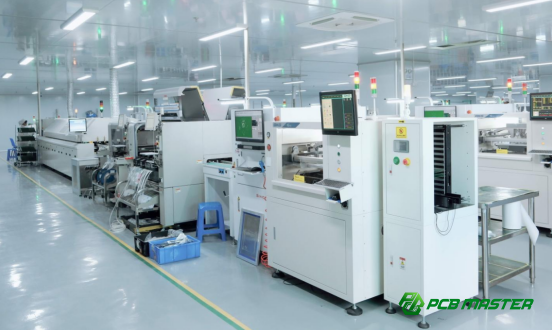
Coverage and Surface Adaptability: How Do Dry Film and Liquid Photoresist Perform?
Dry film struggles with rough surfaces and may trap air bubbles, while liquid photoresist flows smoothly, filling gaps and minimizing defects. Surface type and board preparation influence which photoresist is best.
Surface Roughness and Air Bubble Issues
Dry film can have difficulty adhering to rough or uneven copper surfaces. Its solid structure does not flow, so air pockets can form between the film and the board, leading to defects such as incomplete coverage or broken traces. This makes dry film less suitable for boards with existing features, pits, or textured copper.
Liquid photoresist is fluid and self-leveling, allowing it to conform to surface irregularities. Its ability to fill small pits and crevices reduces air bubble formation, ensuring continuous coverage. This property is particularly valuable when producing high-density boards with microvias or irregular copper patterns.
Example: On a board with slight surface scratches or micro-pits, dry film may leave small gaps requiring rework, while liquid photoresist naturally fills these gaps, producing a defect-free layer.
Secondary Copper and Special Substrate Applications
Liquid photoresist is ideal for special substrates like RTF (Rolled Thermal Foil) copper or boards undergoing secondary copper plating. Its liquid nature allows complete coverage over uneven or plated surfaces, ensuring proper pattern definition even before additional copper deposition.
Dry film is best suited for flat, conventional substrates where the copper surface is smooth and uniform. Its rigidity and consistent thickness work well for standard multilayer PCBs but limit adaptability to complex geometries or secondary plating.
Example: For an HDI board requiring microvia filling and subsequent copper plating, liquid photoresist ensures uniform coverage and reduces defects, while dry film would struggle to cover uneven areas fully.
Cost, Environmental, and Safety Advantages: How Do Dry Film and Liquid Photoresist Compare?
Dry film has higher material cost but lower auxiliary consumption and simpler equipment needs, while liquid photoresist is cheaper in materials but requires more consumables and advanced equipment. Dry film is also safer and more environmentally friendly.
Material and Equipment Cost Comparison
Dry film photoresist costs more per sheet, but it requires fewer chemicals like developers or stripping agents. The lamination equipment is relatively simple and inexpensive, making overall production cost moderate for standard PCBs. This balance makes dry film suitable for high-volume production where consistent quality is important.
Liquid photoresist has lower material costs, as the raw chemicals are cheaper. However, it consumes more auxiliary chemicals (developers, solvents, and stripping agents) and needs precise equipment such as spin coaters, ovens, and cleanroom facilities. The higher equipment investment and chemical usage can increase the total production cost, especially for large volumes.
Example: A small PCB manufacturer may prefer dry film for conventional boards due to minimal equipment needs, whereas an HDI board factory investing in liquid photoresist must account for higher equipment and chemical overhead.
Environmental and Safety Considerations
Dry film produces low VOC (volatile organic compound) emissions, and its waste is mostly solid, which is easier to handle and dispose of safely. This makes it more environmentally friendly and safer for operators.
Liquid photoresist contains organic solvents, generating higher VOC emissions. Proper exhaust and waste gas treatment systems are required. The presence of flammable solvents slightly increases fire risk in the production area. Careful handling, ventilation, and safety protocols are essential when using liquid photoresist in PCB manufacturing.
Example: In mass production of conventional PCBs, dry film minimizes environmental compliance costs and fire hazards, while high-end liquid photoresist processes must include dedicated solvent recovery and fire safety measures.
How to Choose Between Dry Film and Liquid Photoresist: Key Production and Technical Considerations
Choosing between dry film and liquid photoresist depends on production complexity, yield, product specifications, and cost versus output balance. Each type has strengths that fit different PCB manufacturing scenarios.
Production Complexity and Yield
Dry film requires highly clean boards. Dust, scratches, or uneven surfaces can lead to defects, and rework is often difficult, sometimes requiring complete removal of the film. While stable and repeatable, dry film’s sensitivity makes strict process control essential.
Liquid photoresist is more forgiving. Its fluid nature allows it to conform to minor surface imperfections, and rework is easier before exposure and development. This flexibility can improve yield for complex or high-density boards, especially where inner layers have fine traces.
Example: A manufacturer producing 4-layer conventional boards may rely on dry film for speed, but a factory making HDI boards with microvias benefits from liquid photoresist to reduce rework and defect rates.
Product Specifications and Process Matching
Line width, board thickness, and the number of layers are critical factors. Dry film works well for standard line widths and smooth surfaces, while liquid photoresist excels with ultra-fine inner-layer lines and irregular surfaces.
Many manufacturers adopt a hybrid approach: liquid photoresist for inner layers requiring high resolution, and dry film for outer layers with standard traces. This balances precision with efficiency and cost.
Example: A 10-layer HDI board may use liquid photoresist on inner layers to produce 2-mil traces, and dry film on outer layers for 5-mil lines, ensuring both precision and reduced material costs.
Cost and Production Volume Balance
For high-end, fine-line PCBs, liquid photoresist is preferred despite higher equipment and process costs, because it enables ultra-fine features and complex designs.
For standard, high-volume PCB production, dry film is generally more economical. Its simplicity, low auxiliary chemical usage, and automated lamination make it cost-effective while maintaining consistent quality.
Example: A factory producing thousands of conventional 4-layer boards per week will often choose dry film to maximize throughput and minimize chemical consumption, while a specialty HDI PCB line prioritizes liquid photoresist for performance.
Conclusion
Choosing between dry film and liquid photoresist depends on production requirements, resolution needs, and board characteristics. Dry film excels in stability, ease of use, and environmental friendliness, making it ideal for conventional, large-volume PCB production. Liquid photoresist offers superior resolution and coverage, perfect for high-end, fine-line, or HDI boards. Understanding these differences helps manufacturers balance performance, cost, and process complexity. The following table highlights the key contrasts to guide informed material selection.
| Comparison Aspect | Dry Film (Dry Photoresist) | Liquid Photoresist (Wet Film) |
| Material Form | Solid film with polyester (Mylar) backing and PE cover | Liquid resist, typically epoxy or acrylic-based |
| Process Method | Hot-press lamination → Peel protective layer → Exposure → Development | Uniform coating → Pre-bake → Exposure → Development |
| Thickness Control | Determined by film specification, uniform and stable, fixed | Adjustable via coating speed, gap, viscosity; range is wider but uniformity depends on process |
| Resolution / Line Width | High and stable, suitable for 3/3 mil and above | Extremely high, suitable for ultra-fine lines and HDI boards |
| Coverage / Conformability | Poor on rough surfaces or pits; prone to air bubbles | Excellent coverage, fills gaps and rough surfaces; minimal air bubbles |
| Process Complexity | Simple, easy to operate, highly automatable | Multiple steps, sensitive to environment, high equipment requirement |
| Cost | High material cost, low auxiliary consumption, low equipment investment | Low material cost, high auxiliary consumption, high equipment investment |
| Environmental & Safety | Low VOC emission, easy solid waste disposal | High VOC emission, requires exhaust treatment; slightly higher fire risk |
| Yield & Rework | High cleanliness required, difficult rework | More forgiving on surface cleanliness, rework easier |
| Typical Applications | Conventional lines, large-volume production | High-end fine lines, inner layers for HDI, high-layer-count PCBs |
If you want to learn more or have any questions, feel free to reach out to PCBMASTER . As an experienced PCB supplier, we not only provide high-quality PCBs and PCBA services but also offer professional guidance and expert advice.
FAQs
1. How big is the resolution difference between dry film and liquid photoresist?
Dry film typically supports line widths of 3 mil (0.075 mm) and above, which is suitable for standard PCB designs. Liquid photoresist can achieve ultra-fine lines below 3 mil, making it ideal for high-density interconnect (HDI) boards and microvias. In practice, liquid photoresist allows much higher resolution, often 1–2 mil finer than dry film.
2. Can liquid photoresist completely replace dry film for all PCB manufacturing?
No. While liquid photoresist offers higher resolution and better coverage, it requires more complex equipment, tighter process control, and precise environmental conditions. For conventional, large-volume PCB production with standard line widths, dry film remains more efficient and cost-effective. Many manufacturers use a hybrid approach to balance cost and performance.
3. How does the dry-wet hybrid strategy balance cost and precision?
The hybrid strategy uses liquid photoresist for inner layers with fine lines and dry film for outer layers with standard traces. This approach maximizes precision where needed while keeping material, chemical, and equipment costs lower on less demanding layers. It is commonly applied in multi-layer HDI and high-density PCB manufacturing.
4. How much higher are the environmental requirements for liquid photoresist compared to dry film?
Liquid photoresist contains organic solvents that produce higher VOC emissions, requiring proper exhaust systems, ventilation, and sometimes fire safety measures. Dry film has low VOC emissions and solid waste, so environmental and safety requirements are much lower. In practice, liquid photoresist lines need dedicated air treatment and stricter process monitoring.
5. How does board cleanliness affect dry film and liquid photoresist processes?
Dry film is very sensitive to dust, scratches, and surface contamination, which can cause bubbles, broken lines, or poor adhesion. Rework is difficult. Liquid photoresist is more forgiving, flowing over minor imperfections and allowing rework before exposure. Maintaining board cleanliness improves yield for both types, but it is critical for dry film.
About the Author

Carol Luo
PCB Design EngineerI'm Carol, a PCB Engineer at PCBMASTER with experience in PCB design and manufacturing engineering since 2018. I focus on translating engineering requirements into reliable PCB solutions, with expertise in stack-up design, material selection, and design-for-manufacturing (DFM). I share practical engineering insights from real-world PCB design and production experience.
Visit Carol Luo's Profile