








How to Control PCB Warpage in Asymmetrical PCB Stackups: Design, Materials and Lamination Best Practices
As PCB products continue to evolve toward higher layer counts, thinner structures, and increasingly uneven copper distribution, warpage control has become one of the most challenging issues in manufacturing. This challenge is even more pronounced in asymmetrical stackup designs, where differences in copper thickness, residual copper rate, and material behavior create complex internal stress imbalances during lamination and thermal cycling.
From high-speed communication boards to advanced aerospace phased array systems, designers are often forced to balance electrical performance, mechanical reliability, and manufacturing feasibility at the same time. However, when structural asymmetry is unavoidable, even small deviations in copper balance or material selection can significantly amplify board bow and twist after processing.
To address these issues effectively, warpage control must be considered as a system-level problem rather than a single-process correction. Therefore, a coordinated approach involving stackup design optimization, material selection strategy, and precise lamination process control is required to keep deformation within acceptable limits such as 0.3%. The following sections break down these key factors and practical methods in detail.
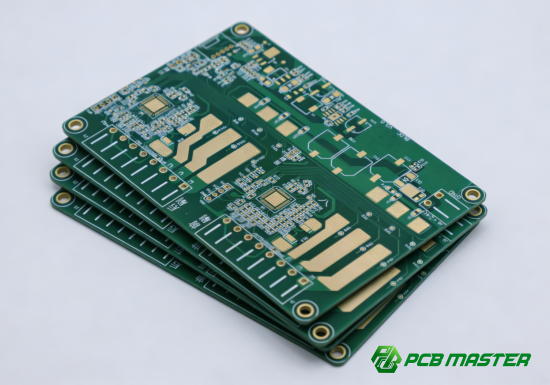
What is PCB structural asymmetry warpage and why is it more difficult to control?
PCB structural asymmetry warpage is board bending caused by uneven copper distribution, layer thickness, or material differences. It is harder to control because heat expansion and shrinkage forces become unbalanced across the stackup.
In PCB warpage control for asymmetrical stackups , the board does not expand evenly during lamination and reflow. One side pulls harder than the other, so the board bends like a “banana” or “arched bridge.” This is common in high-density multilayer PCB manufacturing where design constraints force uneven structures.
A simple example: one side of the PCB has heavy copper planes (high copper coverage), while the other side has sparse routing. During heating, the heavy side expands differently, creating internal stress.
What are the typical types of PCB structural asymmetry?
PCB asymmetry usually comes from copper imbalance, uneven layer thickness, or mixed materials in the stackup design.
In real PCB fabrication, asymmetrical PCB stackup design issues usually fall into five main categories. Each type creates different warpage risks during lamination and cooling.
Copper thickness imbalance
Copper thickness imbalance happens when one side of the PCB has thicker copper (for example 2oz) while the opposite side has thinner copper (for example 0.5oz).
This creates uneven thermal expansion during heating cycles in PCB lamination process control . The thicker copper side stores more heat and expands differently.
Example: Power boards often use thick copper for current handling, while signal layers remain thin. This mismatch increases PCB bending risk after reflow.
Copper coverage ratio imbalance
Copper coverage ratio imbalance means one layer has high copper fill (e.g., 90–95%), while the opposite layer has low copper fill (e.g., 20–40%).
This is one of the most critical causes of PCB warpage due to uneven copper distribution .
When heated, the high-coverage side expands like a solid plate, while the low-coverage side behaves more like a flexible mesh, causing bending stress.
Example: RF boards often have large ground planes on one layer and sparse routing on another, leading to warpage after pressing.
Large copper area difference
Large copper area difference happens when one side has big continuous copper planes while the other side has fragmented traces.
This creates uneven mechanical stiffness across the PCB.
In high-layer PCB warpage control , this is often seen in power + signal hybrid boards.
Example: One side is a full ground plane, while the opposite side only has signal lines → the board naturally bends toward the signal side after lamination.
Dielectric thickness imbalance
Dielectric thickness imbalance means the resin layers between copper layers are not evenly distributed.
This leads to uneven pressure distribution during pressing in PCB lamination warpage control .
Thicker dielectric areas shrink more during curing, pulling the board unevenly.
Example: If the top stack has thicker prepreg than the bottom, the board will warp toward the thinner side after curing.
Mixed material stackup
Mixed material stackup uses different PCB materials in one board, such as FR-4 + high-frequency material ( Rogers type hybrid structures).
Each material has different CTE (Coefficient of Thermal Expansion) , meaning they expand at different rates.
This is common in high-performance PCB for aerospace and RF systems .
Example: In satellite phased array PCBs, RF layers may use low-loss materials while digital layers use FR-4, causing natural mismatch in thermal behavior.
How does structural asymmetry cause PCB warpage?
Structural asymmetry causes PCB warpage because different layers expand and shrink at different rates during heat cycles, creating internal stress imbalance.
CTE mismatch causes stress imbalance
CTE describes how much a material expands when heated. In PCB design, copper, resin, and glass fiber all have different CTE values.
When one side expands more than the other in PCB thermal stress warpage control , the board bends toward the lower expansion side.
Simple view: like two people tied together, but one walks faster → the structure bends.
Copper and resin expand differently
Copper is stable and expands very little. Resin expands much more under heat.
In PCB lamination and reflow cycles , this mismatch creates internal pulling forces.
Example: A board with heavy copper on one side resists expansion, while resin on the other side expands freely → bending occurs.
Residual stress after lamination
During lamination, layers are pressed under heat and pressure. When cooled, internal stress remains trapped.
Later, during PCB cutting or soldering, this stress gets released unevenly.
In PCB manufacturing warpage root cause analysis , this is a major hidden factor.
Thermal cycling accumulation
Every heating cycle (soldering, reflow, testing) slightly changes the board shape.
Over time, these small changes accumulate into permanent warpage.
Example: Boards used in automotive electronics often show gradual bow and twist after repeated thermal cycling.
Why do high-layer and thick PCBs warp more easily?
High-layer and thick PCBs warp more because internal stress increases with layer count and thickness, making imbalance effects stronger.
Stress stacking effect in multilayer PCB
Each layer adds its own thermal expansion force. In high-layer PCB stackup warpage control , these forces do not cancel out if the design is asymmetrical.
Instead, they stack up like multiple springs pulling in different directions.
Result: The more layers, the higher the risk of PCB bow and twist.
Challenges of PCB thicker than 3mm
Thick PCBs are harder to bend during manufacturing, but internal stress is actually higher and harder to release.
In thick PCB lamination process control , cooling becomes critical.
If cooling is too fast, the outer layers shrink faster than the inner layers → warpage increases.
Example: Power modules or industrial control boards often exceed 3mm thickness and require strict cooling control.
Special requirements in aerospace phased array PCBs
Aerospace phased array PCBs often require mixed materials, uneven copper distribution, and strict RF performance.
This naturally leads to asymmetrical PCB stackup design challenges .
However, warpage tolerance is extremely tight because:
- Mechanical alignment must be precise
- Thermal stability in space is critical
- Multi-material structures are unavoidable
Example: Satellite antenna array boards may use hybrid dielectric materials and uneven copper planes, making warpage control a key manufacturing challenge.
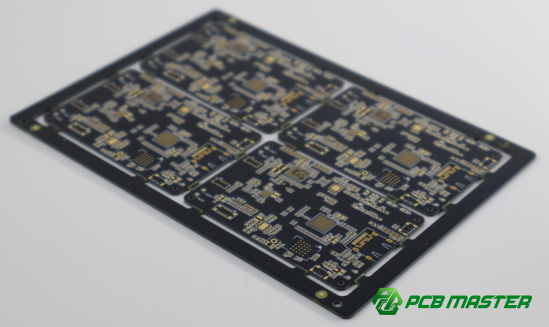
How to reduce PCB warpage risk through PCB stackup design for structural asymmetry?
You reduce PCB warpage in asymmetrical designs by balancing layer thickness, controlling copper distribution, and designing a more symmetrical stackup structure. The goal is to minimize internal stress differences during lamination and thermal cycles.
In PCB stackup design for warpage control , even when full symmetry is impossible, you can still “balance forces” so the board does not bend severely. Think of it like a seesaw: even if weights are different, you can still adjust positions to keep it stable.
How to control thickness differences in symmetric layer design?
Keep thickness differences between symmetric layers within a controlled ratio, avoid extreme copper combinations, and balance electrical and mechanical needs.
Keep symmetric layer thickness difference within 3× limit
In asymmetrical PCB stackup design , a practical engineering rule is to keep thickness differences between symmetric layers within 3 times.
If one side is too thick compared to the other, thermal expansion becomes uneven during lamination.
Example:
- Safe design: 1oz vs 2oz copper (manageable)
- Risky design: 0.5oz vs 3oz copper (high warpage risk)
This rule is widely used in PCB warpage control for multilayer boards to reduce bending stress.
Avoid extreme copper thickness combinations
Extreme copper combinations create strong imbalance in heat absorption and mechanical stiffness.
In PCB copper thickness warpage prevention , mixing ultra-thick copper (e.g., 3oz–6oz) with very thin signal layers is a common root cause of bow and twist.
Example: Power plane (3oz) + signal layer (0.5oz) → board bends toward signal side after reflow.
A better approach is to gradually step copper thickness instead of abrupt jumps.
Balance mechanical stress and electrical performance needs
PCB design is always a trade-off between performance and stability.
High copper thickness improves current capacity, but increases warpage risk in high power PCB stackup design .
Engineers usually:
- Use thick copper only where needed
- Keep signal layers balanced on both sides
- Add dummy copper to compensate imbalance
Example: In power control boards, only power rails use thick copper, while return paths are mirrored to reduce stress.
How to optimize dielectric and copper layer structure distribution?
You reduce warpage by making the stackup more uniform, avoiding sudden thickness changes, and balancing stiffness across the PCB.
Reduce local thickness jumps in PCB stackup
Sudden thickness changes create stress concentration points in PCB lamination warpage control .
When resin thickness or copper thickness changes sharply, shrinkage during curing becomes uneven.
Example: A stackup that goes from thin prepreg → thick core → thin prepreg tends to warp toward the thinner region.
A smoother transition improves stability.
Balance stiffness between top and bottom layers
Stiffness imbalance is a hidden cause of PCB bow and twist.
In asymmetrical PCB stackup design optimization , stiffness depends on copper area, layer count, and dielectric thickness.
If one side is more rigid, the board naturally bends toward the softer side.
Example: Top layer = solid ground planeBottom layer = sparse routing→ Board bends toward bottom side after lamination.
Reduce stress concentration zones between layers
Stress concentration happens when forces are not evenly distributed across the board.
In PCB internal stress control during lamination , this usually occurs near:
- Large copper edges
- Material boundaries
- Thick-to-thin transitions
Solution:
- Add copper relief patterns
- Spread copper gradually
- Avoid abrupt termination of planes
What are stackup design strategies for high-reliability PCB products?
High-reliability PCB stackups use controlled asymmetry, material optimization, and careful balancing between electrical, thermal, and mechanical requirements.
Characteristics of satellite phased array PCB stackup design
In aerospace PCB warpage control , fully symmetric designs are often impossible due to RF and antenna layout needs.
Key features include:
- Mixed materials (low-loss + FR-4)
- Uneven copper for RF routing
- Strict thermal stability requirements
To compensate, engineers rely heavily on:
- Low CTE materials
- Careful lamination control
- Dummy copper balancing
Example: Satellite antenna boards may have heavy copper on RF layers but compensate with symmetrical mechanical core layers.
Trade-off strategies in high-speed and high-frequency PCBs
In high-speed PCB stackup design , signal integrity often conflicts with mechanical symmetry.
Designers may:
- Prioritize impedance control first
- Then add copper balancing later
- Use mirror stacking where possible
Example: A high-speed DDR board may require uneven routing density, so dummy copper is added on low-density layers to balance warpage.
Structural balance strategies for high-power PCB carriers
High-power boards require thick copper for current, which increases warpage risk.
In high power PCB warpage control , strategies include:
- Localized thick copper only where needed
- Symmetrical return current paths
- Copper pour balancing on opposite layers
Example: Power module boards use 2oz–4oz copper only on power nets, while adding mirrored ground pours on opposite layers to stabilize structure.
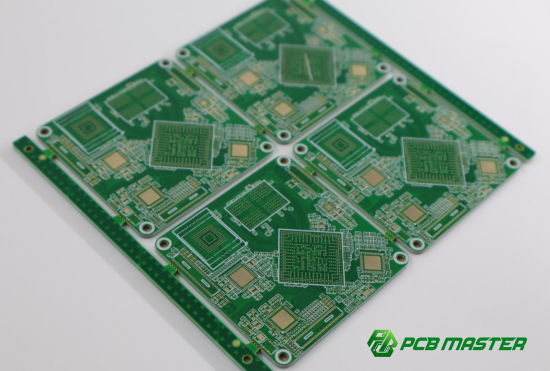
How to control PCB warpage through routing design and copper balance optimization?
PCB warpage can be controlled by balancing copper distribution (copper coverage), using mirror routing strategies, and adding dummy copper (mesh fill) to equalize thermal expansion across layers.
In PCB warpage control through routing design , the main goal is simple: both sides of the board must “feel” similar expansion forces during heat cycles. If one side has more copper, it behaves like a heavy plate; if the other side is lighter, the board bends toward the weaker side.
Why does copper coverage ratio directly affect PCB bending?
Copper coverage (residual copper ratio) affects PCB warpage because copper and resin expand differently under heat, and uneven copper distribution creates unbalanced mechanical stress.
In PCB copper balance PCB warpage control , high copper areas expand less, while low copper areas allow more resin expansion. This mismatch causes the board to bend during lamination and reflow.
Example: A power layer with 90% copper coverage on one side and a signal layer with 30% coverage on the other side will naturally pull the PCB toward the signal side after heating.
This is one of the most common causes of PCB bow and twist in multilayer boards .
How to control copper coverage imbalance in PCB design?
Keep copper coverage difference within 10% for stable designs, and avoid exceeding 20% to prevent serious warpage.
Keep copper coverage difference within 10%
In PCB routing design for warpage control , the safest engineering target is to keep copper coverage difference between top and bottom layers within 10%.
This ensures both sides expand in a similar way during lamination.
Example:
- Layer A: 60% copper
- Layer B: 55% copper→ Stable design, low warpage risk
Do not exceed 20% difference
When copper coverage difference exceeds 20%, the risk of PCB manufacturing warpage defects increases significantly.
At this level, one side becomes mechanically dominant, causing permanent bending after cooling.
Example: 80% vs 50% copper coverage → high warpage risk in high-layer PCB stackups.
Avoid large local copper-free areas
Large copper-free zones behave like “soft regions” in the PCB structure.
In PCB uneven copper distribution control , these areas expand freely during heating and create bending force toward the copper-heavy side.
Example: A board with a full ground plane on one side and large empty routing zones on the other side will always warp after reflow soldering.
How does mirror routing (symmetrical pattern method) reduce PCB warpage?
Mirror routing balances copper distribution by copying layer patterns across the stackup, making thermal expansion forces symmetrical.
Basic principle of mirror design
In PCB mirror routing for warpage reduction , the idea is simple: what exists on one layer is mirrored on another layer to balance copper weight and heat behavior.
This reduces internal stress during lamination because both sides expand similarly.
Application in panelization (multi-board design)
In multi-up PCB panels, mirror routing can be applied between repeated units.
In PCB panel warpage control techniques , flipping layout directions helps equalize copper distribution across the full panel.
Example: 4-up panel → alternating mirrored boards reduces overall bending after press lamination.
Case study: 10-layer PCB design example
In a 10-layer asymmetrical PCB stackup , if inner layers have uneven copper distribution:
- Layer 2 and Layer 9 are mirrored
- Layer 3 and Layer 8 are balanced
Result:
- Internal stress becomes symmetrical
- Warpage reduced from ~0.8% to ~0.3% in practical production cases
How does adding dummy copper (mesh fill) help reduce PCB warpage?
Dummy copper (mesh copper) reduces warpage by increasing copper balance while allowing stress release through gaps in the structure.
Difference between mesh copper and solid copper
In PCB dummy copper design for warpage control :
- Solid copper = rigid, high stress, low flexibility
- Mesh copper = flexible, stress-relief structure
Mesh copper behaves like a “soft grid” that distributes stress evenly.
How to design mesh copper parameters
In PCB copper fill optimization , typical design rules include:
- Grid spacing: medium (not too dense, not too sparse)
- Avoid fully solid conversion in low-density layers
- Match mesh direction across layers when possible
Goal: balance copper ratio without creating rigid stress zones.
How mesh copper releases thermal stress
Mesh copper creates small gaps that allow resin expansion.
In PCB thermal stress management , these gaps act like “shock absorbers,” reducing force transfer between copper and dielectric.
This prevents large-scale bending during heating cycles.
Important design precautions for dummy copper
In PCB dummy copper best practices :
- Do not violate impedance requirements
- Avoid creating antenna-like patterns
- Keep symmetry between top and bottom layers
- Coordinate with CAM engineering rules
Improper mesh design can cause EMI or signal integrity issues.
Which is better for warpage control: high copper coverage or low copper coverage?
Neither extreme is ideal; balanced medium-high copper coverage with symmetry is the most stable condition.
Advantages of high copper coverage design
In high copper PCB warpage behavior , high coverage improves:
- Thermal stability
- Mechanical rigidity
- Current carrying capability
But it may increase internal stress if not balanced properly.
Advantages of low copper coverage design
In low copper PCB routing design , advantages include:
- More flexible stress distribution
- Easier signal routing
- Lower copper cost
But it increases deformation risk during lamination.
Avoid unstable mid-range imbalance designs
The most dangerous situation in PCB copper imbalance warpage control is not high or low copper, but uneven “mixed state” designs.
Example:
- One layer 80% copper
- Another layer 35% copper
This creates unpredictable stress patterns and is harder to correct even with process optimization.
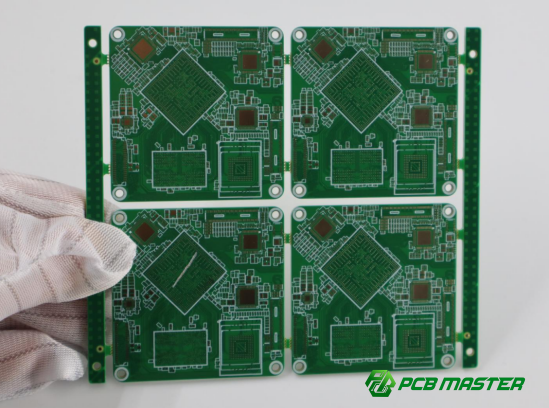
Why are high Tg and low CTE materials critical for controlling warpage in asymmetrical PCBs?
High Tg and low CTE materials reduce thermal expansion mismatch and improve dimensional stability during lamination and reflow, which directly helps control PCB warpage in asymmetrical stackups.
In asymmetrical PCB warpage control , material behavior is often the hidden root cause of bending. Even if stackup design and copper balance are optimized, unstable materials will still expand unevenly under heat.
How does high Tg material improve dimensional stability?
High Tg materials maintain structural rigidity at higher temperatures, reducing softening and deformation during PCB lamination and soldering processes.
Relationship between glass transition temperature (Tg) and PCB warpage
In PCB high Tg material warpage control , Tg is the temperature where resin starts to soften and behave like rubber instead of solid.
If Tg is too low, the PCB structure becomes unstable during lamination and reflow, causing uneven shrinkage.
Example:
- Low Tg FR-4 (~130°C): higher warpage risk in reflow
- High Tg FR-4 (~170°C+): more stable structure, lower deformation
Simply put: higher Tg = stronger shape retention under heat.
Advantages of Tg ≥ 170°C materials
In high Tg PCB material selection for warpage control , materials above 170°C offer:
- Better dimensional stability during lamination
- Reduced resin flow imbalance
- Lower internal stress after cooling
- Improved reliability for multilayer PCB manufacturing
Example: In high-layer communication boards, switching from standard FR-4 to Tg170+ material can reduce warpage from ~0.7% to ~0.3% in production conditions.
How does low CTE material reduce thermal stress?
Low CTE materials reduce expansion and shrinkage differences between copper and resin, which lowers internal stress and prevents PCB bending.
Influence of X/Y/Z axis CTE on PCB warpage
In PCB thermal expansion coefficient (CTE) warpage control , CTE defines how much a material expands per degree of temperature change.
- X/Y axis → in-plane expansion
- Z axis → thickness direction expansion (most critical)
If CTE values are high, the PCB expands unevenly during heating, causing bending.
Example: A board with high Z-axis CTE will “grow in thickness” too much during reflow, pushing layers apart unevenly.
Why Z-axis CTE is most important
In PCB lamination warpage mechanism analysis , Z-axis CTE directly affects layer stacking stability.
When Z-axis expansion is too high:
- Resin swells excessively
- Copper resists expansion
- Internal stress builds up vertically
- Board bends after cooling
Low Z-axis CTE materials help keep layer alignment stable.
Simple analogy: It’s like stacking soft foam and hard metal plates—if foam expands too much, the stack bends.
How do different PCB material systems compare in warpage control?
Standard FR-4 is low cost but unstable, high Tg FR-4 is balanced, and low CTE materials offer the best stability for high-reliability applications.
| Material System | Cost Level | Thermal Stability (Tg) | CTE Behavior | Warpage Control Performance | Typical Use Cases | Key Limitation |
| Standard FR-4 | Low | Low Tg (~130°C) | High CTE variation | Poor in multilayer / asymmetrical stackups (high risk of bow & | Low-cost consumer electronics, simple | Unstable under heat, high warpage |
| High Tg FR-4 | Medium | High Tg (≥170°C) | Medium CTE variation | Balanced performance, widely used for controlled warpage | Telecom, industrial electronics, automotive PCBs | Still limited in extreme asymmetry or very high layer count |
| Low CTE High-Reliability Materials | High | High Tg + enhanced thermal stability | Very low CTE (especially Z-axis) | Excellent warpage control in complex stackups | Aerospace, RF systems, satellite phased array PCBs | High material cost, more complex processing |
Standard FR-4 material
In standard FR-4 PCB warpage performance , this material is widely used due to low cost and easy processing.
However:
- Lower Tg
- Higher CTE variation
- Poor performance in high-layer or asymmetrical designs
Result: Higher risk of bow and twist in complex stackups.
High Tg FR-4 material
In high Tg FR-4 PCB warpage control , this is the most common upgrade option.
It offers:
- Better heat resistance
- More stable lamination behavior
- Reduced resin flow mismatch
Example: Used widely in telecom and industrial PCBs where thermal cycling is frequent.
Low CTE high-reliability materials
In low CTE PCB material systems for aerospace and RF , these materials are designed for extreme stability.
They provide:
- Very low thermal expansion
- Excellent dimensional control
- Strong performance in asymmetrical stackups
Example: Satellite phased array boards often require hybrid low-CTE materials to maintain alignment accuracy.
How do PCB manufacturers use material properties to improve warpage control?
PCB factories improve warpage control by building material databases, managing batch variation, and relying on long-term process experience.
Building a material expansion database
In PCB manufacturing warpage control systems , factories track:
- Material Tg values
- CTE behavior under heat
- Resin flow characteristics
- Historical warpage data
This helps engineers predict warpage risk before production.
Material batch stability management
In PCB quality control for warpage reduction , even the same material type can vary between batches.
Factories manage this by:
- Incoming inspection testing
- Laminated test coupons
- Tracking shrinkage behavior per batch
This reduces unexpected deformation in production.
Importance of long-term process experience
In PCB warpage control engineering practice , experience plays a major role.
Experienced engineers can:
- Recognize risky stackups early
- Adjust pressing curves based on material behavior
- Predict warpage trends from past production data
Example: A factory that has processed thousands of asymmetrical PCBs can often predict warpage risk just by reviewing stackup drawings.
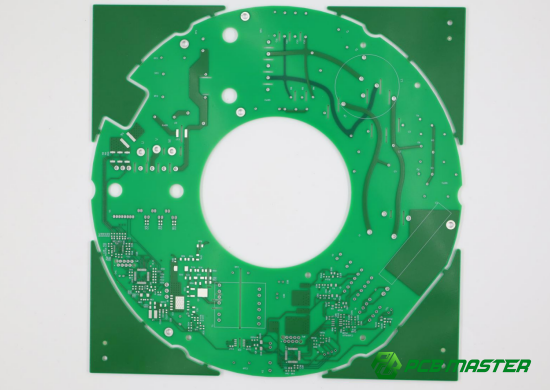
How does baking and pre-processing reduce internal stress in PCB manufacturing?
PCB baking and pre-processing reduce internal stress by removing moisture and stabilizing resin behavior, which prevents expansion, delamination, and warpage during lamination and reflow.
In PCB warpage control through baking process optimization , moisture inside materials is one of the most underestimated causes of board bending and internal stress imbalance.
How does moisture absorption affect PCB warpage?
Moisture absorbed by PCB materials turns into vapor during heating, creating internal pressure that disturbs layer stability and increases warpage risk.
In PCB moisture-induced warpage control , water trapped inside FR-4 or prepreg behaves like a hidden stress source. When heated, it expands rapidly and pushes internal layers apart.
Moisture absorption during material storage
In PCB material storage moisture control , resin and glass fiber naturally absorb humidity from the air, especially in humid environments.
Key effects:
- Prepreg absorbs water during storage
- Resin becomes less stable before lamination
- Surface moisture is uneven across sheets
Example: A PCB stored in a humid warehouse for weeks can absorb enough moisture to cause blistering or slight bow after reflow soldering.
Water vapor expansion during high-temperature processing
In PCB thermal processing warpage mechanism , absorbed water turns into steam at high temperature (above 100°C).
This creates:
- Internal pressure between layers
- Local delamination risk
- Uneven expansion forces inside the PCB
Simple analogy: Like heating a sealed sponge full of water—the steam pushes outward unevenly, bending the structure.
What is the standard PCB pre-baking process before lamination?
Pre-baking removes moisture and stabilizes materials before lamination, typically using controlled temperature and time to ensure consistent moisture-free conditions.
In PCB pre-lamination baking process control , this step ensures the stackup starts from a stable and dry state, reducing later warpage risk.
Standard baking condition: 150°C × 8 ±2 hours
In PCB baking process specification for warpage control , a common industrial standard is:
- Temperature: 150°C
- Time: 8 ± 2 hours
Purpose:
- Remove absorbed moisture
- Stabilize resin structure
- Reduce internal stress before pressing
Example: High-layer telecom boards often require strict pre-baking to ensure stable lamination results and reduce bow/twist after cooling.
Baking parameter adjustment for different materials
Different PCB materials require different baking profiles to avoid damage while still removing moisture.
| Material Type | Recommended Temperature | Time | Key Reason |
| Standard FR-4 | 120–130°C | 6–8 hours | Basic moisture removal |
| High Tg FR-4 | 140–150°C | 8–10 hours | Higher thermal stability requirement |
| Low CTE high-reliability materials | 120–140°C | 6–10 hours | Avoid over-stressing advanced resin systems |
| Thick multilayer PCB | 130–150°C | 8–12 hours | Deeper moisture penetration |
In PCB material baking optimization , improper baking can cause resin damage or insufficient drying, both of which increase warpage risk.
Why is post-lamination baking also important for PCB warpage control?
Post-baking helps complete resin curing and releases internal stress formed during lamination, improving long-term dimensional stability.
In PCB post-lamination stress relief process , this step ensures that the board reaches a stable physical state before further processing.
Promotes further resin curing
In PCB curing optimization for warpage reduction , not all resin fully reacts during lamination.
Post-baking helps:
- Complete incomplete curing reactions
- Strengthen bonding between layers
- Improve overall structural stability
Example: Without post-bake, PCB may slowly deform during later soldering or thermal cycling.
Releases residual internal stress early
In PCB internal stress relief process , lamination introduces pressure and thermal gradients inside the board.
Post-baking helps:
- Relax trapped mechanical stress
- Reduce stress concentration between layers
- Prevent delayed warpage during assembly
Simple analogy: It is like letting a tightly stretched rubber sheet relax before using it—it becomes more stable and less likely to deform later.
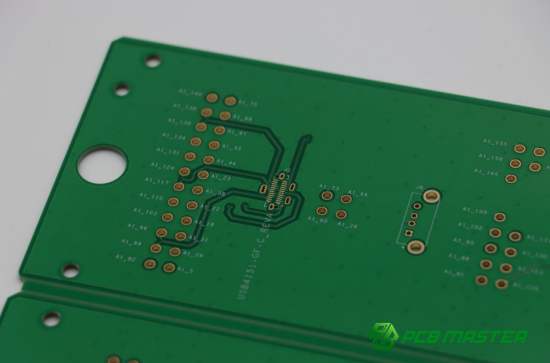
How to optimize PCB lamination process for warpage control in asymmetrical stackups?
PCB lamination (pressing) process controls final warpage because it determines how resin flows, cures, and locks internal stress into the board structure. Poor temperature control directly leads to bow and twist in asymmetrical PCB designs.
In PCB warpage control through lamination process optimization , even a well-designed stackup can fail if pressing conditions are unstable.
Why does lamination process determine final PCB warpage level?
Because lamination is the stage where all layers are permanently bonded, and internal stress is “locked in” during heating and cooling.
In PCB lamination warpage mechanism analysis , this is the most critical step. During pressing, resin flows, copper expands, and layers align under heat and pressure. Any imbalance becomes permanent after cooling.
Example: Even if stackup design is symmetric, uneven press temperature across the panel can still cause PCB bow and twist after curing.
What are the key points of a stepwise heating curve in PCB lamination?
A controlled heating curve ensures uniform resin flow and curing, preventing uneven expansion and internal stress buildup.
In PCB lamination temperature profile optimization , heating must be slow and stable to avoid sudden material reactions.
Heating rate ≤ 3°C/min
In PCB controlled heating warpage prevention , the standard rule is:
- Heating rate must be ≤ 3°C per minute
Purpose:
- Prevent resin from flowing too fast
- Avoid internal temperature gradient
- Reduce uneven expansion between layers
Example: If heating is too fast, outer layers cure first while inner layers are still soft → stress imbalance → warpage after cooling.
Balance between resin flow and curing reaction
In PCB resin flow control during lamination , resin must stay in a “semi-flow state” long enough to fill gaps evenly.
Key idea:
- Too fast → incomplete filling
- Too slow → excessive flow and material imbalance
Simple analogy: Like melting chocolate—you need it soft enough to spread, but not so liquid that it runs unevenly.
Avoid local over-curing during press process
In PCB uneven curing defect control , hot spots inside the press can cause:
- Local resin hardening too early
- Uneven pressure distribution
- Internal stress concentration
Example: A PCB placed near heating plates may cure faster on one side → bending after cooling.
How does slow cooling reduce residual stress in PCB?
Short answer: Slow cooling allows materials to shrink evenly, reducing internal stress differences that cause permanent warpage.
In PCB cooling process warpage control , cooling is just as important as heating.
Cooling rate ≤ 3–4°C/min
In PCB lamination cooling profile optimization , standard cooling control is:
- 3–4°C per minute maximum
Purpose:
- Prevent sudden shrinkage difference
- Maintain layer alignment stability
- Reduce stress locking inside resin
Cool inside press until below 50°C
In PCB post-lamination handling control , boards should remain in press until:
- Temperature drops below 50°C
Reason:
- Prevent external air cooling shock
- Ensure uniform contraction of all layers
Example: Removing PCB too early causes surface to shrink faster than core → permanent bow.
Why rapid cooling causes permanent warpage
In PCB thermal shock warpage mechanism , fast cooling creates:
- Outer layer contraction faster than inner layer
- Internal stress imbalance
- Locked deformation structure
Simple analogy: Like freezing a hot glass suddenly—it cracks or deforms because outer and inner parts shrink differently.
Why is PP (prepreg) grain direction important in PCB lamination?
PP glass fiber direction affects shrinkage behavior; incorrect orientation creates uneven mechanical stress during curing.
In PCB prepreg orientation warpage control , fiber direction must be consistent across layers.
Difference between warp and weft shrinkage
In PCB prepreg mechanical behavior analysis :
- Warp direction → lower shrinkage
- Weft direction → higher shrinkage
This difference affects how each layer contracts during curing.
Requirement for consistent loading direction
In PCB lamination stackup process control , all PP sheets must:
- Follow same fiber direction rules
- Be aligned consistently during stacking
Purpose:
- Avoid directional stress mismatch
- Ensure uniform shrinkage across layers
Defects caused by wrong orientation
In PCB lamination defect analysis , wrong PP orientation can cause:
- Severe bow and twist
- Uneven layer contraction
- Local delamination risk
Example: If one layer is rotated 90°, it shrinks differently and pulls the board into a twisted shape.
High-difficulty asymmetrical PCB lamination case analysis
Complex asymmetrical designs require combined control of copper balance, material behavior, and lamination parameters to prevent warpage.
High copper thickness difference case
In high copper PCB warpage control , thick copper (e.g., 2–3oz) on one side creates strong thermal imbalance.
Result:
- Board bends toward low-copper side
- Requires mirror copper or dummy fill compensation
High copper coverage imbalance case
In PCB copper ratio imbalance warpage control , one side may have:
- 90% copper coverage
- Other side only 30–40%
Result:
- Severe internal stress mismatch
- High risk of bow after lamination
Solution:
·Add mesh copper balancing
·Reduce coverage difference below 10–20%
Mixed material stackup case
In hybrid PCB material warpage control , different materials (FR-4 + RF substrate) behave differently under heat.
Result:
·Different CTE expansion rates
·Layer mismatch stress
·Complex warpage patterns
Example: Satellite phased array boards require hybrid materials but rely heavily on low-CTE cores and strict lamination control to stay flat.
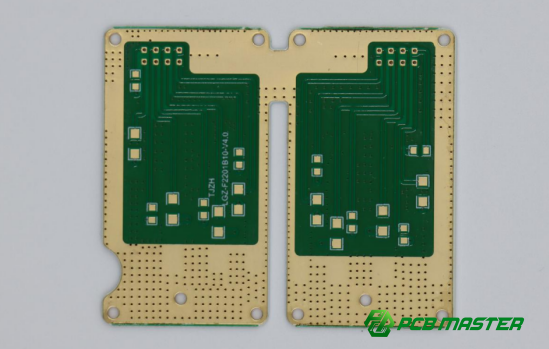
What can be done when PCB warpage exceeds specification limits?
When PCB warpage is out of specification, the main corrective method is thermal pressing (hot pressing correction), which uses heat and pressure to temporarily or partially reset internal stress and flatten the board.
In PCB warpage correction and rework process , not all boards can be fully recovered, but many thermally induced deformations can be improved through controlled reheating and pressing.
How does hot pressing correction work for warped PCBs?
Hot pressing works by applying heat and mechanical pressure to soften resin slightly and force the PCB back into a flat state, while internal stress is redistributed.
In PCB hot press warpage correction technology , the board is placed between flat steel plates, heated to a controlled temperature, and pressed until deformation is reduced.
Key idea:
·Heat softens epoxy resin
·Pressure forces flat geometry
·Slow cooling “locks” improved shape
Example: A slightly bowed multilayer PCB can often be restored close to specification using a single or repeated hot press cycle.
What are the standard process parameters for PCB hot pressing flattening?
Standard hot pressing uses controlled temperature, pressure, and time to ensure deformation recovery without damaging the PCB structure.
In PCB warpage hot pressing process optimization , parameters must be carefully controlled to avoid delamination or over-stress.
Temperature control: 120–150°C
In PCB thermal flattening temperature control , the typical range is:
·120°C to 150°C
Purpose:
·Soften resin without destroying bonding structure
·Allow controlled stress relaxation
·Avoid over-curing or burning material
Simple analogy: Like warming plastic slightly so it becomes flexible, not melted.
Pressure control: 15 kg/cm²
In PCB mechanical flattening pressure process , standard pressure is:
·Around 15 kg/cm²
Purpose:
·Force board into flat shape
·Ensure uniform contact with steel plates
·Prevent localized bending zones
Example: Uneven pressure can create new stress points, so uniform pressure distribution is critical.
Holding time: 30 minutes to 4 hours
In PCB warpage stress relaxation process , holding time depends on severity:
·Light warpage → ~30–60 minutes
·Moderate warpage → 1–2 hours
·Severe warpage → up to 4 hours
Purpose:
·Allow stress redistribution
·Ensure resin fully responds to pressure
When is repeated hot pressing effective for PCB warpage repair?
Repeated hot pressing is effective when warpage is caused mainly by thermal stress imbalance, not structural or material mismatch.
In PCB rework warpage correction process , multiple cycles may gradually improve flatness.
Light warpage repair
In light PCB bow correction process , characteristics include:
·Slight bending after lamination or reflow
·No delamination or structural damage
Result:
·Usually corrected in 1 cycle
·High success rate
Moderate warpage repair
In moderate PCB warpage correction , boards show:
·Visible bow or twist
·Stable but incorrect geometry
Result:
·1–2 hot press cycles required
·Partial recovery possible
Severe warpage correction limits
In severe PCB deformation recovery analysis , boards may show:
·Large permanent bending
·Layer stress locking
·Possible material damage
Result:
·Limited improvement only
·Often cannot fully meet specification
Which types of PCB warpage cannot be fully corrected by hot pressing?
Warpage caused by structural design errors, material mismatch, or process defects cannot be fully fixed by hot pressing because the root cause remains inside the PCB.
In PCB warpage root cause vs repairability analysis , correction depends on whether stress can be reversed or not.
Permanent deformation caused by design defects
In PCB design-induced warpage failure cases , issues include:
·Extreme copper imbalance
·Asymmetrical stackup beyond control limits
·Severe thickness mismatch
Result:
·Internal structure is inherently unstable
·Hot pressing only provides temporary flattening
Warpage caused by material mismatch
In PCB material compatibility warpage analysis , problems include:
·Mixed high CTE and low CTE materials
·Inconsistent Tg layers
·Unbalanced resin shrinkage behavior
Result:
·Different expansion rates remain after pressing
·Warpage returns after cooling or reflow
Stress from abnormal lamination process
In PCB lamination defect-induced warpage , issues include:
·Uneven pressure distribution
·Improper heating curve
·Wrong PP orientation during stacking
Result:
·Internal stress is permanently locked
·Hot pressing cannot fully reset structure
Example: A board with wrong prepreg orientation may twist again even after multiple flattening cycles.
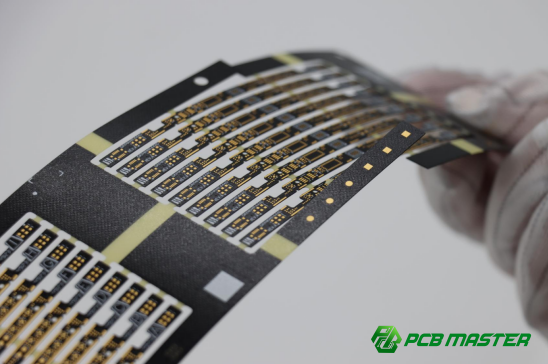
What are the PCB warpage control standards for asymmetrical PCB designs?
PCB warpage standards depend on industry level and application. Typical commercial boards allow around 0.7%, while high-reliability applications such as aerospace may require ≤0.3% or even stricter control.
In PCB warpage control standards for asymmetrical stackups , acceptable deformation depends on product function, reliability requirements, and assembly precision.
What are IPC and common industry PCB warpage standards?
IPC standards define general PCB warpage limits, but actual requirements are often stricter depending on product class and assembly process.
In IPC PCB warpage specification standards , bow and twist are usually defined as a percentage of PCB diagonal length.
Typical industry reference levels:
·Standard commercial PCB: ≤0.7%
·High-reliability PCB: ≤0.5%
·Precision/high-layer PCB: ≤0.3–0.4%
Example: A 200 mm PCB with 0.5% warpage means maximum deformation of 1 mm.
IPC provides guidance, but OEM and EMS factories often set tighter internal limits.
What are warpage control requirements for different application fields?
Different industries require different warpage limits depending on mechanical precision, thermal cycling, and reliability needs.
Consumer electronics
In consumer PCB warpage control standards , products like smartphones and laptops typically allow:
·Warpage: ≤0.7%
·Moderate tolerance due to flexible assembly structures
Reason:
·Short product lifecycle
·Lower mechanical stress sensitivity
Example: Laptop motherboard may still function even with slight bow due to enclosure support.
Communication equipment
In telecom PCB warpage control requirements , such as routers and base stations:
·Warpage: ≤0.5%
·Medium-high reliability requirement
Reason:
·High-layer count boards
·Continuous thermal cycling in operation
Automotive electronics
In automotive PCB warpage standards , requirements are stricter:
·Warpage: ≤0.4–0.5%
·Must withstand vibration + temperature cycling
Reason:
·Engine compartment heat variation
·Long-term reliability requirement
Example: ECU boards require stable flatness to ensure connector alignment.
Aerospace and satellite systems
In aerospace PCB warpage control standards , especially phased array systems:
·Warpage: ≤0.3% or tighter
·Extremely strict mechanical alignment requirement
Reason:
·RF signal accuracy
·Multi-layer hybrid materials
·Space thermal cycling conditions
Example: Satellite antenna arrays require near-perfect alignment for beam accuracy.
What are relaxed standards for thick and special PCB structures?
Thick and highly asymmetrical PCBs may require relaxed warpage limits because mechanical stress is naturally higher and harder to eliminate.
In thick PCB warpage tolerance design , engineers balance feasibility and performance.
Control recommendations for PCBs thicker than 3mm
In thick PCB warpage control standards (>3mm) :
·Typical acceptable range: up to ~0.7–1.0% depending on application
·Cooling and lamination stress dominate deformation
Reason:
·Internal stress increases with thickness
·Heat dissipation becomes uneven
Evaluation method for extreme asymmetrical structures
In extreme PCB asymmetry warpage assessment , engineers evaluate:
·Copper imbalance ratio
·Layer symmetry deviation
·Material CTE mismatch
·Lamination stress distribution
Method:
·Simulate stackup stress before production
·Use test coupons to measure real shrinkage behavior
Determining acceptance criteria by application
In PCB warpage acceptance standard definition , final limits depend on:
·Mechanical assembly tolerance
·Connector alignment requirements
·Product reliability level
Example:
·Consumer PCB → relaxed limit acceptable
·RF phased array → ultra-strict limit required
Is achieving 0.3% PCB warpage realistic?
Yes, but only when design, material, and manufacturing processes are all tightly controlled together.
In PCB ultra-low warpage control engineering , 0.3% is considered a high-end manufacturing target.
Design prerequisites
In PCB design for low warpage stackups , requirements include:
·Balanced or near-balanced stackup
·Controlled copper coverage difference (<10–20%)
·Avoid extreme asymmetry in layer structure
Without design balance, 0.3% is almost impossible.
Material requirements
In PCB material selection for warpage reduction , key needs are:
·High Tg materials (≥170°C)
·Low CTE substrates
·Stable resin shrinkage behavior
Example: Switching from standard FR-4 to high Tg low-CTE materials can significantly reduce warpage risk.
Manufacturing process capability
In PCB manufacturing warpage control capability , key factors include:
·Precise lamination temperature control
·Slow heating and cooling curves
·Moisture control via baking
·Strict PP orientation management
Even with good design and materials, poor process control will still fail the 0.3% target.
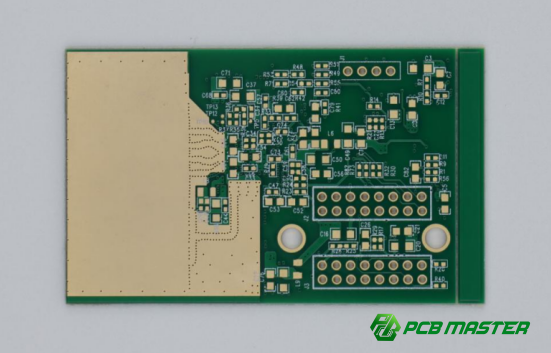
How to build a complete PCB warpage control system for asymmetrical stackups?
A complete PCB warpage control system requires coordinated control across four stages: design, material selection, manufacturing process, and final inspection. Each stage reduces internal stress and prevents imbalance in asymmetrical PCB structures.
In PCB structural asymmetry warpage control system engineering , no single step can solve the problem alone. Warpage is cumulative, so control must be layered across the entire production flow.
What should be controlled in the PCB design stage?
The design stage controls warpage by balancing stackup structure, copper distribution, and thickness layout before manufacturing begins.
In PCB design for warpage prevention , most deformation risks are already “decided” at this stage.
Stackup structure review
In asymmetrical PCB stackup design review , engineers check:
·Layer symmetry (top vs bottom balance)
·Dielectric thickness distribution
·Copper plane placement
Goal:
·Avoid extreme asymmetry that creates uneven expansion
Example: A 10-layer board with uneven signal/power distribution is more likely to warp unless balanced structurally.
Copper coverage (residual copper ratio) analysis
In PCB copper balance warpage control , copper distribution must be checked:
·Keep copper difference ideally <10–20%
·Avoid large empty copper zones
·Balance ground/power planes across layers
Example: One side 90% copper vs another 40% → high warpage risk after lamination.
Copper thickness distribution evaluation
In PCB copper thickness warpage analysis , engineers evaluate:
·0.5oz vs 2oz imbalance
·Local heavy copper zones
·Power vs signal layer mismatch
Goal:
·Avoid sudden stiffness differences across layers
Simple analogy: Like stacking uneven books—thicker books on one side cause tilt.
What should be controlled in the PCB material stage?
Material control focuses on selecting stable thermal properties (high Tg, low CTE) and verifying batch behavior consistency.
In PCB material selection for warpage control , material is the foundation of dimensional stability.
High Tg material selection
In PCB high Tg material warpage control , engineers choose:
·Tg ≥ 170°C materials
·Better thermal stability under reflow
·Reduced resin softening during lamination
Example: High Tg FR-4 reduces deformation in telecom and industrial PCBs.
Low CTE material verification
In PCB low CTE material system control , key checks include:
·X/Y/Z expansion behavior
·Thermal cycling stability
·Layer-to-layer consistency
Low CTE reduces mismatch between copper and resin.
Material shrinkage data confirmation
In PCB material shrinkage control system , manufacturers must confirm:
·Batch-to-batch shrinkage variation
·Pressing behavior under heat
·Historical warpage data
Purpose:
·Avoid unpredictable deformation during mass production
What should be controlled in the PCB manufacturing stage?
Manufacturing control ensures that heat, pressure, moisture, and cooling are all managed to prevent internal stress locking.
In PCB warpage manufacturing process control , this is where stress is either stabilized or locked into the board.
Baking (pre-drying) management
In PCB moisture control baking process , key actions:
·Remove absorbed moisture before lamination
·Standard conditions like 150°C × 8 hours
·Prevent vapor expansion during heating
Example: Without baking, moisture turns into steam and causes internal delamination or bowing.
Lamination (pressing) curve control
In PCB lamination temperature profile control , critical rules:
·Slow heating (≤3°C/min)
·Controlled resin flow stage
·Avoid local overheating
Purpose:
·Ensure uniform curing across all layers
Cooling process management
In PCB cooling warpage prevention , key controls:
·Slow cooling (3–4°C/min)
·Cool inside press
·Avoid thermal shock removal
Result:
·Reduces residual stress locking
What should be controlled in the PCB final inspection stage?
Final stage control ensures warpage is measured, corrected if possible, and validated for reliability before shipment.
In PCB final quality control for warpage , this step determines whether the board is acceptable for use.
Warpage measurement and inspection
In PCB bow and twist measurement control , engineers check:
·Bow (overall bending)
·Twist (diagonal deformation)
·Percentage of warpage vs PCB size
Example: A 0.3% warpage target means 0.3 mm deformation per 100 mm length.
Hot pressing correction (rework)
In PCB warpage correction process , hot pressing is used when:
·Warpage is thermally induced
·Structure is not permanently damaged
Process:
·120–150°C + pressure (~15 kg/cm²)
·Controlled time (30 min–4 hours)
Reliability verification testing
In PCB reliability validation for warpage control , tests include:
·Thermal cycling
·Reflow simulation
·Mechanical stress testing
Purpose:
·Ensure warpage does not return during real use
Example: A PCB may pass flattening but fail after multiple thermal cycles if internal stress is not fully removed.
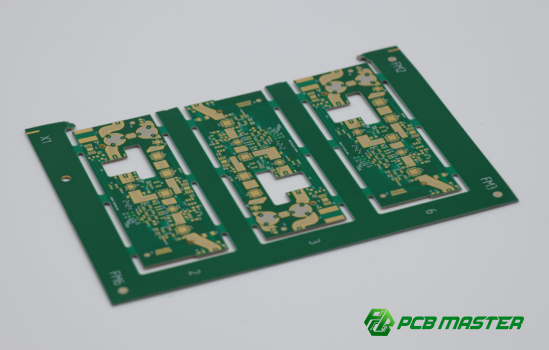
Conclusion
Controlling warpage in asymmetrical PCB structures is not achieved by a single fix, but through a complete engineering system that combines design optimization, material selection, manufacturing process control, and final inspection. From stackup balancing and copper distribution management, to high Tg/low CTE material selection, and precise lamination and cooling control, every step directly influences the final flatness and reliability of the board.
In addition, when warpage exceeds specification, corrective processes such as hot pressing can provide limited recovery, but long-term stability still depends on upstream design and process discipline. Therefore, true PCB warpage control is always a “front-loaded” engineering effort.
In practical industrial applications, especially in high-reliability fields such as telecom, automotive, and aerospace electronics, experience and process capability become critical. This is where working with a professional manufacturing partner makes a real difference.
PCBMASTER, as a senior PCB and PCBA supplier , has extensive expertise in handling complex asymmetrical stackups and strict warpage control requirements. Through advanced material management, precise lamination control, and mature engineering experience, PCBMASTER helps ensure stable board performance from prototype to mass production.
Ultimately, achieving low warpage is not just about meeting a specification—it is about building consistency, reliability, and trust in every PCB delivered.
FAQ
Does asymmetrical PCB stackup always cause warpage?
No. Asymmetrical PCB stackups do not always lead to warpage. If copper thickness, copper coverage (residual copper ratio), material CTE, and lamination process are well controlled, the warpage can still be kept within acceptable limits. The key is overall balance of thermal and mechanical stress.
What copper coverage difference causes PCB warpage risk?
In most PCB warpage control guidelines, a copper coverage difference within 10% is considered safe. When the difference exceeds 20%, the risk of bow and twist increases significantly, especially in high-layer or high-density PCB stackups.
Why do satellite phased array PCBs use asymmetrical stackups?
Satellite phased array PCBs often use asymmetrical stackups because of strict requirements for RF performance, thermal management, structural strength, and complex component placement. As a result, designers must rely on material selection and process control to compensate for imbalance and reduce warpage risk.
Can high Tg materials fully solve PCB warpage problems?
No. High Tg materials only improve thermal stability and reduce deformation caused by heat. However, final warpage performance still depends on stackup design, copper balance, material CTE matching, and lamination process control. It is only one part of a complete warpage control system.
How much can hot pressing correction fix PCB warpage?
Hot pressing can usually correct stress-induced warpage and bring the PCB back within specification. However, if the warpage is caused by structural design defects, material mismatch, or permanent internal stress, it is often not fully recoverable and may only be partially improved.
About the Author

Carol Luo
PCB Design EngineerI'm Carol, a PCB Engineer at PCBMASTER with experience in PCB design and manufacturing engineering since 2018. I focus on translating engineering requirements into reliable PCB solutions, with expertise in stack-up design, material selection, and design-for-manufacturing (DFM). I share practical engineering insights from real-world PCB design and production experience.
Visit Carol Luo's Profile