








Embedded Copper PCB Explained: Benefits and Manufacturing Process
PCB embedded copper block technology is a specialized PCB manufacturing process that integrates solid copper inserts into internal layers or cavities of a printed circuit board. Unlike conventional copper foil traces, embedded copper blocks create a three-dimensional thermal and electrical conduction path with significantly lower thermal resistance and electrical resistance. This technology is widely used in high-power electronics, automotive systems, industrial control equipment, power supplies, LED lighting, telecommunications, and other applications requiring superior heat dissipation and high-current carrying capability. As a manufacturer certified to IATF 16949, ISO 9001, UL, and RoHS standards , PCBMASTER provides advanced PCB solutions including embedded copper structures designed for demanding thermal management and power distribution applications.
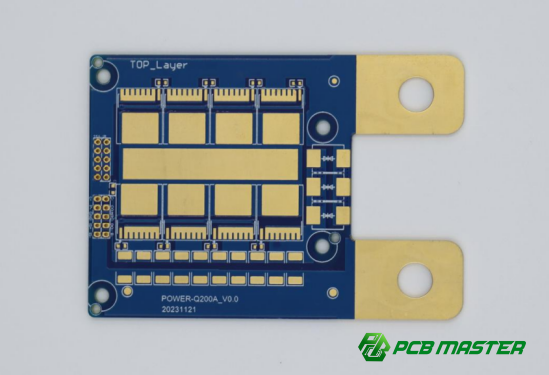
What Is an Embedded Copper Block PCB?
An embedded copper block PCB refers to a specialized circuit board in which a solid copper insert is embedded into an internal layer or machined cavity of the PCB and laminated into the board structure using thermally conductive insulating materials.
Unlike standard PCBs that rely solely on copper foil traces, embedded copper block boards incorporate three-dimensional copper structures that serve as:
- High-efficiency thermal conduction channels
- High-current carrying paths
- Mechanical reinforcement structures
- Low thermal resistance interfaces
This technology is particularly valuable in applications where conventional PCB thermal management methods cannot adequately dissipate heat generated by high-power components.
Key Structural Characteristics
| Feature | Standard PCB | Embedded Copper Block PCB |
| Heat Transfer Path | Copper foil + FR-4 | Solid copper insert |
| Current Carrying Capacity | Limited by copper thickness | Significantly increased |
| Thermal Resistance | Relatively high | Extremely low |
| Mechanical Strength | Standard | Enhanced |
| Manufacturing Complexity | Conventional | Advanced Special Process |
Why Use Embedded Copper Blocks in PCB Design?
The primary purpose of embedding copper blocks is to overcome thermal and electrical limitations encountered in high-power electronic systems.
Efficient Heat Dissipation and Temperature Equalization
Copper has a thermal conductivity of approximately 400 W/m·K , which is dramatically higher than FR-4 substrate materials.
As a result, embedded copper blocks can:
- Rapidly transfer heat away from power devices
- Reduce localized hot spots
- Improve temperature distribution across the PCB
- Enhance overall system reliability
- Support higher power densities
For power semiconductors such as MOSFETs, IGBTs, and power modules, embedded copper structures provide a highly effective thermal pathway to external heat sinks.
Enhanced Current Carrying Capability
Because solid copper has extremely low electrical resistance, embedded copper blocks can handle substantially higher currents than conventional copper traces.
Benefits include:
- Supporting tens of amperes or more of continuous current
- Reduced voltage drop
- Lower power loss
- Improved efficiency in power conversion systems
For high-current applications, embedded copper often performs better than simply increasing copper foil thickness.
Improved Mechanical Strength
In areas subjected to mechanical stress, such as:
- Connectors
- Terminal blocks
- High-power modules
- Industrial interfaces
Copper blocks act similarly to structural reinforcements, increasing rigidity and reducing the risk of PCB cracking or deformation.
Creation of Low Thermal Resistance Paths
Many high-power devices require extremely low thermal resistance between the semiconductor junction and the cooling system.
Embedded copper technology enables:
- Direct heat conduction
- Reduced thermal bottlenecks
- Better performance than standard FR4-based thermal vias
- More compact thermal management solutions
This makes embedded copper particularly valuable for:
- High-power LED systems
- Automotive electronics
- Industrial power supplies
- EV charging equipment
- Renewable energy converters
How Does Embedded Copper Block Technology Work?
The principle behind embedded copper technology is relatively straightforward:
- Heat generated by electronic components transfers into the copper block.
- The copper block rapidly conducts heat through its high thermal conductivity.
- Heat is distributed throughout the PCB structure.
- Heat eventually reaches external cooling systems such as heat sinks, chassis, or thermal interfaces.
Heat Transfer Comparison
| Material | Thermal Conductivity |
| FR-4 | ~0.3 W/m·K |
| Aluminum | ~205 W/m·K |
| Copper | ~400 W/m·K |
This significant conductivity advantage explains why embedded copper blocks dramatically improve thermal performance compared with traditional PCB structures.
Special Manufacturing Challenges of Embedded Copper PCB
Embedded copper technology requires a manufacturing process significantly different from standard PCB fabrication.
Precision Slot Milling and Copper Insertion
Before lamination, precise cavities must be machined into the PCB core material.
Key requirements include:
- Accurate cavity dimensions
- Tight copper block tolerances
- Proper alignment with surrounding circuitry
The copper block is then inserted into the cavity and secured using thermally conductive prepreg or thermal adhesive materials.
Thermal Conductive Bonding Materials
The material between the copper insert and substrate must simultaneously provide:
- Excellent thermal conductivity
- Electrical insulation
- Mechanical stress absorption
- Long-term reliability
Proper material selection directly affects board performance and lifespan.
Lamination and Resin Flow Control
Large copper inserts absorb heat differently from surrounding laminate materials.
During lamination:
- Resin flow behavior changes significantly
- Additional flow channels may be required
- Pressing parameters must be optimized
- Copper movement must be prevented
Manufacturers often use temporary high-temperature fixation methods or specially designed retention structures to maintain positioning accuracy.
Reliability and Stress Management
One of the most critical challenges is the difference in thermal expansion coefficients between copper and FR-4.
Potential risks include:
- Board warpage
- Delamination
- Internal stress accumulation
- Long-term fatigue failures
Therefore, careful engineering design and process control are essential.
Drilling Considerations
Mechanical drilling near copper blocks introduces additional challenges:
- Increased drill wear
- Higher risk of drill breakage
- Positioning difficulties
Solutions commonly include:
- Laser drilling
- Pre-drilled copper inserts
- Optimized drill path planning
Common Embedded Copper Block Structures
Different copper block geometries are used to meet specific mechanical and thermal requirements.
I-Type Copper Block
The most common rectangular structure.
Advantages:
- Simple manufacturing
- Cost-effective
- Excellent thermal conductivity
T-Type Copper Block
Features an undercut profile for improved retention.
Advantages:
- Enhanced mechanical locking
- Better resistance to separation
- Increased structural reliability
U-Type Copper Block
Includes groove structures to improve bonding.
Advantages:
- Better stress distribution
- Improved adhesion
- Enhanced thermal cycling performance
Typical Embedded Copper Block PCB Specifications
Copper Block Dimensions
| Parameter | Typical Range |
| Thickness | 0.5 mm – 3.0 mm |
| Width/Length | 3 × 3 mm to 40 × 100 mm |
| Structure Type | I-Type, T-Type, U-Type |
Critical Tolerance Requirements
| Parameter | Typical Capability |
| Copper-to-Trace Clearance | ≥ 0.25 mm – 0.35 mm |
| Copper-to-Hole Clearance | ≥ 0.25 mm – 0.35 mm |
| Surface Flatness | ±30 μm – ±50 μm |
Maintaining these tolerances is critical to avoid:
- Electrical shorts
- Assembly defects
- Reliability failures
Performance Validation
Embedded copper boards typically require:
- High-voltage testing
- High-current testing
- Thermal cycling testing
- Reliability verification
- Dimensional inspection
Industry Applications of Embedded Copper PCB
Embedded copper technology is increasingly adopted in industries where thermal management and high-current performance are mission-critical.
Automotive Electronics
With the growing demand for electric vehicles and advanced driver assistance systems (ADAS) , automotive electronics require highly reliable thermal management solutions.
PCBMASTER's IATF 16949-certified manufacturing system supports the stringent quality requirements of automotive-grade embedded copper PCB production.
Industrial Power Electronics
Applications include:
- Motor drives
- Servo controllers
- Inverters
- Power supplies
These systems often generate significant heat and require robust current-carrying capability.
LED Lighting Systems
High-power LEDs depend heavily on efficient heat removal to maintain:
- Brightness stability
- Color consistency
- Long operating life
Embedded copper blocks provide an effective low-thermal-resistance solution.
Telecommunications and Networking
Modern communication equipment often combines:
- High-density circuitry
- High-speed signals
- Elevated power consumption
Embedded copper technology helps maintain thermal stability while supporting compact designs.
PCBMASTER's Expertise in Embedded Copper PCB Manufacturing
As a professional PCB and PCBA manufacturer serving more than 300,000 global customers , PCBMASTER provides advanced embedded copper PCB solutions for high-performance electronic applications.
Leveraging its 80,000㎡ manufacturing facility , PCBMASTER offers:
- Embedded copper PCB fabrication
- HDI PCB manufacturing
- High-frequency PCB production
- Rigid-Flex PCB solutions
- SMT assembly and PCBA services
- Component sourcing and engineering support
Key Advantages
| Capability | PCBMASTER Practice |
| Quality Management | ISO 9001, IATF 16949 |
| Compliance | UL & RoHS Certified |
| Quality Assurance | 100% electrical testing |
| Product Yield | 99.5% |
| Engineering Support | 50+ professional engineers |
| Rapid Response | 24-hour support |
| Delivery Performance | 99.59% on-time delivery |
In addition, PCBMASTER provides free engineering file review services , helping customers optimize manufacturability, thermal performance, and production cost before fabrication begins.
Future Trends of Embedded Copper PCB Technology
As electronic devices continue moving toward:
- Higher power density
- Greater miniaturization
- Faster switching frequencies
- Electrification and automation
The demand for advanced thermal management solutions will continue to grow.
Embedded copper block technology is expected to become increasingly important in:
- Electric vehicles
- AI computing hardware
- Renewable energy systems
- Industrial automation
- Next-generation telecommunications equipment
Manufacturers capable of combining advanced embedded copper processes with rigorous quality management systems will be best positioned to support these evolving applications.
Conclusion
Embedded copper block PCB technology provides a highly effective solution for overcoming thermal management and high-current limitations in modern electronic systems. By embedding solid copper inserts directly into the PCB structure, designers can achieve superior heat dissipation, improved electrical performance, enhanced mechanical strength, and lower thermal resistance.
For organizations developing high-power electronic products, selecting an experienced manufacturing partner is critical. With advanced manufacturing capabilities, international certifications, rapid turnaround services, and extensive PCB/PCBA expertise, PCBMASTER continues to support global customers in delivering reliable, high-performance electronic solutions.
Tags: #EmbeddedCopperPCB #PCBManufacturing #PCBA #SMTAssembly #ThermalManagement #HighCurrentPCB #AutomotiveElectronics #HDIPCB #RigidFlexPCB #PCBMASTER #ElectronicsManufacturing
About the Author

Carol Luo
PCB Design EngineerI'm Carol, a PCB Engineer at PCBMASTER with experience in PCB design and manufacturing engineering since 2018. I focus on translating engineering requirements into reliable PCB solutions, with expertise in stack-up design, material selection, and design-for-manufacturing (DFM). I share practical engineering insights from real-world PCB design and production experience.
Visit Carol Luo's Profile