








What Do Resistors Do? Understanding Their Role in Electronics
Resistors are needed for safe and correct operation of every electronic circuit, from a simple LED flashlight to a complex industrial control system . But what do resistors do? A resistor is an electronic component that passively limits the flow of electrical current. You put resistance in a circuit to protect sensitive components . To set the correct voltage levels . To convert excess electrical energy to heat .
Resistors are small and cheap but a vital component in almost all electronic devices. They stop too much current or the wrong voltage getting to things like LEDs , microcontrollers , sensors and integrated circuits which means they don't work well or get damaged permanently .
Here you will learn what resistors do in a circuit, how resistors work and the main functions they serve in electronics. We will also explain how to select the right resistor for different applications and give some common mistakes to avoid, giving you a complete understanding of one of the most basic elements in modern circuit design.
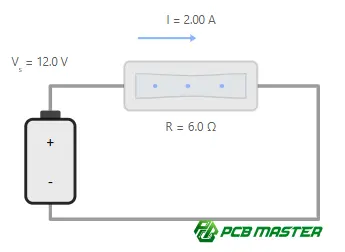
What Do Resistors Do in an Electronic Circuit?
Resistors limit the flow of electricity in a circuit. They carry current, they provide the right voltages, they safely dispose of excess electrical energy as heat, and they ensure that electronic parts work reliably. Without resistors, many circuits would not function correctly or could be damaged by too much current.
Control the flow of electric current
Resistors play a very important role in controlling the flow of electric current. Resistors do not stop electricity. They limit the amount of electricity that can flow through a circuit . This means each component can only handle the current it is designed for.
For example , an LED connected straight to a power source can explode due to the extra current running through it . when a resistor is added it limits to safe level and the led works normally Thus present day limiting resistor used in LED circuits, sensors, micro controllers etc. is explained.
Create voltage drops
Resistors also permit us to achieve controlled voltage drops. The voltage needed by the different parts of a circuit can be supplied. Resistor. When current flows through a resistor some of the supply voltage is dropped across the resistor . This property is used by engineers to distribute the voltage properly in a circuit.
For example , take a voltage divider . A voltage divider is a circuit that produces an output voltage that is a fraction of the input voltage using two resistors . One of the most common applications of resistors in electronics is the voltage divider. Voltage dividers are used extensively in sensor circuits, analog input circuits, and reference voltage circuits.
Dissipate electrical energy as heat
Resistors also have another important function – to get rid of electrical energy that is not needed, in the form of heat. So that large amounts of energy do not flow to sensitive parts . If current flows through a resistor , the resistance dissipates electrical energy .
But this heat is usually low, but significant in high power circuits. For example power resistors for motor controllers or industrial equipment are designed to safely dissipate more heat . Choosing the proper power rating will not only help to avoid overheating, it will also increase the reliability of the circuit.
Why every electronic circuit needs resistors
Almost all electronic circuits use resistors to control and stabilize electrical signals. They provide the correct operating voltage. They protect the components against over current. They improve the overall performance of the circuit.
Resistors are one of the most common electronic components, whether you are designing a simple hobby project or a complex industrial system. They’re also cheap, simple to build, and do the basics. They’re a staple in modern day electronics.”

How Do Resistors Work?
Resistors oppose the flow of electrical current. As electricity passes through a resistor it limits the current, causes a voltage drop and converts some electrical energy into heat . These activities help the electronic circuits to function safely and as expected.
Understanding electrical resistance
It is the property which resists the flow of electricity . A resistor has a resistance value, in ohms (Ω) , that indicates how much resistance there is to current. As a rule the higher the resistance the less current flows. The lower the resistance the more current passes.
A way to think about resistance is to imagine water flowing through a pipe. A narrow pipe lets water flow slower . A wide pipe lets more water flow . Just as a resistor restricts the flow of electricity to a controlled level . So that is pretty much how a resistor works in an electronic circuit.
Applying Ohm's Law
Ohm’s Law relates the voltage (V), the current (I) and the resistance (R). The equation is:
V = I × R
This is how if you know any two values you can find the third. The engineers can use Ohm ' s Law to determine how much current will flow, and choose the appropriate resistor value for a circuit.
If a circuit requires 20 mA (0.02 A) of current and is powered by a 9 V battery, then the resistance needed is 450 Ω (9 V ÷ 0.02 A = 450 Ω). Simple math like this can help make sure that components can operate safely and reliably.”
Simple circuit example
Consider a simple circuit: a 9 V battery, an LED and a 470 Ω resistor in series. When power is applied the resistor limits the current going to the LED so it doesn't get too much current and burn out.
Without the resistor the LED could be taking more current than it can handle. This may result in the LED overheating or being permanently damaged. Resistors control the amount of current and protect electronic components so the circuit can work as it should . Here is an example of what resistors do in a circuit: The same is true for anything from small DIY electronics to complex PCBs (printed circuit boards) .

How Do You Choose the Right Resistor?
When choosing the right resistor, there are four main considerations: resistance value, power rating, tolerance, package type. The correct combination provides safe, accurate and reliable circuit operation.
Resistance value
The resistance value, expressed in ohms (Ω), tells you how much the resistor will restrict current or how much voltage drop it will produce. The right value depends on the voltage and current in your circuit, and on what function the resistor performs. Most of the time engineers use the Ohm's Law ( V = I × R ) to calculate the resistance needed .
Example : Lets say you have an LED that requires 20 mA of current from a 5 V power supply . You would determine what value resistor you need to keep the current in a safe range . If the resistance value of the resistor is too low, there may be too much current flowing . If the resistance value is too high , the circuit may not work properly .
Power rating
The power rating tells you how much heat a resistor can safely dissipate in operation. Common ratings are 1/8 W, 1/4 W, 1/2 W and 1 W, but higher-power resistors are available for demanding applications.
When selecting a resistor, choose a power rating that is larger than the calculated power dissipation to give a safety margin. For example, a circuit that requires a resistor that dissipates 0.2W would use a 1/4W (0.25W) resistor as the minimum acceptable choice, with a 1/2W resistor providing greater reliability and running cooler.
Tolerance
The tolerance is a measure of how close the actual value of a resistor will be to the value stamped on it. It is expressed as a percentage, ±1%, ±5%, or ±10%. The smaller the percentage, the more accurate the resistor.
Precision is critical for applications like measurement equipment , voltage references and analog circuits as even a small change in resistance can affect performance . For general purpose electronics a ±5% resistor will often do, while more accurate circuits will usually have ±1% resistors.
Package type
The package type indicates the physical size and the mounting style of the resistor. The two most common types are through-hole resistors, which have leads that go through the PCB, and surface-mount device (SMD) resistors, which are soldered directly onto the surface of the board.
Through-hole resistors are easy to work with and popular for prototyping, education and hand-assembly. SMD resistors are much smaller, and so are ideal for compact PCBs and automated manufacturing. Which package is right for you will depend on your circuit design, board space available, assembly process and power requirements.
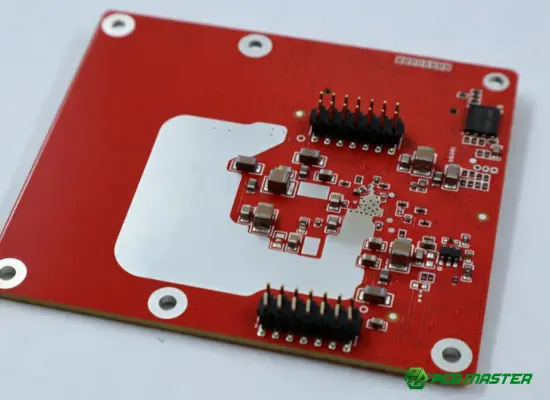
What Common Mistakes Should You Avoid When Using Resistors?
The most common resistor mistakes are using the wrong value , forgetting the power rating , and not taking tolerance or temperature effects into account . Avoiding these mistakes can help improve circuit performance, reliability and component life.
Choosing the wrong resistance value
One of the most common mistakes in design is choosing the wrong value of resistance. If the resistor has too little resistance , too much current will flow . If the resistor has too much resistance , a component may not work properly . Calculate the required value using Ohm’s Law and verify that the voltage and current requirements of your circuit are met before selecting a resistor.
For example, an LED circuit with a resistor of too low a value can lead to the LED overheating and failing. If the resistor is too high a value, the LED might seem dim or the LED might not turn on at all.
Ignoring power ratings
The power rating of a resistor is as important as its resistance value. If a resistor is forced to dissipate more power than it was designed for it can overheat, change value or fail completely. In worst case, the excessive heat can also damage other components on the printed circuit board.
It is a good idea to calculate the expected power dissipation and select a resistor with a power rating larger than necessary. This extra safety factor adds to reliability and allows the resistor to run cooler, especially in high power or continuous duty applications.
Overlooking tolerance and temperature
Many only consider the resistance value, forgetting that the tolerance and temperature also affect the performance of the circuit. The tolerance tells you how much the actual resistance can differ from the rated value . Temperature changes can cause the resistance to go up or down a little.
In simple circuits these variations may not matter much. When using precision measurement equipment, analog circuit and voltage reference circuit, small resistance changes will affect the accuracy. Pick a resistor with the right tolerance and temperature coefficient and you’ll get the most stable, consistent performance over the lifetime of the circuit.

Conclusion: What Are the Key Takeaways About Resistors?
What is the function of resistors? Their three main jobs are:
- Control the flow of current
- Provide the necessary voltages
- Safely dissipate excess electrical energy as heat
Resistors are among the simplest electronic components, but they are vital for circuit protection, stability, and reliable operation. It is equally important to choose the right resistor by considering its resistance value, power rating, tolerance and package type. Choosing the right one will prevent overheating, inaccurate circuit behavior and premature component failure.
As electronic products get smaller and more sophisticated, selecting the right components becomes more important than ever. Whether you are building a prototype, designing a PCB or producing high volume electronic products, understanding how resistors work and what resistors do in a circuit provides a solid basis for better circuit design. PCBMASTER offers complete PCB and PCBA manufacturing services to help you bring your electronic designs to life as finished products, with reliable, high-quality PCB fabrication and PCB assembly.
FAQs
Can a circuit work without resistors?
Yes, but only occasionally. In simple circuits, like a battery connected to an incandescent light bulb, a resistor may not be required because the light bulb has resistance of its own. Most modern electronic circuits, however, require resistors to control current, to set voltage levels, and to protect delicate components. Devices like LEDs , microcontrollers and integrated circuits can be damaged or perform poorly if too much current is supplied to them . Without resistors .
Do resistors reduce current or voltage?
Resistors affect current and voltage differently . A resistor is a simple means of restricting the flow of electricity according to the Ohm’s Law. The current through the resistor creates a voltage drop across the resistor. That is why resistors are used for current limiting and for voltage dividing in electronic circuitry.
Why do resistors get hot?
Resistors heat up. They change electricity to heat. Some of the electrical energy is converted to thermal energy when current flows through a resistor . That is the normal function of a resistor. The amount of heat produced depends on the voltage, current and resistance. Also, choose the right power rating for the resistor so that it can safely dissipate the heat without overheating or burning out.
How do you calculate the correct resistor value?
Normally , the value of the resistor is determined by Ohm 's Law .
I = V ÷ R
To calculate the required resistance:
- Determine the supply voltage.
- Calculate the operating current required.
- Calculate the resistance using Ohm's law.
- Choose the nearest standard resistor value and see what power rating is needed.
For example, if you run an LED that requires 20 mA (0.02 A) off of 5 V, the resistor would be about 250 Ω ( 5 V ÷ 0.02 A = 250 Ω). In practice you would select the closest standard resistor value which ensures it works safely.
Can resistors fail over time?
Yes. “Resistors are very reliable, but can fail from too much heat, electrical overload, moisture, mechanical damage, or from age over time. Typical symptoms of resistor failure are discoloration, burning, cracking, or a resistance value that is out of its specified tolerance. Proper selection of resistance value, power rating and operating conditions will help to maximize the life of the resistor and improve the overall circuit reliability.
About the Author

Carol Luo
PCB Design EngineerI'm Carol, a PCB Engineer at PCBMASTER with experience in PCB design and manufacturing engineering since 2018. I focus on translating engineering requirements into reliable PCB solutions, with expertise in stack-up design, material selection, and design-for-manufacturing (DFM). I share practical engineering insights from real-world PCB design and production experience.
Visit Carol Luo's Profile