








Types and Installation of Braking Resistors: A Complete Guide
Braking resistors are essential components in motor drive systems, industrial automation, electric vehicles, and power control applications. They help to dissipate the regenerative energy generated during the deceleration of the motor, avoiding the overvoltage faults, and improving the stability of the system. In this guide you will get descriptions of different types of braking resistors, ways of installing, selection criteria and practical use. PCBMASTER offers advanced PCB manufacturing capabilities, rigorous quality control systems and engineering support to help electronics manufacturers develop reliable solutions for power control and industrial applications.
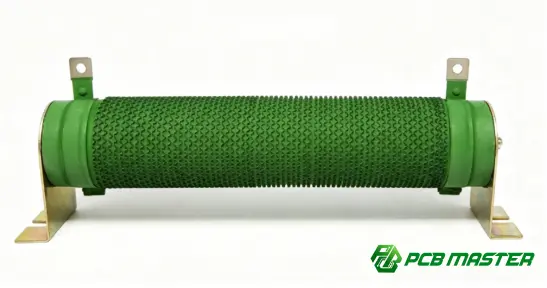
What Is a Braking Resistor and Why Is It Important?
Braking resistor (dynamic braking resistor). A power electronic device that dissipates excess electrical energy as heat when a motor is braking or slowing down.
When a motor slows down, it becomes a generator for an instant. It does not consume energy but feeds electrical energy back into the drive system. This regenerated energy can increase the DC bus voltage on a variable frequency drive (VFD) , servo drive or a motor controller. When the voltage is too high the electronic parts are shut down or damaged .
A braking resistor provides a controlled way to dissipate energy, allowing the system to:
- Prevent DC bus overvoltage failures
- Improve braking performance
- Reduce mechanical stress on motors and machines
- Increase equipment reliability
- Support faster acceleration and deceleration cycles
Braking resistors are widely used in industrial electronics, such as PCB, power modules, control circuits and thermal management structures. Reliability in PCB design and manufacturing is a must if you want to achieve the stable operation under high current and high temperature conditions.
What Are the Different Types of Braking Resistors?
Braking resistors are divided by structure, material, rated power and application environment. The type needed depends on such factors as the frequency of braking, energy absorption requirements, available installation space, and operating temperature.
1. Wirewound Braking Resistors
Wirewound braking resistors are one of the most popular types used in industrial motor control applications.
They are made by winding resistance wire on an insulating core, usually made of ceramic or fibreglass materials. This structure has very good heat resistance as well as high power handling capability.
The Advantages:
- High energy absorption capacity
- Stable resistance performance
- Suitable for heavy-duty applications
- Good thermal durability
Common applications:
- Industrial automation equipment
- Cranes and elevators
- CNC machines
- Large motor drives
2. Aluminum Housing Braking Resistors
Aluminum Housing Braking Resistors Aluminum housing braking resistors feature an aluminum enclosure for improved heat dissipation.
The aluminum case acts as a heat sink , conducting the heat generated from braking away to the outside environment .
Advantages:
- Compact design
- Efficient thermal management
- Easy installation
- Good mechanical protection
These resistors are often found in small industrial equipment where space-efficiency and reliability are important.
3. Grid Braking Resistors
Grid resistors are a number of resistance elements connected in a grid structure.
They are made for very high power applications where energy must be dissipated continuously.
Typical applications include:
- Railway systems
- Heavy industrial machinery
- Mining equipment
- Large power conversion systems
The modular structure provides the manufacturer with the ability to change the resistance value and power capacity to meet the system requirements.
4. Ceramic Braking Resistors
Ceramic insulation and heat resistant parts are used in ceramic braking resistors.
They are very temperature stable and therefore suitable for use in harsh environments where reliable function is important.
Applications:
- Industrial controllers
- Power electronics equipment
- High-temperature environments
5. PCB-Mounted Braking Resistors
Surface mounted braking resistors on a PCB are designed for electronic equipment where the power is controlled at the IC level.
These resistors are usually smaller and are soldered directly to printed circuit boards.
They are commonly found in:
- Motor control boards
- Consumer electronics
- Embedded systems
- Power management modules
System reliability of PCB mounted braking resistor applications is directly influenced by PCB thermal design, copper thickness, material selection and manufacturing quality. PCBMASTER offers the most advanced PCB solutions for high-end electronic applications, such as manufacturing of high frequency PCB , metal core PCB , HDI PCB and rigid-flex PCB .
Comparison of Different Braking Resistor Types
| Dimension | Standard Solution | Advanced Engineering Practice |
|---|---|---|
| Power Handling | Suitable for low to medium energy dissipation | Customized solutions for industrial and high-power applications |
| Thermal Management | Basic heat dissipation methods | Optimized PCB design and thermal structures |
| Application Range | General motor control systems | Automotive electronics, industrial automation, communication equipment |
| Reliability Requirements | Standard quality inspection | Certified production under ISO 9001, IATF 16949, UL standards |
| Production Capability | Limited customization | Flexible prototype and mass production support |
How to Install a Braking Resistor Correctly?
Correct installation is essential for reliable operation and to avoid overheating or electrical failure.
1. Determine the Correct Installation Location
The location of the braking resistors should be as close as possible to the inverter/VFD/motor controller to minimize the cable length and electrical losses.
But there has to be enough space for ventilation. The braking resistors get very hot when running .
Recommended considerations include:
- Avoid enclosed spaces without airflow
- Keep away from heat-sensitive components
- Ensure proper grounding
- Follow manufacturer installation specifications
2. Select Proper Wiring and Connection Methods
The wiring between the drive system and the braking resistor must be sized to handle the expected current and voltage.
Important factors include:
- Cable size selection
- Insulation rating
- Connection reliability
- Protection against vibration and mechanical stress
For PCB-integrated braking resistor designs, engineers must also consider:
- Trace width and copper thickness
- Thermal vias
- Component spacing
- High-current path optimization
3. Ensure Effective Heat Dissipation
One of the critical installation considerations is thermal management since braking resistors convert electrical energy into heat.
Common cooling methods include:
| Cooling Method | Application |
|---|---|
| Natural Air Cooling | Small and medium power systems |
| Forced Air Cooling | Continuous braking applications |
| Heat Sink Installation | Compact industrial equipment |
| Liquid Cooling | High-power applications |
4. Verify Resistance Value and Power Rating
Choose the wrong resistor and the braking ability will be diminished or the drive system could be damaged.
Engineers should calculate:
- Required braking torque
- Regenerative energy
- Maximum braking time
- Allowable resistor temperature
- Drive manufacturer's recommended resistance range
The brake resistor must be compatible with the inverter or motor drive electrical specifications.
Common Mistakes When Installing Braking Resistors
Choosing the Wrong Power Rating
If a resistor is not rated for enough power it can get very hot and burn out with frequent braking cycles.
Ignoring Thermal Design
In most cases the system fails due to a problem of heat management rather than an electrical problem. Having good thermal paths and airflow is important.
Installing Near Sensitive Components
High operating temperatures can impact electronic components near the system, decreasing reliability and product life.
Neglecting Quality Control During Manufacturing
In industrial and automotive electronics, not only the reliability of individual components, but also the quality of the PCB manufacturing, the accuracy of the assembly and the inspection processes are responsible for the reliability of the components.
Practical Application Experience: Designing Reliable Power Electronics Systems
You seldom find braking resistors as separate components in modern electronic equipment. "Together with PCBs, controllers, sensors and communication modules they are part of complete power control systems."
A reliable design requires:
- Stable PCB materials
- Optimized circuit layout
- Accurate manufacturing processes
- Comprehensive testing procedures
PCBMASTER is a professional PCB & PCBA manufacturer, and adopts strict quality management systems such as ISO 9001, IATF 16949 standard. Our engineering team provides design file review and manufacturing support to assist customers in improving PCB performance, manufacturability and production efficiency.
PCBMASTER offers customized PCB solutions including metal core PCB, HDI PCB, rigid-flex PCB, high-frequency PCB technologies for high power electronics, industrial control systems and automotive electronics applications.
How PCBMASTER Supports Reliable Electronic Product Development
PCBMASTER is your reliable partner for PCB and PCBA manufacturing. We offer you one-stop solutions from prototype to mass production.
Key capabilities include:
- Advanced PCB Manufacturing: Supports HDI, rigid-flex, FPC, high-frequency PCB, and metal core PCB production.
- Strict Quality Assurance: Products comply with ISO 9001, IATF 16949, UL, and RoHS requirements.
- Engineering Support: Professional engineers provide free design file checking and optimization recommendations.
- Fast Production Capability: Quick-turn PCB prototypes can be completed within 24 hours, supporting accelerated product development.
- Flexible Manufacturing: Suitable for both small-batch projects and large-scale production.
PCBMASTER combines manufacturing expertise, engineering support and quality management to enable global electronics companies to develop reliable products for industrial automation, automotive electronics, communication systems and other advanced applications.
Summary: Choosing the Right Braking Resistor for Long-Term Reliability
Regenerative energy dissipation for safety is an important element in modern motor control and power electronics. Depending on the application requirements, there are different types of braking resistors like wirewound, aluminum housing, grid, ceramic and PCB mounted braking resistors.
The key to success is to consider the resistance value, power rating, installation environment and thermal management. Cooperation with an experienced PCB and PCBA supplier can greatly improve the reliability of the product and the efficiency of production for manufacturers, who are developing complex electronic systems.
PCBMASTER provides the latest in production capabilities and complete engineering support, with certified manufacturing processes. We are a trusted source for PCB solutions around the world.
Tags: #BrakingResistors #PowerElectronics #PCBManufacturing #PCBA #SMT #IndustrialAutomation #MotorControl #PCBMASTER #IndustryInsights
About the Author

Carol Luo
PCB Design EngineerI'm Carol, a PCB Engineer at PCBMASTER with experience in PCB design and manufacturing engineering since 2018. I focus on translating engineering requirements into reliable PCB solutions, with expertise in stack-up design, material selection, and design-for-manufacturing (DFM). I share practical engineering insights from real-world PCB design and production experience.
Visit Carol Luo's Profile