








How AI Is Transforming the PCB Industry: Design, Manufacturing, and Future Trends
In recent years, artificial intelligence (AI) has developed very quickly. The global AI market will grow from $294.16 billion in 2025 to $2.48 trillion by 2034, according to Fortune Business Insights . The growth is exponential and indicates how AI is important in hastening automation, improving efficiency and pushing the frontiers of technology across industries such as manufacturing, healthcare, transportation and finance.
Meanwhile, with the development of artificial intelligence technology, its application scope has been expanding from software and data analysis to physical manufacturing, thus promoting the intelligent transformation of traditional industries. AI is emerging as a key enabler to improve design efficiency, optimize the manufacturing process, enhance quality control and drive the smart factory development in PCB industry.
AI will enable manufacturers to make more efficient engineering decisions, more precise process control and faster product development in PCB design, manufacturing, inspection and production management.
Why the PCB Industry Needs AI
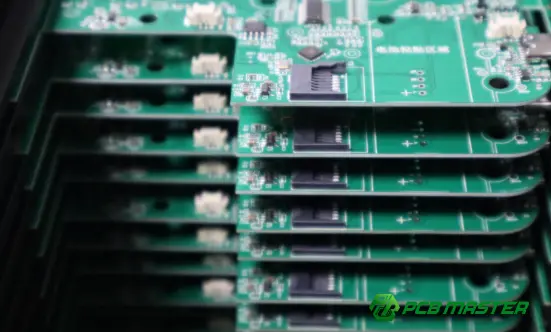
With the rapid development of electronic technology, the complexity and performance requirements of printed circuit boards (PCBs) have been greatly increased. The PCB manufacturers are facing increasing challenges in design and production. Such challenges are driving the adoption of smart technologies. Artificial intelligence (AI) is emerging as an essential tool to improve efficiency, accuracy and competitiveness in the PCB industry.
Increasing PCB Design Complexity
Today's electronic applications demand PCBs that are more integrated, have higher signal transmission speeds, and are more reliable. Applications such as High-Density Interconnect (HDI) PCBs , high-speed PCBs , AI server PCBs, and automotive electronics are moving beyond traditional PCB design.
With the increased complexity of PCB structures, engineers must consider many aspects simultaneously: layer stack-up, signal integrity, power integrity, thermal management and manufacturability. The convergence of mounting design constraints and dwindling development cycles has rendered traditional design methods unsustainable, thereby necessitating smarter, more efficient engineering solutions.
Manufacturing Challenges
The PCB manufacturing industry is under a number of pressures including shorter delivery times, higher quality standards and the need to reduce production costs. Manufacturers are forced to shorten their production schedules due to shorter product life cycles. Shortages of labour and rising operating costs mean that optimizing processes is essential.
Similarly, application fields such as automotive electronics, communication equipment, AI computing systems require very high reliability and consistency. PCB manufacturers require new technologies that can address these changing needs to enhance manufacturing efficiency, quality control and smarter manufacturing.
AI in PCB Design
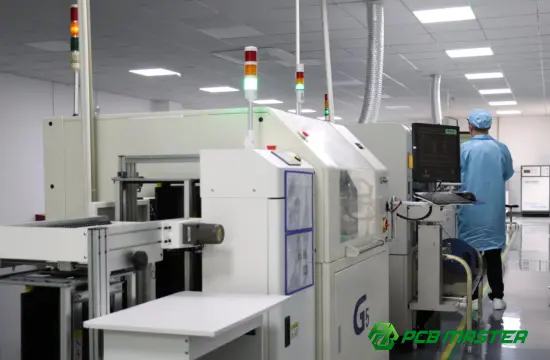
The design of modern PCBs is becoming more and more complex and this brings some new challenges for the engineer especially in high performance, miniaturization and high reliability applications. Traditional PCB design flows require a significant amount of manual tuning, and multiple iterations through verification steps leading to longer development cycles and higher risks of design errors. With the integration of artificial intelligence (AI) into the PCB design flow, engineers can improve design efficiency, optimize performance and accelerate the development of advanced electronic products.
Intelligent PCB Layout and Routing
The most time consuming steps in the design process are the placement and routing of the PCB. As the designs become more complex, with increasing component density, multi-layer structures and high-speed signal transmission, engineers need to consider multiple factors at the same time like signal integrity, power distribution, thermal performance and manufacturing limitations.
AI based design tools can analyze large amount of design data and intelligently suggest component placement, trace routing and design optimization. With AI, engineers can identify potential issues, recommend more efficient solutions, reduce manual iterations, and resulting in higher quality PCB layout design.
AI-Driven DFM Analysis
DFM ( Design for Manufacturing ) is important that the designs of PCBs can be manufactured reliably and cheaply. For complex designs, the early life identification of manufacturing risks is more difficult.
Automated DFM analysis powered by AI allows you to review PCB designs before they go into production for potential manufacturing issues and get suggestions on how to improve them. This leads to less design iterations, better manufacturing yields and a faster design to manufacturing ramp.
Simulation and Design Optimization
With increasing performance requirements for PCBs, simulation is becoming an integral part of the design verification process. For high speed and high density PCBs, the signal integrity, power integrity and the EMC and thermal properties need to be analyzed carefully.
AI can improve simulation and optimisation by analysing complex data sets, identifying patterns in performance and predicting potential design problems. This on one hand helps the engineer to take faster and more accurate decisions that in turn results in better reliability and electrical performance of the PCB.
Accelerating Prototype Development
Traditional PCB prototyping involves a lot of design iterations, testing cycles and engineering tweaks. AI speeds up this designing process by automating part of the design analysis, improving accuracy and reducing wasted iterations. AI-powered workflows allow engineers to move from proof-of-concept to prototype manufacturing faster, enabling manufacturers to respond to market demands faster and fuel the next generation of electronic product development.
AI in PCB Manufacturing
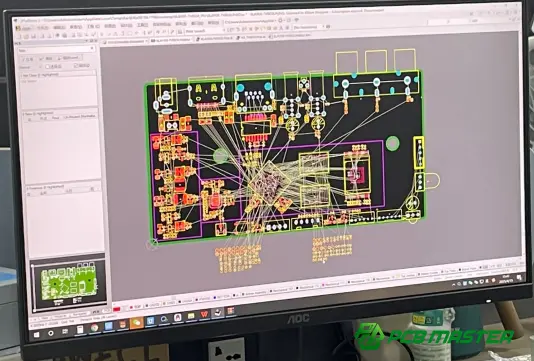
With the increasing complexity of the PCB manufacturing as well as the increasing customer demands, manufacturers need to have more efficient and flexible production systems to stay competitive. Traditional manufacturing methods are mostly based on manual adjustment and past experience, which may not be easy to respond to the rapidly changing production conditions. The integration of artificial intelligence into manufacturing processes can give PCB manufacturers the opportunity to realize smarter production management, higher operational efficiency and enhanced manufacturing performance.
Smart Production Planning
Effective production planning is one of the critical factors for PCB manufacturers to optimize the capacity, delivery schedules, materials availability and resource allocation. Traditional planning approaches may have difficulties in increasingly dynamic production environments with large amounts of data and rapidly changing requirements.
AI can analyze historical data on production, orders, equipment capacity, workflow conditions, etc., to optimize production schedule and resource allocation. AI helps manufacturers, for example, to optimize production efficiency, reduce waiting times and achieve more reliable delivery performance through better planning accuracy and the identification of possible bottlenecks.
AI Process Control
Processes involved in manufacturing of Printed Circuit Boards include imaging, etching, drilling, plating, lamination and surface finishing. Consistent quality requires control of these processes. The results of the manufacturing process can be affected by small changes in temperature, pressure, chemical concentration, or processing time.
AI-enabled process control systems continuously collect and analyze manufacturing data to detect abnormal conditions and suggest real-time adjustments. This gives manufacturers more consistent conditions for production, reduces variation in the process and improves consistency in manufacturing.
Predictive Equipment Maintenance
PCB manufacturing needs advanced equipment that should work with high precision and continuously. Equipment breakdowns cause delays in production, higher costs and lower productivity.
Predictive maintenance powered by AI uses machine data, sensor data and historic performance data to spot early signs of equipment degradation. They are able to foresee failures before they occur, schedule maintenance accordingly and thus minimize downtime and prolong the life of the equipment.
Intelligent Factory Automation
Smart factories are changing the traditional setting of PCB manufacturing into a data-driven, connected production facility. It allows to improve the collaboration of production equipment, manufacturing systems and operational data platforms.
Intelligent automation can also be used for automating workflow management, real-time monitoring of production and for making better manufacturing decisions. This helps PCB manufacturers improve their efficiency, reduce manual intervention and create more flexible production systems that can meet the requirements of advanced electronics manufacturing.
AI in PCB Inspection and Quality Assurance
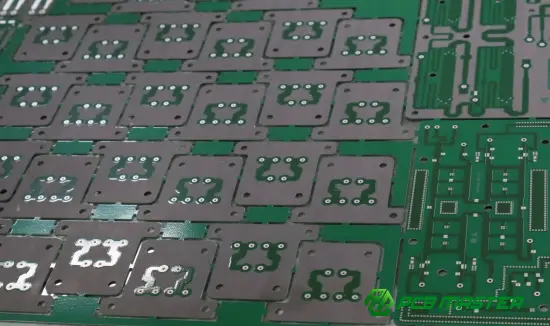
Especially the important aspect of the quality assurance of PCB manufacturing is that modern electronic products require higher reliability and more stringent performance requirements. Traditional inspection methods are often time consuming and highly dependent on the experience of the operator, leading to an inefficient and inconsistent inspection process for increasingly complex PCB structures. With the help of AI in the inspection process, PCB manufacturers can improve the accuracy of detecting defects, speed up the quality analysis and get more reliable results in production.
AI-Based AOI
Automated optical inspection (AOI) is one of the major inspection techniques used in PCB manufacturing. It is used to detect surface defects such as open circuit, short circuit, missing feature and soldering problems. But in the face of increasingly complex PCB designs, traditional AOI systems have a hard time distinguishing between real defects and acceptable variance.
Machine learning and image recognition technology enable AI-driven AOI systems to provide a smarter analysis of inspection images. With large datasets of PCB images, AI can be trained to become more accurate in identifying defects, reduce false alarms, and speed up the inspection of complex PCB assemblies.
AI-Assisted X-ray Inspection
X-Ray inspection is one of the most widely used methods for the detection of non-visible defects. This is even more critical for dense PCB assemblies with BGAs or fine pitch packages.
AI helps engineers process complicated images of internal structures, detect abnormal patterns and locate potential defects more quickly. This improves inspection accuracy and saves manufacturers manual evaluation time.
Defect Recognition and Classification
The defect classification is important to diagnose the problems in production and suggest the corrective actions. Engineers may need to manually review inspection results and defect classifications with traditional methods.
The AI based defect recognition systems can automatically recognize and classify the defect based on the type of PCB defect (open, short, not enough solder, solder bridge and surface defect). AI can assist manufacturers in analyzing defect patterns to gain deeper insight into the causes of failures and improve troubleshooting efficiency.
Continuous Yield Improvement
In addition to the identification of individual defects, AI allows PCB manufacturers to look at inspection data from a higher level view. AI can associate defect information with production history and process data to assist in finding repeat quality issues and identifying opportunities for improvements.
This data driven approach allows the manufacturers to optimize the processes on the fly, reduce defect rates and improve overall production yield. AI is changing PCB quality assurance from a reactive inspection process to a more proactive, intelligent quality management system.
Future Trends of AI in the PCB Industry
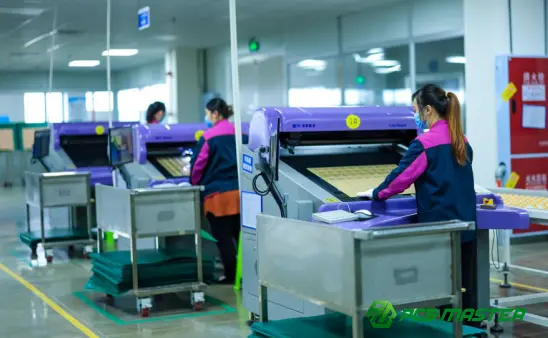
As AI technologies evolve, the role of AI in the PCB industry will transition from optimizing individual processes to creating fully integrated, intelligent manufacturing ecosystems. In the future the PCB will more and more depend on AI supported engineering assistance, virtual simulation, autonomous production systems and data driven decision making. These trends will make manufacturers more efficient, flexible and innovative.
Generative AI for PCB Engineering
Generative AI will be one of the main tools for future PCB engineering, helping engineers during the entire product development lifecycle. Traditional design tools are rule-based, but generative AI can analyse engineering requirements, design constraints and historical data to generate intelligent suggestions and alternative solutions.
Generative AI can assist with PCB engineering applications including design optimization, documentation, design review and knowledge management. Generative AI can help eliminate the drudgery of repetitive work, and speed up engineering analysis so engineers can spend more time on complex problem solving and innovation.
Digital Twins and Virtual Manufacturing
Digital twin technology is a key solution for smart manufacturing, creating virtual copies of physical products, equipment and manufacturing processes. In the PCB industry, digital twins are used to simulate manufacturing conditions, predict potential problems, and test process changes before actual production starts.
Paired with AI analytics, digital twins provide manufacturers with a better understanding of their production performance, the opportunity to optimize in a virtual environment and less risk with trial-and-error improvements. This leads to better efficiency and better decision making across the manufacturing life-cycle.
Autonomous Smart Factories
In the future, PCB plants will be smarter and automated. AI will allow production systems to look at data as it's created and decide how to run and change processes automatically to adapt to changing circumstances.
The integration of intelligent equipment, robotics, manufacturing execution systems (MES) and AI-driven analytics will make smart factories autonomous, creating more flexible and efficient production environments. The change will allow manufacturers to boost productivity, cut dependency on manual operations and react faster to market needs.
AI-Powered Supply Chain Collaboration
AI will also revolutionize the way PCB manufacturers manage their supply chains. With supply chains becoming more global and complex, manufacturers are seeking more visibility into the availability of material, supplier performance, demand change and potential risks.
With AI supply chain solutions we can analyze large data to improve demand forecasting, optimize inventory management and allow better collaboration between manufacturers, suppliers and customers. This will produce a more resilient, more responsive PCB ecosystem.
Human-AI Collaboration in PCB Engineering
More automation, but AI will augment human capability. AI will not replace the engineer In the future, PCB engineers will work with AI systems to solve difficult problems, optimize designs and make smarter decisions.
PCB manufacturers can boost innovation and efficiency by leveraging the accumulated wisdom of human experience with AI-based concepts. The future of the PCB industry is not a future in which AI replaces engineers, but a future in which intelligent technologies are combined with human knowledge.
Conclusion
Artificial intelligence is revolutionizing the entire product lifecycle of the PCB industry including all aspects from design optimization, improved manufacturing efficiency, intelligent inspection to data-driven decision making. AI helps PCB manufacturers improve product quality, reduce development cycles and better meet the ever more complex demands of modern electronic products through smarter processes and more accurate analysis.
For PCB manufacturers, the adoption of AI is thus not only about introducing new technology but also about building smarter engineering capabilities and more efficient manufacturing systems. With the industry moving toward intelligent operations, as a professional PCB manufacturer, PCBMASTER continues to combine advanced manufacturing concepts with focused PCB engineering expertise. We are committed to working with our customers to find new ways to improve efficiency, quality and reliability as they face the changing needs of next generation electronics.
FAQs
1. What is the impact of AI on the PCB industry?
AI is revolutionizing the PCB industry, providing improved efficiencies, accuracy and decision making throughout the PCB lifecycle. AI is utilized for optimization of the PCB design layout, routing, DFM analysis and simulation. AI helps manufacturers in production planning, process control, predictive maintenance and smart factory automation. In addition, AI-based optical inspection systems can help increase defect detection and quality management, and allow manufacturers to create more reliable PCBs with faster development cycles.
2. How Can AI Be Used In PCB Design?
During the PCB design process, AI assists engineers with intelligent layout optimization, routing guidance, design validation, and simulation analysis. AI-driven tools can analyze complex design requirements and identify potential issues and suggest improvements for signal integrity, power integrity, thermal performance and manufacturability. They cut down on design iterations and accelerate PCB development.
3. How can AI be used in PCB manufacturing?
Benefits of AI to PCB Manufacturers: Improve production efficiency, quality control and reduce operation cost. AI can analyze real-time manufacturing data for production scheduling optimization, process condition monitoring, equipment failure prediction, and intelligent factory operations. These applications allow manufacturers to achieve much more stable production performance and to increase overall productivity.
4. Will PCB engineers be replaced by AI in the future?
AI will not replace PCB engineers, but will augment them by automating mundane tasks and providing intelligent insights. Engineers will continue to play a central role in making tough technical decisions, using their industry experience and engineering problem solving. “The future of PCB development is going to be a combination of human expertise and AI technologies.
5. Future of PCB industry with AI?
The future of AI in the PCB industry will be characterized by more integration of intelligent design tools, digital twins, autonomous smart factories, and data-driven manufacturing systems. There’s also a boon for PCB engineering with generative AI. AI-enabled supply chain management and advanced automation can help manufacturers create more agile, efficient production ecosystems. The PCB industry will continue to innovate with AI technologies.
About the Author

Carol Luo
PCB Design EngineerI'm Carol, a PCB Engineer at PCBMASTER with experience in PCB design and manufacturing engineering since 2018. I focus on translating engineering requirements into reliable PCB solutions, with expertise in stack-up design, material selection, and design-for-manufacturing (DFM). I share practical engineering insights from real-world PCB design and production experience.
Visit Carol Luo's Profile