








What Does a Resistor Do? Understanding Resistors in Electronic Circuits
A resistor is a passive electronic component that limits and controls the flow of electric current in a circuit. By providing a specific amount of electrical resistance, resistors help regulate voltage, protect components, set operating conditions, and control signal behavior. Understanding what a resistor does is essential for PCB design, PCBA assembly, and reliable electronic system development.
What Does a Resistor Do in a Circuit?
A resistor is a passive component designed to oppose the flow of electric current. Its resistance is measured in ohms (Ω) , and the resistance value determines how much current flows when a voltage is applied.
The basic relationship between voltage, current, and resistance is described by Ohm's law :
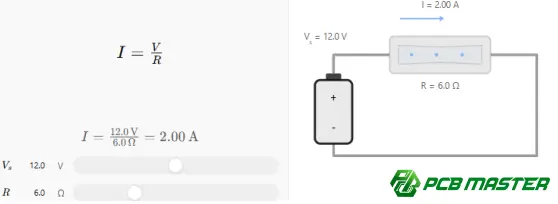
In practical PCB circuits, resistors are rarely used for only one purpose. Depending on their location and value, they can perform several important functions:
- Limit current to protect sensitive components
- Divide voltage between circuit nodes
- Set bias conditions for transistors and other semiconductor devices
- Control signal levels
- Provide pull-up or pull-down functions
- Dissipate electrical energy as heat
- Establish operating conditions for analog and digital circuits
For PCB designers, choosing the correct resistor value, package, tolerance, and power rating is therefore an important part of circuit design.
How Does a Resistor Limit Current?
When voltage is applied across a resistor, the resistor restricts current according to its resistance value.
For example, if the voltage remains constant, increasing resistance reduces the amount of current flowing through the component. A lower resistance allows more current to flow.
This simple characteristic makes resistors useful for protecting components such as LEDs and controlling current in different sections of a circuit.
Resistor Example
Suppose an LED circuit requires current limiting. A resistor can be placed in series with the LED to prevent excessive current from flowing through it.
The resistor converts part of the electrical energy into heat. The appropriate resistance value must therefore be selected according to the circuit's voltage and current requirements.
What Are the Main Functions of Resistors?
| Resistor Function | How It Is Used | Typical PCB Application |
|---|---|---|
| Current limiting | Restricts current flow | LED circuits, protection circuits |
| Voltage division | Produces a desired voltage level | Sensor and analog circuits |
| Pull-up / pull-down | Defines a default logic state | Digital interfaces |
| Biasing | Establishes transistor operating conditions | Amplifier and control circuits |
| Signal control | Adjusts signal levels or interacts with other components | Communication and control circuits |
| Energy dissipation | Converts electrical energy into heat | Power and load circuits |
The specific function depends on the resistor's position within the circuit rather than simply the component itself.
What Is Resistance?
Resistance describes how strongly a material or component opposes electric current. It is measured in ohms.
Several physical factors can affect the resistance of a conductor, including its material, length, and cross-sectional area.
For a uniform conductor:
R = ρL/A
where:
- R = resistance
- ρ = resistivity of the material
- L = conductor length
- A = cross-sectional area
A discrete resistor is manufactured with a controlled resistance value so that designers can predict its electrical behavior within a circuit.
What Do Resistor Values Mean?
Resistors are available in many resistance values, such as:
- 10 Ω
- 100 Ω
- 1 kΩ
- 10 kΩ
- 100 kΩ
- 1 MΩ
The required value depends on the circuit's electrical requirements.
Resistors also have specifications beyond resistance. Important parameters include:
Resistance Tolerance
Tolerance indicates how closely the actual resistance is expected to match its nominal value.
For precision circuits, a tighter tolerance may be required. Less demanding circuits may use standard tolerance components.
Power Rating
A resistor must be capable of handling the power generated during operation. If excessive power is dissipated, the resistor can become too hot and potentially fail.
Package Size
For PCB applications, resistor packages must match the assembly process and available board space. Common surface-mount resistor packages vary in physical dimensions, making component selection an important part of PCB layout and SMT assembly.
What Is the Difference Between Resistors in Series and Parallel?
Resistors can be connected in different configurations, with series and parallel being two of the most common.
Resistors in Series
When resistors are connected in series, their equivalent resistance is the sum of their individual resistance values:
Rₜₒₜₐₗ = R₁ +R₂ + ⋯
This configuration increases the total resistance and is useful when a specific resistance value needs to be achieved using multiple components.
Resistors in Parallel
When resistors are connected in parallel, the equivalent resistance is lower than the resistance of the individual branches:
1/Rₜₒₜₐₗ =1/R₁ +1/R₂ + ⋯
Parallel resistor networks can also be used for current distribution and power-handling requirements.
What Should You Consider When Choosing a Resistor for a PCB?
Selecting a resistor is not simply a matter of finding a resistance value.
Engineers should evaluate several parameters together:
- Resistance value— determines the electrical behavior required by the circuit.
- Tolerance— determines how much the actual value can vary.
- Power rating— determines how much power the resistor can safely dissipate.
- Package— must be compatible with PCB layout and SMT assembly.
- Operating environment— temperature and other environmental conditions can affect component performance.
- Circuit function— precision, power, signal, and protection circuits may require different resistor specifications.
A resistor that has the correct resistance but an inadequate power rating, package, or tolerance may still be unsuitable.
Common Resistor Selection Mistakes
One common mistake is selecting a resistor based only on its resistance value.
For example, two resistors can have the same nominal resistance but different power ratings, tolerances, package sizes, and electrical characteristics. They may therefore not be interchangeable in every PCB design.
Another issue occurs during PCB manufacturing. The selected resistor package needs to correspond with the PCB footprint and SMT assembly process. Incorrect footprint dimensions can lead to assembly problems even when the electrical specification is correct.
This is why component selection, PCB layout, and manufacturability should be considered together .
How Resistors Relate to PCB and PCBA Manufacturing
Resistors are among the fundamental components found on PCBs and assembled circuit boards. During PCBA production, surface-mount resistors are typically placed onto PCB pads using automated SMT equipment.
For manufacturers, component placement accuracy, soldering quality, PCB pad design, and inspection processes all influence assembly reliability.
At PCBMASTER , PCB and PCBA production is supported by engineering file review, SMT assembly, automated inspection, and multiple quality-control stages. Its manufacturing capabilities cover applications ranging from quick-turn prototypes to complex advanced PCB projects.
For projects involving large numbers of resistor components, component sourcing, PCB design verification, and SMT process control can all influence production efficiency and final product reliability .
Resistor Selection: A Practical Checklist
Before releasing a PCB design for manufacturing, engineers can check:
| Parameter | Key Question |
|---|---|
| Resistance | Is the resistance value appropriate for the circuit? |
| Tolerance | Does the application require precision? |
| Power | Can the resistor safely handle the expected power? |
| Package | Is the package compatible with the PCB footprint? |
| SMT compatibility | Can the component be reliably assembled? |
| Availability | Is the selected component suitable for production requirements? |
| Layout | Is there sufficient PCB space and appropriate pad geometry? |
PCBMASTER's Approach to PCB and PCBA Manufacturing
As a PCB and PCBA manufacturer serving different electronics industries, PCBMASTER provides PCB manufacturing, PCBA assembly, SMT, engineering file review, and design support.
Its manufacturing capabilities include quick-turn PCB prototypes , high-frequency PCB , HDI PCB , FPC , rigid-flex PCB , and metal core PCB . The company also operates an 80,000㎡ factory and provides engineering support throughout the manufacturing process.
Quality management is supported by ISO 9001, IATF 16949, UL, and RoHS certifications , while PCB and PCBA products undergo quality-control and testing procedures before shipment.
For engineers working with resistor-based circuits, this type of integrated PCB/PCBA manufacturing approach can help connect electrical design requirements with PCB manufacturability and assembly considerations .
Final Takeaway: What Does a Resistor Do?
A resistor primarily controls the flow of electrical current and establishes desired voltage and operating conditions within a circuit . Its applications range from simple current limiting to voltage division, biasing, signal control, and power dissipation.
For PCB projects, selecting the right resistor requires more than choosing an ohmic value. Resistance, tolerance, power rating, package, footprint, circuit function, and manufacturing requirements should all be evaluated together.
Understanding these factors helps engineers create PCB designs that are electrically functional, manufacturable, and reliable in production.
Tags: #Resistor #WhatDoesAResistorDo #ResistorInCircuit #PCB #PCBA #SMT #CircuitDesign #Electronics #PCBManufacturing #PCBMASTER
About the Author

Carol Luo
PCB Design EngineerI'm Carol, a PCB Engineer at PCBMASTER with experience in PCB design and manufacturing engineering since 2018. I focus on translating engineering requirements into reliable PCB solutions, with expertise in stack-up design, material selection, and design-for-manufacturing (DFM). I share practical engineering insights from real-world PCB design and production experience.
Visit Carol Luo's Profile