








How PCB Serial Number Printing Improves Circuit Board Traceability
Modern electronics manufacturing demands precise circuit board traceability. With products becoming increasingly complex and quality standards rising, manufacturers face the challenge of tracking each PCB throughout production, testing, shipment, and even after-sales service. One of the most effective solutions is PCB serial number printing.
By assigning a unique serial number to every circuit board, manufacturers achieve true board-level traceability, rather than relying solely on batch-level records. This approach simplifies defect identification, isolates affected units, reduces recall scope, enhances quality control, and ensures an accurate production history.
This article explores how PCB serial number printing enhances circuit board traceability, details its application in real manufacturing workflows, and outlines best practices to maximize its effectiveness.
What Is PCB Serial Number Printing and Why Is It Important for Circuit Board Traceability?
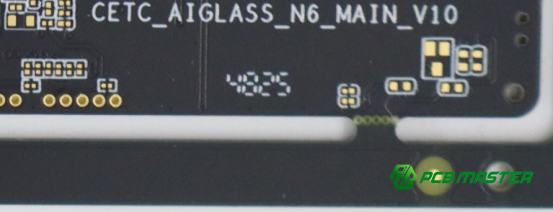
PCB serial number printing is the process of applying a unique identifier to each printed circuit board. This identifier may appear as human-readable text, a barcode, a Data Matrix code, or a combination of these formats. Unlike a lot code or batch code, a serial number is assigned to one specific board, not a group of boards.
This distinction is critical for traceability. A batch code tells you that multiple boards were made in the same production lot, but it does not tell you which exact board passed through which machine, failed which inspection, or was shipped to which customer. A serial number does.
When each PCB has its own unique serial number, manufacturers can connect that physical board to a complete digital record, including:
- material and component lot data
- SMT and assembly process records
- AOI, ICT, and functional test results
- repair and rework history
- final packaging and shipment details
Without serial number printing, traceability often remains incomplete. Manufacturers may still have production records, but linking those records to one exact board becomes difficult, slow, and error-prone. This weakens root-cause analysis, expands recall scope, and increases manual investigation time.
In short, PCB serial number printing is the foundation of precise circuit board traceability because it turns every board into an individually traceable unit.
How Does PCB Serial Number Printing Work in a PCB Traceability System?
A PCB traceability system works best when every board can be uniquely identified and tracked at multiple stages of production. PCB serial number printing provides that identity layer.
The process usually begins when a unique serial number is generated. Depending on the manufacturer’s system, this number may be:
- Sequential
- rule-based
- generated from MES or ERP
- tied to product model, date, line, or revision logic
Once created, the serial number is printed or marked onto the PCB. This may happen before SMT, after SMT, or after final assembly, depending on the process design and the traceability level required.
After the mark is applied, the board is scanned at critical stations. At each scan point, the system links the serial number to production data such as:
- machine ID
- process time
- operator or line information
- inspection status
- test results
- repair records
This creates a one-to-one relationship between the physical PCB and its digital manufacturing history.
For example, if a board is scanned before AOI, after ICT, and again at final functional testing, the manufacturer can later retrieve the full journey of that board in seconds. If the board fails in the field, the serial number can be used to trace:
- which components were mounted
- which production lot was used
- which machine processed it
- whether it passed or failed earlier inspections
- whether it was reworked before shipment
This is why PCB serial number printing is not just a marking process. It is the entry point for data-driven traceability.
Why Does PCB Serial Number Printing Improve Circuit Board Traceability More Than Batch Tracking Alone?
Many manufacturers still rely heavily on batch tracking. While batch tracking is useful, it is not enough when precision matters.
Batch tracking groups multiple PCBs under one lot or production run. If a quality issue is found, the manufacturer can identify the affected batch, but not always the exact boards within that batch. This often leads to uncertainty and overreaction.
PCB serial number printing improves traceability because it enables unit-level tracking instead of only lot-level tracking.
Batch tracking limitations
With batch-only traceability:
- multiple boards share the same identifier
- defect investigation covers a wider range than necessary
- unaffected boards may be placed on hold
- recalls may include entire lots instead of exact units
- investigation time is longer
Serial number traceability advantages
With serial number traceability:
- each board can be isolated individually
- defect patterns can be analyzed more accurately
- only affected units need containment or recall
- root-cause analysis becomes faster
- rework and scrap costs can be reduced
For example, imagine one soldering issue occurred during a short machine instability period. With batch tracking alone, a manufacturer may quarantine an entire production lot. But with PCB serial number printing and scan records, the team may identify that only boards processed between two exact timestamps were exposed to the issue.
That difference can significantly reduce:
- unnecessary rework
- customer disruption
- warranty exposure
- internal investigation cost
This is why PCB serial number printing creates a much more precise and cost-effective traceability system than batch tracking alone.
Which Production Data Can Be Linked Through PCB Serial Number Printing for Better Traceability?
The real value of PCB serial number printing comes from the amount of manufacturing data that can be linked to each board.
A serial number is useful only when it becomes the central reference for traceability records. In a well-designed system, one PCB serial number can connect multiple layers of production and quality information.
1. Material and component traceability
The board serial number can be linked to:
- bare PCB batch information
- solder paste lot data
- critical component supplier lots
- feeder and reel loading records
- moisture-sensitive component handling records
This is especially important when a supplier issue is discovered later. Instead of investigating every board built during a broad time range, the manufacturer can identify exactly which serial-numbered boards used the affected material.
2. SMT and assembly process records
PCB serial number printing can connect each board to:
- SMT line ID
- placement machine records
- feeder positions
- reflow oven profile or zone data
- assembly station sequence
- operator or shift information
This improves process visibility and supports more accurate troubleshooting when manufacturing variation occurs.
3. Inspection and test data
Each serial number can also be tied to:
- SPI results
- AOI inspection records
- ICT pass/fail history
- functional test results
- burn-in outcomes
- X-ray records when applicable
- repair and retest history
This is one of the strongest advantages of board-level traceability. It allows quality teams to see not just whether a board failed, but where, when, and how it failed.
4. Final shipment and after-sales records
After production, the same serial number can link to:
- final packing records
- carton or pallet association
- customer order details
- shipment date
- destination customer or region
- RMA or field return history
This means the same PCB serial number can remain valuable throughout the product lifecycle, from production to field service.
What Are the Main Business Benefits of PCB Serial Number Printing for Traceability Control?
PCB serial number printing is not just a technical improvement. It creates measurable business value across quality, operations, cost control, and customer confidence.
Faster defect isolation
When a problem is found, teams can immediately search by serial number and retrieve the board’s history. This reduces the time required for:
- defect verification
- line containment
- suspect unit identification
- cross-checking test records
- Faster analysis means less production disruption.
More accurate recalls and rework decisions
If a defect affects only certain boards, serial number traceability helps narrow the impact scope. Instead of holding or recalling an entire batch, manufacturers can target only the confirmed units.
This reduces:
- Scrap
- unnecessary rework
- replacement costs
- shipping impact
- customer complaints caused by overbroad containment
Stronger quality management
Board-level traceability improves quality systems by making it easier to:
- analyze recurring defect trends
- compare failure patterns across lines
- support CAPA investigations
- verify process changes
- audit rework and repair effectiveness
Better accountability and transparency
When scan data is linked to each PCB, manufacturers can trace:
- which machine processed the board
- which line produced it
- which shift handled it
- whether it was repaired or retested
This creates a clearer operational picture and reduces undocumented variation.
Improved customer trust
Many customers—especially in industrial, automotive, medical, telecom, and high-reliability sectors—expect strong traceability. PCB serial number printing helps manufacturers present a more credible quality system and respond faster when traceability data is requested.
Overall, PCB serial number printing turns traceability into a practical quality and cost-control tool, not just a documentation requirement.
What Are the Best PCB Serial Number Printing Methods for Reliable Circuit Board Traceability?
Not all marking methods provide the same traceability performance. The best method depends on durability requirements, process conditions, scan reliability, and production speed.
1. Inkjet printing
Inkjet is commonly used for variable data marking because it is flexible and efficient.
Advantages:
- suitable for high-speed inline production
- good for changing serial numbers automatically
- relatively easy to integrate into production lines
Considerations:
- print contrast must be controlled carefully
- ink must withstand process heat, cleaning, and handling
- smearing or fading can reduce scan reliability
Inkjet works well when the process is validated and the print remains readable throughout downstream manufacturing.
2. Laser marking
Laser marking is often preferred when long-term durability is critical.
Advantages:
- highly permanent marking
- strong resistance to heat and abrasion
- consistent readability when properly configured
Considerations:
- higher equipment cost
- process setup requires control of material compatibility and contrast
- may need more initial optimization than simple print methods
For demanding environments, laser marking is often one of the strongest options for long-term PCB traceability.
3. Label-based marking
Labels may be used in some workflows, especially when deployment speed matters or when direct board marking is limited.
Advantages:
- simple to implement
- flexible for some product types
- easy to add machine-readable codes
Considerations:
- labels may peel, wrinkle, or degrade
- heat, chemicals, or conformal coating can affect reliability
- physical durability is often lower than direct marking
For robust circuit board traceability, direct board marking is usually more reliable than removable or vulnerable labels.
Best PCB Serial Number Printing Methods: A Quick Comparison
Choosing the right PCB serial number printing method is essential for reliable traceability. The table below highlights the advantages, limitations, and ideal use cases of the most common marking techniques.
| Printing Method | Advantages | Considerations / Limitations | Best Use Case |
| Inkjet Printing | - Flexible and efficient- Good for variable serial numbers- Easy integration into production lines | - Requires controlled print contrast- Ink must withstand heat, cleaning, handling- Smearing/fading can reduce scan reliability | High-speed inline production with frequent serial number changes |
| Laser Marking | - Highly permanent- Strong resistance to heat and abrasion- Consistent readability when configured | - Higher equipment cost- Requires material compatibility control- More initial setup optimization needed | Environments requiring long-term durability and high reliability |
| Label-Based Marking | - Simple to implement- Flexible for some product types- Easy to add machine-readable codes | - Labels may peel, wrinkle, degrade- Heat, chemicals, or coatings may affect reliability- Lower physical durability than direct marking | Quick deployment or when direct board marking is limited; not ideal for long-term traceability |
Which method is best?
For most manufacturers, the best method is the one that provides:
- consistent readability
- durability through all process stages
- high first-pass scan success
- stable performance at production speed
The best traceability system is not the one with the most advanced marking method. It is the one where the serial number remains unique, readable, and consistently captured.
How Should PCB Serial Numbers Be Designed for Maximum Traceability Accuracy?
A strong traceability system depends not only on where and how the serial number is printed, but also on how the serial number itself is structured.
Keep the serial number unique
Every PCB should have a serial number that is never duplicated. Duplicate identifiers can corrupt traceability data and create major confusion during audits or recalls.
Avoid overcomplicated serial formats
Some manufacturers try to encode too much information directly into the serial number, such as:
- product family
- date code
- line number
- shift code
- revision level
- process variant
This can work, but excessive complexity increases risk. In many cases, it is better to use a simple unique ID and store detailed attributes in the database.
Use both human-readable and machine-readable formats when possible
For best results, a PCB serial number should include:
- human-readable text for manual verification
- barcode or Data Matrix for fast automated scanning
This improves flexibility during production, repair, service, and field returns.
Optimize for scan reliability
A serial number should be designed for real production conditions. That means:
- sufficient contrast
- correct code size
- proper spacing
- stable placement
- compatibility with scanner and vision system capabilities
If the code is too small, too dense, or printed with weak contrast, the traceability system may fail even if the serial logic itself is correct.
In practice, the best PCB serial number is not the most complex one. It is the one that remains easy to identify, easy to scan, and easy to link to reliable records.
Where Should PCB Serial Numbers Be Printed on the Board for Better Traceability Performance?
Placement has a direct impact on traceability quality. Even a perfectly generated serial number can become useless if it is placed in the wrong location.
Good placement improves scan success
The best PCB serial number location should be:
- flat and unobstructed
- easy to access during scanning
- visible after assembly
- unlikely to be covered by large components, shields, or connectors
- resistant to contamination or abrasion
If the mark becomes hidden or damaged after assembly, traceability breaks at the exact moment it is most needed.
Poor placement creates hidden failures
Common placement mistakes include:
- printing too close to the board edge
- placing the code under tall components
- marking on irregular or low-contrast surfaces
- locating the code where flux residue or solder contamination is likely
- choosing an area later covered by shielding, labels, or coating
These problems may not be obvious during early trials, but they often reduce first-pass scan rates in full production.
Placement should be validated, not assumed
The best location should be confirmed by testing the board through real production stages, such as:
- before SMT
- after reflow
- after cleaning
- after assembly
- after final inspection
- after packaging if needed
A good rule is simple: if the serial number cannot be scanned reliably when the board is fully built, the placement is not good enough for true traceability.
How Can PCB Serial Number Printing Be Integrated into SMT and PCB Assembly Workflows?
PCB serial number printing creates the most value when it is fully integrated into the manufacturing flow—not treated as a separate or optional step.
Choose the right print stage
The serial number may be applied:
- before SMT, when early process tracking is required
- after SMT, if pre-assembly marking is not practical
- after final assembly, when the board must be linked to a larger product structure
The right timing depends on how early traceability is needed and whether the mark must survive all downstream processes.
Define mandatory scan points
To build a complete traceability chain, manufacturers should define scan checkpoints such as:
- incoming board verification
- pre-assembly confirmation
- AOI station
- ICT station
- functional test station
- repair/rework station
- final pack-out
- shipment verification
Missing scan points create data gaps. Those gaps weaken traceability even if the serial number itself is printed correctly.
Use scan-before-process discipline
One strong best practice is to require the board to be scanned before the next operation begins. This ensures:
- the correct board enters the correct station
- data is attached in sequence
- unscanned boards do not move forward unnoticed
Simple example workflow
A practical PCB traceability workflow may look like this:
- Generate a unique serial number in MES or internal system
- Print or mark the serial number on the PCB
- Verify readability immediately after marking
- Scan the board at key SMT and test stations
- Attach inspection and process records automatically
- Link final test and shipment data
- Use the serial number later for service, audit, or failure analysis
This workflow transforms serial number printing from a marking task into a closed-loop traceability mechanism.
What Common Problems Can Reduce the Effectiveness of PCB Serial Number Printing for Traceability?
Even with a good system design, traceability can fail if the serial number is not consistently readable and properly managed.
Unreadable marks
Unreadable serial numbers are one of the most common causes of traceability failure. This can happen because of:
- low contrast
- Smearing
- poor print adhesion
- heat damage
- contamination from flux or cleaning residues
- incorrect code size
If the code cannot be scanned, the system may require manual entry or may lose the record completely.
Duplicate serial numbers
If two boards accidentally receive the same serial number, traceability data becomes unreliable. This can lead to:
- incorrect production histories
- mixed repair records
- confusion during recalls
- audit failures
Unique ID control must be enforced at the system level.
Inconsistent print location
If different product runs place the serial number in different positions, scanner setup becomes unstable and operator errors increase. Standardization matters.
Weak data linkage
Sometimes the mark is printed correctly, but the backend system is poorly connected. For example:
- the board is scanned, but the test result is not linked
- rework data is stored separately
- shipment records are not tied to the same serial number
This creates “partial traceability,” which is often not enough during real quality incidents.
How to prevent failures
Manufacturers can reduce traceability breakdowns by:
- validating print quality inline
- enforcing unique serial number generation rules
- standardizing location and code format
- verifying scan success at multiple stages
- auditing database linkage regularly
The key point is clear: printing a serial number is only the first step—maintaining readable, complete, and connected traceability data is what creates real value.
What Best Practices Help Maximize the Traceability Value of PCB Serial Number Printing?
To get the full benefit of PCB serial number printing, manufacturers should treat it as a controlled quality process rather than a simple labeling task.
1. Give every PCB one unique and permanent identifier
Each board should have a stable identifier that remains associated with it throughout its lifecycle. This prevents confusion during:
- Rework
- Retest
- Packaging
- Shipment
- field returns
2. Validate print quality immediately
After the serial number is printed, confirm that it is readable before the board moves forward. This reduces hidden failures that are harder to recover later.
3. Standardize the code format
Keep the serial number structure consistent across product families whenever possible. Standardization helps:
- operators work faster
- scanners perform more reliably
- systems integrate more cleanly
- historical data remain easier to search
4. Use both physical and digital verification
A traceability system should confirm:
- the serial number exists physically on the board
- the code can be scanned successfully
- the data is correctly stored in the system
- All three conditions are necessary.
5. Test under real manufacturing conditions
Do not validate only in a clean sample environment. Test after:
- Reflow
- Cleaning
- Handling
- Rework
- coating if applicable
- final assembly
The serial number must remain useful at the exact stage where traceability matters most.
6. Measure performance continuously
Track metrics such as:
- first-pass scan rate
- missing scan rate
- board history retrieval time
- defect containment time
- recall scope reduction
If these metrics improve, the traceability system is working.
How Can You Measure Whether PCB Serial Number Printing Is Actually Improving Circuit Board Traceability?
A traceability system should produce measurable operational results. If PCB serial number printing is working properly, the benefits should be visible in both quality and efficiency data.
Key traceability KPIs
Useful metrics include:
- first-pass scan success rate
- missing scan rate
- time to retrieve complete board history
- time to identify affected units during a defect event
- percentage of boards with complete traceability records
These metrics show whether the system is functioning consistently.
Quality and cost indicators
PCB serial number printing should also improve outcomes such as:
- shorter root-cause analysis time
- reduced over-quarantine of unaffected boards
- lower rework volume during containment
- lower warranty investigation cost
- narrower recall scope
Before-and-after comparison
One of the clearest ways to prove value is to compare two workflows:
- batch-only traceability
- serial-number-based traceability
In most cases, manufacturers will see that serial number traceability improves:
- investigation speed
- accuracy of defect isolation
- confidence in shipment screening
- efficiency of quality decision-making
If the data shows that the team can identify the exact affected boards faster and with less operational disruption, then PCB serial number printing is delivering real traceability improvement.
Conclusion: Why Is PCB Serial Number Printing a Critical Tool for Circuit Board Traceability?
PCB serial number printing is one of the most practical and effective ways to improve circuit board traceability. By assigning a unique identifier to every PCB, manufacturers move from broad batch-level visibility to precise board-level traceability, enabling faster defect analysis, narrower recall scopes, and stronger quality control.
A strong traceability system depends on printing the right code, in the right place, with reliable readability, and capturing it consistently throughout production. As a trusted PCB manufacturer and supplier, PCBMASTER applies a well-established PCB serial number printing system to ensure precise PCB traceability, maintain orderly production, and support effective production management and quality control.
With this traceability system, PCBMASTER ensures orderly production, reduces risks, and delivers high-quality PCBs to its clients.
FAQ: Common Questions About PCB Serial Number Printing and Traceability
Is PCB serial number printing the same as PCB barcode marking?
Not exactly. A PCB serial number is the unique identifier assigned to the board. A barcode or Data Matrix code is simply one method used to encode that identifier for fast scanning. In many cases, the best approach is to combine human-readable serial text with a machine-readable code.
Can PCB serial number printing survive reflow soldering and cleaning?
Yes, but only if the printing method, materials, and placement are selected correctly. Some methods are more durable than others under heat, flux exposure, cleaning chemicals, and handling. That is why manufacturers should validate readability after real production steps, not just before assembly.
What is the best code format for PCB traceability: text, barcode, or Data Matrix?
For most applications, a combination of human-readable text + machine-readable code offers the best balance. Human-readable text supports manual checks and service work, while barcodes or Data Matrix codes improve speed and accuracy in automated scanning environments.
Do all PCBs need unique serial numbers for strong traceability?
If the goal is true board-level traceability, then yes. Batch codes can support lot-level control, but they are less precise. Unique serial numbers allow each PCB to be tracked individually through production, testing, shipment, and after-sales analysis.
How small can a PCB serial number be and still remain scannable?
There is no single answer because it depends on the marking method, code type, contrast, scanner capability, board surface, and process conditions. The correct size should always be confirmed through production validation to ensure reliable scanning at actual line speed and after downstream processing.
About the Author

Carol Luo
PCB Design EngineerI'm Carol, a PCB Engineer at PCBMASTER with experience in PCB design and manufacturing engineering since 2018. I focus on translating engineering requirements into reliable PCB solutions, with expertise in stack-up design, material selection, and design-for-manufacturing (DFM). I share practical engineering insights from real-world PCB design and production experience.
Visit Carol Luo's Profile