








Top 10 Common Circuit Board Components and Their Functions in Electronics
Circuit boards are crucial to nearly every electronic device, from smartphones and computers to home appliances and vehicles. These flat, often small, boards contain a network of electrical pathways that connect various components, enabling the device to work properly. Without circuit boards, modern electronics would not function.
Each circuit board consists of different components like resistors, capacitors, and transistors, each serving a specific purpose. These parts work together to control the flow of electricity, process signals, and power devices. Understanding how each component contributes to the overall circuit is key for anyone interested in electronics, whether for designing, troubleshooting, or repairing.
This article will introduce the top 10 common circuit board components, explaining their functions, types, and typical applications. By the end, you’ll have a clear understanding of how these components interact to make electronic devices run smoothly. Whether you're a beginner or just curious, this guide offers a straightforward look at the essential elements of any electronic circuit board.
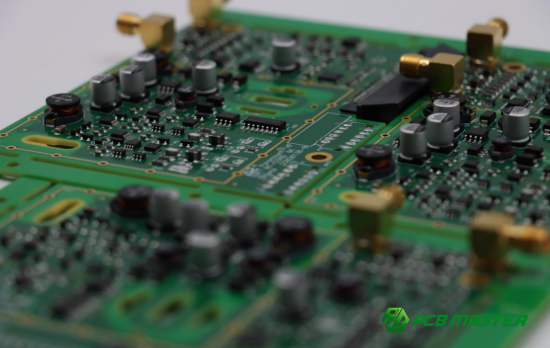
1. Resistors: Controlling Current Flow in Circuits
Function: Resistors limit or control the amount of electrical current flowing through a circuit. By creating resistance, they prevent too much current from flowing, which can damage other components. In simple terms, resistors act like "traffic controllers" for electrical current.
Types:
- Fixed Resistors: Their resistance value stays constant.
- Variable Resistors (Potentiometers): Their resistance can be adjusted manually, allowing fine-tuning of the current flow.
- Surface-Mount Resistors: Small, compact resistors placed directly onto the surface of the circuit board.
Adjustable Resistors: Allow changes in resistance without removing them from the circuit.
Applications: Resistors are used in voltage dividers to split voltage in a circuit, in current limiting to protect components like LEDs, and for power dissipation to convert excess electrical energy into heat. For example, in a LED circuit, resistors control the current to prevent burning out the LED.
2. Capacitors: Storing and Releasing Electrical Energy
Function: Capacitors store electrical energy and release it when needed. Think of them as "batteries" that provide short bursts of energy to smooth out power fluctuations or store energy for future use.
Types:
- Ceramic Capacitors: Small and widely used for general applications.
- Electrolytic Capacitors: Larger capacitors, often used in power supplies for energy storage.
- Tantalum Capacitors: Known for stable performance in small packages.
- Film Capacitors: Used for precision applications like signal processing.
Applications: Capacitors are essential for power supply filtering, ensuring steady voltage, signal coupling, which allows AC signals to pass while blocking DC, and noise reduction in sensitive circuits like audio equipment. For example, in power supplies, capacitors smooth out ripples caused by alternating current.
3. Inductors: Storing Energy in Magnetic Fields
Function: Inductors store electrical energy in the form of a magnetic field. They resist sudden changes in current and are often used to filter or smooth electrical signals.
Types:
- Air-Core Inductors: No magnetic core, often used in high-frequency applications.
- Ferrite-Core Inductors: Small, efficient, and commonly used in power supplies.
- Iron-Core Inductors: Provide high inductance values, used in transformers.
Applications: Inductors are used in power supply filters to reduce ripple, inductive coupling to transfer energy between circuits, and energy storage in power systems. For example, in a power supply, inductors filter out high-frequency noise from the incoming current.
4. Diodes: Allowing Current to Flow in One Direction
Function: Diodes are semiconductor devices that allow current to flow in only one direction, providing protection and ensuring the correct direction of current flow in circuits.
Types:
- Zener Diodes: Used for voltage regulation.
- Schottky Diodes: Known for their low voltage drop and fast switching speed.
- LEDs (Light Emitting Diodes): Emit light when current flows through them.
Applications: Diodes are commonly used in rectification to convert AC to DC, voltage regulation in power circuits, signal modulation for radio transmission, and light emission in display screens. For example, LEDs light up displays on electronics like TVs and calculators.
5. Transistors: Switching and Amplifying Signals
Function: Transistors are essential for switching and amplifying electrical signals. They act like on/off switches or amplifiers, controlling the flow of current in a circuit.
Types:
- BJT (Bipolar Junction Transistor): Common in analog circuits and amplifiers.
- FET (Field-Effect Transistor): Used in digital circuits for high-speed switching.
- IGBT (Insulated Gate Bipolar Transistor): Ideal for high-power applications.
Applications: Transistors are used in signal amplification (like in audio systems), digital logic circuits (like computers), voltage regulation, and switching (in devices like digital clocks). For example, a transistor in an amplifier increases the volume of audio signals in your stereo system.
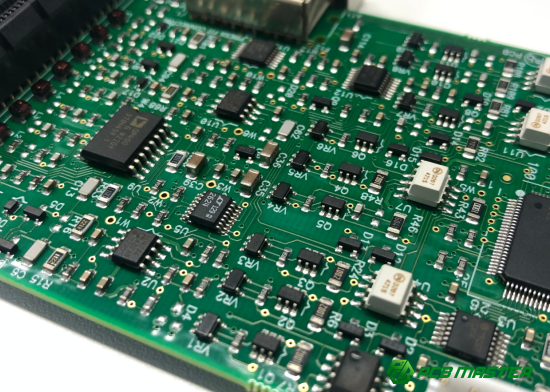
6. Connectors: Enabling Electrical Connections
Function: Connectors allow electrical signals or power to be transferred between different parts of a circuit or between different devices. They make it possible to connect and disconnect parts of the system easily.
Types:
- Pin Headers: Small connectors used to link two circuit boards.
- USB Connectors: Common for power and data transfer.
- Ribbon Connectors: Multiple connectors on a single strip, often used for data transmission.
Applications: Connectors are used for external device connections, like linking a computer to a printer, power transmission, and data communication between circuit boards. For example, USB connectors are used to transfer data between a computer and a flash drive.
7. Switches: Controlling the Flow of Electricity
Function: Switches control the flow of electricity by either opening or closing the circuit. This enables or disables specific components or functions in the circuit.
Types:
- Toggle Switches: Common in everyday items like lamps and TVs.
- Push Buttons: Momentary switches, used in devices like doorbells.
- DIP Switches: Small, manual switches often used in circuit boards for setting configurations.
Applications: Switches are used for power control, turning devices on and off, mode selection (like choosing between different settings on a device), and circuit routing to direct electricity to the right part of a system. For example, a push-button switch can start a motor in a fan.
8. Crystals and Oscillators: Generating Stable Frequencies
Function: Crystals and oscillators generate stable frequencies, ensuring that circuits run at the correct timing. They are essential for synchronizing operations in digital circuits.
Types:
- Quartz Crystals: Most common, used in clocks and watches.
- Ceramic Resonators: Often used in smaller, low-cost devices.
- MEMS Oscillators: Small, reliable, and used in modern electronics.
Applications: Crystals and oscillators are used in clock generation for microcontrollers, ensuring they operate at the right speed, and in frequency stabilization for communication devices, like radios. For example, a quartz crystal helps a watch keep accurate time.
9. Fuses: Protecting Circuits from Overcurrent
Function: Fuses protect circuits by breaking the connection when the current exceeds a safe level. This prevents damage to components from power surges or short circuits.
Types:
- Glass Tube Fuses: Common in home electronics.
- Ceramic Fuses: More durable and often used in high-power applications.
- Resettable Fuses: Can be reused once the overcurrent condition is removed.
Applications: Fuses are used in overcurrent protection for power supplies, safety devices like smoke detectors, and automotive circuits to prevent fires or component damage. For example, a fuse in a car’s electrical system protects the battery from power surges.
10. Heat Sinks: Dissipating Excess Heat from Components
Function: Heat sinks are used to dissipate excess heat generated by electronic components like transistors and processors, ensuring they don’t overheat and malfunction.
Types:
- Aluminum Heat Sinks: Lightweight and common in consumer electronics.
- Copper Heat Sinks: Better heat conductivity but heavier and more expensive.
- Passive and Active Cooling Systems: Passive systems rely on natural heat dissipation, while active systems use fans or pumps.
Applications: Heat sinks are used in cooling power semiconductors, processors, and other high-heat components in electronics like computers and power amplifiers. For example, a heat sink on a CPU helps prevent it from overheating during heavy use.
Conclusion
The components of a circuit board play essential roles in ensuring that electronic devices function smoothly and reliably. From resistors that control current flow to capacitors that store and release energy, each component contributes to the overall operation of the system. Inductors help regulate power, while diodes ensure that electricity flows in the correct direction. Transistors amplify signals and switch between different states, enabling devices to process information. Connectors, switches, crystals, fuses, and heat sinks all work together to make devices more efficient, safe, and reliable.
Understanding how each of these components functions within a circuit board is crucial when designing or maintaining electronic products. Whether it’s creating high-performance devices or ensuring their long-term durability, knowledge of these components helps in achieving optimal design and functionality.
For those looking for high-quality components and reliable PCB assembly services, companies like PCBMASTER provide expert solutions . As an experienced supplier of PCBs and PCBA (Printed Circuit Board Assembly), PCBMASTER is committed to offering high-quality products, including a wide range of durable and efficient components for your electronic projects. By partnering with such experts, you can ensure that your circuit boards are not only functional but also highly reliable for long-term use.
FAQs
1. How do I know which resistor to choose for my circuit?
To choose the correct resistor for your circuit, you need to calculate its resistance value based on the required current and voltage in the circuit. This can be done using Ohm's Law, which states:
R=V/I
Where:
- R is the resistance in ohms (Ω),
- V is the voltage across the resistor (in volts),
- I is the current flowing through the resistor (in amperes).
For example, if your circuit has a 9V battery and you need a current of 3A, you would calculate the resistance needed as follows:
R=9V/3A=3Ω
Additionally, you must consider the power rating of the resistor, which determines how much energy the resistor can safely dissipate without overheating. You can calculate the power using the formula:
P= I^2 ×R
For the previous example, if you are using a 3Ω resistor and 3A of current, the power dissipated will be:
P= (3A)^2 × 3Ω =27W
So, you would need a resistor rated for at least 27 watts to prevent overheating. Always choose a resistor with a higher power rating than the calculated value for safety.
2. Can I use a capacitor in place of a resistor for energy storage?
No, capacitors and resistors serve very different roles in a circuit. Capacitors are used for energy storage and filtering, while resistors control the flow of electrical current.
- Capacitors store electrical energy in an electric field and release it when needed. They can smooth voltage fluctuations in power supplies, couple AC signals, or store energy for a brief period before discharging it. The primary function of capacitors is temporary energy storage or signal filtering, and they only react to changes in voltage.
- Resistors, on the other hand, limit or control the flow of current in a circuit. They don’t store energy, but instead convert excess energy into heat. Their role is mainly to restrict current flow to prevent damage to other components.
While both components are essential in circuits, they are not interchangeable. Capacitors can’t replace resistors for current limiting, and resistors can’t store energy for later use like capacitors can. Each is designed for very specific tasks.
3. Why do some transistors have higher switching speeds than others?
Transistor switching speed is primarily affected by several factors, including material type, design, and construction.
1. Material Type:
Silicon-based transistors are the most common but tend to have slower switching speeds compared to gallium arsenide (GaAs) or silicon carbide (SiC) transistors. GaAs and SiC materials have better electron mobility, allowing them to switch on and off more quickly.
2. Design:
The design of the transistor plays a key role in its switching speed. Field-Effect Transistors (FETs) generally offer faster switching speeds than Bipolar Junction Transistors (BJTs) due to their charge-based operation, which is quicker than the current-based switching in BJTs.
3. Size and Construction:
Smaller transistors with shorter distances between the source and drain (for FETs) or the emitter and collector (for BJTs) can switch faster. Advanced high-density fabrication processes create smaller transistors that can operate at higher speeds.
4. Capacitance:
Transistors with lower internal capacitance (such as gate capacitance in FETs) switch faster. High capacitance can slow down the response time as it takes longer for the capacitor to charge and discharge.
For example, FETs like MOSFETs are often chosen for high-speed applications like computers or RF circuits due to their fast switching speeds.
4. Are all diodes the same, or do they have different uses?
Not all diodes are the same—diodes come in various types, each designed for specific applications in circuits. Here are a few common types and their unique uses:
1. Standard Diodes:
These diodes allow current to flow in only one direction. They are mainly used for rectification, converting AC power into DC power.
2. Zener Diodes:
Zener diodes are designed to allow current to flow in both directions, but they limit the voltage to a specific value in the reverse direction. This makes them ideal for voltage regulation. For example, they’re used in power supplies to maintain a stable voltage output.
3. Schottky Diodes:
Schottky diodes have a lower voltage drop and faster switching speed compared to regular diodes, making them useful in high-speed switching applications and power rectifiers in circuits like radio-frequency (RF) devices.
4. Light Emitting Diodes (LEDs):
LEDs emit light when current flows through them. They are widely used in display screens, indicators, and lighting systems due to their efficiency and long lifespan.
Each type of diode is optimized for different roles, such as signal modulation, protection, lighting, or rectification, depending on the circuit’s requirements.
5. How do I choose the right inductor for my power supply filter?
When selecting an inductor for a power supply filter, you should consider the following factors:
1. Inductance Value:
The inductance (measured in henries) determines the ability of the inductor to store energy and filter signals. A higher inductance value is typically better for filtering low-frequency noise, while lower inductance may be needed for high-frequency filtering.
2. Current Rating:
The inductor must be able to handle the maximum current that will flow through it without saturating. Saturation occurs when the magnetic core of the inductor can no longer store additional energy, which can affect performance. Ensure that the current rating of the inductor is higher than the maximum current your circuit will experience.
3. Resistance (DC Resistance - DCR):
Low DCR is important to minimize power loss in the inductor. A high resistance can lead to heat generation and energy loss. Choose inductors with low DCR for efficiency.
4. Core Type:
The core material affects the inductor’s performance. For high-frequency filtering, you may want an air-core inductor, while ferrite-core inductors are often used for power supplies as they provide better inductance for a given size.
For example, in a DC-DC converter, a high-current inductor with low DCR and appropriate inductance is needed to filter the output and maintain a steady voltage.
By considering these factors, you can choose the right inductor that balances efficiency, size, and performance for your power supply filter.
About the Author

Carol Luo
PCB Design EngineerI'm Carol, a PCB Engineer at PCBMASTER with experience in PCB design and manufacturing engineering since 2018. I focus on translating engineering requirements into reliable PCB solutions, with expertise in stack-up design, material selection, and design-for-manufacturing (DFM). I share practical engineering insights from real-world PCB design and production experience.
Visit Carol Luo's Profile