








PCBA Inspection Guide - A Comprehensive Guide to Circuit Board Component Inspection for Electronics Engineers
In modern electronic products, the quality of PCB Assembly (PCBA) directly determines device performance. Statistics show that 60% of circuit board failures originate from component quality issues. As an electronic engineer with 15 years of experience, I will share the most critical component inspection techniques in PCB assembly to help you build highly reliable electronic products.
-
Resistor Inspection: The "Blood Pressure Monitor" of PCB Assembly
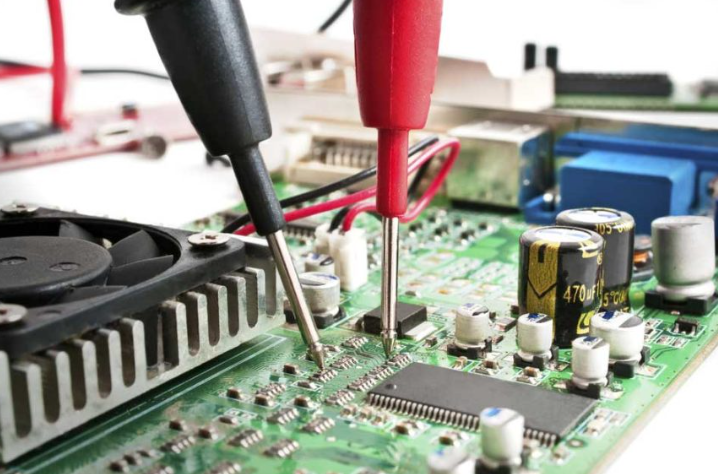
On PCBA production lines, resistor inspection is akin to measuring the "blood pressure" of a circuit board. Three common methods are:
1.1 Wheatstone Bridge Method (Precision Medical-Grade) • Principle: Accurately measures resistance by balancing a bridge circuit. • Accuracy: Up to ±0.01%. • Application: Medical equipment and other precision PCBA inspections.
1.2 Multimeter Rapid Screening Method • Advantage: Completes single-point detection in 30 seconds. • Tip: Always power off the circuit before measurement to avoid interference from parallel components.
1.3 Laser Matrix Inspection (Industry 4.0 Solution) • Efficiency: Inspects 2000+ components per hour. • Case Study: A automotive electronics factory achieved a 23% improvement in PCBA yield after adoption. - Capacitor Inspection: The "Cardiac Function Test" for PCBA
In high-speed PCB assembly lines, capacitor failures are a common cause of system crashes:
▶ Bridge Detection Method • Accurately measures tiny capacitances down to pF levels. • Key Note: Eliminate the influence of stray capacitance.
▶ Oscilloscope Dynamic Observation Method • Advantage: Visualizes charge/discharge curves in real-time. • Typical Use: Effectiveness testing of power filter capacitors. - Diode/Transistor Inspection: The "Nervous System Check" for PCB Assembly
3.1 Dual-Purpose Multimeter Test • Forward Voltage Drop: 0.3–0.7V indicates normal operation. • Reverse Resistance: Should exceed 500kΩ.
3.2 Dynamic Characteristic Tester • Detects nanosecond-level response speeds. • Essential Equipment: Curve tracer.
3.3 Temperature-Controlled Testing • Range: -40℃ to 125℃. • Importance: Mandatory for automotive electronics PCBA. - Transistor Inspection: The "Brain Check-Up" for Circuit Boards
[Static Parameter Testing] • Key Metrics: Beta value (β), saturation voltage drop. • Industry Standard: IEC 60747 series.
[Dynamic Characteristic Analysis] • Frequency Response Test: 10Hz–100MHz. • Case Study: PCB assembly inspection for 5G communication modules. - PCBA Inspection Equipment Selection Guide (2024 Update)
[Engineer’s Advice] During PCB assembly, adopt a "Three-Level Inspection" strategy: - Incoming Inspection (Full Check for Critical Components)2. In-Process Inspection (Sampling at Each Stage)3. Final Product Inspection (Functional + Environmental Testing)
Through systematic PCBA inspection, a smart home manufacturer reduced product return rates from 5% to 0.3%. Remember: High-quality PCB assembly is not accidental—it is the inevitable result of systematic inspection.
About the Author

Jack Wang
Production DirectorI'm Jack Wang, Production Director at PCBMASTER, responsible for PCB manufacturing and SMT assembly operations since 2014. My focus includes production management, yield optimization, cost control, and lean manufacturing across PCB fabrication and SMT processes. I share practical insights from real-world PCB mass production and factory operations.
Visit Jack Wang's Profile

