







Glass Core Substrate Explained: Advantages, Challenges, and the Future of PCB Technology
AI chips are getting larger. Data centres are requiring more bandwidth. Advanced packaging is becoming more complex than ever before with chiplet architectures. These trends are forcing the electronics industry to rethink one key component that often gets far less attention than the chips themselves — the substrate.
Next-generation substrates must provide higher dimensional stability, lower signal loss, and better thermal reliability than traditional organic materials to support larger package sizes, finer interconnects, and faster signal transmission. This is the exact direction industry is looking at for glass core substrates. Glass substrates are a key enabler for future advanced packaging as pointed out by Intel, and Samsung Electro-Mechanics and Absolics are enhancing their development and manufacturing capabilities. As investment continues to grow, glass core technology is increasingly being seen as a potential breakthrough for next generation electronic systems.
But will glass core substrates be a game changer in PCB technology, or will they be a niche solution for specialized applications? The article discusses their benefits and limitations, emerging uses and future prospects.
What Is a Glass Core Substrate?
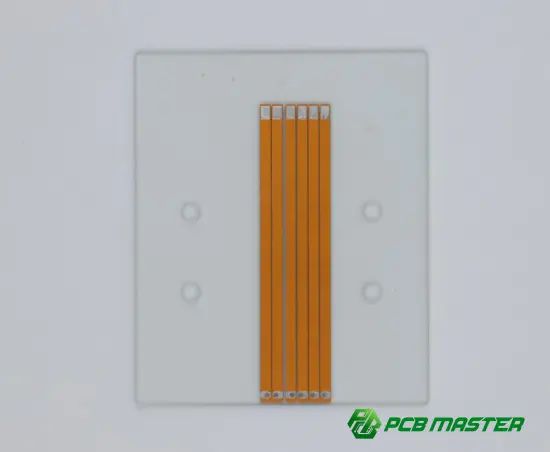
Glass core substrate is a high end substrate technology. Glass is used as core material to support high performance electronic systems. This is a promising technology for AI, High Performance Computing (HPC) and advanced packaging applications, with improved dimensional stability, lower signal loss and more potential for high-density interconnections compared to conventional substrate solutions.
Definition and structure
Glass core substrate is a high-end electronic substrate, which uses a specially designed layer of glass to replace the traditional organic core material. The stable glass core is the base for patterning of fine circuits and high density interconnect structures.
The key parts of a typical glass core substrate are:
- Glass core: The central layer that provides mechanical stability and maintains precise dimensions.
- Through-glass vias (TGVs): Tiny vertical conductive pathways that connect different circuit layers through the glass.
- Copper redistribution layers: Conductive patterns that transmit electrical signals and power.
- Build-up dielectric layers: Insulating layers that enable additional circuit routing and higher wiring density.
The basic construction is similar to other advanced substrates A core material is formed with layers of conductive and insulating materials thereon. But the main difference is the use of glass as a base. Glass's superb dimensional stability and electrical characteristics enable more precision manufacture of ever more complex electronic packages.
In an AI accelerator package with multiple chiplets, for example, thousands of electrical connections must be precisely aligned. Small dimensional variations due to manufacture or in service can affect performance. This precision stability is maintained by a glass core.
How it differs from conventional PCB substrates
The short answer is that glass core substrates are developed for extreme performance requirements, while existing PCB and substrate technologies are tuned for other application requirements such as cost, thermal management or general reliability.
There is no one-size-fits-all solution to PCB and substrate materials. Depending on some performance requirements, different technologies are selected. FR-4 PCBs are very common as they have a good balance of cost, reliability and manufacturability. Metal core PCBs are used in applications where good heat dissipation is required, and ceramic PCBs are used in applications where high thermal conductivity and electrical stability are required.
Glass core substrates are intended to solve the problems of advanced electronic systems where conventional materials are not sufficient.
| Technology | Core Material | Main Advantages | Typical Applications |
|---|---|---|---|
| FR-4 PCB | Epoxy resin + fiberglass | Cost-effective, reliable, widely available | Consumer electronics, industrial products |
| High-frequency PCB | Low-loss materials such as PTFE | Reduced signal loss at high frequencies | RF and communication systems |
| Metal Core PCB | Aluminum or copper | Excellent thermal management | LED, power electronics |
| Ceramic PCB | Ceramic materials | High thermal performance and stability | Power modules, harsh environments |
| Glass Core Substrate | Glass | High dimensional accuracy, low signal loss, fine interconnect capability | AI, HPC, advanced packaging |
The chief advantages of glass are due to its physical properties. The coefficient of thermal expansion (CTE) of glass is lower than many organic materials so it expands and contracts less with changes in temperature. This results in improved layer registration and reliability for large and complex packages.
With glass core substrates, smaller interconnect structures are also possible. As semiconductor packages get bigger and chiplet architectures become more popular, manufacturers are looking for substrate technologies that can handle more connections in less space. So this is where the glass core technology has potential.
But glass core substrates are not likely to replace all PCB technologies. They are not for cost-effective applications, but special high performance applications where advanced electrical and mechanical properties are important.
Why it is gaining industry attention
Higher-performance substrate technologies are in demand due to emerging AI, HPC and advanced semiconductor packaging, and glass core substrates are gaining attention.
Modern electronic systems are becoming more powerful and complex. Faster signal transmission, larger package sizes and tighter interconnection accuracy are all requirements for AI processors, data centre chips and chiplet-based designs. Such demands are pushing traditional substrate technologies to the edge of their practical limits.
Glass core substrates offer a number of significant advantages and may be a possible solution:
- Higher dimensional stability for large and complex packages.
- Better signal integrity for high-speed data transmission.
- Support for advanced packaging structures with higher interconnection density.
- Improved scalability for future semiconductor designs.
Investment from industry has spurred more interest in this technology. Intel said that glass substrates are one of the key technologies for future advanced packaging, and companies including Samsung Electro-Mechanics and Absolics have been developing technologies and manufacturing capabilities related to glass substrates.
For example, future AI systems may require packages with multiple computing units, memory components and high-speed connections on a single platform. Such designs are difficult for traditional substrate materials and therefore glass core substrates provide an attractive option for next generation solutions.
Glass core substrates are still under development and are not yet a replacement for the primary PCB technologies but they are playing an ever more important part in advanced electronics. The technology is a step toward substrates that could enable next-generation high-performance computing and semiconductor integration.
What Are the Advantages of Glass Core Substrates?
Glass core substrates offer better electrical performance, better dimensional stability, better thermal reliability and better advanced packaging support. The benefits make them attractive for next generation applications such as AI processors, high performance computing (HPC) and next generation advanced semiconductor packages.
Better electrical performance
Glass core substrates improve electrical performance by minimizing signal loss and enabling high-speed data transmission.
With the increase in operating frequency of electronic systems, it is difficult to maintain the signal integrity The substrate material directly affects the efficiency of signals travelling between components.
The principal electrical advantages of glass core substrates are:
- Lower signal loss: Glass has stable electrical properties that help reduce signal attenuation during high-speed transmission.
- Better signal integrity: More consistent material characteristics help minimize signal distortion.
- Support for fine-pitch wiring: Glass enables smaller and more precise interconnection structures.
- Improved high-frequency performance: Suitable for advanced applications requiring fast data transfer.
For example, AI accelerators and data centre processors require very high-speed communication between the computing units and memory components. Glass core substrates can help maintain signal quality in these high-speed environments.
Higher dimensional stability
Glass core substrates retain their shape better . Glass tends to have a relatively low coefficient of thermal expansion ( CTE ).
Electronic materials are subjected to repeated temperature cycles in their fabrication and operation. Large, complex packages may have problems of mis-alignment due to different rates of expansion of materials.
The advantages of glass core substrates with respect to dimensional stability are:
- Lower thermal expansion: Glass changes size less when temperature varies.
- Better layer alignment: Helps maintain accuracy during multi-layer manufacturing.
- Higher manufacturing precision: Supports smaller circuit features and tighter design tolerances.
- Improved package reliability: Reduces mechanical stress between connected materials.
For example, high-end multi-chiplet packages require thousands of precise connections. Dimensional stability is key. Even a little misalignment can affect performance.
Improved thermal performance
Glass core substrates are more thermally reliable because they do not change in structure with temperature.
Glass core substrates are more focused on reducing thermal stress caused by the different expansion of materials, whereas metal core PCBs are primarily designed for heat dissipation.
Their advantages in respect to thermal are:
- Stable performance at changing temperatures
- Reduced thermal expansion mismatch
- Lower mechanical stress between package layers
- Improved long-term reliability in high-performance systems
To prevent reliability issues for AI servers and HPC systems running 24/7 under heavy loads, structural stability is a must-have.
Support for advanced packaging
Higher density interconnections in glass core substrates enable larger and more complex semiconductor packages.
The modern semiconductor designs are moving towards more advanced packaging techniques like chiplets where multiple smaller chips are integrated into a single package. It needs a substrate that can make accurate connections over a larger area.
Advanced Packaging on Glass-Based Substrates:
- Large panel size capability
- High-density interconnect structures
- Excellent flatness for chip integration
- Precise alignment for fine-pitch connections
- Compatibility with next-generation packaging technologies
Future processors could bundle computing chips, memory and specialized accelerators into a single unit. These parts are joined on a stable platform with high performance using the glass core substrates.
What Challenges Are Slowing Glass Core Substrate Adoption?
Glass core substrates have many performance advantages, but their use is still limited by the complexity of manufacture, cost of production, reliability issues and a lack of a mature supply chain. These problems need to be solved before glass core technology can be put into large scale commercial production.
Manufacturing complexity
It is more complicated to make glass core substrates than traditional substrates, because glass requires special processing techniques and equipment.
Glass is a harder and more brittle material than organic substrates such as FR-4. The manufacturing capabilities are mature, because the circuit structures on glass have to be accurate, especially the through-glass vias (TGVs) and high-density interconnects.
The major problems in manufacturing are:
- TGV formation: Creating tiny holes through glass without causing cracks or defects requires advanced laser or etching technologies.
- Copper adhesion: Unlike organic materials, glass has a smooth surface that makes reliable copper bonding more difficult.
- High manufacturing precision: Advanced packaging requires extremely accurate alignment between layers and interconnections.
- New production equipment: Manufacturers need specialized tools and processes that are different from conventional PCB fabrication.
For instance, the high-end AI package must make thousands of electrical connections in a very tight space. Processing defects in the glass can affect the performance of the package and the production yields.
High production costs
Glass core substrates are more expensive than conventional PCB substrates due to the need for advanced materials, equipment and manufacturing processes.
There are a number of factors driving the cost challenge:
- Expensive glass materials: High-performance glass suitable for semiconductor packaging requires strict quality control.
- Higher equipment investment: Manufacturers need new production lines and specialized processing tools.
- Lower production yield: Early-stage technologies often produce fewer usable products compared with mature manufacturing processes.
- Additional quality control: More inspection steps are required to ensure reliability.
FR-4 PCBs have decades of manufacturing experience and large scale production behind them, while the industrial ecosystem for glass core substrates is still in its infancy.
For example, a standard PCB in consumer electronics is produced at a very optimized cost. However, a glass core substrate for an AI accelerator needs much tighter process control, and thus is much more expensive at the initial adoption phase.
Reliability and processing challenges
glass core substrates have reliability issues. Glass is very stable but brittle and more difficult to process .
Glass has good dimensional stability . But its physical properties create new engineering problems. Unlike flexible organic materials, glass cannot accommodate mechanical stress by deformation.
The main issues of reliability and processing are:
- Glass brittleness: Mechanical stress during handling or manufacturing may cause cracks.
- Thermal stress management: Different materials in a package may expand at different rates, creating stress at interfaces.
- Surface treatment challenges: Reliable bonding between glass and conductive materials requires precise surface preparation.
- Long-term reliability testing: More data is needed to verify performance under different operating conditions.
Reliability is critical for advanced semiconductor packages because failure at the system level can be very costly. So, before they can be widely implemented, manufacturers still need to improve their glass processing techniques and testing methods.
Supply chain limitations
The glass core substrate supply chain is still developing. Limited capacity, not many suppliers, not many industry standards.
For traditional PCB materials such as FR-4, there are mature global supply chains with established suppliers of materials, fabricators and testing processes. The glass core technology needs a new ecosystem composed of:
- Specialized glass material suppliers
- Advanced substrate manufacturers
- Semiconductor packaging companies
- Equipment providers for TGV and precision processing
- New inspection and reliability testing systems
Big companies are investing in this space. But,It’s still small when compared to the capacity to make things at a large scale, such as traditional PCBs.
For example, we anticipate high future demand for glass core substrates for AI and high performance computer applications. But for the technology to get out of the narrow high-end use cases and into wider commercial use, manufacturers need strong production capacity and supply chains.
Where Are Glass Core Substrates Used?
Glass core substrates are used mainly in advanced electronic systems where performance beyond conventional substrate technology is needed. Applications include today’s and tomorrow’s applications such as AI processors, high performance computing (HPC), advanced semiconductor packaging and high speed networking systems.
AI and high-performance computing
AI and HPC systems use glass core substrates as they can accommodate larger packages, transmit signals at a faster rate and integrate more complex chips.
The fast developing Artificial Intelligence has increased the need of faster processors. AI accelerators and HPC chips need high computing performance, large package size and high speed communication between computing units and memory components.
Glass core substrates can fulfill these by:
- Higher interconnect density: Enables more connections between multiple chips within one package.
- Better signal integrity: Helps maintain signal quality during high-speed data transmission.
- Greater dimensional stability: Supports precise alignment in large advanced packages.
Next-gen AI processors often use chiplet architectures, which consist of several smaller chips packaged together. These designs rely on a stable substrate platform for reliable interconnection of the various chiplets. Glass core substrates are seen as a promising approach as they can support these large and complex package structures.
Advanced semiconductor packaging
Next generation chip integration requires precision and stability, making glass core substrates suitable for advanced semiconductor packaging.
As chips grow larger and more interconnected, traditional semiconductor packaging techniques are becoming increasingly difficult. Very fine wiring and accurate placement of components are required for 2.5D packaging, 3D packaging and chiplet integration.
Advantages of glass core substrates for advanced packaging applications:
- Excellent flatness: Helps improve alignment between chips and interconnections.
- Large panel capability: Supports larger package designs and potentially improves manufacturing efficiency.
- Fine-pitch interconnect support: Enables higher connection density between semiconductor components.
- Low thermal expansion: Reduces alignment issues caused by temperature changes.
Companies working on sophisticated packaging solutions are investigating glass substrates to overcome the limitations of today's organic substrates. As semiconductor designs become more complex, substrate performance becomes ever more critical to the overall system performance.
High-speed networking and data centers
Glass core substrates are ideal for high speed networking and data centres. They provide faster data transmission and higher reliability in demanding computing environments.
Data centres are working overtime to process the deluge of data for cloud computing, AI services and digital applications. Network equipment and server systems need stable components that can deliver higher bandwidth.
Glass core substrates can offer the following advantages to these systems:
- Reduced signal loss: Helps improve high-speed communication between components.
- Improved electrical stability: Supports reliable operation at higher frequencies.
- Higher integration capability: Enables more advanced system designs in limited space.
Consider the AI data centres, which require powerful computing nodes to connect processors, memory and networking components at very high data rates. At scale, advanced substrate technologies such as glass core substrates can have a bigger role in delivering high performance and efficiency.
Future electronics applications
Glass core substrates are suitable for future electronics applications where higher performance, smaller size and more integration are desirable.
Glass core substrates are used in high-end computing and semiconductor applications and the range of applications may increase with development in manufacturing technology.
Potential future applications:
- Next-generation communication systems: Supporting higher-frequency and higher-bandwidth electronic devices.
- Advanced automotive electronics: Enabling more powerful computing platforms for autonomous driving and intelligent vehicle systems.
- High-performance consumer electronics: Supporting compact devices with increased processing requirements.
- Emerging AI-enabled devices: Providing a foundation for future edge AI hardware.
Glass core substrates are not expected to replace all PCB technologies, however. Instead, they are more likely to be additive to existing solutions for applications where conventional materials are not able to meet performance requirements.
As the manufacturing processes mature and the costs come down the glass core substrates may play an important role in the evolution of high performance electronic systems.
Can Glass Core Substrates Replace Traditional PCB Technology?
No, glass core substrates are unlikely to replace conventional PCB technologies en masse. Instead they are designed to be a special solution for high performance applications where traditional PCB materials are not able to meet advanced requirements Glass core substrates. Likely to co-exist with existing PCB technologies depending upon the market needs.
Where glass core offers advantages
Glass core substrates are used in ultra high performance areas such as advanced packaging, AI computing and high speed electronic systems.
The primary benefits of the glass core substrates arise from the unique characteristics of glass, which enable it to address certain limitations associated with traditional substrate materials.
Glass core substrates have advantages in a number of key areas, including:
- High-density interconnections: Glass supports fine circuit patterns and advanced interconnect structures needed for complex chip integration.
- Better dimensional stability: The low coefficient of thermal expansion (CTE) of glass helps maintain precise alignment during manufacturing and operation.
- Improved signal performance: Glass can reduce signal loss and support high-speed data transmission.
- Large package support: Glass substrates can support larger and more complex package designs for AI and high-performance computing applications.
For instance, high-end AI chips frequently incorporate multiple chiplets, memory elements and compute units in one package. The designs are based on a substrate that is able to make accurate connections on a large scale. Glass core substrates are being considered as a candidate to meet the stability and accuracy requirements for these next generation systems.
These benefits, however, are most useful in high-end applications. While the performance benefits of glass core substrates can be most readily realized by many electronic products, the added cost and complexity of manufacture may not be justified.
Where conventional PCB technology remains suitable
Most electronic products still use mainstream PCB technologies because they are proven reliable, cost-effective and mature in manufacturing.
Different PCB materials have different application requirements. For example:
- FR-4 PCBs: Remain widely used for consumer electronics, industrial equipment, and general electronic devices because of their balance between cost and performance.
- High-frequency PCBs: Continue to serve RF communication, radar, and wireless applications that require low-loss materials.
- Metal core PCBs: Remain important for LED lighting and power electronics because of their excellent thermal management.
- Ceramic PCBs: Are suitable for applications requiring high thermal conductivity and stability in demanding environments.
There are no inherent practical advantages of glass core substrates to replace these technologies. For many electronic products, the extreme performance characteristics of glass core technology are unnecessary.
A typical industrial controller or consumer device might be perfectly fine with a FR-4 PCB. The use of a glass core substrate would add considerably to the cost of these products, but would not produce any significant performance gains.
Traditional PCB methods will remain relevant as they can satisfy different performance, cost and manufacturing requirements.
Industry outlook
Good outlook for glasscore substrates but slow and mainly for advanced electronics applications.
We are seeing a trend in the electronics industry toward more computing power, faster data transfer and more systems integration. These trends are creating the need for new substrate technologies for larger packages and more complex designs.
The future use of glass core substrates will depend on a number of issues:
- Manufacturing improvements: Better processing methods are needed to increase production yield and reduce costs.
- Supply chain development: More material suppliers and manufacturers must build reliable production capabilities.
- Application demand: Growth in AI, HPC, and advanced packaging will drive commercial adoption.
- Technology maturity: Long-term reliability data will help determine wider acceptance.
The technology of glass core is gaining more and more confidence, which is evidenced by the major investments in the semiconductor and substrate industry. But that won’t happen overnight. Glass core substrates are expected to be the first adopters for high-value applications such as AI servers, advanced processors and next-generation data centre systems.
Glass core substrates are an evolution of substrate technology, not a total replacement for all PCBs. Conventional PCB solutions will remain the backbone of mainstream electronics while glass core substrates will morph into high performance applications.
Conclusion
With the continuing advancements in electronics, glass core substrates are a critical step toward satisfying the increasing demands of AI, high-performance computing and advanced semiconductor packaging. But this technology will not substitute all existing pcb solutions. Instead, it’s likely to be a complementary technology used in conjunction with traditional PCB materials to meet a variety of application requirements.
There are still challenges to be addressed in manufacturing complexity, cost and supply chain maturity, but the electronics industry is steadily investing in the development of glass core substrates. As the technology matures it will be able to play a more important role in enabling faster, smaller and more powerful electronic systems.
For companies looking to explore advanced PCB technologies and prepare for future electronic demands, PCBMASTER continues to focus on providing reliable PCB manufacturing solutions, engineering support, and technology expertise across a wide range of applications. By combining manufacturing experience with a commitment to innovation, PCBMASTER helps customers develop PCB solutions that meet both current requirements and future industry challenges.
FAQs
What is a glass core substrate?
The glass core substrate is a new type substrate technology, using the glass layer as the core material, instead of the traditional organic material. It is designed to provide improved dimensional stability and signal performance and to support high density interconnect.
Glass core substrates have through-glass vias (TGVs) and fine copper wiring layers for the interconnection of electronic components compared to the structure of conventional PCB substrates like FR-4. Glass is extremely flat and has an ultra-low thermal expansion, making it ideal for use in advanced applications such as AI processors, high performance computing (HPC) and semiconductor packaging.
Why are glass core substrates important for future PCB technology?
The glass core substrates are critical in overcoming the performance limitations of the existing substrate technologies for next generation electronic systems.
The rapid evolution of AI, cloud computing and sophisticated semiconductor designs require faster data transmission, larger package sizes and more complex chip integration. These requirements can be met with glass core substrates:
- Better signal integrity for high-speed data transmission.
- Higher dimensional stability for precise chip and layer alignment.
- Support for finer interconnections in advanced packaging.
- Improved scalability for larger and more complex electronic systems.
Glass core substrates will not replace all PCBs, but could be an enabling technology for high performance applications where conventional materials will not meet future needs.
Are glass core substrates replacing traditional PCBs?
Conventional PCBs will not be completely replaced by No Glass core substrates. Instead, they will improve current PCB technologies to serve the requirements of more difficult applications.
Different PCB materials are required depending on the application. For example:
- FR-4 PCBs remain widely used because of their cost efficiency and reliability.
- Metal core PCBs are preferred for applications requiring strong thermal management.
- Ceramic PCBs are suitable for high-temperature and high-reliability environments.
- High-frequency PCBs are used in RF and communication systems.
Mainly used in high-end applications such as AI chips, HPC systems and next generation semiconductor packaging, glass core substrates have ultra-high precision and electrical performance.
What are the biggest challenges of glass core substrates?
The main challenges for glass core substrates are manufacturing complexities and production costs, as well as concerns on reliability and supply chain constraints.
The problems are:
- Complex manufacturing processes: Creating through-glass vias (TGVs) and reliable copper connections requires specialized equipment and techniques.
- High production costs: Advanced materials, equipment investment, and lower early-stage production yields increase manufacturing costs.
- Processing and reliability challenges: Glass is highly stable but also brittle, making handling and long-term reliability testing more difficult.
- Limited supply chain maturity: Compared with traditional PCB materials, the glass substrate ecosystem is still developing.
With the manufacturing technology improvement and the production capacity increase, these problems are expected to be solved gradually and the glass core substrate will tend to be the broader commercial application.
About the Author

Carol Luo
PCB Design EngineerI'm Carol, a PCB Engineer at PCBMASTER with experience in PCB design and manufacturing engineering since 2018. I focus on translating engineering requirements into reliable PCB solutions, with expertise in stack-up design, material selection, and design-for-manufacturing (DFM). I share practical engineering insights from real-world PCB design and production experience.
Visit Carol Luo's Profile