








Adjustable Resistor: Types, Working Principle, Applications, and Selection Guide
An adjustable resistor is a resistor whose resistance value can be manually or electronically varied to control current, voltage, or signal levels within a circuit. Unlike fixed resistors, adjustable resistors provide flexibility during circuit tuning, calibration, testing, and performance optimization. Common types include potentiometers, rheostats, and trimmer potentiometers, each designed for different power levels and adjustment frequencies. From consumer electronics to industrial automation, adjustable resistors remain essential components in modern PCB design.
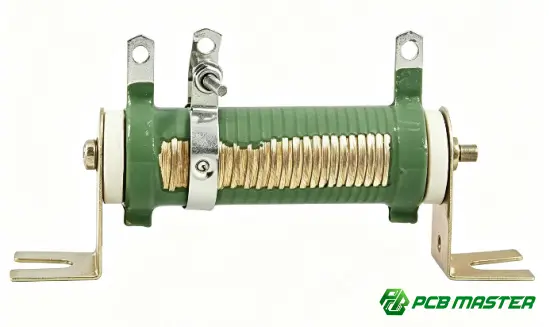
What Is an Adjustable Resistor?
An adjustable resistor (also called a variable resistor ) is an electronic component that allows its resistance to be changed over a specified range.
Unlike a fixed resistor that always provides the same resistance, an adjustable resistor enables engineers to fine-tune circuit performance after assembly or during operation.
Typical functions include:
- Controlling current flow
- Dividing voltage
- Adjusting signal gain
- Calibrating sensors
- Setting reference voltages
- Tuning analog circuits
Because of their versatility, adjustable resistors are widely used in PCB assemblies across consumer electronics, automotive systems, industrial equipment, medical devices, and communication products.
How Does an Adjustable Resistor Work?
Most adjustable resistors consist of:
- A resistive element
- A movable wiper
- Two or three electrical terminals
As the adjustment shaft or screw rotates, the wiper moves along the resistive track, changing the effective resistance.
When configured as a voltage divider, the device outputs an adjustable voltage.
When connected with only two terminals, it functions as a variable resistor that limits current.
Main Types of Adjustable Resistors
Potentiometer
A potentiometer is a three-terminal adjustable resistor primarily used as a voltage divider.
Common Applications
- Audio volume control
- Display brightness adjustment
- Position sensing
- User interface controls
- Analog signal conditioning
Advantages
- Smooth adjustment
- Wide resistance range
- Easy manual operation
- Available in rotary and slide versions
Rheostat
A rheostat is essentially a two-terminal variable resistor designed to control current.
Compared with potentiometers, rheostats typically handle much higher power.
Common Applications
- Motor speed control
- Heating elements
- Laboratory equipment
- Industrial current regulation
Advantages
- High power capability
- Excellent current regulation
- Durable construction
Trimmer Potentiometer (Trimpot)
A trimmer potentiometer is a miniature adjustable resistor intended for occasional calibration rather than frequent user adjustment.
Most are mounted directly on a PCB and adjusted with a screwdriver.
Common Applications
- Voltage calibration
- Sensor offset adjustment
- Oscillator tuning
- Precision analog circuits
- Power supply calibration
Advantages
- Compact size
- High precision
- Stable adjustment
- Ideal for PCB assembly
Adjustable Resistor vs . Fixed Resistor
| Feature | Adjustable Resistor | Fixed Resistor |
|---|---|---|
| Resistance | Variable | Constant |
| Adjustment | Manual or electronic | Not adjustable |
| Cost | Higher | Lower |
| Precision | Depends on adjustment | Factory-defined |
| PCB Space | Larger | Smaller |
| Typical Use | Calibration and tuning | General circuit design |
Common Resistance Values
Typical adjustable resistor values include:
| Resistance | Typical Applications |
|---|---|
| 100 Ω | Current limiting |
| 500 Ω | Motor control |
| 1 kΩ | Signal adjustment |
| 5 kΩ | Analog circuits |
| 10 kΩ | Voltage dividers |
| 50 kΩ | Audio circuits |
| 100 kΩ | Sensor interfaces |
| 1 MΩ | High-impedance circuits |
Key Specifications to Consider
Selecting the correct adjustable resistor involves evaluating several electrical and mechanical parameters.
Resistance Range
Choose a resistance value appropriate for the circuit design.
Power Rating
Ensure the resistor can safely dissipate the expected power without overheating.
Typical ratings include:
- 0.1 W
- 0.25 W
- 0.5 W
- 1 W
- 2 W
- 5 W or higher
Tolerance
Common tolerance levels include:
- ±20%
- ±10%
- ±5%
Precision trimming applications may require tighter tolerances.
Taper
Two common resistance curves are available:
- Linear taper (B): Resistance changes proportionally with rotation.
- Logarithmic (audio) taper (A): Designed for human hearing response, commonly used for volume controls.
Mechanical Life
High-quality potentiometers may withstand:
- 10,000–100,000 adjustment cycles
- Industrial models may exceed one million cycles
PCB Design Considerations
When integrating adjustable resistors into a PCB, designers should consider:
- Adequate spacing for manual adjustment
- Proper mechanical support
- Heat dissipation for high-power applications
- Solder joint reliability
- Accessibility after final assembly
- Environmental protection against dust and moisture
For trimmer potentiometers, ensure sufficient clearance for adjustment tools during maintenance or calibration.
Typical Applications
Adjustable resistors are found in numerous electronic systems.
| Industry | Typical Applications |
|---|---|
| Consumer Electronics | Audio controls, brightness adjustment |
| Industrial Automation | Sensor calibration, PLC analog inputs |
| Automotive Electronics | ECU calibration, instrument clusters |
| Medical Devices | Precision measurement circuits |
| Telecommunications | RF tuning, amplifier adjustment |
| Power Electronics | Power supply voltage adjustment |
| Test Equipment | Signal calibration and measurement |
Common Design Mistakes
Engineers should avoid the following mistakes when selecting adjustable resistors:
- Choosing an insufficient power rating
- Ignoring environmental conditions
- Using linear taper instead of logarithmic taper for audio applications
- Selecting resistance values outside the circuit's operating range
- Placing trimmers where adjustment becomes inaccessible after assembly
Proper component selection helps improve long-term reliability and simplifies manufacturing.
Manufacturing Considerations
Although adjustable resistors are standard PCB components, assembly quality directly affects product reliability.
During PCB assembly, manufacturers typically inspect:
- Component orientation
- Solder joint quality
- Mechanical stability
- Functional resistance adjustment
- Electrical continuity
For products requiring precise calibration, manufacturers often perform resistance adjustment as part of functional testing before shipment.
Companies with integrated PCB manufacturing and PCBA capabilities, such as PCBMASTER , can streamline this process by combining engineering review, PCB fabrication, SMT assembly, testing, and final inspection under one quality management system. This integrated approach helps reduce manufacturing risks, improve consistency, and accelerate product development.
Future Trends
Adjustable resistors continue evolving alongside modern electronics.
Emerging developments include:
- Digital potentiometers controlled via I²C or SPI
- Higher precision trimming components
- Smaller surface-mount packages
- Improved environmental durability
- Longer operational life
- Better integration with automated calibration systems
While digital solutions are becoming increasingly common, traditional adjustable resistors remain indispensable for manual calibration, maintenance, and analog circuit optimization.
Conclusion
Adjustable resistors provide a simple yet highly effective method for controlling resistance, voltage, and current in electronic circuits. Whether used for user controls, precision calibration, or circuit tuning, selecting the appropriate type—potentiometer, rheostat, or trimmer potentiometer—is essential for achieving optimal electrical performance.
For PCB designers and electronics manufacturers, understanding resistance range, power rating, tolerance, taper, and installation requirements ensures reliable operation throughout the product lifecycle. Combined with high-quality PCB fabrication and PCBA assembly, properly selected adjustable resistors contribute significantly to the stability and long-term reliability of modern electronic systems.
FAQs
What is the difference between an adjustable resistor and a variable resistor?
The terms are often used interchangeably. An adjustable resistor is a type of variable resistor whose resistance can be changed manually or electronically.
Is a potentiometer the same as a rheostat?
No. A potentiometer has three terminals and is primarily used as a voltage divider, while a rheostat typically uses two terminals to regulate current.
Can adjustable resistors be used in SMT assembly?
Yes. Many trimmer potentiometers are available in surface-mount (SMT) packages for automated PCB assembly.
How do I choose the correct resistance value?
Select the resistance range based on your circuit requirements, considering current, voltage, and the desired adjustment range.
Are adjustable resistors suitable for high-power circuits?
Standard potentiometers are intended for low-power applications. High-power circuits generally require rheostats or specialized power variable resistors.
Tags: #AdjustableResistor #VariableResistor #Potentiometer #Rheostat #TrimmerPotentiometer #PCB #PCBA #SMT #Electronics #CircuitDesign #PCBMASTER
About the Author

Carol Luo
PCB Design EngineerI'm Carol, a PCB Engineer at PCBMASTER with experience in PCB design and manufacturing engineering since 2018. I focus on translating engineering requirements into reliable PCB solutions, with expertise in stack-up design, material selection, and design-for-manufacturing (DFM). I share practical engineering insights from real-world PCB design and production experience.
Visit Carol Luo's Profile