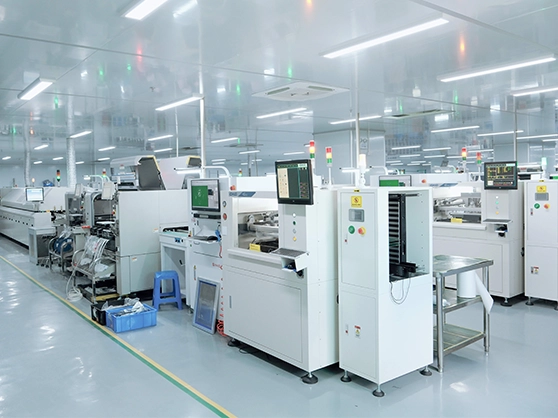
SMT Assembly (Surface Mount Technology Assembly) is the process of mounting surface-mount components directly onto a PCB and soldering them to form a functional PCB Assembly (PCBA). Unlike through-hole assembly, SMT places components on the PCB surface without requiring component leads to pass through drilled holes. This mounting method is widely used for compact, high-density electronic designs.
A typical SMT Assembly process begins with solder paste printing, followed by Solder Paste Inspection (SPI), automated component placement, and reflow soldering. After soldering, the assembled PCB can undergo AOI, X-Ray inspection, electrical testing, and final inspection to verify component placement and solder joint quality.
The exact SMT Assembly process depends on your PCB design, component packages, board structure, production requirements, and testing needs. Designs containing BGA, QFN, fine-pitch, or miniature components may require specific placement, soldering, and inspection controls.
You need more than standard component placement. You need an SMT Assembly partner that can adapt the assembly process to your specific PCB design, component selection, package types, and production requirements. PCBMASTER provides customized SMT Assembly for fine-pitch, miniature, BGA, QFN, and high-density PCB designs, with engineering support focused on placement accuracy, soldering quality, and assembly manufacturability.
PCBMASTER combines automated SMT equipment, process control, inspection, and electrical testing to support demanding PCBA requirements. Our SMT Assembly capabilities cover prototype development, low-volume production, and mass production, while our engineering team helps address assembly-related manufacturing issues before production. Our one-stop manufacturing model can also simplify coordination when your project requires PCB manufacturing, component sourcing, SMT Assembly, and testing.
01
Customized SMT Assembly
Adapt the assembly process to your specific PCB design, component selection, package types, and production requirements.
02
Advanced Inspection & Testing
AOI, X-Ray, ICT, FCT, and electrical testing verify placement, solder joints, and PCBA functionality.
03
One-Stop PCBA Manufacturing
PCB manufacturing, component sourcing, SMT Assembly, and testing coordinated through one manufacturing partner.
SMT Assembly Service Options
Choose the SMT Assembly option that matches your production stage, component supply model, and assembly requirements. PCBMASTER supports your PCBA project from prototype development and small-batch production to scalable manufacturing, with flexible options for component supply and mixed-technology assembly.
01
Prototype SMT Assembly
Fast Prototype SMT Assembly helps you validate your PCB design, test functionality, and identify assembly issues before moving into larger production.
02
Low-Volume SMT Assembly
Low-Volume SMT Assembly gives you production flexibility for small batches, product launches, and new product introduction without immediately committing to large production volumes.
03
Medium-Volume SMT Assembly
Medium-Volume SMT Assembly provides repeatable PCBA production as your product moves beyond development and into regular market supply.
04
High-Volume SMT Assembly
High-Volume SMT Assembly supports scalable PCBA production when you need consistent assembly processes, stable output, and continuous manufacturing.
05
Turnkey SMT Assembly
Turnkey SMT Assembly combines PCB manufacturing, component sourcing, SMT assembly, inspection, and testing, reducing the need to coordinate multiple suppliers.
06
Consigned SMT Assembly
With Consigned SMT Assembly, you provide the required components while PCBMASTER manages the SMT assembly process, production, inspection, and delivery.
07
Kitted SMT Assembly
Kitted SMT Assembly uses your prepared component kit for production, giving you greater control over component selection while PCBMASTER handles the PCB assembly process.
08
Mixed SMT/THT Assembly
Mixed SMT/THT Assembly combines surface-mount and through-hole components on the same PCBA, allowing you to accommodate designs that require different component mounting technologies.
SMT Assembly Technical Capabilities
PCBMASTER’s SMT Assembly Technical Capabilities cover component placement, PCB dimensions, assembly methods, inspection, electrical testing, and production volume, giving you a clear reference for your PCB Assembly and PCBA requirements.
From prototype builds to volume production, PCBMASTER provides PCB Manufacturing, Component Sourcing, SMT Assembly, Inspection, and Testing through one streamlined manufacturing process. Send us your project requirements and let our engineering team review your files and provide a solution tailored to your PCBA needs.
Different industries require PCB assemblies to perform different electronic functions. SMT Assembly provides the component-level manufacturing needed to turn bare PCBs into functional PCBAs, with its specific role changing according to the application.
01
01
자동차 전자
In automotive systems, SMT Assembly mounts components for battery management, vehicle control, sensing, communication, and power management, turning the PCB into a functional control circuit for applications such as BMS and onboard chargers.
자동차 전자
02
02
산업 통제
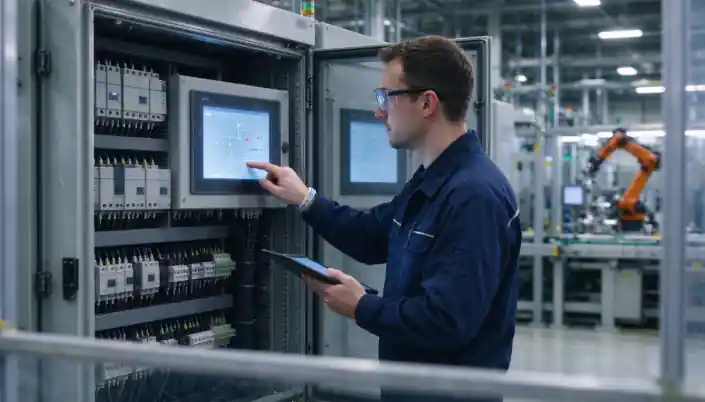
For PLCs, automation controllers, and monitoring systems, SMT Assembly integrates microcontrollers, sensors, memory, communication interfaces, and control components so the PCBA can process signals and control industrial equipment.
산업 통제
03
03
가전 제품
In smart devices and IoT products, the process places processors, memory, sensors, wireless modules, and power-management components onto compact PCBs, enabling functions such as computing, connectivity, sensing, and user control.
가전 제품
04
04
의사소통
Communication equipment uses SMT Assembly to integrate processors, transceivers, RF components, memory, and interface circuits, allowing the finished PCBA to handle signal processing, data transmission, and network connectivity.
의사소통
05
05
의료 전자
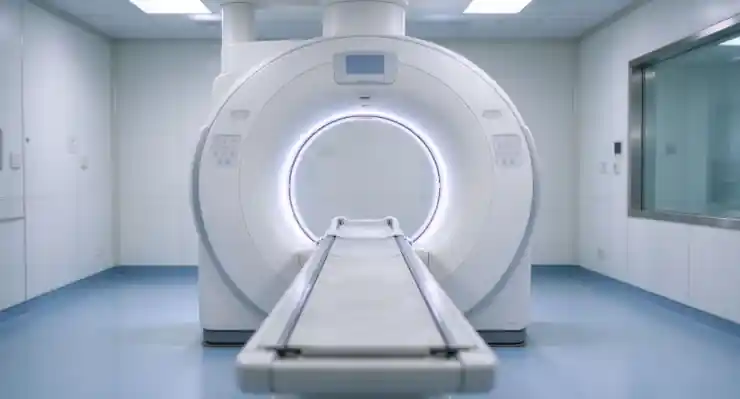
For medical equipment, SMT Assembly brings together sensing, processing, control, display, and communication components, enabling PCBAs to perform functions such as measurement, monitoring, signal processing, and equipment control.
의료 전자
06
06
전력 전자
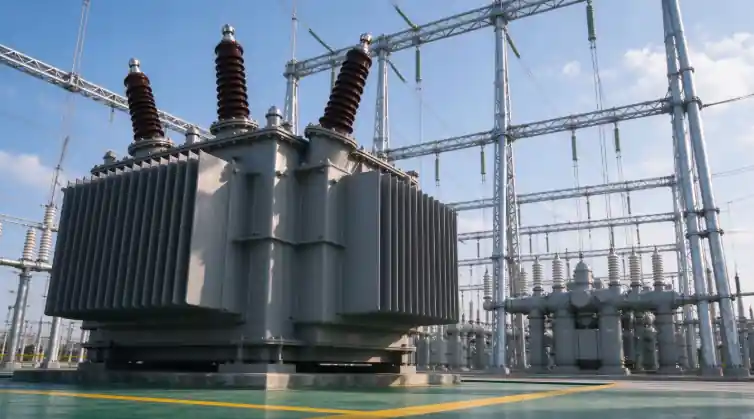
In power supplies, converters, and chargers, SMT Assembly mounts control ICs, drivers, sensing circuits, and supporting components that regulate, monitor, and control electrical power within the system.
전력 전자
07
07
Computer & Server
Computer and server PCBAs use SMT Assembly to integrate processors, memory, power-management circuits, storage interfaces, and high-speed connectivity, providing the electronic infrastructure required for computing and data processing.
Computer & Server
08
08
보안 전자 제품
For security cameras, alarms, and access-control equipment, SMT Assembly integrates image-processing, sensing, storage, communication, and control circuits, enabling functions such as image capture, detection, data transmission, and access management.
보안 전자 제품
09
09
Aerospace Electronics
In aerospace systems, SMT Assembly integrates control ICs, sensors, communication interfaces, power-management components, and monitoring circuits, enabling PCBAs to support functions such as flight control, navigation, communication, instrumentation, and onboard system monitoring.
Aerospace Electronics
10
10
Energy & Solar
Solar and energy systems rely on SMT Assembly to mount control ICs, sensing circuits, communication components, and monitoring electronics, allowing PCBAs to manage energy conversion, operating conditions, system communication, and monitoring.
Energy & Solar
SMT Assembly Quality & Compliance
PCBMASTER maintains documented quality and compliance standards for SMT Assembly and PCBA manufacturing, helping you verify the quality management, automotive requirements, product safety, and material compliance relevant to your SMT Assembly project.
PCBMASTER has supported different SMT Assembly and PCBA manufacturing projects, from automotive electronics and industrial control to communication, power electronics, and IoT products. Each case required a different combination of PCB technology, component sourcing, assembly, inspection, and testing.
The customer was developing a BMS PCBA for an automotive application and needed to fit monitoring and control circuitry into a compact PCB design. The main challenge was maintaining sufficient routing space while meeting the component and assembly requirements of the automotive application.
PCBMASTER reviewed the Gerber files and BOM, supported HDI PCB manufacturing and component sourcing, and then completed the SMT Assembly process. Automated placement was used for the dense component layout, followed by AOI and electrical testing to identify assembly and functional issues before shipment. The integrated PCB manufacturing, sourcing, SMT Assembly, and testing workflow allowed the customer to manage the project through one manufacturing partner.
Case 02
Industrial Control PCBA
High Component Density · SMT + THT · Industrial Control · Reliability Testing
An industrial control customer needed a PCBA combining high-density SMT components with through-hole components required by the circuit and mechanical design. The challenge was not simply placing more components, but maintaining reliable soldering and assembly quality across two different mounting technologies.
PCBMASTER reviewed the component list and assembly requirements before production, then used SMT + THT assembly to build the PCBA. AOI and other inspection procedures were applied to the SMT process, while additional testing was used to verify the completed assembly. The finished PCBA was subsequently evaluated under the customer's reliability requirements.
For a communication equipment project, the customer needed a compact PCBA with fine-pitch and BGA components while maintaining consistent placement and solder-joint quality. The limited PCB space made component placement and hidden BGA solder connections particularly important manufacturing considerations.
PCBMASTER optimized the SMT Assembly process around the high-density layout and used automated placement for the fine-pitch and BGA components. AOI was used to inspect visible placement and soldering defects, while X-Ray inspection was applied to hidden BGA solder joints. This multi-stage inspection process gave the customer greater visibility into assembly quality before the PCBA was delivered.
Case 04
Power Electronics PCBA
Large Power Components · SMT + THT · Thermal Requirements · Electrical Testing
A power electronics customer needed a PCBA that combined large power components with smaller control and sensing components. Because the components had different mounting and thermal requirements, using a single assembly method was not suitable for the complete design.
PCBMASTER used a mixed SMT/THT Assembly process, selecting the appropriate mounting method according to each component's requirements. During engineering review, component placement, soldering, thermal considerations, and assembly sequence were evaluated. After assembly, inspection and electrical testing were performed to verify the finished PCBA against the customer's requirements.
A consumer/IoT customer was at the product development stage and needed assembled PCBAs for design verification and functional testing before moving into larger production. The compact PCB required miniature components and consistent automated placement, while the initial order volume was relatively small.
PCBMASTER reviewed the customer's Gerber files, BOM, and CPL before moving into rapid SMT prototype assembly. Miniature components were placed using automated equipment, followed by assembly inspection and testing. The customer could then evaluate the assembled PCBA and make design adjustments before proceeding to subsequent production stages.
What Customers Say About Our SMT Assembly
Different customers look at SMT Assembly from different perspectives. Engineers care about manufacturability, procurement teams focus on supply coordination, R&D teams prioritize prototype speed, while manufacturing teams pay close attention to process consistency and inspection.
“The biggest value for us was not simply getting the boards assembled. Our original BMS layout had several areas where component placement and routing were difficult to manufacture. PCBMASTER’s engineering team reviewed the design before production and discussed the potential issues with us instead of waiting until the assembly stage. That engineering feedback helped us make the design more production-ready before SMT Assembly.”
— Michael Carter, Hardware Engineering Manager, Automotive Electronics, United States
“From a purchasing perspective, the BOM was the part I was most concerned about. We had many components to coordinate, and managing PCB fabrication, component sourcing, and SMT Assembly separately would have created more work for our team. PCBMASTER handled these stages together, which made the purchasing process much easier to manage. I especially appreciated having one contact point for questions related to components and production.”
— Daniel Müller, Procurement Manager, Industrial Automation, Germany
“We were working against a tight development schedule and needed assembled boards for the next round of functional testing. What mattered to me was how quickly we could move from the design files to usable prototype PCBAs. PCBMASTER reviewed our Gerber files, BOM, and CPL, then moved the project into prototype SMT Assembly. Once we received the boards, our team could immediately start testing and identify changes for the next revision.”
— James Wilson, Product Development Engineer, Consumer Electronics & IoT, United Kingdom
“For production, consistency matters more to us than simply getting the first batch out. Our communication PCBA included fine-pitch and BGA components, so we needed inspection methods that could identify defects that were not visible from the outside. PCBMASTER used AOI for visible assembly inspection and X-Ray for hidden BGA solder joints. That gave our production team a much clearer picture of the assembly quality and made process control easier during production.”
— Kenji Tanaka, Manufacturing Manager, Communication Equipment, Japan
Learn More About SMT Assembly
Explore the following resources to learn more about SMT Assembly, including its processes, technologies, components, inspection methods, costs, and manufacturing considerations.
01
What Is Surface Mount Technology?
Surface Mount Technology (SMT) is a PCB Assembly method that mounts electronic components directly onto the surface of a PCB instead of inserting component leads through drilled holes. SMT supports compact components, high-density layouts, and automated component placement, making it widely used in modern PCB Assembly.
02
SMT vs THT Assembly: What Is the Difference?
SMT mounts components directly onto PCB pads, while THT inserts component leads through holes in the PCB. SMT is generally used for compact, high-density PCB designs and automated assembly, while THT is commonly used for leaded components or applications requiring stronger mechanical support.
03
What Is a Pick-and-Place Machine?
A pick-and-place machine is an automated SMT Assembly machine that picks electronic components from feeders and accurately places them onto their designated PCB pads. It uses component identification and positioning systems to achieve repeatable placement and supports high-speed assembly of miniature, fine-pitch, and standard SMT components.
04
What Is Reflow Soldering?
Reflow soldering is the process of heating solder paste until it melts and forms electrical and mechanical connections between SMT components and PCB pads. The PCB passes through controlled heating and cooling zones, and the temperature profile must be properly controlled to produce reliable solder joints without damaging components or the PCB.
05
What Is BGA SMT Assembly?
BGA SMT Assembly is the process of mounting Ball Grid Array components onto a PCB using solder balls arranged beneath the package. Because the solder joints are hidden under the BGA, accurate solder paste printing, component placement, and reflow control are required, while X-Ray inspection can be used to detect hidden soldering defects.
06
Why Is QFN Assembly Challenging?
QFN Assembly can be challenging because the component terminals are located underneath the package and the exposed thermal pad also requires controlled soldering. Proper stencil design, solder paste volume, placement accuracy, and reflow conditions are important for achieving reliable electrical and thermal connections.
07
What Are the Challenges of Fine-Pitch SMT Assembly?
Fine-Pitch SMT Assembly is challenging because the small distance between adjacent component terminals increases the risk of solder bridging, insufficient solder, and placement errors. Precise solder paste printing, PCB pad design, component placement, reflow control, and inspection are required to maintain reliable assembly quality.
08
What Are the Requirements for 01005 Component Assembly?
01005 Component Assembly requires SMT equipment and process controls capable of handling extremely small components. Accurate solder paste deposition, precise component placement, suitable stencil design, controlled reflow, and effective inspection are necessary to prevent component displacement and soldering defects.
09
What Causes Defects During SMT Solder Paste Printing?
SMT solder paste printing defects can result from incorrect stencil design, improper paste volume, printing misalignment, unsuitable printing parameters, or poor solder paste condition. These problems can produce insufficient solder, excessive solder, bridging, solder balls, and other defects that affect subsequent component soldering.
10
What Is the Difference Between SPI and AOI in SMT Assembly?
SPI checks solder paste before component placement, while AOI checks components and solder joints after placement and reflow soldering. SPI can detect problems with solder paste volume and position, while AOI can identify visible defects such as missing, misplaced, or incorrectly soldered components.
11
What Determines the Cost of SMT Assembly?
SMT Assembly cost is determined by factors such as PCB specifications, component count, placement points, BOM complexity, component packages, sourcing requirements, production volume, tooling, inspection, and testing. More complex PCB designs or additional manufacturing and testing requirements generally require more production resources.
12
What Should You Consider When Choosing an SMT Assembly Manufacturer?
You should consider whether the SMT Assembly manufacturer can meet your PCB specifications, component requirements, placement accuracy, assembly technology, inspection and testing requirements, production volume, and quality standards. Engineering support, manufacturing capacity, equipment capability, and experience with your type of PCBA are also important considerations.
13
What Files Are Needed for an SMT Assembly Quote?
An SMT Assembly quotation normally requires Gerber files, a BOM, CPL or centroid data, and assembly drawings. PCB specifications, assembly quantity, component requirements, testing requirements, and special manufacturing instructions may also be needed to evaluate your project and prepare an accurate quotation.
14
How Should You Prepare a BOM for PCBA Assembly?
A PCBA BOM should include the manufacturer part number, component quantity, value, package type, and approved manufacturer or supplier where applicable. It should also clearly identify the BOM revision and any sourcing or substitution requirements so the correct components can be procured and assembled.
Key SMT Assembly Features
SMT Assembly is characterized by surface-mounted components, compact packages, high component density, and low-profile construction. These characteristics help you build smaller, denser, and more space-efficient PCB assemblies for modern electronic products.
01
Efficient PCB Space Utilization
Components mount directly onto PCB pads, helping you use board space more efficiently.
02
Simplify PCB Routing
Components generally do not require lead holes, leaving more PCB area available for routing and other components.
03
Integrate More Functions
Smaller component packages help you reduce PCB size and support more compact product designs.
04
Meet Complex Design Requirements
Components can be placed closely together, allowing more functions to fit within a limited PCB area.
05
Support High-Speed Applications
Short connections between components and PCB pads help support compact layouts and reduce connection distances.
06
Meet Space-Constrained Product Requirements
Low-profile SMT components help reduce PCBA height, making them suitable for thinner and space-constrained products.
SMT Assembly FAQs
Before placing an order, you may have questions about quotation requirements, components, file changes, special production requirements, and the ordering process. The following SMT Assembly FAQs address common questions you may have before starting your PCB Assembly project with PCBMASTER.
자주 묻는 질문 SMT Assembly
Yes, an existing PCB design can be used for SMT Assembly if the design meets the required manufacturing conditions. PCBMASTER can review your PCB layout, footprints, pad geometry, component clearances, and assembly data, including designs using fine-pitch, BGA, QFN, miniature, and high-density components.
Yes, SMT components can be assembled on both the top and bottom sides of a PCB. PCBMASTER supports double-sided SMT Assembly and considers component arrangement, package size, component height, weight, soldering sequence, and reflow requirements during production.
Yes, SMT and THT components can be combined on the same PCBA when the design requires both mounting technologies. PCBMASTER supports mixed SMT/THT Assembly for boards that use surface-mount components together with through-hole components such as connectors, terminals, or other leaded devices.
Yes, BGA, QFN, CSP, fine-pitch, and other specialized SMT packages can be assembled when their manufacturing requirements are supported by the design and process. PCBMASTER provides controlled placement and reflow processes and supports X-Ray inspection for solder joints that cannot be adequately inspected from the PCB surface.
Yes, high-density PCB designs can be manufactured with component spacing down to the stated 0.20 mm limit and component sizes down to 01005. PCBMASTER’s SMT capability supports these designs with controlled component placement, solder paste deposition, and inspection, while the PCB layout still needs to meet the applicable manufacturing requirements.
Moisture-sensitive components must be stored, handled, and processed according to their specified moisture sensitivity requirements. PCBMASTER can incorporate these requirements into the SMT Assembly process to help prevent moisture-related package damage during reflow soldering.
Yes, both lead-free and leaded SMT Assembly are available. PCBMASTER selects the applicable soldering process according to your product requirements, compliance requirements, component compatibility, and manufacturing specifications.
Yes, an SMT Assembly with a correctable defect can generally be reworked, depending on the component, defect type, and PCB condition. PCBMASTER can perform applicable component removal, replacement, or localized soldering correction, followed by inspection or testing of the reworked area.
Yes, functional testing can be performed when your PCBA requires verification of its actual operating functions. PCBMASTER also supports Flying Probe and ICT electrical testing, with the appropriate test method determined by the circuit and verification requirements of your project.
SMT Assembly risks can be reduced by identifying potential manufacturing and testing issues before the PCBA is shipped. PCBMASTER uses engineering review, process control, SPI, AOI, X-Ray, visual inspection, FQC, Flying Probe, ICT, and Functional Testing to verify different aspects of the assembly according to project requirements.
Have an SMT Assembly project ready for quotation? Send us your Gerber files, BOM, CPL, assembly quantity, and testing requirements. Our engineering team will review your manufacturing data and contact you with the next steps for your project.