








What Do Resistors Do in a Circuit? Functions, Types, and PCB Applications
Resistors are one of the most basic electronic components used in circuit design. They regulate current , alter voltage , protect sensitive components and keep your circuits humming . Resistors are used in PCB applications from simple consumer electronics to complex automotive, industrial and communications systems. In this article, we are going to review the importance of resistors in a circuit, different types of resistors and how professional PCB manufacturers like PCBMASTER offer dependable resistor solutions in PCB and PCBA manufacturing through strict quality control, excellent manufacturing skills and engineering support.
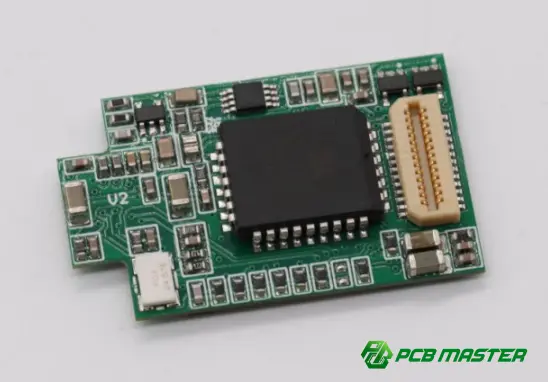
What Does a Resistor Do in a Circuit?
Resistors Electrical components that are used to provide resistance and control the flow of current in a circuit. Ohm's law is the relation:
V = I × R
where:
- V represents voltage (volts)
- I represents current (amps)
- R represents resistance (ohms)
Engineers include resistors in circuits to generate resistance, to regulate the flow of electricity, and to safeguard other components from excess current or unstable voltage.
PCB designs use resistors, integrated circuit (ICs) , capacitors, diodes, transistors and connectors that ensure the reliable operation of the circuit. Resistors are important components for power management, signal processing, sensor applications, and communication systems. They are used to control and improve the electrical functions.
Key functions of resistors in circuits include:
| Function | Description | Typical PCB Applications |
|---|---|---|
| Current Limiting | Reduces excessive current to protect components | LED circuits, power supplies, protection circuits |
| Voltage Division | Creates specific voltage levels from a higher voltage source | Sensor circuits, microcontroller inputs |
| Signal Conditioning | Adjusts and stabilizes electronic signals | Communication modules, audio circuits |
| Pull-Up/Pull-Down Control | Defines default logic states in digital circuits | Embedded systems, IoT devices |
| Heat Dissipation | Converts electrical energy into heat | Power control circuits, load balancing |
How Do Resistors Work in Electronic Circuits?
When the electric current passes through a resistor the flow of electrons is resisted . The resistance reduces the current and some of the electrical energy is converted into heat.
The resistance will determine the maximum current that can flow through the circuit. The more resistance, the less current. The greater the current , the less the resistance .
For example:
- A resistor placed in series with an LED limits current to prevent the LED from burning out.
- A voltage divider circuit uses multiple resistors to generate a required voltage level for sensors or IC inputs.
- A termination resistor in high-speed communication circuits helps reduce signal reflection and improve signal integrity.
So when selecting a resistor for a modern PCB application you should consider resistance value, tolerance, power rating, temperature coefficient, package size and environmental conditions.
What Are the Different Types of Resistors?
The resistors are made up of different materials and of different constructions as per the requirement of the application. The type of resistor to be used on a PCB is generally dictated by electrical performance, reliability, manufacturing considerations and space.
Common Resistor Types Used in PCB Applications
| Resistor Type | Characteristics | Common Applications |
|---|---|---|
| Fixed Resistors | Provide a constant resistance value | General electronic circuits, control systems |
| Surface Mount Resistors (SMD) | Compact size and suitable for automated assembly | High-density PCB and PCBA production |
| Through-Hole Resistors | Strong mechanical reliability | Industrial equipment and high-power applications |
| Variable Resistors | Adjustable resistance values | Calibration circuits, user controls |
| Power Resistors | Designed to handle higher power loads | Power supplies, motor control systems |
| Precision Resistors | High accuracy and low tolerance | Measurement equipment, automotive electronics |
SMD resistors are a common component in modern PCB assemblies that enable high-density layouts and automated SMT manufacturing.
The defect of resistor will directly affect the reliability of the circuit, so the PCB manufacturer should pay attention to the accuracy of component placement and the quality of soldering in the SMT assembly process.
How Are Resistors Used in PCB Applications?
Resistors are found in virtually every electronic product because of their fundamental role in circuit control. They are used by the system as required.
1. Power Management Circuits
They are used in power supplies and battery management systems to control current, divide voltage and protect sensitive semiconductor devices.
Applications include:
- Voltage monitoring circuits
- Current sensing circuits
- Power conversion systems
- Battery protection modules
Industry and quality of PCB and components used is of utmost importance. Reliability of power electronics is of utmost importance. P CBMASTER is a high performance PCB manufacturer producing premium PCB for industrial and electronic systems that do hard jobs.
2. Signal Processing and Communication Systems
Accurate resistor networks are important for signal integrity of high speed electronic devices.
Examples include:
- Signal termination resistors
- Impedance matching circuits
- Filter networks
- Communication interfaces
In high level PCB designs, the resistor should be optimally placed and routed so that it reduces the interference of signal and improves the stability of system.
3. Automotive Electronics
Modern vehicles are built around electronic control systems, sensors and communication networks. Resistors are used for:
- Engine control modules
- Battery management systems
- ADAS systems
- Vehicle communication networks
Reliability of PCB is very important especially for automotive application. The PCBMASTER reliably supports PCB solutions for automotive electronics applications according to the IATF 16949 automotive quality management system.
How Do You Choose the Right Resistor for a PCB Design?
But it is not just a matter of picking a resistance, like picking a proper resistor. Engineers must also take electrical and environmental factors into account.
| Selection Factor | Why It Matters |
|---|---|
| Resistance Value | Determines current flow and voltage behavior |
| Tolerance | Defines accuracy of the resistance value |
| Power Rating | Ensures the resistor can handle heat generation |
| Package Size | Affects PCB layout and assembly process |
| Temperature Coefficient | Determines stability under temperature changes |
| Reliability Requirements | Important for automotive, industrial, and medical applications |
Review your Professional PCB and PCBA projects by engineers before it is too late to prevent problems such as wrong component selection, no power rating or manufacturing issues.
PCBMASTER provides our customers with a FREE engineering file check service to help identify potential design problems, improve manufacturability, reduce costs and shorten production timelines.
Common Mistakes When Using Resistors in PCB Design
Resistors are simple devices. But if you choose them wrong, or use them wrong, the circuit may fail.
Mistake 1: Choosing the Wrong Power Rating
You can have a resistor with the correct resistance, but if it doesn't have the power dissipation it needs, it'll still blow up.
Solution: Calculate expected power consumption using:
P = I² × R
and choose a resistor with a nice safety margin.
Mistake 2: Ignoring Tolerance Requirements
Typically, normal resistors are supplied with tolerances of ±1%, ±5%, or better. A precision circuit needs components with tighter tolerances.
Solution:
Select the resistor tolerance according to the accuracy requirements of your circuit.
Mistake 3: Poor PCB Layout Placement
Wrong placement of resistors can cause noise, signal attenuation or thermal problems.
Solution: Consider:
- Signal path length
- Heat dissipation
- Component spacing
- Manufacturing requirements
Mistake 4: Overlooking Manufacturing Capability
Even the best designed circuits can become a problem in production if the PCB manufacturing processes don’t meet the design requirements.
Solution:
Price is not the only thing to look for in PCB suppliers, there should be engineering support and a good quality assurance system.
PCBMASTER’s PCB and PCBA Manufacturing Experience with Resistor Applications
PCBMASTER is a professional manufacturer of PCB and PCBA , providing one-stop electronic manufacturing solutions for industries that depend on reliable circuit performance.
PCBMASTER attaches great importance to strict quality management during PCB production and assembly. ISO 9001, IATF 16949, UL and RoHS Approved.
For resistor-based PCB applications, PCBMASTER supports:
- High-density SMT assembly for SMD resistor placement
- Advanced PCB manufacturing including HDI, rigid-flex, FPC, and high-frequency PCB technologies
- Professional engineering review before production
- Full electrical testing before shipment
- Prototype manufacturing and mass production support
PCBMASTER has a professional engineering team, perfect quality assurance system and advanced manufacturing equipment, to provide customers with reliable electronic products from prototype verification to mass production.
Summary: Why Are Resistors Important in Circuit Design?
Resistors are tiny, but they do big things in almost all electronic systems. They control, protect and enhance signal quality and increase circuit reliability. They control the current and voltage.
The trick is to select the right kind of resistors and assemble them correctly so that the PCB and PCBA products are consistent.
As electronic systems become smaller, faster and more complex, reliable PCB manufacture and engineering support will continue to be key. PCBMASTER with advanced PCB technology , strict quality standards and large manufacturing capacity, provide reliable electronic solutions to clients all over the world.
Tags: #PCB #PCBA #SMT #Resistors #CircuitDesign #ElectronicComponents #PCBManufacturing #PCBMASTER #IndustryInsights
About the Author

Carol Luo
PCB Design EngineerI'm Carol, a PCB Engineer at PCBMASTER with experience in PCB design and manufacturing engineering since 2018. I focus on translating engineering requirements into reliable PCB solutions, with expertise in stack-up design, material selection, and design-for-manufacturing (DFM). I share practical engineering insights from real-world PCB design and production experience.
Visit Carol Luo's Profile