



High Volume PCB Assembly Capacity
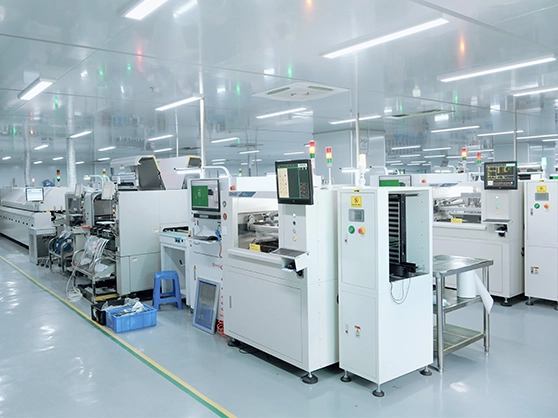
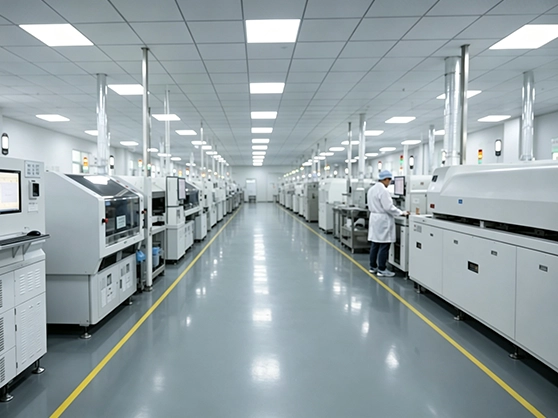
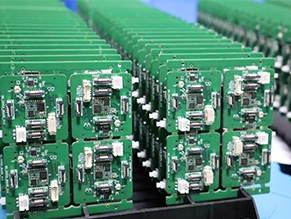
Scale from prototypes and small batches to stable mass production with 6 self-owned factories and 80,000 m² of manufacturing space.
From Prototype Validation to Stable Mass Production with Consistent Quality, Reliable Supply, and Scalable Capacity
Why PCBMASTER
PCBMASTER combines scalable manufacturing capacity, automated assembly, stable component sourcing, rigorous quality control, and engineering support to help you move from prototype to reliable, high-volume production.
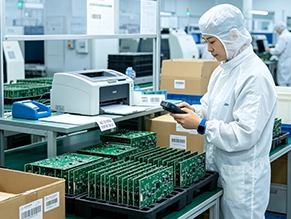
Scale from prototypes and small batches to stable mass production with 6 self-owned factories and 80,000 m² of manufacturing space.
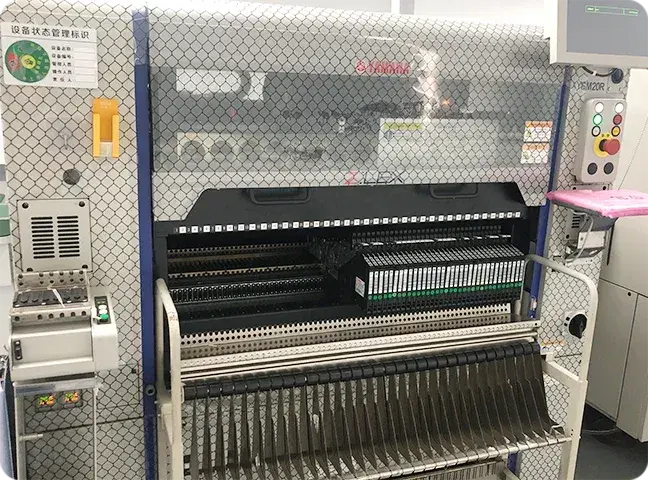
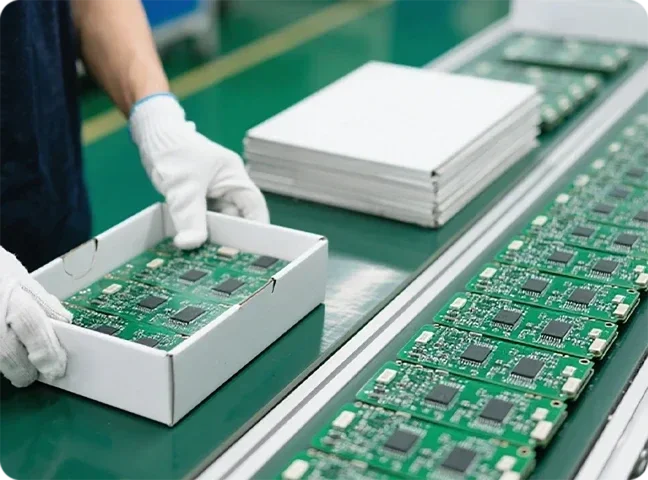
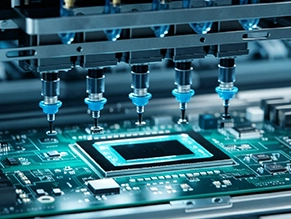
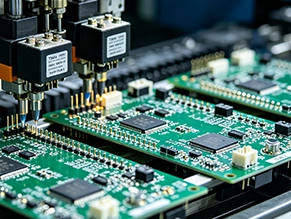
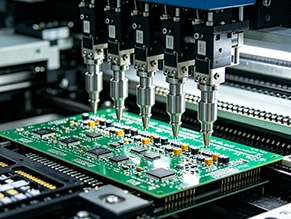
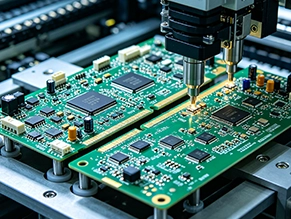
Automated SMT and THT processes support consistent quality, high efficiency, and repeatable production across large-volume orders.
Global component sourcing helps you reduce shortage risks and maintain supply continuity for long-term High Volume PCB Assembly.
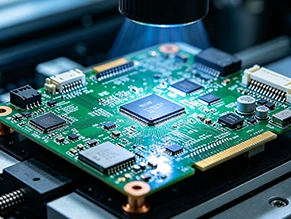
AOI, X-Ray, Flying Probe, ICT, and FCT help identify assembly defects and maintain consistent High Volume PCB Assembly quality.
100+ engineers provide DFM review and manufacturing support to identify potential production risks before mass production.
Move from prototype and NPI to High Volume PCB Assembly with one manufacturing partner, reducing supplier changes and production risks.
Share your Gerber files, BOM, and target volume to receive a production-focused quotation.
Quick Guide
High Volume PCB Assembly is designed for products that have moved beyond prototype and NPI stages and require consistent quality, cost, and delivery across recurring orders. Unlike prototype assembly, high-volume production depends on automation, DFM, process control, testing, and stable component supply to maintain consistency as production scales.
With PCBMASTER's one-stop PCB + PCBA + component sourcing + engineering + testing solution, you can reduce supplier handoffs and smoothly transition from Prototype → NPI → Pilot Production → High Volume PCB Assembly.
Production Scale
PCBMASTER helps you scale High Volume PCB Assembly without compromising quality, cost, or delivery.
When thousands of boards are produced, even small process variations can create repeated defects. High Volume PCB Assembly uses standardized and repeatable processes to maintain consistent assembly quality across large production runs.
Manual assembly becomes slower and less economical as order volumes increase. High Volume PCB Assembly relies on automated, high-throughput processes to increase output while reducing unnecessary labor and production cycle time.
Changes between production batches can affect soldering, component placement, and final performance. High Volume PCB Assembly keeps critical production parameters controlled and standardized for more predictable results.
As product designs become more compact, fine-pitch, BGA, QFN, and other high-density components can increase assembly difficulty. High Volume PCB Assembly supports complex component configurations while maintaining repeatable placement and soldering quality.
Many production boards combine surface-mount and through-hole components. High Volume PCB Assembly integrates SMT and THT processes to avoid fragmented production and simplify manufacturing for mixed-technology boards.
Low-volume production can carry higher setup and labor costs per board. High Volume PCB Assembly spreads production setup and process costs across larger quantities, helping you achieve a more competitive and predictable unit cost.
Demand can increase quickly after a product enters the market. High Volume PCB Assembly allows production to scale with recurring orders without redesigning the manufacturing process or changing suppliers unnecessarily.
For long-term products, every production batch needs to meet the same specifications. High Volume PCB Assembly establishes standardized manufacturing and quality requirements so you can maintain consistent product performance across recurring orders.
Service Types
PCBMASTER combines flexible High Volume PCB Assembly services with scalable production capacity to support different product volumes, technologies, and long-term manufacturing needs.
Automated surface-mount assembly for high-volume production, delivering fast component placement, consistent quality, and repeatable manufacturing results.
Through-hole assembly for high-volume production of connectors, transformers, terminals, and components requiring strong mechanical and electrical connections.
Combined SMT and THT assembly for complex PCBAs that require both surface-mount and through-hole components in high-volume production.
Precision BGA assembly for high-density PCBAs, supporting reliable solder connections and consistent placement across high-volume production runs.
Double-sided PCB assembly for high-volume production, enabling components on both PCB sides to increase circuit density and optimize board space.
Fine-pitch assembly for high-density PCBAs using compact, high-pin-count components, with precise placement for consistent high-volume production.
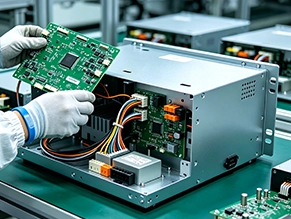
Box-build assembly integrating PCBAs, enclosures, wiring, and subassemblies for complete electronic products and streamlined high-volume production.
Turnkey PCB assembly combining PCB manufacturing, component sourcing, SMT/THT assembly, testing, and delivery through one integrated supply chain.
Manufacturing Capacity
PCBMASTER provides the manufacturing scale and production resources you need to maintain stable High Volume PCB Assembly from production ramp-up to long-term mass production.
| Production Capability | PCBMASTER |
|---|---|
| Self-Owned Factories | 6 |
| Manufacturing Area | 80,000 m² |
| 従業員数 | 700+ |
| R&D Engineers | 100+ |
| Annual Manufacturing Output | 1.2 Billion Pieces |
| PCB Assembly SMT Capacity | 12 Million Points/Day |
| Orders Processed | 3,000+ / Day |
| First-Pass Production Yield | 99.6% |
| 時間通り納品 | 99.5% |
From automated SMT and THT assembly to AOI, X-Ray, ICT, FCT, and flying probe testing, PCBMASTER has the production infrastructure to support consistent, scalable PCBA manufacturing.
Send your production forecast and BOM, and our team will evaluate capacity, sourcing, and scheduling for your project.
Industries
PCBMASTER supports high-volume electronics production across automotive, AI infrastructure, industrial control, telecommunications, consumer electronics, medical, power, and security applications with scalable assembly, consistent quality, and reliable production support.
Supports consistent, repeatable production of BMS, controllers, chargers, and other vehicle electronics as automotive production scales.
Enables scalable production of server, networking, power, and computing PCBAs to meet the rapidly growing demand for AI infrastructure.
Delivers stable, repeatable production of PLC, automation, sensor, and control-system PCBAs for continuous industrial operation.
Supports high-volume production of routers, switches, communication modules, and networking equipment as connectivity demand grows.
Helps reduce per-unit production costs while maintaining consistent output for high-demand smart devices and connected electronics.
Provides controlled, repeatable production of medical and diagnostic PCBAs where consistent quality and product reliability are critical.
Supports scalable production of power supply, converter, inverter, and energy-system PCBAs for demanding power applications.
Enables reliable mass production of camera, access control, alarm, and monitoring PCBAs for expanding security deployments.
From stable component sourcing to automated assembly and comprehensive testing, you get production built for repeatable scale.
Start Your High Volume PCB Assembly Project
Quality Control
PCBMASTER applies controlled inspection, process monitoring, and electrical testing throughout High Volume PCB Assembly to maintain consistent quality across production batches.
Before production, incoming materials are inspected to verify quality, specifications, and production suitability.
Critical assembly parameters are monitored throughout production to minimize process variation and prevent recurring defects.
Testing and final inspection help identify electrical, functional, and visual defects before finished PCBAs are released for shipment.
Certifications
PCBMASTER’s ISO 9001, IATF 16949, UL, and RoHS compliance supports consistent quality, manufacturing control, and regulatory requirements across High Volume PCB Assembly.
ISO 9001
Quality Management System
IATF 16949
Automotive Quality Management
UL
Recognized Safety Compliance
RoHS
Environmental Compliance
Case Studies
See how PCBMASTER uses advanced technologies, scalable manufacturing, and rigorous quality control to deliver High Volume PCB Assembly solutions for complex production challenges across high-demand industries.
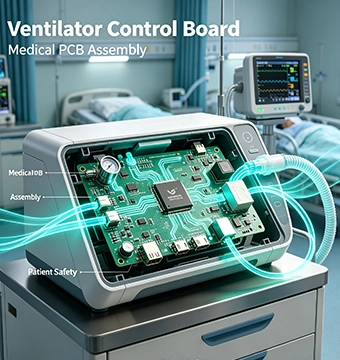
A U.S. ventilator manufacturer required reliable PCB assemblies for recurring medical equipment production. The main challenge was maintaining consistent assembly quality across batches while meeting the stringent requirements of medical electronics. Any variation in materials, assembly processes, or surface protection could affect product reliability and production consistency.
PCBMASTER implemented a controlled PCBA manufacturing process with biocompatible coating to provide additional protection for the finished assemblies. Production and quality controls were aligned with ISO 13485 requirements, helping maintain consistent manufacturing standards throughout batch production.
The solution enabled the customer to move beyond one-time production toward a more stable and repeatable supply of medical PCB assemblies, supporting the reliability requirements of ventilator equipment.
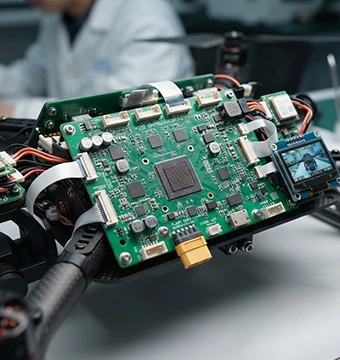
A wearable electronics project required high-volume production of a compact PCBA with limited board space and increasingly dense component placement. As production volume increased, the customer needed to control placement accuracy and soldering consistency while minimizing rework caused by defects that are difficult to detect visually.
PCBMASTER used automated SMT assembly to handle high-density placement, including 01005 components and fine-pitch BGA packages. AOI was applied for automated solder and placement inspection, while X-Ray inspection provided additional control for hidden solder joints on BGA and other high-density components.
This approach helped establish a repeatable manufacturing process for compact consumer electronics and reduce the risk of assembly variation during recurring high-volume production.
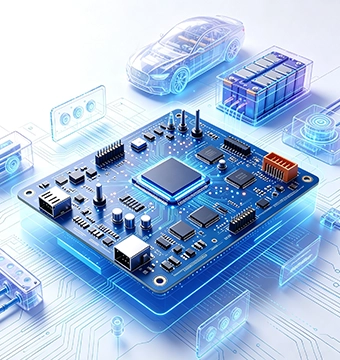
An automotive electronics project needed to increase production volume while maintaining consistent PCBA quality from one batch to the next. The board combined surface-mount and through-hole components, making process coordination and inspection more demanding than a standard SMT assembly.
PCBMASTER integrated SMT and THT assembly within a standardized production process and applied AOI and X-Ray inspection to identify placement and soldering defects. Where required, ICT and functional testing were used to verify electrical performance before shipment. The manufacturing process operates under an IATF 16949-certified quality system, supporting the stricter process-control expectations of automotive production.
The result was a scalable assembly process designed to maintain repeatable quality, controlled production variation, and reliable output as order volumes increase.
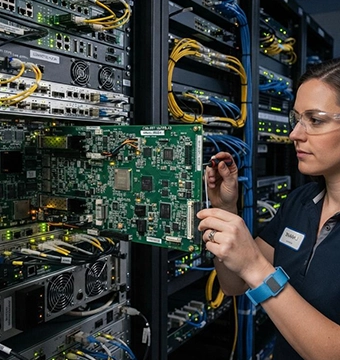
A 5G communication module required high-volume assembly with compact components, dense layouts, and hidden BGA solder joints. The key production challenge was maintaining placement and soldering consistency at scale while preventing defects that could affect the reliability of communication equipment.
PCBMASTER applied automated SMT assembly for high-density component placement, including 01005 components and BGA packages. AOI was used to identify visible placement and soldering defects, while X-Ray inspection provided additional verification of hidden solder joints. Functional testing could then be applied to verify the completed PCBA according to the product’s electrical requirements.
The standardized process helped control production variation and provided a more reliable manufacturing route for recurring, high-volume communication PCBA production.
Customer Voices
Hear how customers value PCBMASTER’s High Volume PCB Assembly for consistent quality, reliable delivery, responsive communication, and dependable engineering support.
“For us, consistency is more important than simply achieving a high output. PCBMASTER’s High Volume PCB Assembly process has kept placement and soldering quality stable across repeat production runs. Their engineers also respond quickly when we have DFM questions or need to adjust the manufacturing process. That technical support has made production ramp-up much smoother.”
“Our biggest concern was component availability as order volumes increased. PCBMASTER’s component sourcing team helped us manage supply issues without constantly changing the production schedule. The High Volume PCB Assembly quality has also remained consistent from batch to batch. For procurement, having one team coordinate components, assembly, and delivery has significantly simplified our supply chain.”
“What stands out to us is communication. When production schedules change, we need answers quickly, not several days later. PCBMASTER has been responsive throughout our High Volume PCB Assembly projects, particularly during production planning and delivery coordination. The assemblies have remained consistent across recurring orders, and their team has been proactive in flagging potential production issues before they affect our schedule.”
Technical Guidance
Planning your next High Volume PCB Assembly project? Let’s look at the key factors that can affect production cost, quality, consistency, and long-term manufacturing performance before you scale up.
High Volume PCB Assembly is most suitable when your product design has been validated, the BOM and PCB revision are stable, and demand requires recurring production. Moving to high-volume manufacturing too early can increase the cost of design changes, while staying with low-volume assembly for too long can limit production efficiency and increase unit costs. Before scaling, you should evaluate product maturity, forecasted demand, assembly complexity, target cost, and required production capacity.
High Volume PCB Assembly can reduce unit costs by spreading setup and engineering costs across larger production quantities while making greater use of automated assembly processes. Higher purchasing volumes can also improve component sourcing efficiency, while standardized processes help reduce labor requirements, production variation, rework, and material waste. However, high volume alone does not guarantee lower costs. A production-ready PCB design, stable BOM, optimized panelization, and high first-pass yield are equally important for achieving cost-efficient mass production.
A PCB designed for prototyping may require further optimization before entering high-volume production. You should review component availability, component spacing, footprints, fiducials, PCB panelization, board orientation, SMT/THT requirements, test points, and manufacturing tolerances. Standardizing components where practical can simplify sourcing and production, while proper panelization can improve equipment utilization and reduce handling time. Designs using BGA, fine-pitch, or very small components also require careful consideration of placement accuracy, soldering, inspection, and testability.
DFM helps identify manufacturing risks before they become recurring production defects. During a DFM review, engineers can evaluate component spacing, pad and footprint design, solderability, component placement, panelization, thermal considerations, and assembly accessibility. Potential issues such as solder bridging, tombstoning, insufficient solder, component interference, and BGA soldering difficulties can then be addressed before production begins. This is especially important for high-volume manufacturing because a small design or process problem can be repeated across thousands of assemblies.
Consistent High Volume PCB Assembly requires controlled processes rather than relying only on final inspection. Production parameters such as solder paste application, component placement, and reflow profiles should be monitored throughout manufacturing. Inspection and testing can include SPI, AOI, X-Ray, ICT, flying probe, and functional testing, depending on the PCBA design and quality requirements. Process documentation, revision control, traceability, and standardized inspection criteria also help maintain consistent results across production batches and make it easier to identify and correct recurring defects.
Your supplier should be evaluated on more than quoted assembly price. Look at production capacity, SMT and THT capabilities, component sourcing, DFM engineering, testing capabilities, quality certifications, production consistency, delivery performance, and scalability. The manufacturer should also be able to support your project as demand changes—from production ramp-up to recurring mass production. A capable partner should provide a controlled manufacturing process and sufficient engineering support to manage component, design, quality, and production risks throughout the product lifecycle.
FAQ
Ready to start your High Volume PCB Assembly project? Find answers to common questions about quotes, component sourcing, production lead times, testing, and order requirements.
The cost depends on PCB specifications, assembly complexity, component types, production volume, testing requirements, and sourcing method. Higher production volumes can generally reduce the unit cost by spreading setup and manufacturing costs across more boards. For an accurate quote, PCBMASTER evaluates your PCB files, BOM, assembly requirements, order quantity, and testing specifications before providing a project-specific quotation.
To prepare an accurate quote, PCBMASTER typically needs your Gerber files, BOM, Pick-and-Place files, assembly drawings, PCB specifications, required quantity, and testing requirements. If you have additional requirements for materials, components, surface finish, packaging, or delivery schedules, these should also be provided. Complete production information helps our engineers identify manufacturing requirements and calculate costs more accurately.
Production time depends on PCB complexity, component availability, order quantity, assembly technology, testing requirements, and production scheduling. Component sourcing can also affect the overall lead time. PCBMASTER evaluates these factors when reviewing your project and provides a production schedule based on your specific requirements rather than applying a fixed lead time to every order.
Yes. PCBMASTER provides scalable PCB and PCBA manufacturing for projects ranging from initial production ramp-up to recurring mass production. Its manufacturing infrastructure includes 6 self-owned factories, 80,000 m² of manufacturing area, and automated PCB and PCBA production lines. This allows production resources to be allocated according to project requirements as your recurring demand develops.
Yes. High-volume production requires a manufacturing partner that can support demand increases without creating unnecessary supplier transitions. PCBMASTER can support production scaling through automated SMT and THT assembly, component sourcing, engineering support, and integrated PCB manufacturing. Production planning can be adjusted according to changes in order volume, product demand, and manufacturing requirements.
Yes. PCBMASTER provides component sourcing as part of its PCBA services. Components can be sourced according to your BOM and project requirements, helping reduce the workload of managing PCB manufacturing, component procurement, and assembly through separate suppliers. Component availability, specifications, lead times, and sourcing risks can be reviewed during the quotation and production-planning process.
Component shortages can disrupt high-volume production, so component planning should begin before assembly starts. PCBMASTER reviews BOM requirements and component availability during project preparation and coordinates component sourcing with the production schedule. For long-term production, factors such as lead time, availability, lifecycle status, and sourcing options should be considered to reduce the risk of interruptions between production batches.
PCBMASTER uses standardized manufacturing processes, process monitoring, inspection, and electrical testing to control production variation. Depending on the PCBA, quality control can include SPI, AOI, X-Ray, flying probe, ICT, FCT, and appearance inspection. Process control and testing help identify defects before shipment and maintain consistent assembly quality across recurring production batches.
PCBMASTER supports multiple inspection and testing methods depending on the product and quality requirements. These can include SPI, AOI, X-Ray, flying probe testing, ICT, FCT, and final appearance inspection. AOI helps identify visible assembly defects, while X-Ray can inspect hidden solder joints such as BGA connections. Electrical and functional testing can provide additional verification before finished PCBAs are released.
Yes. PCBMASTER supports both SMT and THT/DIP assembly for high-volume production. SMT is suitable for high-density surface-mount components and automated placement, while THT is commonly used for connectors and components requiring stronger mechanical connections. Mixed-technology PCBAs can combine SMT and THT processes within the same manufacturing workflow.
Yes. PCBMASTER supports high-density component assembly, including BGA, fine-pitch, and 01005 components. These technologies require precise component placement and controlled soldering processes, together with appropriate inspection methods. X-Ray inspection can also be used to evaluate hidden BGA solder joints that cannot be fully inspected through conventional optical inspection.
Yes. PCBMASTER engineers can review your design before high-volume production to identify potential manufacturing risks. DFM considerations can include component spacing, footprints, solderability, panelization, component placement, SMT/THT requirements, tolerances, and testability. Addressing these issues before production helps reduce recurring assembly defects, rework, and unnecessary manufacturing costs.
Yes. NPI provides an important transition between prototype validation and stable mass production. PCBMASTER can support engineering review, manufacturing preparation, assembly, inspection, and testing before production is scaled. This allows potential design, component, and process issues to be identified earlier, helping establish a more stable manufacturing process before recurring high-volume orders begin.
Yes. PCBMASTER provides turnkey PCBA services covering PCB manufacturing, component sourcing, SMT/THT assembly, inspection, testing, and delivery. A turnkey approach allows these manufacturing activities to be coordinated through one supply chain instead of requiring you to manage multiple suppliers separately. This can simplify procurement, production coordination, quality management, and delivery planning for long-term production.
You can submit your Gerber files, BOM, Pick-and-Place files, assembly drawings, required quantity, and production requirements to PCBMASTER for review. Our engineering team can evaluate your project, identify manufacturing requirements, and provide a tailored quotation. For recurring or large-volume production, you can also provide your target production schedule and expected demand so the manufacturing plan can be evaluated accordingly.
Our engineering team can review your production requirements and answer your technical questions.
始める
Send your Gerber files, BOM, quantity, and production requirements. Our engineering and manufacturing teams will evaluate your High Volume PCB Assembly project and provide a production-focused quotation.