








What Is a Capacitor Used For? A Practical Guide to Capacitor Functions in Electronic Circuits
A capacitor is a passive electronic component that stores electrical energy in an electric field and releases it when needed. In practical PCB and electronic circuits, capacitors are primarily used for energy storage, voltage smoothing, power supply decoupling, noise filtering, signal coupling, timing, and transient suppression . The correct capacitor type, capacitance, voltage rating, ESR, and placement depend on the circuit application. For PCB designers and engineers, capacitor selection and layout are particularly important for maintaining stable power delivery and reliable circuit performance.
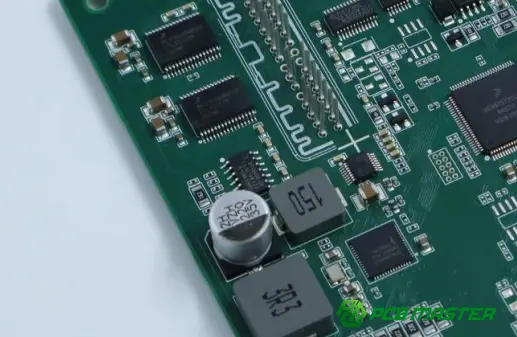
What Is a Capacitor Used For?
A capacitor is used to store and release electrical charge in a controlled way . Unlike a resistor, which primarily limits current, a capacitor responds to changes in voltage and can temporarily store electrical energy.
The basic relationship is:
Q=CV
where:
- Q = electrical charge
- C = capacitance
- V = voltage
The energy stored by a capacitor can be expressed as:
E=(1/2)CV 2
This makes capacitors useful in circuits where electrical energy needs to be temporarily stored, filtered, transferred, or released.
On a PCB, capacitors can appear as tiny MLCCs next to IC power pins, larger electrolytic capacitors in power supplies, or specialized components in RF, automotive, industrial, and high-power applications.
1. Voltage Smoothing and Ripple Reduction
One of the most common capacitor applications is smoothing the output of a power supply .
Rectifiers and switching regulators can produce voltage ripple or other periodic fluctuations. A capacitor connected across the power rail can absorb and release charge as the voltage changes, helping maintain a more stable DC voltage.
For example, in a rectifier circuit, the capacitor charges when the rectified voltage rises and supplies current to the load when the voltage falls.
This is why capacitors are commonly found near power supply outputs.
2. Power Supply Decoupling and IC Stability
Modern digital ICs can create very fast transient current demands. When an MCU, FPGA, processor, or other high-speed device switches states, its instantaneous current consumption can change rapidly.
A decoupling capacitor , often called a bypass capacitor, provides a local source of charge for these short-duration current demands.
The capacitor helps reduce:
- Power supply voltage fluctuations
- High-frequency noise
- Voltage transients
- Noise caused by rapid switching
For this reason, a small ceramic capacitor is often placed very close to an IC's power and ground pins .
The physical PCB layout matters as much as the nominal capacitance. A long connection introduces parasitic inductance, reducing the capacitor's effectiveness at high frequencies.
3. Noise Filtering
Capacitors can also be used to remove unwanted high-frequency components from a signal or power rail.
Their impedance is frequency-dependent:
X C =1/(2πfC)
As frequency increases, capacitive reactance decreases. This means a capacitor can provide a relatively low-impedance path for high-frequency noise.
For example, a capacitor connected between a power rail and ground can help shunt high-frequency noise away from sensitive circuitry.
This principle is widely used in:
- Switching power supplies
- Digital electronics
- Automotive electronics
- Industrial control systems
- Communication equipment
- RF circuits
4. AC Coupling and DC Blocking
A capacitor can pass AC signals while blocking steady-state DC voltage .
This makes capacitors useful for coupling signals between circuit stages.
For example, if two amplifier stages operate at different DC bias levels, a coupling capacitor can transfer the desired AC signal while preventing the DC operating point of one stage from directly affecting the other.
This is commonly known as AC coupling or DC blocking .
The capacitor's value must be selected according to the signal frequency and the resistance or impedance of the surrounding circuit.
5. Timing and Oscillator Circuits
Capacitors are also used with resistors to create RC timing circuits .
The approximate time constant is:
τ=RC
A larger resistance or capacitance increases the time required for the capacitor to charge or discharge.
RC networks can therefore be used for:
- Delay circuits
- Pulse shaping
- Oscillators
- Filters
- Reset circuits
- Timing functions
In these applications, capacitor tolerance and leakage current can affect circuit timing accuracy.
6. Energy Storage and Short-Term Power Delivery
Capacitors can temporarily store electrical energy and release it quickly.
This property is useful when a circuit needs a short burst of current.
Examples include:
- Camera flash circuits
- Pulse circuits
- Backup or hold-up circuits
- Motor-starting applications
- Energy buffering
- Power electronics
Large capacitors can store substantially more energy than the small MLCCs typically used for IC decoupling.
7. Transient and Surge Suppression
Capacitors can help manage fast voltage changes and transient disturbances.
In combination with other components, such as resistors, inductors, TVS devices, or filtering networks, capacitors can reduce the impact of transient noise on sensitive circuits.
However, a capacitor should not automatically be treated as a substitute for a dedicated surge-protection device . The required protection method depends on the transient's voltage, energy, duration, and source.
8. Filtering in Analog and Communication Circuits
Capacitors are fundamental components in analog filters.
Combined with resistors or inductors, they can create:
- Low-pass filters
- High-pass filters
- Band-pass filters
- Notch filters
The capacitor value affects the filter's cutoff or resonant characteristics.
In communication and RF applications, capacitor selection becomes more demanding because parasitic inductance, dielectric properties, package size, and self-resonant frequency can significantly influence actual performance.
What Are the Main Types of Capacitors?
Different capacitor technologies are suited to different applications.
| Capacitor Type | Common Characteristics | Typical Applications |
|---|---|---|
| Ceramic / MLCC | Small, low ESR, good high-frequency performance | Decoupling, filtering, RF, digital circuits |
| Aluminum Electrolytic | High capacitance, relatively economical | Power supply smoothing, bulk energy storage |
| Tantalum | High capacitance per volume, stable characteristics | Power management, compact electronics |
| Film | Good stability and low losses | Power electronics, filtering, precision circuits |
| Supercapacitor | Very high capacitance | Backup power, energy storage |
No single capacitor type is ideal for every PCB.
For example, an MLCC may be highly effective for high-frequency decoupling, while an electrolytic capacitor may be more appropriate for bulk energy storage and low-frequency ripple suppression .
How Do You Choose the Right Capacitor?
Capacitance alone is not enough.
Engineers typically evaluate several parameters.
Capacitance
The required capacitance depends on the circuit function.
A capacitor used for IC decoupling may have a value in the nF or µF range, while bulk power storage can require substantially higher capacitance.
Voltage Rating
The capacitor's rated voltage should provide an appropriate margin above the circuit's actual operating voltage and expected transients.
Operating a capacitor too close to or above its rated voltage can reduce reliability or cause failure.
ESR and ESL
Equivalent Series Resistance (ESR) and Equivalent Series Inductance (ESL) influence how effectively a capacitor handles transient and high-frequency currents.
For high-speed PCB designs, a capacitor with the right nominal capacitance but excessive parasitic inductance may perform poorly at the frequency of interest.
DC Bias
This is particularly important for ceramic capacitors.
Some MLCCs, especially Class 2 dielectrics such as X5R and X7R, can experience a reduction in effective capacitance as the applied DC voltage increases.
Therefore, the marked capacitance may not equal the actual capacitance under operating conditions.
Temperature and Tolerance
Temperature coefficient and capacitance tolerance can affect circuit behavior, particularly in precision, timing, RF, and automotive applications.
Package and PCB Layout
A capacitor's package size and connection geometry influence parasitic inductance.
For high-frequency decoupling, placing the capacitor close to the IC power pin and providing a short, low-inductance return path to ground is often critical .
Capacitor Selection: Common Mistakes to Avoid
Choosing Only by Capacitance
A common mistake is to select a capacitor based solely on its µF value.
Two capacitors with identical nominal capacitance can have very different ESR, ESL, voltage characteristics, temperature behavior, and reliability.
Ignoring DC Bias
This can be particularly problematic with ceramic capacitors.
A nominal 10 µF MLCC may have considerably less effective capacitance under its actual DC operating voltage , depending on its dielectric, voltage rating, package, and manufacturer specifications.
Placing Decoupling Capacitors Too Far Away
A theoretically excellent capacitor can become less effective when connected through long PCB traces.
At high frequencies, the parasitic inductance of those traces can dominate the impedance.
Using One Capacitor for Every Frequency
Power integrity designs often use different capacitor values and technologies to address different frequency ranges rather than expecting a single capacitor to handle every transient.
Ignoring Manufacturer Specifications
For critical designs, engineers should review the manufacturer's datasheet and impedance, bias, temperature, lifetime, and reliability information rather than relying only on the nominal component value.
How Are Capacitors Used on PCBs?
Capacitors are among the most frequently used passive components on a PCB.
A typical board may contain capacitors in several different locations:
| PCB Location | Capacitor Function |
|---|---|
| Near IC power pins | High-frequency decoupling |
| Power input | Bulk filtering and transient stabilization |
| DC/DC converter | Energy transfer and output/input filtering |
| Analog circuits | Signal filtering and noise reduction |
| Communication circuits | AC coupling and impedance-related functions |
| Motor-control circuits | Power filtering and transient management |
| RF circuits | Matching, filtering, and DC blocking |
This means capacitor selection is closely connected to PCB layout, power integrity, signal integrity, thermal conditions, and the application's operating environment .
For complex PCB projects, engineers should evaluate the capacitor and its surrounding layout as part of the complete electrical system rather than treating the component as an isolated BOM item.
Practical PCB Design Considerations
From a PCB engineering perspective, the most important question is not simply “What capacitor should I use?” but rather:
What electrical problem is the capacitor supposed to solve?
Start by identifying whether the capacitor is intended for decoupling, filtering, energy storage, AC coupling, timing, or transient management .
Then determine the relevant operating frequency, voltage, current transient, temperature range, capacitance tolerance, ESR, ESL, and physical constraints.
For high-speed and power-sensitive designs, simulation and measurement can also be valuable. An impedance-versus-frequency analysis can reveal whether a selected capacitor actually provides the desired low-impedance path within the target frequency range.
PCB manufacturing considerations should also be addressed early. Component package, land pattern, assembly process, spacing, thermal conditions, and component availability can all influence the final design.
PCBMASTER's Approach to Reliable PCB Manufacturing
As a PCB and PCBA manufacturer serving applications across multiple industries, PCBMASTER integrates PCB manufacturing, PCBA assembly , component sourcing, and engineering support within its own 80,000 m² factory .
Its engineering service includes free engineering file checking , allowing potential manufacturability, performance, and cost issues to be identified before production. This is particularly useful when capacitor footprints, component specifications, placement, or PCB layout require engineering review.
PCBMASTER's manufacturing capabilities cover standard and advanced boards, including high-frequency PCB , HDI PCB , FPC , rigid-flex PCB , and metal-core PCB . Its quality system is supported by ISO 9001, IATF 16949, UL, and RoHS certifications , with boards tested before shipment.
For projects where capacitor selection is part of a larger power-integrity, high-frequency, automotive, or PCBA requirement, the key is to evaluate component selection, PCB layout, manufacturing capability, and quality control together rather than separately.
Summary: What Is a Capacitor Used For?
A capacitor has several fundamental roles in electronic circuits:
- Store and release electrical energy
- Smooth power supply voltage and reduce ripple
- Decouple ICs from power supply noise
- Filter unwanted electrical signals
- Block DC while passing AC signals
- Create RC timing and filtering circuits
- Provide short-term energy during transient loads
- Support transient and noise suppression
- Perform filtering and matching functions in RF circuits
The right capacitor depends on the electrical function, capacitance, voltage, frequency, ESR, ESL, temperature, DC bias, package, and PCB layout .
For PCB designers, capacitor selection should therefore be considered part of the overall circuit and layout design—not simply a component-selection task.
Tags
#Capacitor #Capacitors #PCB #PCBA #PCBDesign #Electronics #CircuitDesign #PowerSupply #DecouplingCapacitor #PowerIntegrity #SignalIntegrity #ElectronicComponents #PCBManufacturing #PCBMASTER #ElectronicsEngineering
About the Author

Carol Luo
PCB Design EngineerI'm Carol, a PCB Engineer at PCBMASTER with experience in PCB design and manufacturing engineering since 2018. I focus on translating engineering requirements into reliable PCB solutions, with expertise in stack-up design, material selection, and design-for-manufacturing (DFM). I share practical engineering insights from real-world PCB design and production experience.
Visit Carol Luo's Profile