








Fixed Resistor: Types, Working Principle, Applications, and Selection Guide
A fixed resistor is one of the most fundamental passive electronic components used in virtually every electronic circuit. Unlike variable resistors, a fixed resistor has a predetermined resistance value that cannot be adjusted during normal operation. It is widely used in PCB and PCBA designs to limit current, divide voltage, protect sensitive components, and ensure stable circuit performance. Selecting the appropriate resistor type, resistance value, power rating, tolerance, and package size is essential for achieving reliable electronic products.
What Is a Fixed Resistor?
A fixed resistor is an electronic component designed to provide a constant electrical resistance. It follows Ohm's Law , where resistance controls the relationship between voltage and current.
Its primary function is to regulate electrical current, create voltage drops, dissipate heat, and stabilize circuit operation.
Fixed resistors are found in nearly every electronic device, including:
- Consumer electronics
- Industrial control systems
- Automotive electronics
- Medical devices
- Communication equipment
- IoT products
- Power supplies
- Embedded systems
How Does a Fixed Resistor Work?
According to Ohm's Law , the current flowing through a resistor depends on the applied voltage and its resistance.
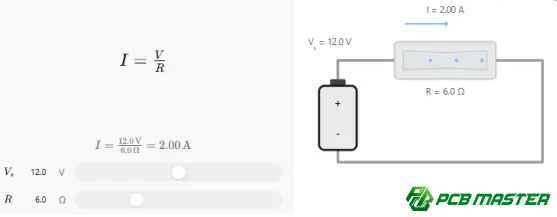
As electrical current passes through the resistor, part of the electrical energy is converted into heat. This controlled resistance allows engineers to:
- Limit excessive current
- Protect integrated circuits (ICs)
- Set operating voltages
- Bias transistors
- Filter electrical noise
- Form timing and sensing circuits
Main Types of Fixed Resistors
Different resistor technologies are optimized for different electrical and environmental requirements.
| Resistor Type | Characteristics | Typical Applications |
|---|---|---|
| Carbon Film | Low cost, general-purpose | Consumer electronics |
| Metal Film | High precision, low noise | Measurement instruments, analog circuits |
| Thick Film Chip | Most common SMD resistor | PCB assembly |
| Thin Film Chip | Excellent accuracy and stability | High-speed and precision electronics |
| Wirewound | High power handling | Power supplies, motor drives |
| Metal Oxide Film | High temperature resistance | Industrial equipment |
| Fusible Resistor | Acts as both resistor and fuse | Power protection circuits |
Common Fixed Resistor Packages
Modern PCB assembly primarily uses surface-mount device (SMD) resistors, while through-hole resistors remain common in power electronics and prototyping.
| Package | Dimensions (mm) | Typical Applications |
|---|---|---|
| 0201 | 0.6 × 0.3 | Wearables, smartphones |
| 0402 | 1.0 × 0.5 | Compact electronics |
| 0603 | 1.6 × 0.8 | General PCB design |
| 0805 | 2.0 × 1.25 | Industrial electronics |
| 1206 | 3.2 × 1.6 | Higher power circuits |
| Axial Through-Hole | Various | Prototyping and power circuits |
Key Specifications to Consider
Selecting the correct fixed resistor involves evaluating multiple parameters.
Resistance Value
Measured in Ohms (Ω) , common values range from fractions of an ohm to several megaohms.
Tolerance
Tolerance indicates the allowable deviation from the nominal resistance.
| Tolerance | Typical Applications |
|---|---|
| ±5% | General electronics |
| ±1% | Industrial control |
| ±0.5% | Precision analog circuits |
| ±0.1% | Measurement equipment |
Power Rating
Common power ratings include:
- 1/16 W
- 1/10 W
- 1/8 W
- 1/4 W
- 1/2 W
- 1 W
- 2 W
- 5 W and above
Choosing an insufficient power rating can cause overheating and premature failure.
Temperature Coefficient (TCR)
Lower TCR values provide better resistance stability across temperature variations, making them suitable for precision applications.
Common Applications of Fixed Resistors
Fixed resistors perform numerous essential functions in electronic circuits.
Current Limiting
Protect LEDs, ICs, and sensors from excessive current.
Voltage Divider Networks
Generate stable reference voltages for analog and digital circuits.
Pull-Up and Pull-Down Resistors
Ensure reliable logic levels for microcontrollers and digital ICs.
Signal Conditioning
Control gain, impedance, and filtering in analog circuits.
Bias Networks
Establish proper operating points for transistors and amplifiers.
Current Sensing
Low-value precision resistors measure current in battery management systems (BMS), motor controllers, and power supplies.
Common Mistakes When Selecting Fixed Resistors
| Selection Factor | Common Practice | Recommended Engineering Practice |
|---|---|---|
| Power Rating | Select the minimum required | Include a safety margin for improved reliability |
| Tolerance | Ignore accuracy requirements | Match tolerance to circuit precision |
| Package Size | Choose based only on board space | Consider heat dissipation and current capacity |
| Temperature Stability | Often overlooked | Evaluate TCR for harsh environments |
| Voltage Rating | Frequently ignored | Verify for high-voltage applications |
Best Practices for PCB Design with Fixed Resistors
Proper resistor selection contributes significantly to PCB reliability and manufacturability.
Recommended practices include:
- Place precision resistors away from heat-generating components.
- Keep high-speed signal paths as short as possible.
- Use matched resistor networks where accuracy is critical.
- Follow IPC footprint recommendations for solderability.
- Verify power dissipation during PCB thermal analysis.
- Consider resistor tolerance during circuit simulation and design validation.
For complex PCB projects, engineering review before fabrication can identify resistor placement, thermal management, and manufacturability issues early, reducing redesign costs and improving production efficiency.
PCBMASTER's Engineering Support for PCB Assembly
As a professional PCB and PCBA manufacturer , PCBMASTER supports customers from prototype development to mass production with comprehensive engineering services.
Its capabilities include:
- Free Design for Manufacturability (DFM) review
- PCB fabrication and SMT assembly
- HDI, High-Frequency, Rigid-Flex, FPC, and Metal Core PCB manufacturing
- Component sourcing and assembly
- ISO 9001, IATF 16949, UL, and RoHS-compliant production
- 24-hour rapid PCB prototyping
- 99.59% on-time delivery
- Advanced AOI inspection and multi-stage quality control
For designs containing hundreds or thousands of fixed resistors, early engineering verification helps optimize component placement, improve assembly efficiency, and enhance long-term product reliability.
Conclusion
Fixed resistors may appear simple, but they are indispensable components that directly influence the performance, stability, and reliability of electronic systems. Understanding resistor technologies, package options, tolerance, power ratings, and application requirements enables engineers to design more robust and manufacturable PCBs. Whether developing consumer electronics, automotive systems, industrial equipment, or communication devices, selecting the appropriate fixed resistor is a fundamental step toward successful electronic product design.
Tags: #FixedResistor #Resistor #PCB #PCBA #SMT #Electronics #CircuitDesign #PCBDesign #PCBManufacturing #PCBMASTER #PassiveComponents #ElectronicComponents
About the Author

Carol Luo
PCB Design EngineerI'm Carol, a PCB Engineer at PCBMASTER with experience in PCB design and manufacturing engineering since 2018. I focus on translating engineering requirements into reliable PCB solutions, with expertise in stack-up design, material selection, and design-for-manufacturing (DFM). I share practical engineering insights from real-world PCB design and production experience.
Visit Carol Luo's Profile