








What Is a Ballast Resistor? Working Principle, Types, Applications, and Selection Guide
A ballast resistor is an electrical component , used to add a known amount of resistance to a circuit to limit and stabilize the current flow . It safeguards sensitive components against overcurrent, lowers the likelihood of overheating, and enhances system reliability. Ballast resistors are used in automotive ignition systems, lighting equipment, industrial control circuits and power electronics. Some of the traditional applications have been superseded by modern electronic control technologies, but ballast resistors are still useful due to their simplicity, reliability and cost. Engineers must understand the working principle, different types, applications and selection criteria to design safer and more durable electronic systems .
What Is a Ballast Resistor?
A ballast resistor is a resistor connected in series with a load to limit current and maintain the stability of the circuit .
A ballast resistor is intended to continuously dissipate power and protect components from excessive electrical stress, unlike a normal resistor (which is used for voltage division, signal conditioning or current limiting in low power circuits).
The main function of ballast resistor is:
- Current limitation: Preventing excessive current from damaging components.
- Voltage regulation: Creating a controlled voltage drop within a circuit.
- Thermal protection: Converting excess electrical energy into heat.
- Circuit stabilization: Maintaining consistent operating conditions when load characteristics change.
This is especially true in circuits where the load current can change rapidly and cause overheating or component failure .
How Does a Ballast Resistor Work?
Basic Current Limiting Principle
The ballast resistor is based on the principle of the voltage current resistance relationship.
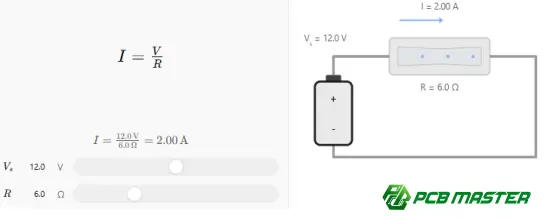
By placing a ballast resistor in series with a load, the total resistance of the circuit is increased. This reduces current in the load and avoids excess electrical stress.
The basic operating steps are:
- The power source supplies voltage to the circuit.
- The load attempts to draw current based on its electrical characteristics.
- The ballast resistor introduces additional resistance.
- A portion of the voltage is dropped across the resistor.
- The load receives a controlled amount of current.
Ballast resistors are very reliable as no complex control circuits are required . It is a simple passive control method .
Thermal Regulation Principle
Some ballast resistors use temperature dependent characteristics for automatic current regulation.
e.g. a PTC (positive temperature coefficient) ballast resistor that increases its resistance when temperature rises:
Temperature increases → Resistance increases → Current decreases
This self-regulating action protects circuits from abnormal current conditions.
Types of Ballast Resistors
Ballast resistors can be classified according to their construction, resistance characteristics and operating mechanism.
1. Fixed Ballast Resistor
Fixed ballasts resistors have a constant resistance value when operating.
Characteristics:
- Stable resistance
- Simple structure
- High reliability
- Low maintenance requirements
Fixed ballast resistors are often used where the required level of current is predictable.
Typical applications include:
- Automotive ignition systems
- Industrial control circuits
- Power protection circuits
2. Wirewound Ballast Resistor
A wire-wound ballast resistor is constructed by winding the resistance wire on an insulator core.
The heat produced by the resistance wire which transforms electrical energy into heat is dissipated by the resistor body.
Advantages:
- High power-handling capability
- Excellent thermal stability
- Suitable for high-current applications
- Long operational life
Wirewound ballast resistors are generally used in automotive and industrial applications where continuous power dissipation is required.
3. Ceramic Ballast Resistor
Ceramic ballast resistors are made of ceramic materials for the outer housing or insulating structure.
Ceramic materials are very heat resistant and mechanistically stable.
Advantages:
- High-temperature operation
- Flame resistance
- Strong environmental durability
- Good heat dissipation
They are often selected for applications that have to withstand harsh operating conditions.
4. PTC Ballast Resistor
PTC ballast resistors are constructed from materials with a positive temperature coefficient.
Their resistance increases automatically with rising temperature.
Working behavior:
| Condition | Resistance Change | Current Effect |
|---|---|---|
| Normal temperature | Lower resistance | Normal current flow |
| Temperature increases | Resistance increases | Current decreases |
| Overcurrent condition | High resistance | Circuit protection |
PTC ballast resistors are widely used in protection circuits, motor applications and battery related systems.
5. Variable Ballast Resistor
Variable ballast resistors give engineers the ability to change the resistance values manually.
By changing resistance, engineers can control:
- Current flow
- Voltage drop
- Power delivered to the load
They are mainly used in:
- Laboratory equipment
- Testing systems
- Prototype development
Applications of Ballast Resistors
Automotive Ignition Systems
One of the most common applications of ballast resistors in conventional automobile ignitions is
In older ignition systems the ballast resistor was used to reduce the voltage that was always supplied to the ignition coil so that it would not overheat and would last longer.
In the case of engine starting the resistor could be temporarily bypassed to give a higher voltage and improve ignition performance.
Common applications include:
- Classic automobiles
- Vintage motorcycles
- Industrial engines
- Agricultural machinery
Fluorescent Lighting Systems
The current regulation is required for conventional fluorescent lamps because of the inherently unstable electrical characteristics of the lamp.
The lamp is turned on and ballasts limit the current flow to limit the excess of current.
Electronic ballasts are being used more and more in today’s lighting systems but old ballast technologies still have a big role to play in many existing installations.
Industrial Control Equipment
For the operation of many industrial systems, reliable current regulation of components like:
- Relays
- Solenoids
- Actuators
- Motors
- Control circuits
Ballast resistors offer a simple protection method when reliability is more important than circuit complexity.
Electronic Testing Equipment
In test environments engineers use ballast resistors to:
- Simulate electrical loads
- Protect prototypes
- Limit startup current
- Improve measurement safety
Ballast Resistor vs . Standard Resistor
| Feature | Standard Resistor | Ballast Resistor |
|---|---|---|
| Main purpose | General resistance control | Current stabilization |
| Power handling | Usually lower | Designed for higher power |
| Heat management | Secondary consideration | Critical design factor |
| Typical use | Signal and control circuits | Power and protection applications |
| Current regulation | Limited | Primary function |
Ballast Resistor vs . Electronic Ballast
While the names are similar, traditional ballast resistors and electronic ballasts operate differently.
| Feature | Ballast Resistor | Electronic Ballast |
|---|---|---|
| Control method | Passive resistance | Active semiconductor control |
| Circuit complexity | Simple | More complex |
| Efficiency | Lower | Higher |
| Heat generation | Higher | Lower |
| Reliability | Extremely high | Depends on electronic components |
Today, electronic ballasts are widely used in modern lighting and power systems due to their advantages in efficiency and control.
How to Select a Ballast Resistor?
There are many electrical and mechanical considerations in selecting the proper ballast resistor.
1. Resistance Value
The resistance value determines how much current is restricted.
If the resistance is too low, the resistor will not safeguard the circuit. If the resistance is too high, the circuit won't work correctly.
2. Power Rating
One of the most important selection criteria is the power dissipation.
The engineers must ensure that the resistor can safely dissipate the continuous heat generation.
Consider:
- Operating current
- Voltage drop
- Duty cycle
- Thermal environment
3. Temperature Performance
Thermal performance is important. Ballast resistors turn electrical energy into heat.
Important factors include:
- Ambient temperature
- Cooling conditions
- Mounting method
- Heat dissipation capability
4. Environmental Requirements
Resistance for industrial and automotive applications:
- Vibration
- Moisture
- Dust
- Temperature cycling
- Chemical exposure
PCB Design Considerations for Ballast Resistors
The traditional method is to use discrete ballast resistors. Power resistors are incorporated into the printed circuit board in many modern electronic systems.
It's the design that dictates the reliability of your PCB.
Thermal Management
Power ballast resistors get very hot.
PCB designers should consider:
- Larger copper areas
- Thermal vias
- Proper component spacing
- Heat dissipation paths
Trace Width and Current Capacity
In high current circuits the copper thickness and the trace width should be adequate so that the temperature rise is not excessive.
Component Placement
Ballast resistors should be kept away from heat sensitive components such as:
- Microcontrollers
- Capacitors
- Sensors
- Communication modules
Manufacturing Quality
The reliability of the ballast resistor circuits depends on the choice of components and the quality of the PCB manufacture.
PCBMASTER is a PCB and PCBA manufacturer that helps engineers with PCB fabrication, SMT assembly and manufacturing optimization. The company is ISO 9001, IATF 16949, UL Certified, and RoHS compliant to support reliable electronic products for automotive, industrial, and consumer applications.
PCBMASTER optimizes the design of customer PCBs for manufacturability, thermal performance and long-term reliability with engineering file review, advanced inspection processes and professional technical support.
Common Ballast Resistor Problems and Troubleshooting
Overheating
Possible causes:
- Incorrect power rating
- Poor ventilation
- Excessive current
Solutions:
- Select a higher-power resistor
- Improve thermal management
- Check circuit current levels
Open Circuit Failure
If it overheats for a long time, the ballast resistor can become an open circuit.
Symptoms include:
- Circuit failure
- Loss of current regulation
- Equipment malfunction
Incorrect Resistance Value
Using an incorrect resistance value can cause:
- Excessive current
- Insufficient voltage
- Unstable operation
Ensure electrical ratings are checked prior to installation.
Frequently Asked Questions About Ballast Resistors
What is the main purpose of a ballast resistor?
A ballast resistor limits and stabilizes the flow of current . This protects electrical components and improves the reliability of the circuit .
Are ballast resistors still used today?
Yeah. Although many applications have moved to electronic control systems, ballast resistors are still commonly found in automotive, industrial and specialized electronic applications.
Is a ballast resistor the same as a normal resistor?
No. Ballast resistors are made to limit current and to dissipate power continuously. Resistors for general circuit functions are common.
Can a ballast resistor be used in PCB circuits?
Yes. With proper thermal design and manufacturing considerations, power rated ballast resistors can be used in PCB assemblies.
Conclusion
Ballast resistors remain a viable solution for current control and electrical system protection. Their simple design and reliable operation makes them useful components in such a wide range of applications as automotive ignition systems, industrial equipment and electronic circuits.
The traditional ballast resistor has been used for many years and some of its uses have been replaced by modern semiconductor technologies but passive current regulation still has advantages in durability, simplicity and cost.
Choosing the right ballast resistor is critical to engineers designing robust electronic products in that they require the correct resistance value, power rating, thermal performance and PCB implementation. Partnering with an experienced PCB & PCBA manufacturer like PCBMASTER will help you achieve consistent quality standards, reliable performance and efficient production for your electronic assemblies.
Tags: #BallastResistor #PowerElectronics #CircuitDesign #PCB #PCBA #SMT #AutomotiveElectronics #IndustrialElectronics #ResistorTechnology #PCBDesign #ElectronicsManufacturing #EngineeringGuide #PCBMASTER
About the Author

Carol Luo
PCB Design EngineerI'm Carol, a PCB Engineer at PCBMASTER with experience in PCB design and manufacturing engineering since 2018. I focus on translating engineering requirements into reliable PCB solutions, with expertise in stack-up design, material selection, and design-for-manufacturing (DFM). I share practical engineering insights from real-world PCB design and production experience.
Visit Carol Luo's Profile