








Audio Capacitor: Types, Applications, Selection Guide, and PCB Design Considerations
An audio capacitor is a passive component used in audio circuits for AC coupling , DC blocking , filtering, decoupling, tone shaping, and power-supply stabilization . The right capacitor depends on capacitance, voltage rating, dielectric, ESR, leakage current, polarity, package, and the circuit's frequency range. For audio equipment, capacitor selection should be considered together with PCB layout, signal integrity, grounding, thermal management, and manufacturing requirements. A capable PCB and PCBA manufacturing partner can help ensure that the selected capacitor and PCB design translate reliably into production.
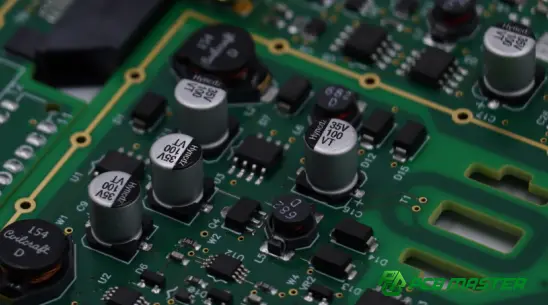
What Is an Audio Capacitor?
An audio capacitor is a capacitor used in an audio-frequency electronic circuit, typically to control how AC audio signals and DC voltages interact.
Audio capacitors can be found in:
- Audio amplifiers
- Microphone circuits
- Headphone amplifiers
- Speakers and active speakers
- Mixers and audio interfaces
- DACs and ADCs
- Car audio systems
- Home theater equipment
- Musical instrument electronics
- Professional recording equipment
- Wireless and communication devices
The capacitor itself is not necessarily a special component manufactured exclusively for audio. Instead, "audio capacitor" generally describes a capacitor selected or optimized for use in an audio signal path or audio-related circuit .
Its electrical characteristics can directly affect the behavior of the circuit, particularly when the capacitor is part of the signal path or interacts with an amplifier's power supply.
What Does an Audio Capacitor Do?
The most common functions include:
| Function | Purpose in an Audio Circuit |
|---|---|
| AC coupling | Passes the audio signal while blocking DC |
| DC blocking | Prevents unwanted DC voltage from entering the next circuit stage |
| Filtering | Attenuates unwanted frequency components |
| Decoupling | Stabilizes supply voltage near active devices |
| Power smoothing | Reduces ripple in amplifier power supplies |
| Tone control | Helps determine frequency response |
| Signal conditioning | Works with resistors and other components to establish circuit behavior |
The same capacitor value can behave very differently depending on where it is placed in the circuit. Therefore, selecting an audio capacitor should start with the circuit function rather than simply choosing a component marketed as an "audio capacitor."
How Does a Capacitor Affect an Audio Signal?
A capacitor's impedance decreases as frequency increases:
XC =1/(2πfC)
Where:
- XC = capacitive reactance
- f = frequency
- C = capacitance
This relationship explains why capacitors are useful for audio coupling and filtering.
For example, when a capacitor is combined with a resistor in a high-pass filter, the cutoff frequency can be approximated by:
fc =1/(2πRC)
A larger capacitance generally produces a lower cutoff frequency when resistance remains constant.
This is why capacitance should be selected according to the required circuit response rather than by habit.
Audio Capacitor Example
Suppose an audio coupling capacitor works with a resistance of 10 kΩ.
| Capacitance | Approximate High-Pass Cutoff |
|---|---|
| 10 nF | 1.59 kHz |
| 100 nF | 159 Hz |
| 1 µF | 15.9 Hz |
| 10 µF | 1.59 Hz |
These values illustrate the design principle: increasing capacitance lowers the RC high-pass cutoff frequency .
The actual circuit response can differ because the effective resistance may include multiple circuit impedances, and real capacitors have ESR, leakage, parasitic inductance, tolerance, and dielectric-dependent behavior.
Common Types of Audio Capacitors
There is no single capacitor technology that is optimal for every audio application. Common choices include ceramic, film, aluminum electrolytic, tantalum, and other polarized or non-polarized capacitor technologies .
1. Ceramic Capacitors
Ceramic capacitors are widely used for:
- Power-supply decoupling
- High-frequency noise suppression
- Bypass applications
- Compact audio electronics
Their small size makes them particularly useful when PCB space is limited.
However, dielectric type matters. Different ceramic dielectric classes can have significantly different capacitance stability, voltage characteristics, and losses.
2. Film Capacitors
Film capacitors are frequently considered when designers require stable electrical characteristics in signal-path applications.
Common applications include:
- Audio coupling
- Filters
- Tone-control networks
- Crossovers
- Precision analog circuits
Their larger physical size compared with many ceramic capacitors can become a consideration in compact PCB designs.
3. Aluminum Electrolytic Capacitors
Aluminum electrolytic capacitors offer relatively high capacitance in a practical package size.
They are commonly used for:
- Power-supply smoothing
- Bulk decoupling
- Amplifier power rails
- Low-frequency coupling applications
Because many electrolytic capacitors are polarized, correct polarity must be verified during circuit design and PCB assembly .
4. Tantalum Capacitors
Tantalum capacitors can provide relatively high capacitance in compact packages and are used in various power-management and signal-conditioning applications.
However, designers must carefully consider:
- Voltage rating
- Surge conditions
- Polarity
- Reliability requirements
- Derating
They should not be selected simply because the package is compact.
5. Non-Polarized Capacitors
Non-polarized capacitors can be advantageous where the voltage across the component may change polarity, including certain AC signal and crossover applications.
The appropriate technology depends on the circuit topology, voltage, frequency, capacitance, size, and reliability requirements.
How to Choose the Right Audio Capacitor
Choosing an audio capacitor requires more than matching capacitance.
1. Determine the Required Capacitance
Start with the circuit function.
For an RC high-pass network:
f c =1/(2πRC)
If the capacitor is used as an audio coupling capacitor, determine the lowest frequency that must pass and calculate an appropriate cutoff frequency below that point.
Do not automatically choose the largest available capacitance. Excess capacitance can increase physical size, cost, startup behavior, or other circuit considerations.
2. Check the Voltage Rating
The capacitor's voltage rating must exceed the maximum voltage expected under normal operation, with an appropriate design margin.
For amplifier and power-supply circuits, also consider:
- Supply-voltage variation
- Startup conditions
- Transient voltage
- Fault conditions
- Temperature
3. Consider Dielectric Characteristics
Dielectric selection can influence:
- Capacitance stability
- Temperature behavior
- Voltage dependence
- Loss characteristics
- Physical size
For signal-path applications, designers should evaluate the complete electrical specification rather than choosing based solely on capacitance and voltage.
4. Evaluate ESR and ESL
Real capacitors contain parasitic resistance and inductance.
ESR can affect losses and filtering behavior, while ESL becomes increasingly relevant as frequency increases.
This is particularly important when an audio PCB contains both low-frequency analog signals and higher-frequency digital or switching circuits.
5. Check Leakage Current
Leakage current can become important in high-impedance analog circuits and coupling networks.
For sensitive audio stages, the capacitor's leakage characteristics should be evaluated together with the input impedance and biasing architecture.
6. Consider Tolerance
A capacitor marked with a nominal value does not necessarily have exactly that capacitance.
Tolerance can affect:
- Filter cutoff frequency
- Frequency response
- Channel matching
- Timing
- Circuit consistency
For designs where two audio channels need closely matched characteristics, component tolerance can become especially important.
7. Evaluate Temperature and Aging
Electronic equipment may operate under different ambient and internal temperatures.
A capacitor's characteristics can change with:
- Temperature
- Applied voltage
- Frequency
- Aging
- Mechanical conditions
For commercial, industrial, automotive, or other demanding applications, these effects should be incorporated into component selection.
Audio Capacitor Selection: Common Mistakes
Mistake 1: Choosing a Capacitor Only by Capacitance
Two capacitors with the same nominal capacitance can have substantially different electrical characteristics.
Better approach: evaluate capacitance, dielectric, voltage rating, tolerance, ESR, leakage, temperature characteristics, package, and application simultaneously.
Mistake 2: Assuming "Audio Grade" Automatically Means Better
The term audio-grade is not a substitute for an engineering specification.
A capacitor that performs well in one audio circuit may be inappropriate for another.
The circuit topology and electrical requirements should determine the component choice.
Mistake 3: Ignoring the PCB
Even an appropriately selected capacitor can perform poorly if PCB implementation introduces unwanted coupling, noise, grounding problems, or excessive parasitic effects.
The capacitor and PCB should therefore be designed as one electrical system .
Mistake 4: Treating Every Capacitor as Polarized
Some capacitor technologies are polarized, while others are not.
Installing a polarized capacitor incorrectly can result in reliability problems or component failure.
Mistake 5: Ignoring Manufacturing Requirements
A capacitor that works electrically may still create production problems because of:
- Package selection
- Component availability
- Placement limitations
- Reflow compatibility
- BOM complexity
- PCB footprint problems
- Assembly orientation
Component selection should therefore consider both electrical performance and manufacturability.
Audio Capacitors and PCB Design
Audio performance depends not only on individual components but also on PCB architecture.
Important PCB considerations include:
Signal Routing
Sensitive analog audio traces should be routed carefully to reduce unwanted interference from:
- Switching regulators
- High-speed digital signals
- Clock circuits
- Power traces
- Electromagnetic noise sources
Grounding
Ground architecture is particularly important in mixed-signal audio equipment.
Poor grounding can contribute to:
- Hum
- Noise
- Crosstalk
- Ground-loop-related problems
- Unwanted interference
The appropriate grounding strategy depends on the complete system architecture.
Power-Supply Decoupling
Audio amplifiers and analog ICs can require local power-supply decoupling.
A common design strategy is to combine capacitors with different electrical characteristics so that the power network can address different frequency components.
Component Placement
The physical distance between an IC and its associated capacitor affects parasitic inductance and the effectiveness of high-frequency decoupling.
Short, controlled connections are generally preferable for local bypass capacitors.
Audio Capacitor vs. General-Purpose Capacitor
It is more useful to compare capacitors according to their application and electrical characteristics than to divide them into "audio" and "non-audio" categories.
| Evaluation Factor | General Selection Approach | Audio Circuit Consideration |
|---|---|---|
| Capacitance | Match circuit requirement | Determine coupling/filter response |
| Voltage rating | Exceed operating voltage | Include amplifier transients and bias conditions |
| Dielectric | Based on application | Consider stability and signal-path requirements |
| ESR | Application dependent | Consider filtering and power behavior |
| Leakage | Usually evaluated as needed | Important in some high-impedance analog stages |
| Tolerance | Match required accuracy | Can affect filter response and channel matching |
| Package | Based on PCB space | Balance electrical performance and layout |
| Temperature | Based on operating environment | Consider long-term audio equipment stability |
There is no universal "best audio capacitor." The best choice is the capacitor whose electrical characteristics fit the specific circuit.
How Audio Capacitors Fit Into PCB and PCBA Manufacturing
For an audio product, component selection is only one stage of the manufacturing process.
A reliable production workflow typically connects:
Circuit Design → Component Selection → PCB Design → Engineering Review → PCB Manufacturing → SMT/THT Assembly → Inspection → Testing → Final Delivery
Engineering review is particularly valuable before production because it can identify potential issues involving:
- Capacitor footprints
- Polarity markings
- Component spacing
- PCB manufacturability
- Assembly orientation
- BOM compatibility
- Signal and power routing
- Component availability
For products moving from prototype to production, these considerations become increasingly important because a design that works on a laboratory prototype must also remain manufacturable and consistent at scale.
Why PCB Manufacturing Capability Matters for Audio Products
Audio electronics can range from simple single-board products to highly integrated mixed-signal systems containing analog, digital, RF, power, and communication circuitry.
A PCB manufacturing partner therefore needs to support different board structures and production requirements.
For example, PCBMASTER provides PCB, PCBA, and SMT manufacturing through its own 80,000 m² factory , covering PCB fabrication, assembly, component sourcing, and design support.
Its capabilities include 24-hour rapid PCB prototyping , high-frequency PCB production, HDI with buried/blind vias, FPC , rigid-flex PCB , and metal-core PCB manufacturing. These capabilities can be relevant when audio products incorporate compact layouts, high-density interconnects, flexible connections, or mixed-signal circuitry.
PCBMASTER's Quality and Engineering Approach
For audio and other electronic products, production quality needs to extend beyond the individual capacitor.
PCBMASTER operates under ISO 9001 and IATF 16949 quality management systems and holds UL and RoHS certifications . The company also provides engineering file review before production, allowing potential manufacturability and design issues to be identified before fabrication.
Its stated manufacturing quality indicators include a 99.5% product yield rate , while its production operation reports a 99.59% on-time delivery rate .
These capabilities are particularly relevant when an audio PCB needs to move from prototype validation toward repeatable production.
Audio PCB Manufacturing Considerations
When preparing an audio PCB for manufacturing, review these areas before releasing the design:
- Verify capacitor values against the circuit calculations.
- Confirm voltage ratings and polarity.
- Check every capacitor footprint against the selected component.
- Review capacitor orientation for SMT and THT assembly.
- Separate sensitive analog routing from noisy switching or digital sections where appropriate.
- Review grounding and power-distribution architecture.
- Check component availability before production.
- Run DFM checks before ordering the PCB.
- Validate prototype performance before committing to larger production volumes.
- Confirm that PCB fabrication and PCBA assembly capabilities match the board's construction.
Audio Capacitor Applications
Audio capacitors appear across a broad range of electronic products.
| Product | Typical Capacitor Functions |
|---|---|
| Audio amplifier | Coupling, filtering, power decoupling |
| Headphone amplifier | Signal coupling and power filtering |
| Microphone preamp | Coupling and signal conditioning |
| Active speaker | Filtering, crossover, power supply |
| Audio interface | Analog filtering, coupling, decoupling |
| DAC | Power decoupling and analog signal conditioning |
| Automotive audio | Power filtering and signal conditioning |
| Mixing console | Coupling, filtering, signal conditioning |
| Musical instruments | Tone shaping and signal coupling |
| Home audio equipment | Filtering, coupling and power stabilization |
Frequently Asked Questions About Audio Capacitors
What is an audio capacitor?
An audio capacitor is a capacitor used in an audio circuit for functions such as AC coupling, DC blocking, filtering, decoupling, and power-supply smoothing . The term describes its application rather than one specific capacitor technology.
What capacitor is best for audio?
There is no universal best capacitor for audio. The appropriate choice depends on capacitance, dielectric, voltage rating, tolerance, ESR, leakage, temperature characteristics, package, and circuit position .
Does a capacitor affect audio quality?
A capacitor can affect circuit behavior when its electrical characteristics influence frequency response, filtering, coupling, distortion mechanisms, noise behavior, or power-supply performance. However, the effect depends strongly on the circuit design rather than simply whether a capacitor is marketed as "audio grade."
What capacitor should I use for audio coupling?
Select the coupling capacitor based on the circuit's input/output impedance and required low-frequency response. The RC relationship is a useful starting point:
fc =1/(2πRC)
The final selection should also consider voltage, leakage, tolerance, dielectric, package, and component availability.
Are electrolytic capacitors suitable for audio?
Yes. Electrolytic capacitors are widely used in audio equipment, particularly where relatively high capacitance is required for power-supply smoothing, bulk decoupling, and certain coupling applications. Polarity and voltage rating must be carefully considered.
Are film capacitors better than ceramic capacitors for audio?
Not universally. Film capacitors can be attractive for certain signal-path and filter applications, while ceramic capacitors are widely useful for compact decoupling and high-frequency applications. The correct choice depends on the circuit requirements.
Does PCB layout affect audio performance?
Yes. PCB routing, grounding, component placement, power distribution, and separation between sensitive analog circuits and noisy digital or switching circuits can all influence the behavior of an audio system.
Can an audio PCB use both SMT and THT components?
Yes. Audio products can use either SMT, THT, or a combination depending on component selection, mechanical requirements, assembly strategy, and product design.
Final Takeaway
Selecting an audio capacitor is fundamentally an engineering problem, not simply a matter of choosing a capacitor labeled "audio." Start with the circuit function, calculate the required capacitance and frequency response, then evaluate voltage rating, dielectric, ESR, leakage, tolerance, temperature characteristics, package, reliability, and availability.
For PCB-based audio products, capacitor selection should also be evaluated together with PCB stack-up, routing, grounding, component placement, power distribution, DFM, and PCBA assembly . This integrated approach helps turn an electrically sound schematic into a manufacturable and reliable product.
As audio electronics continue to combine analog processing, high-speed digital interfaces, wireless connectivity, and increasingly compact hardware, PCB and PCBA manufacturing capability becomes an important part of the overall design strategy . A manufacturer such as PCBMASTER can support the transition from rapid PCB prototypes to more complex PCB and PCBA production through engineering review, PCB fabrication, SMT assembly, component sourcing, and testing.
Tags
#AudioCapacitor #Capacitor #AudioElectronics #AudioPCB #PCBDesign #PCBA #SMT #AudioAmplifier #CircuitDesign #PCBManufacturing #ElectronicsEngineering
About the Author

Carol Luo
PCB Design EngineerI'm Carol, a PCB Engineer at PCBMASTER with experience in PCB design and manufacturing engineering since 2018. I focus on translating engineering requirements into reliable PCB solutions, with expertise in stack-up design, material selection, and design-for-manufacturing (DFM). I share practical engineering insights from real-world PCB design and production experience.
Visit Carol Luo's Profile