







Custom 3D Printing for Complex Geometries
Build internal channels and intricate shapes that are difficult with conventional manufacturing.
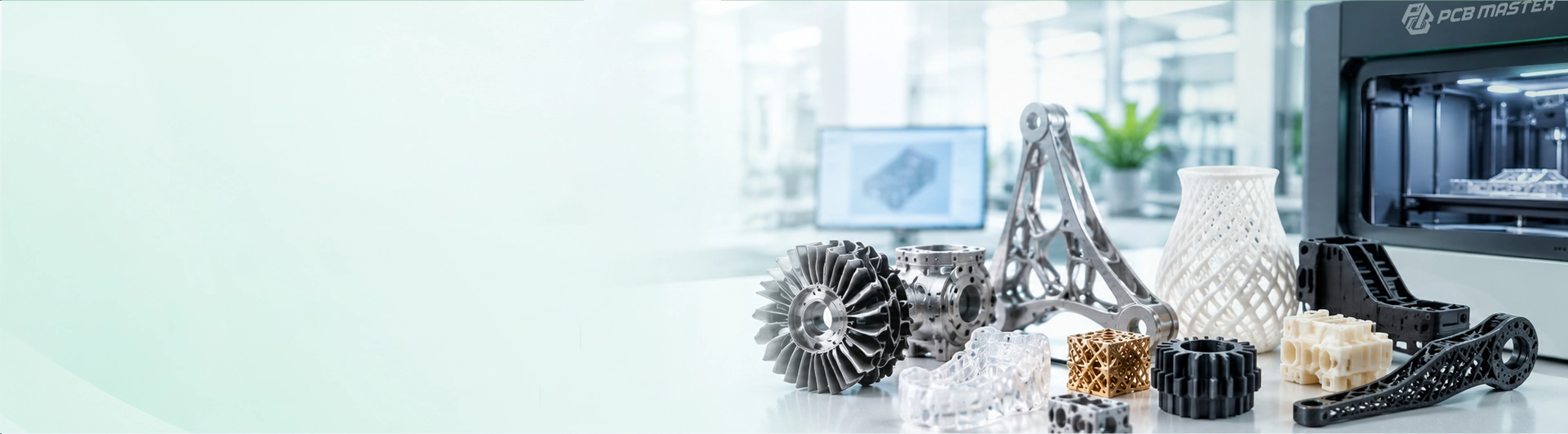
Turn your digital designs into custom 3D printed parts, functional prototypes, and production components with flexible 3D Printing services.
Build internal channels and intricate shapes that are difficult with conventional manufacturing.
Choose from FDM, SLA, SLS, MJF, DLP, and SLM with plastics, resins, nylon, TPU, and metals.
Turn CAD designs into physical prototypes quickly to validate fit, form, and function.
Move smoothly from a single prototype to functional prototypes and low-volume batches.
Pourquoi choisir PCBMASTER
PCBMASTER provides 3D Printing services for custom prototypes, functional parts, and low-volume production needs. You can submit your CAD files or 3D models and get customized 3D printed parts for complex structures, non-standard components, and rapid product development.
With flexible 3D Printing solutions, PCBMASTER helps you select a suitable printing process based on your requirements for material, dimensional accuracy, surface finish, mechanical strength, and production quantity. Our engineering support also helps review part geometry, dimensions, and manufacturability before production, reducing avoidable printing and design issues.
Whether you need a 3D Printing prototype for early validation or want to move from a single prototype to functional prototypes and low-volume production, PCBMASTER supports your development process with quality-controlled manufacturing. Dimensional inspection, appearance inspection, and applicable testing help maintain the consistency and reliability of your 3D printed parts.
Design review helps identify potential issues in geometry, dimensions, and manufacturability before production.
Process and material selection matched to your strength, accuracy, surface finish, and quantity needs.
Dimensional, appearance, and applicable testing help keep your 3D printed parts consistent and reliable.
About 3D Printing
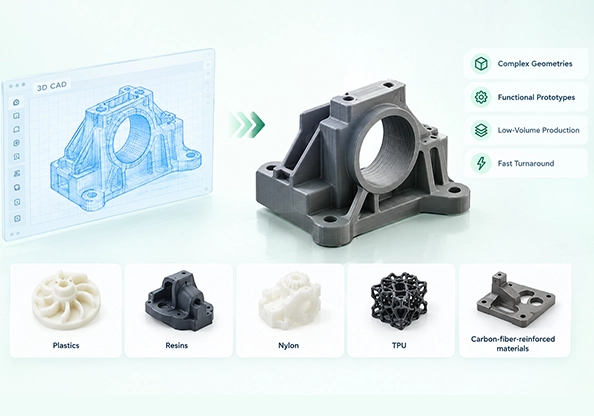
3D Printing is an additive manufacturing process that builds a physical part layer by layer from a digital 3D CAD file. Unlike conventional manufacturing methods that remove material or require dedicated tooling, 3D Printing allows you to produce complex geometries, customized components, functional prototypes, and low-volume parts directly from your digital design.
At PCBMASTER, your 3D Printing project can follow a structured process: 3D CAD File to Design Review to Technology Selection to Material Selection to Printing to Post-Processing to Inspection to Delivery. Engineering review helps identify potential design or manufacturability issues before production, while technology and material selection are matched to your requirements for strength, accuracy, surface finish, application, and quantity.
You can use 3D Printing when you need rapid prototypes, frequent design iterations, complex structures, customized parts, or low-volume production without investing in traditional tooling. Depending on the selected 3D Printing technology, materials can include plastics, resins, nylon, TPU, carbon-fiber-reinforced materials, and metals.
For functional prototypes, 3D Printing can help you evaluate fit, form, assembly, and practical performance before moving toward larger-scale production. It is also suitable for producing customized 3D printed parts in low quantities when conventional manufacturing may be less economical or flexible.
Our 3D Printing Workflow
Caractéristiques principales
At PCBMASTER, our 3D Printing services focus on helping you turn digital designs into practical prototypes and production-ready parts.
Create complex shapes, internal channels, and intricate structures that are difficult to produce with conventional manufacturing.
Quickly turn CAD designs into physical prototypes so you can test concepts, fit, assembly, and function earlier.
Develop customized geometries without relying heavily on traditional tooling, giving you more freedom to optimize your product design.
Select suitable 3D Printing materials based on your required strength, flexibility, temperature resistance, weight, and application.
Update your CAD model and produce revised 3D printed parts quickly, helping you identify and correct design issues faster.
Produce customized parts in smaller quantities without investing in expensive molds, making low-volume 3D Printing practical.
Use optimized internal structures and material-efficient designs to reduce component weight while maintaining required functionality.
Manufacture custom 3D printed parts tailored to your dimensions, geometry, functional requirements, and specific application needs.
Turn your CAD designs into functional 3D printed parts with flexible 3D Printing technologies and engineering support from PCBMASTER.
Specifications
Review the key 3D Printing parameters and specifications before ordering your custom 3D printed parts. PCBMASTER supports different 3D Printing technologies, materials, accuracy levels, build sizes, surface finishes, and production quantities.
| 3D Printing Parameter | Typical Options / Specifications |
|---|---|
| 3D Printing Technology | FDM · SLA · SLS · MJF · DLP · SLM |
| Matériaux | PLA · ABS · PETG · Nylon · TPU · Resin · Metal · Carbon-Fiber-Reinforced Polymers |
| Layer Resolution | Technology- and material-dependent |
| Dimensional Accuracy | Technology- and geometry-dependent |
| Minimum Feature Size | Technology- and material-dependent |
| Wall Thickness | Design- and process-dependent |
| Build Size | Technology-dependent |
| Finition de surface | Standard · Smooth · Post-processed |
| Part Strength | Material- and process-dependent |
| Production Quantity | Prototype · Low Volume · Custom Batch |
| Post-Processing | Support Removal · Cleaning · Sanding · Painting |
| File Formats | STL · STEP · 3MF · CAD Drawings |
Need a Custom 3D Printing Solution?
Get a 3D Printing Quote →Les applications
3D Printing helps you shorten development cycles, validate designs earlier, customize components, and produce complex or low-volume parts without traditional tooling.
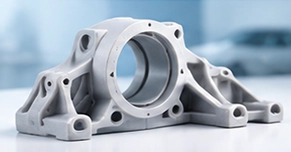
Prototype components faster, check fit and assembly, and validate functional designs before committing to production tooling.
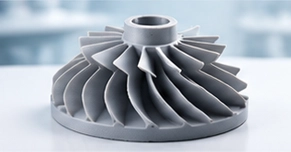
Develop lightweight and complex components, test design concepts, and iterate structures while reducing material and development constraints.
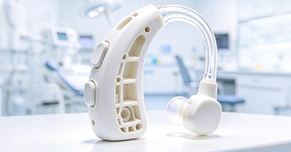
Create customized models, prototypes, tooling, and application-specific components to support product development and design validation.
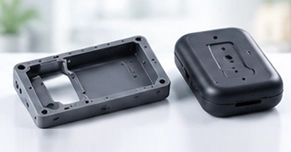
Quickly test enclosures, housings, buttons, brackets, and ergonomic designs before finalizing your product design.
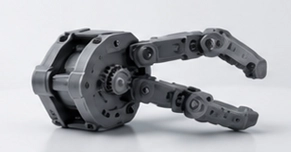
Produce customized fixtures, jigs, replacement parts, and machine components without waiting for conventional tooling.
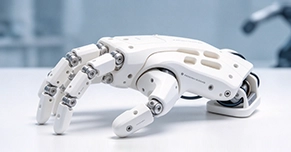
Build and modify lightweight frames, grippers, brackets, and housings quickly as you test different robotic configurations.
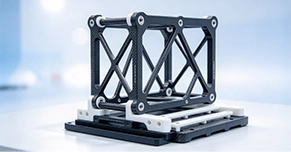
Turn CAD designs into physical prototypes quickly so you can evaluate form, fit, function, and make faster design iterations.
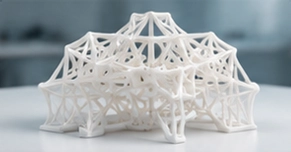
Create customized experimental models and functional prototypes to test concepts, demonstrate designs, and support research projects.
Comment ça marche
At PCBMASTER, our 3D Printing process is designed to take you from a digital 3D CAD file to finished 3D printed parts through a structured manufacturing workflow.
Submit your STL, STEP, 3MF, or other supported 3D model files so our team can understand your part geometry and manufacturing requirements.
Your design is reviewed for geometry, wall thickness, dimensions, tolerances, overhangs, and overall 3D Printing manufacturability before production.
Choose a suitable 3D Printing technology based on your required accuracy, strength, material, part geometry, quantity, surface finish, budget, and lead time.
Select a suitable 3D Printing material, such as PLA, ABS, PETG, Nylon, Resin, TPU, carbon-fiber-reinforced polymers, or metal, according to your application.
Your approved design is converted into physical 3D printed parts using the selected 3D Printing process and manufacturing parameters.
Depending on your requirements, your 3D printed parts can undergo processes such as support removal, cleaning, sanding, surface finishing, or painting.
Your finished 3D printed parts are checked for dimensional accuracy, appearance, and specified critical requirements.
After inspection, your 3D printed parts are properly packaged and prepared for delivery according to your project requirements.
Études de cas
Different 3D Printing projects require different approaches to geometry, material, accuracy, strength, and production volume.
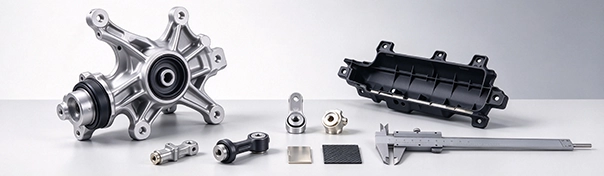 01
A functional automotive component prototype with complex curved surfaces and multiple mounting features.
The customer needed a functional automotive component prototype with complex curved surfaces and multiple mounting features. The main challenge was validating fit, assembly, and function before committing to production tooling. PCBMASTER reviewed the CAD model and selected a suitable 3D Printing process and material to produce the functional prototype.
Faster design validation and more flexible design iteration.
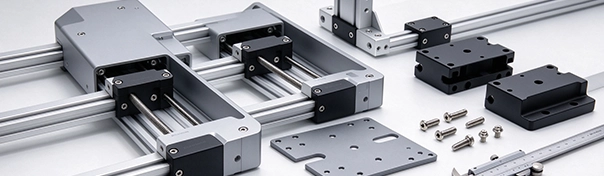 02
A customized replacement component for existing industrial equipment.
The customer needed a customized replacement component for existing industrial equipment, but conventional tooling was inefficient for the required quantity. PCBMASTER reviewed the available CAD data and dimensional requirements, then selected an appropriate 3D Printing technology and material to manufacture the replacement part directly from the digital design.
A flexible 3D Printing solution for customized, low-volume replacement parts without dedicated tooling.
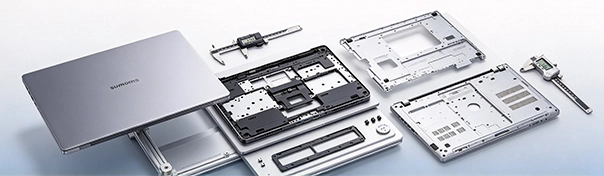 03
A new consumer electronics housing evaluated for appearance, dimensions, and assembly interfaces.
The customer was developing a new consumer electronics housing and needed to evaluate its appearance, dimensions, and assembly interfaces before finalizing the design. PCBMASTER selected a high-resolution 3D Printing process suitable for the housing geometry and surface requirements, producing a detailed physical prototype for design validation.
Faster form, fit, and appearance testing before final production.
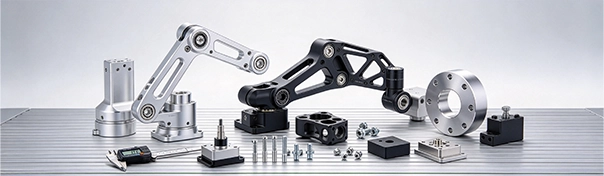 04
Lightweight customized structural components for a robotic prototype.
The customer needed lightweight customized structural components for a robotic prototype, with complex geometry and multiple mounting interfaces. Because the design was expected to change during testing, PCBMASTER selected a suitable 3D Printing technology and material that allowed updated CAD designs to be reproduced efficiently.
Greater design flexibility and faster iteration during robotic development.
Avis des clients
 “
"We needed the housing prototype pretty quickly, and the 3D printed parts came out very close to our CAD design. It made the fit check much easier than expected."
 “
"I was mainly concerned about the complex geometry and whether the material would hold up for testing. PCBMASTER helped us choose the right 3D Printing option, and the prototype worked well for our first round of functional testing."
 “
"What I liked most was how easy it was to make another version. We changed a few details in the CAD file and quickly had an updated 3D Printing prototype to test. That saved us a lot of back-and-forth."
Resource Guide
Choosing the right 3D Printing service involves more than selecting a printing technology. The following guide answers common questions to help you plan your 3D Printing project more effectively.
The cost of 3D Printing depends on more than the size of your finished part. When you request a 3D Printing quote, the manufacturing process, material, geometry, quantity, and post-processing requirements can all affect the final price.
For this reason, there is no single standard 3D Printing cost for every project. Providing your CAD file, material requirements, quantity, and application details allows the 3D Printing quote to be evaluated against your actual requirements.
3D Printing can shorten the time between a digital design and a physical prototype, but printing time is not the same as total lead time. Your actual 3D Printing lead time can include several stages: Engineering Review to Quotation to Production Queue to 3D Printing to Post-Processing to Inspection to Shipping.
A relatively simple part may print quickly but still require additional time for engineering review, production scheduling, finishing, inspection, and delivery. Larger parts, complex geometries, multiple parts, special materials, or additional post-processing can also affect the overall schedule. If you need a 3D Printing prototype for an urgent development project, provide your CAD files and required delivery date when requesting a quote.
The right 3D Printing material should match how you intend to use the finished part. Instead of choosing a material based only on price or appearance, consider the mechanical, thermal, chemical, and visual requirements of your application.
| Requirement | What You Should Consider |
|---|---|
| Strength | Choose a material capable of handling the expected mechanical load and impact. |
| Flexibility | Flexible materials such as TPU may be more suitable for parts that need to bend or compress. |
| Temperature | Consider the operating and environmental temperature of the finished part. |
| Chemical Resistance | Evaluate exposure to oils, solvents, cleaning agents, or other chemicals. |
| Appearance | Consider surface smoothness, detail, color, and overall visual requirements. |
| Weight | Polymer-based materials can be useful when lightweight parts are required. |
| Wear Resistance | Mechanical and moving components may require materials with suitable durability and wear resistance. |
| Candidature | Match the material to whether you need a concept model, functional prototype, fixture, replacement part, or production component. |
3D Printing and CNC machining are both useful for prototypes and custom parts, but they manufacture components in fundamentally different ways. 3D Printing builds parts layer by layer, while CNC machining removes material from a solid workpiece.
| Facteur | 3D Printing | CNC Machining |
|---|---|---|
| Geometry | Well suited to complex geometries and internal structures | Excellent for many machined geometries; access can limit some features |
| Matériaux | Polymers, resins, reinforced materials, and selected metals | Wide range of metals, plastics, and engineering materials |
| Accuracy | Technology and process dependent | Generally high and process dependent |
| Finition de surface | Technology and post-processing dependent | Generally good with appropriate tooling and machining |
| Tooling | Usually does not require dedicated tooling | Does not normally require molding tooling |
| Design Freedom | High for complex and customized geometries | Depends on tool access and machining strategy |
| Faible volume | Suitable for prototypes and customized parts | Suitable for prototypes and low-volume machined parts |
| Coût | Often attractive for complex, customized, or low-volume parts | Can be attractive when geometry and material are well suited to machining |
| Lead Time | Can support rapid design iteration | Depends on programming, setup, machining, and finishing |
Choose 3D Printing when complex geometry, rapid iteration, customization, or tooling-free production is important. CNC machining may be more appropriate when you need specific material properties, machined surfaces, tight dimensional requirements, or a geometry that is well suited to subtractive manufacturing.
The choice between 3D Printing and injection molding often depends on where you are in the product development cycle. 3D Printing is particularly useful when your design is still changing. You can manufacture a 3D Printing prototype, test the fit and function, modify your CAD model, and produce another version without creating a new mold.
| Facteur | 3D Printing | Injection Molding |
|---|---|---|
| Development Stage | Prototype, validation, iteration | Production after design is finalized |
| Tooling | Generally no dedicated mold | Requires injection molding tooling |
| Changements de conception | Easy to implement through CAD revisions | Mold changes may require additional cost and time |
| Production Volume | Prototypes and low-volume parts | Medium- to high-volume production |
| Initial Investment | Generally lower without mold tooling | Higher due to tooling investment |
| Unit Cost at High Volume | Can become less economical | Often benefits from high-volume production |
| Customization | Highly flexible | Less flexible once tooling is established |
| Speed for Design Iteration | Well suited to rapid iterations | Better after the design is finalized |
For prototypes and low-volume production, 3D Printing can help you validate a product before making a significant tooling investment. Once your design, dimensions, materials, and production requirements are stable, injection molding may become a suitable option for larger-scale manufacturing.
Questions fréquentes
Before ordering custom 3D printed parts, you may need to confirm part quality, tolerances, CAD requirements, material performance, minimum quantity, and design manufacturability.
The quality of 3D printed parts depends on several factors, including the selected 3D Printing technology, material, layer resolution, part geometry, build orientation, printing parameters, and post-processing. Your required dimensional accuracy and surface finish also influence the appropriate process. For functional parts, mechanical requirements such as strength, flexibility, and wear resistance should be considered together with appearance. When you request a 3D Printing quote from PCBMASTER, providing your CAD file and application requirements helps our engineers evaluate the appropriate manufacturing approach.
3D Printing tolerances vary according to the printing technology, material, part size, geometry, and critical feature. Small or complex features may require different manufacturing considerations than larger structural areas. Instead of applying one tolerance value to every 3D printed part, you should identify the dimensions that are critical to fit, assembly, or function. PCBMASTER can review your drawings or CAD files and help determine whether the selected 3D Printing process is appropriate for your dimensional requirements.
Build orientation can affect the dimensional accuracy, surface finish, support requirements, printing time, and mechanical performance of a 3D printed part. The orientation of the model determines how features are formed layer by layer and where supports may be required. For functional prototypes, orientation can also influence the strength of different areas of the part. PCBMASTER can evaluate your part geometry and recommend a suitable orientation based on your 3D Printing requirements, critical dimensions, and intended application.
There is no single strongest 3D Printing material for every application. Material performance depends on what you mean by strength, such as tensile strength, impact resistance, stiffness, fatigue resistance, or wear resistance. Nylon, reinforced polymers, and metal 3D Printing materials can be considered for different demanding applications, while the appropriate choice depends on the part's geometry and operating conditions. When selecting a material, you should also consider temperature, chemical exposure, weight, and required flexibility rather than strength alone.
For flexible 3D printed parts, TPU 3D Printing is a common option because TPU provides elasticity and flexibility. It can be suitable for components such as grips, protective parts, gaskets, seals, and other designs that need controlled deformation. However, the required hardness, flexibility, durability, and operating environment should be considered before choosing a material. If you are unsure which 3D Printing material is appropriate, provide your CAD file and application requirements to PCBMASTER for an engineering evaluation.
Your CAD file should accurately represent the final part geometry and include the dimensions and design features required for manufacturing. Commonly used 3D model formats include STL, STEP, and 3MF, depending on the service provider and workflow. Before ordering Custom 3D Printing, check wall thickness, holes, clearances, overhangs, assembly interfaces, and critical dimensions. If your design has complex geometry or tight functional requirements, PCBMASTER can review the model during the engineering stage and identify potential 3D Printing issues before production.
There is no universal wall thickness that applies to every 3D Printing project. The appropriate value depends on the selected technology, material, part size, geometry, orientation, and intended function. Very thin walls may be difficult to print consistently, while unnecessarily thick walls can increase weight, material usage, and production time. For custom 3D printed parts, you should consider both structural requirements and manufacturing limitations. PCBMASTER can review your CAD geometry and recommend suitable design considerations based on the selected 3D Printing process.
Yes. Design review is particularly useful when you are ordering Custom 3D Printing for the first time or when a part has complex geometry, critical dimensions, or functional requirements. An engineering review can identify potential issues involving wall thickness, overhangs, orientation, tolerances, assembly interfaces, and material selection before production. PCBMASTER can review your 3D CAD file and discuss the appropriate 3D Printing technology, material, and manufacturing approach based on your project requirements.
3D Printing is well suited to prototypes and low-volume production because it does not normally require conventional production tooling for each customized part. The practical minimum quantity depends on your project, part design, selected technology, material, and production requirements. You can discuss quantities ranging from individual 3D Printing prototypes to customized low-volume batches with PCBMASTER. When requesting a 3D Printing quote, provide your required quantity so the manufacturing method and pricing can be evaluated according to your specific project.
Before ordering custom 3D printed parts, you should confirm the CAD file, material, 3D Printing technology, critical dimensions, tolerances, surface finish, quantity, application requirements, and delivery expectations. You should also identify any features that are essential for assembly or functional testing. Providing complete information helps reduce unnecessary design revisions and quotation delays. With PCBMASTER, you can submit your 3D CAD file and project requirements for review and discuss a suitable Custom 3D Printing Service before production.
Commencer
Need custom 3D printed parts or a 3D Printing prototype? Submit your design and key requirements to PCBMASTER. Our engineers can review your project and help determine the right 3D Printing technology, material, and solution.