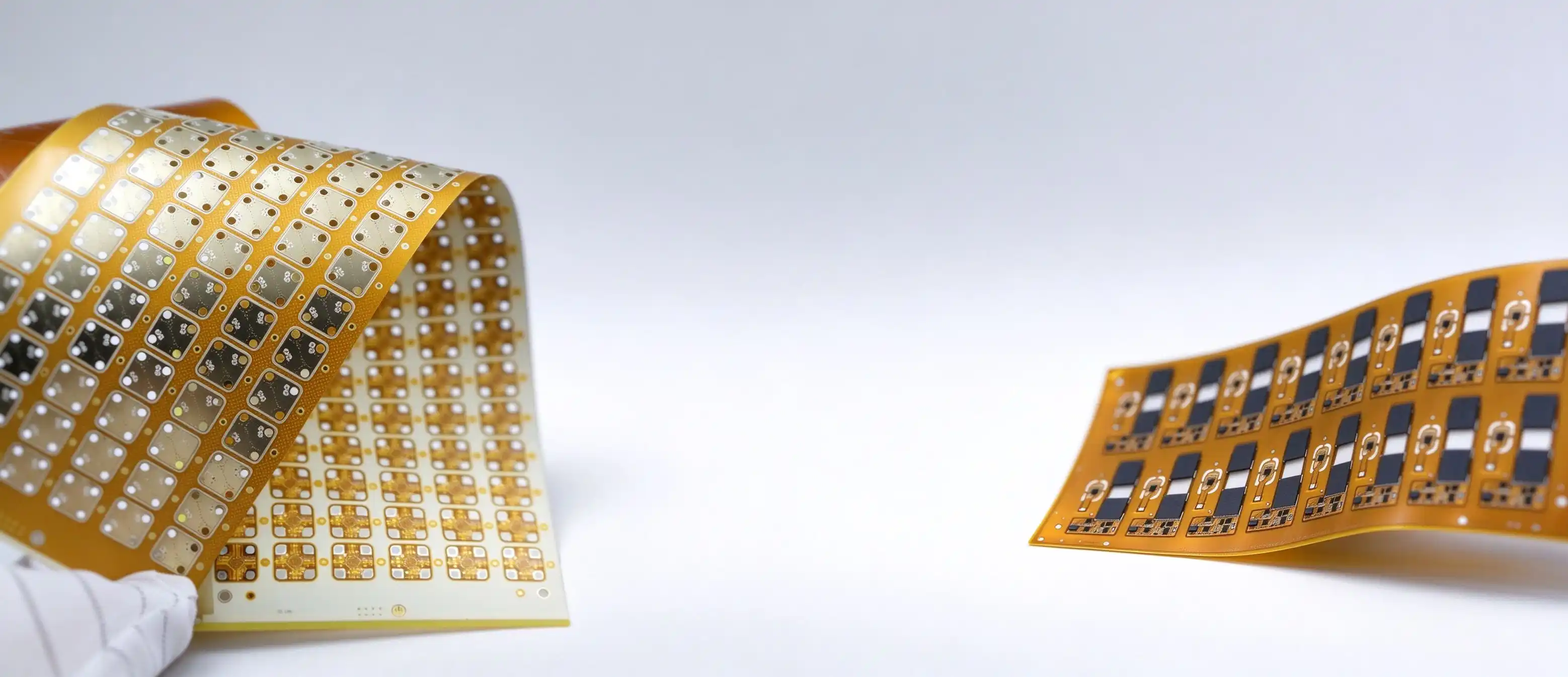
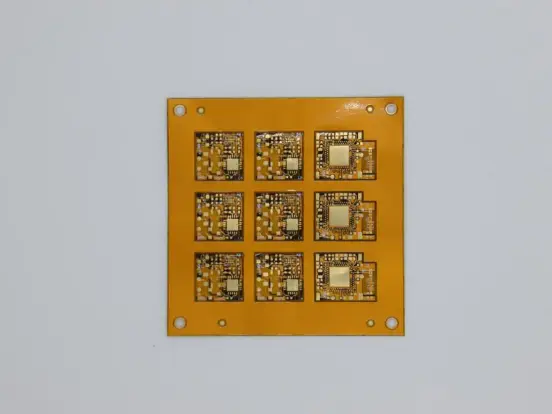
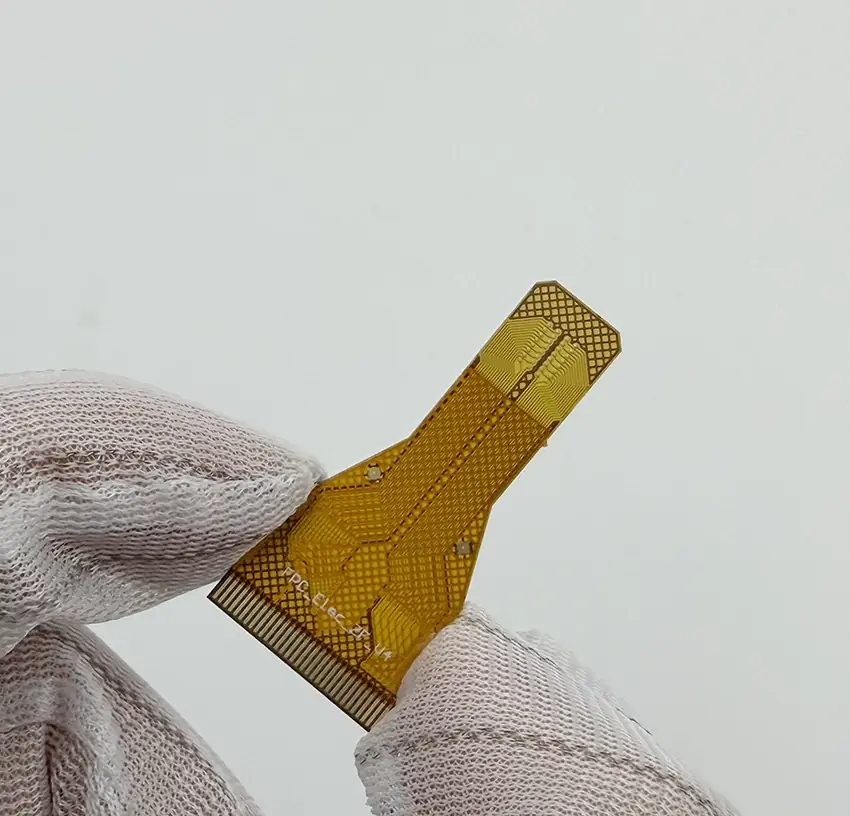
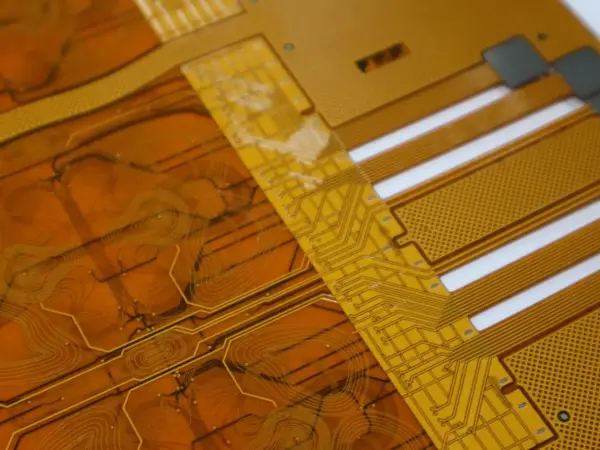
Polyimide PCB ManufacturerHigh-Temperature and Flexible Applications
Get custom Polyimide PCBs engineered around your thermal, mechanical, and electrical requirements. PCBMASTER combines material expertise, flexible circuit manufacturing, and quality-focused production to support demanding electronic applications.
Stable Polyimide Material Supply
Consistent material availability for reliable production.
Fine-Line PCB Fabrication
Trace width and spacing down to 25μm.
Flexible & Rigid-Flex Expertise
Custom PI-based constructions for complex designs.
Quality-Controlled Manufacturing
Comprehensive inspection and electrical testing before shipment.
Why Choose PCBMASTER for Polyimide PCB Manufacturing?
✓
When you choose PCBMASTER for polyimide PCB manufacturing, you get engineering support tailored to your design requirements. Our team can review your PCB files, evaluate stack-up configurations, and identify potential manufacturing challenges before production, helping you reduce design revisions and improve manufacturing readiness.
✓
Whether you need a custom flexible PCB or a rigid-flex PCB, we help you assess suitable manufacturing options based on your board structure, electrical specifications, and application requirements. Our engineering review supports informed decisions on material selection, copper thickness, coverlay, stiffeners, and other design details.
✓
From prototype development to production planning, PCBMASTER works with you to clarify technical specifications, coordinate manufacturing requirements, and establish appropriate quality checks. We aim to make your polyimide PCB sourcing process more straightforward through responsive communication and project-specific support.
✓
By aligning manufacturing decisions with your technical and commercial priorities, PCBMASTER helps you move your custom polyimide PCB project from design review toward production with greater confidence.
Certified Quality and Compliance for Polyimide PCB Manufacturing
PCBMASTER supports your Polyimide PCB projects with quality-focused manufacturing processes and recognized certifications.
IATF 16949
ISO 9001
Certificación UL
Conformidad RoHS
What Is a Polyimide PCB?
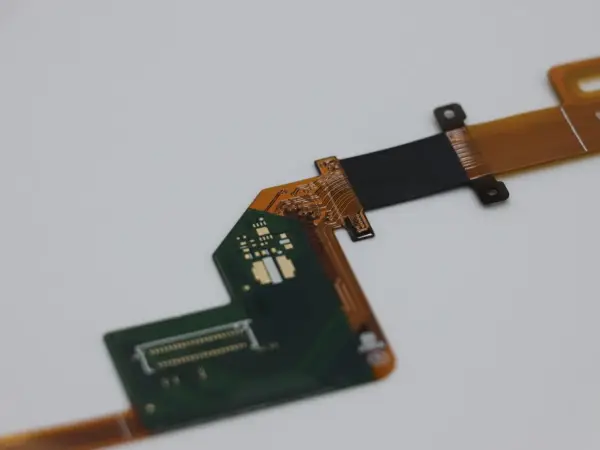
A Polyimide PCB is a printed circuit board that uses polyimide (PI) as an insulating substrate or dielectric material. It is commonly used in flexible printed circuit boards (FPCs) and rigid-flex PCBs, where polyimide provides flexibility, heat resistance, and thermal stability. These properties make Polyimide PCB Material suitable for compact electronic designs, space-constrained assemblies, and applications exposed to elevated temperatures.
In flexible circuits, polyimide serves as the base film that supports conductive copper traces while allowing the circuit to bend or conform to different shapes. In multilayer and rigid-flex constructions, it can also function as an insulating layer between conductive layers, supporting more complex circuit layouts and interconnections.
Although polyimide is widely used in flexible and rigid-flex circuits, it can also be incorporated into certain rigid PCB structures. Therefore, not all Polyimide PCBs are flexible; their physical structure depends on the materials and construction used in the design.
Polyimide · PI
The high-performance flexible dielectric
Used as the base film and insulating layer in FPCs and rigid-flex boards — enabling bendable, heat-resistant, and lightweight circuit constructions.
Polyimide PCB materials offer several performance advantages that help engineers address thermal demands, space constraints, and manufacturing requirements in electronic applications.
Heat Resistance
Maintains thermal stability at continuous-use temperatures up to 232°C, helping protect circuit performance in high-temperature operating environments.
Flexibility
Flexible PI films allow circuits to bend and fit into confined spaces, providing greater freedom in component placement and circuit routing.
Thermal Stability
Stable material properties during thermal exposure help minimize material-related changes during soldering and other heat-intensive processes.
Dimensional Stability
Maintaining substrate dimensions during specified processing conditions supports precise circuit alignment and consistent manufacturing results.
Chemical Resistance
Resistance to selected chemicals helps preserve material integrity during compatible manufacturing processes and under specific operating conditions.
Lightweight Design
Thin polyimide films enable lightweight circuit constructions, benefiting compact and weight-sensitive electronic assemblies.
Polyimide PCB Solutions for Demanding Electronic Applications
Polyimide PCBs serve specialized functions across industries by providing circuit interconnections, compact routing, and suitable thermal or mechanical performance.
Aerospace Electronics
Routes signals between avionics modules, navigation systems, and sensors while accommodating tight packaging and weight constraints.
Electrónica de automoción
Connects sensors, control units, and displays, enabling compact wiring layouts within vehicle electronic modules.
Medical Devices
Carries signals between sensing elements and processing circuits in diagnostic instruments and patient monitoring equipment.
Wearable Electronics
Routes power and data through curved device housings, allowing circuits to follow compact wearable product geometries.
Industrial Equipment
Connects temperature sensors, control boards, and monitoring circuits in equipment operating under demanding thermal conditions.
Electrónica de consumo
Links cameras, displays, and mainboards through narrow spaces where conventional rigid interconnections may be impractical.
Telecomunicaciones
Carries high-frequency signals between RF components and communication modules when the selected material system meets electrical requirements.
Sensors and Instrumentation
Connects sensing elements to signal-conditioning circuits, enabling compact signal acquisition and measurement assemblies.
Robotics and Automation
Routes control signals and power through moving joints, reducing bulky wiring in compact robotic assemblies.
Explore Custom Polyimide PCB Types for Your Application
Choose from different Polyimide PCB configurations based on circuit structure, mechanical requirements, and material properties. PCBMASTER supports customized PCB manufacturing solutions to meet specific design, fabrication, and application requirements.
Polyimide PCB Types by Circuit Structure
Single-Sided Polyimide Flex PCB
A single conductive layer simplifies circuit routing while supporting thin, lightweight designs for applications with straightforward interconnection requirements.
Double-Sided Polyimide Flex PCB
Conductive layers on both sides provide more routing options and higher circuit density without requiring a multilayer structure.
Multilayer Polyimide Flex PCB
Multiple conductive layers accommodate complex interconnections within compact flexible assemblies where single- or double-sided routing is insufficient.
Polyimide PCB Types by Mechanical Requirements
Rigid-Flex Polyimide PCB
Integrated rigid sections and flexible connections simplify assembly when components and interconnections must fit into a unified structure.
Polyimide PCB with Stiffeners
Localized reinforcement improves connector support and component-mounting stability in areas where flexible circuits need additional rigidity.
Polyimide PCB Types by Material and Performance Requirements
Adhesiveless Polyimide Flex PCB
An adhesive-free copper-to-polyimide structure supports thin circuit designs and applications with specific material and dimensional requirements.
High-Temperature Polyimide PCB
Heat-resistant material systems support applications requiring PCB materials rated for elevated operating or processing temperatures.
Polyimide PCB Engineering Solutions and Case Studies
With extensive expertise in polyimide PCB engineering and manufacturing, PCBMASTER delivers customized solutions that address complex design challenges, optimize space utilization, improve assembly efficiency, and support reliable performance across demanding electronic applications.
CASE 01
Precision Polyimide Flex PCB for Space-Constrained Electronic Devices
A customer developing a compact electronic device needed a flexible circuit that could fit within a narrow housing while maintaining reliable electrical connections and meeting strict space constraints. A conventional rigid PCB could not accommodate the required routing path. PCBMASTER’s engineering team developed a single-sided polyimide flex PCB using a 25 μm polyimide base film and 18 μm copper foil, balancing circuit flexibility, conductor layout, and mechanical reliability.
To address the installation challenges, our engineers optimized the circuit outline, routing paths, and connector interfaces according to the available internal space. Localized stiffeners reinforced connector areas, improving mechanical support during assembly and repeated mating. By combining material selection with detailed layout optimization, PCBMASTER delivered a compact flexible circuit solution that followed the device’s internal geometry, reduced interconnection constraints, and supported a thinner, lighter product design.
CASE 02
High-Temperature Polyimide FPC for Severe Thermal Conditions
While developing an electronic control module rated for 150°C, our client needed a flexible interconnection solution that retains stable electrical performance and structural integrity under intense heat. The PCBMASTER engineering team evaluated polyimide substrate options, copper thickness and stack-up configuration to match fine-pitch routing requirements, delivering a custom FPC solution that meets both thermal and electrical specs.
This design features a 0.20mm overall thickness with 35μm copper for conductive layers. Beyond high-temperature PI material selection, our engineers took reflow temperature, dimensional stability under heat, copper distribution and long-term thermal aging into account. This integrated engineering methodology balances material properties and flexible circuit structure, helping our client realize high-temperature electronics without compromising fine circuit layout or electrical function.
CASE 03
Four-Layer Polyimide Flex PCB for High-Density Circuit Routing
As a customer’s electronic product evolved toward a smaller form factor, a double-sided flexible PCB no longer provided sufficient routing capacity for the increasingly complex circuit connections. PCBMASTER developed a four-layer polyimide multilayer flex PCB featuring 18 μm copper foil and a target finished thickness of 0.25 mm, creating additional routing capacity within a compact footprint.
Our engineering team optimized the layer stack-up, via arrangement, and conductor routing to accommodate complex interconnections while preserving the flexibility required by the application. Special attention was given to copper distribution and via placement in areas exposed to bending, helping manage mechanical stress and maintain circuit integrity. By coordinating multilayer design, material selection, and fabrication considerations, PCBMASTER provided a high-density flexible circuit solution that supported more complex electrical connections without increasing the circuit outline.
CASE 04
Custom Rigid-Flex Polyimide PCB for Integrated Electronic Systems
When a customer needed to connect multiple rigid circuit sections within a compact electronic product, separate rigid PCBs and connecting cables complicated internal routing and assembly. PCBMASTER engineered a custom rigid-flex PCB with a four-layer copper structure, 1.0 mm rigid sections, and a 0.20 mm flexible section, integrating component-mounting areas and flexible interconnections into one coordinated circuit design.
Our engineers optimized the rigid and flexible regions, layer transitions, and routing paths to meet the product’s electrical and mechanical requirements. The rigid sections provided stable platforms for component mounting, while the polyimide-based flexible section routed signals through confined spaces without relying on multiple separate cable connections. This integrated approach simplified interconnection architecture, reduced dependence on additional connectors and cables, and supported a more compact assembly.
Get a Polyimide PCB Quote
Share your design files and technical requirements with our engineering team for a Polyimide PCB manufacturing review and quotation.
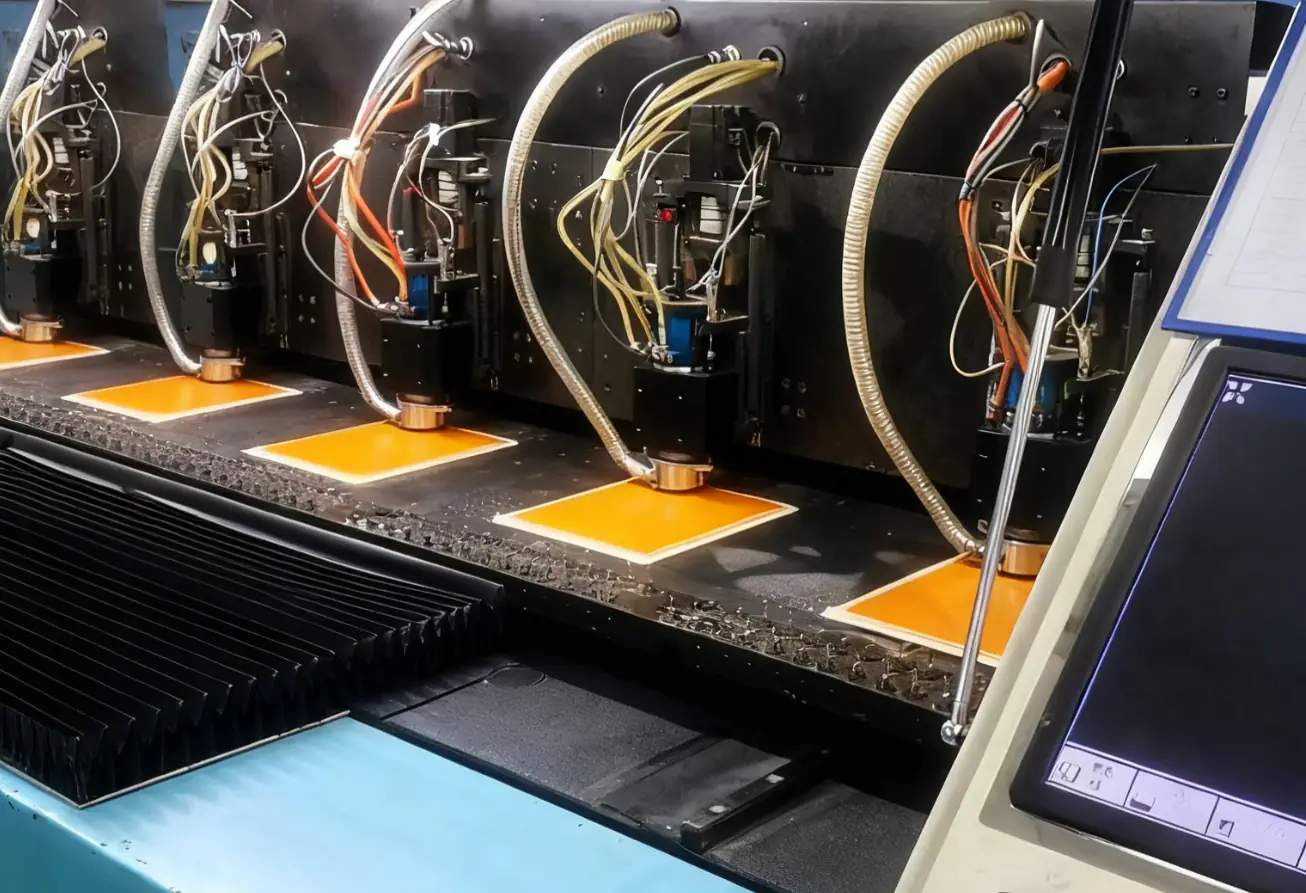
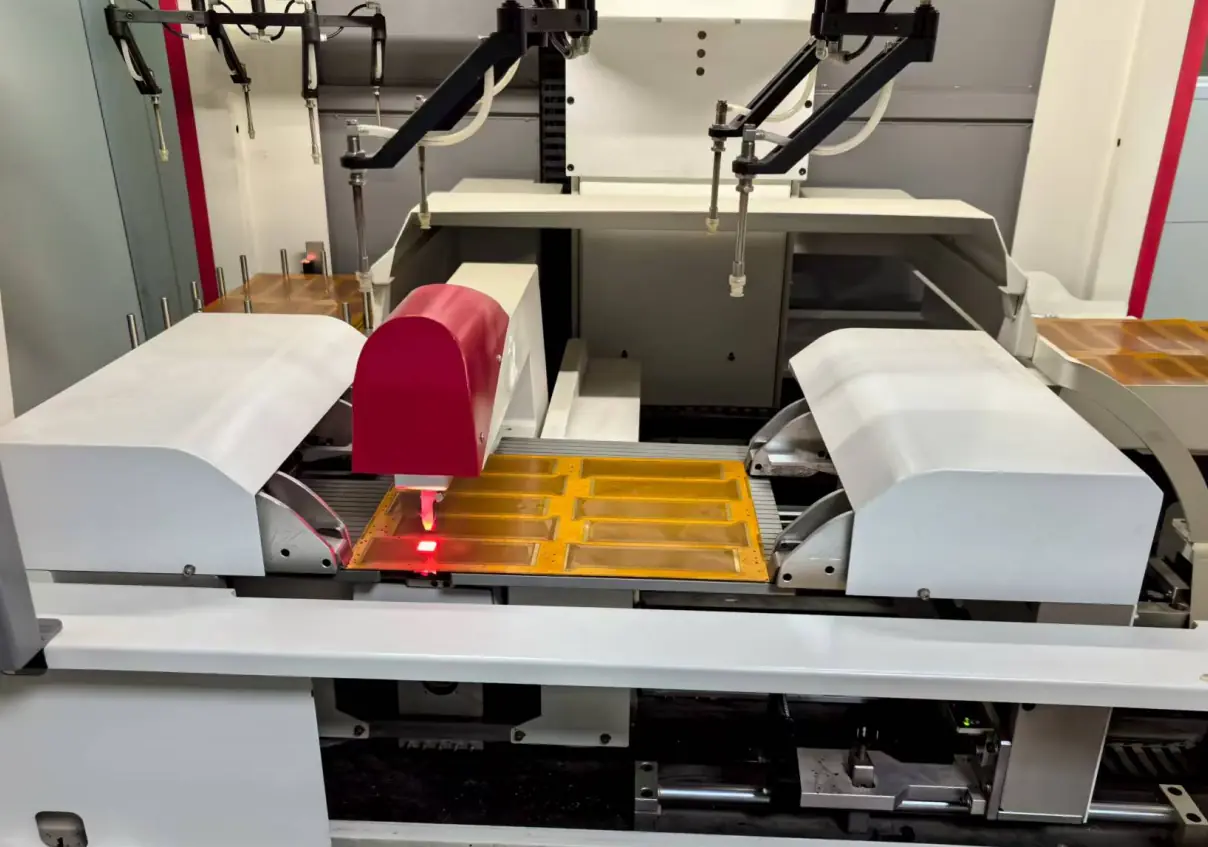
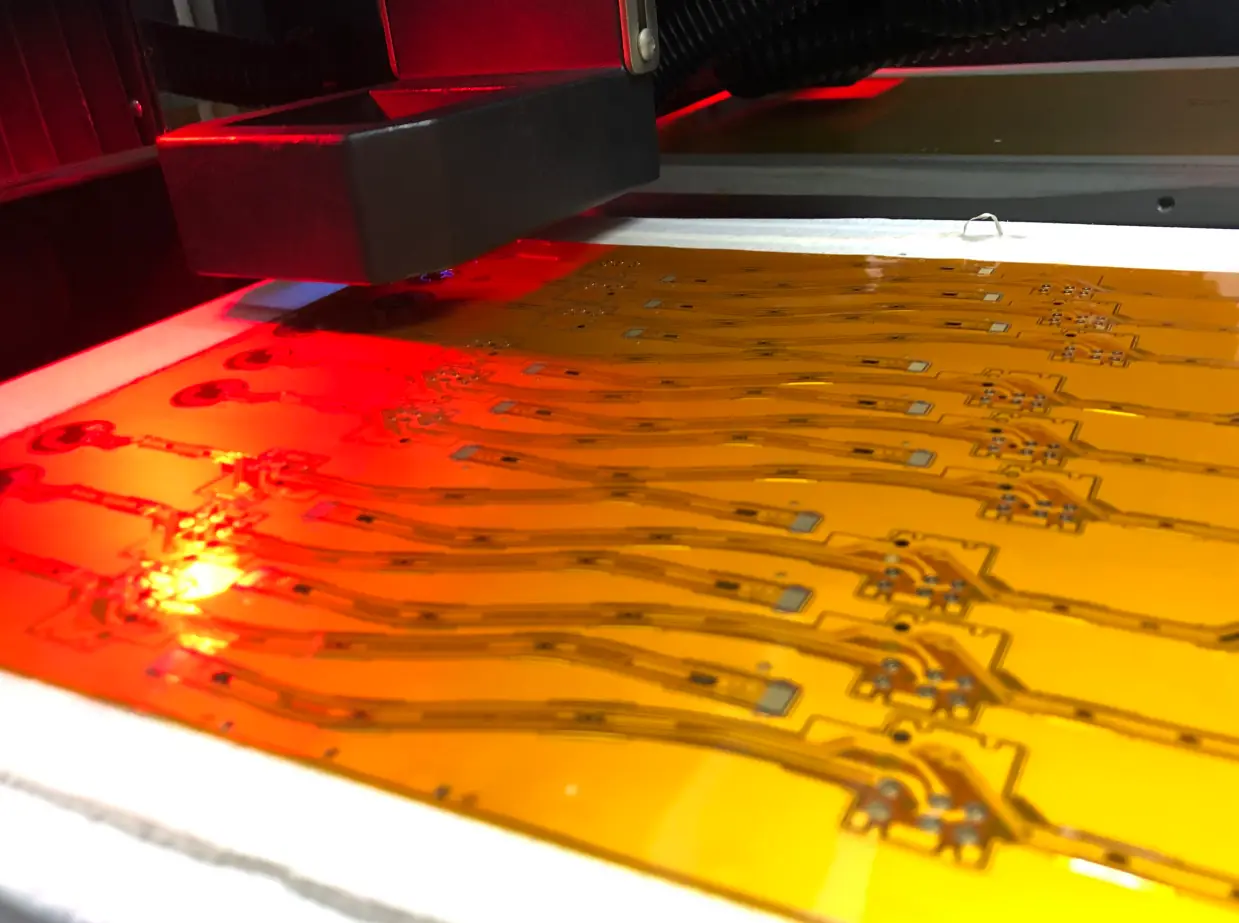
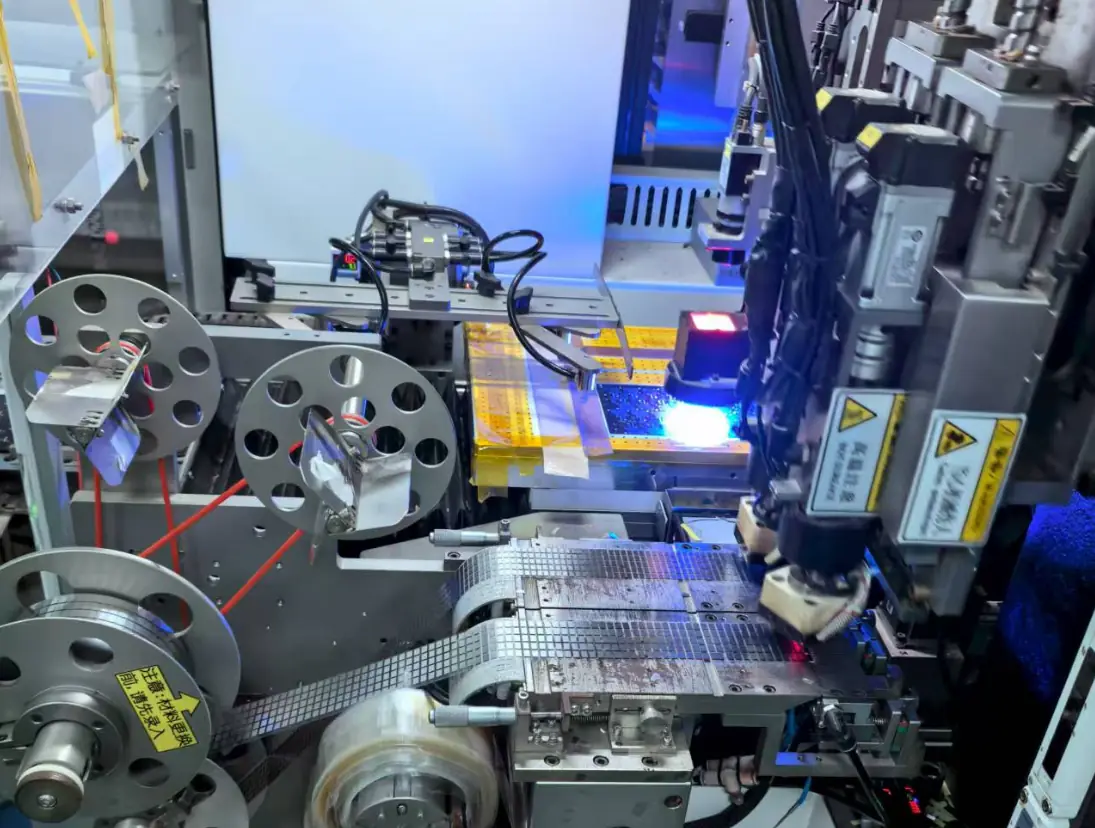
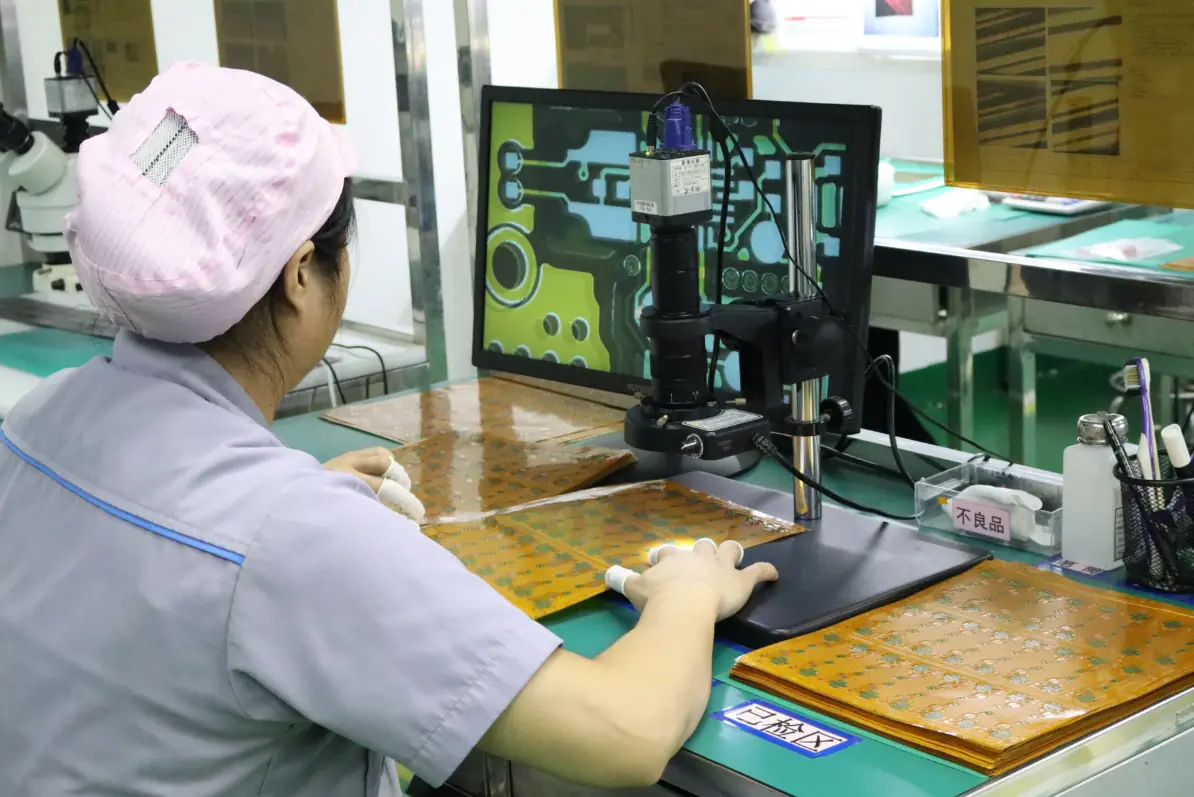
Take a look at our FPC production floor, where polyimide flexible circuits are fabricated under controlled processes — from material preparation and lamination to fine-line imaging, bonding, and electrical inspection.
Ready to Build Your Custom Polyimide PCB?
Get the right Polyimide PCB for your application with PCBMASTER’s engineering support, material selection guidance, and customized manufacturing solutions. Share your design files and technical requirements to receive a tailored quotation for your project.
What Customers Say About PCBMASTER’s Polyimide PCB Services
From material selection and design review to quality control and delivery coordination, PCBMASTER helps you overcome Polyimide PCB manufacturing challenges, maintain consistent product quality, and keep your projects on schedule.
“
Engineering Support for Polyimide PCB Design
“With a Polyimide PCB, material selection and bending requirements have to be considered together. We needed a flexible circuit that would fit a tight mechanical layout without compromising the electrical design. PCBMASTER’s engineering team helped us review the material and routing requirements early in the process. I appreciated that the discussion focused on practical design constraints, not just whether the files could be manufactured.”
Ryan Mitchell · Hardware Design Engineer · Industrial Electronics · United States“
Manufacturing Consistency and Polyimide PCB Quality
“I pay close attention to inspection results and consistency between batches. For our Polyimide PCB project, we needed confidence that the manufactured circuits would continue to meet the specified requirements as production progressed. PCBMASTER’s attention to fabrication details and electrical testing gave us a clearer basis for evaluating product quality and moving forward with production.”
Sophie Laurent · Quality Assurance Engineer · Medical Electronics · France“
Delivery Coordination for Polyimide PCB Orders
“From a purchasing perspective, a competitive quotation is only part of the decision. Material availability and production scheduling matter just as much, especially when a Polyimide PCB is needed for a product development milestone. PCBMASTER kept us informed about the order’s progress and coordinated the production schedule with our requirements. That made it easier for our team to plan the next stage of the project.”
Michael Anderson · Procurement Manager · Consumer Electronics · United States“
Clear Communication During Polyimide PCB Development
“Our Polyimide PCB project went through several design revisions, and we needed quick, specific answers whenever the drawings or mechanical requirements changed. What I valued was the direct communication with PCBMASTER’s team. Instead of treating each revision as a simple file replacement, they discussed the manufacturing implications with us. That helped our development team resolve technical questions and keep the project moving.”
Daniel Weber · Product Development Engineer · Automotive Electronics · Germany
Preguntas frecuentes Polyimide PCB
Polyimide (PI) and polyethylene terephthalate (PET) are both used as flexible circuit substrates, but they suit different operating and manufacturing conditions. Polyimide is generally preferred for applications requiring higher temperature resistance, thermal stability, or compatibility with demanding soldering processes. PET is often considered for cost-sensitive applications with less demanding thermal requirements. When comparing these materials, evaluate the specific material grade, assembly temperature, operating environment, electrical requirements, and expected bending conditions rather than relying on the material name alone.
Polyimide PCB is worth considering when your design requires flexible interconnections, a thin profile, or improved thermal performance under specified conditions. FR-4 is widely used for rigid circuit boards that need structural support and cost-effective fabrication. However, PI and FR-4 are not strictly mutually exclusive categories: polyimide can be used in flexible circuits and certain rigid or rigid-flex constructions. Your choice should depend on the required board structure, mechanical layout, operating temperature, assembly process, and electrical performance.
Start by evaluating the actual operating conditions and mechanical requirements of your product. Consider temperature range, chemical exposure, electrical performance, available installation space, and whether the circuit will remain stationary or undergo repeated bending. For dynamic-flex applications, copper type, layer count, bend radius, and expected flex cycles are particularly important. Polyimide PCB suitability depends on the specific material grade and complete circuit construction, so sharing your application requirements with your manufacturer helps identify an appropriate design.
Polyimide PCB pricing depends on board dimensions, layer count, copper thickness, material grade, trace width and spacing, surface finish, coverlay, stiffeners, and order quantity. Multilayer flexible circuits and rigid-flex boards generally involve more complex processing than simpler single-sided designs. Tight tolerances and specialized electrical or mechanical requirements can also increase costs. For an accurate quotation, provide your fabrication files, stack-up requirements, technical specifications, order quantity, and target delivery date. Complete information helps reduce uncertainty during engineering review and quotation.
Lead time depends on material availability, design complexity, layer count, fabrication processes, inspection requirements, order quantity, and whether PCB assembly is included. Multilayer flexible circuits and rigid-flex boards may require additional engineering review and processing steps. Incomplete design files or late engineering changes can also affect the production schedule. When requesting a quotation, specify whether you need prototypes, pilot production, or volume manufacturing, along with your target delivery date. This allows the manufacturer to assess the schedule against the project's technical requirements.
Prototype production allows you to evaluate mechanical fit, electrical performance, assembly compatibility, and circuit behavior before committing to larger quantities. For flexible circuits, testing should also address bend radius, connector reliability, and mechanical stress during installation or operation. To support prototype evaluation, provide your Gerber files, stack-up information, mechanical drawings, and relevant test requirements. Before placing an order, confirm prototype availability, minimum order requirements, and lead time with your chosen manufacturer. Once the design meets your acceptance criteria, it can progress toward pilot and volume production.
Yes. Flexible and rigid-flex PCBs can be designed around specific enclosure dimensions, connector positions, mounting points, cutouts, and internal routing paths. This is particularly useful for compact products where conventional wiring or rigid boards may not fit the available space. For an effective design review, provide the mechanical drawing or 3D model, available clearance, connector specifications, and expected bending conditions. These details help the engineering team evaluate circuit geometry, identify potential interference, and determine suitable fabrication requirements.
Evaluate each manufacturer's documented capabilities against your actual design requirements. Check supported layer counts, copper thickness, minimum trace width and spacing, finished thickness, coverlay options, stiffener integration, and dimensional tolerances. Also ask about material traceability, electrical testing, inspection procedures, engineering support, and production scheduling. For demanding applications, clarify how design-for-manufacturing issues and engineering changes are handled. Reviewing capability data and quality documentation alongside price and lead time helps you select a Polyimide PCB supplier that can support your prototype and production requirements.
¿Tiene más preguntas? Nuestro equipo técnico está listo para ayudarle.
Looking for a reliable polyimide PCB manufacturing partner? Share your design files and project requirements with PCBMASTER. Our team can review your specifications, evaluate manufacturing feasibility, and help you identify suitable options for your application.
Utilizamos cookies necesarias para garantizar la funcionalidad básica del sitio (navegación, cotización, inicio de sesión) y cookies analíticas opcionales para optimizar nuestro servicio.
Sus datos son estrictamente confidenciales y nunca serán vendidos o compartidos con terceros.
Su consentimiento es voluntario y revocable.
Utilizamos cookies necesarias para garantizar la f...