








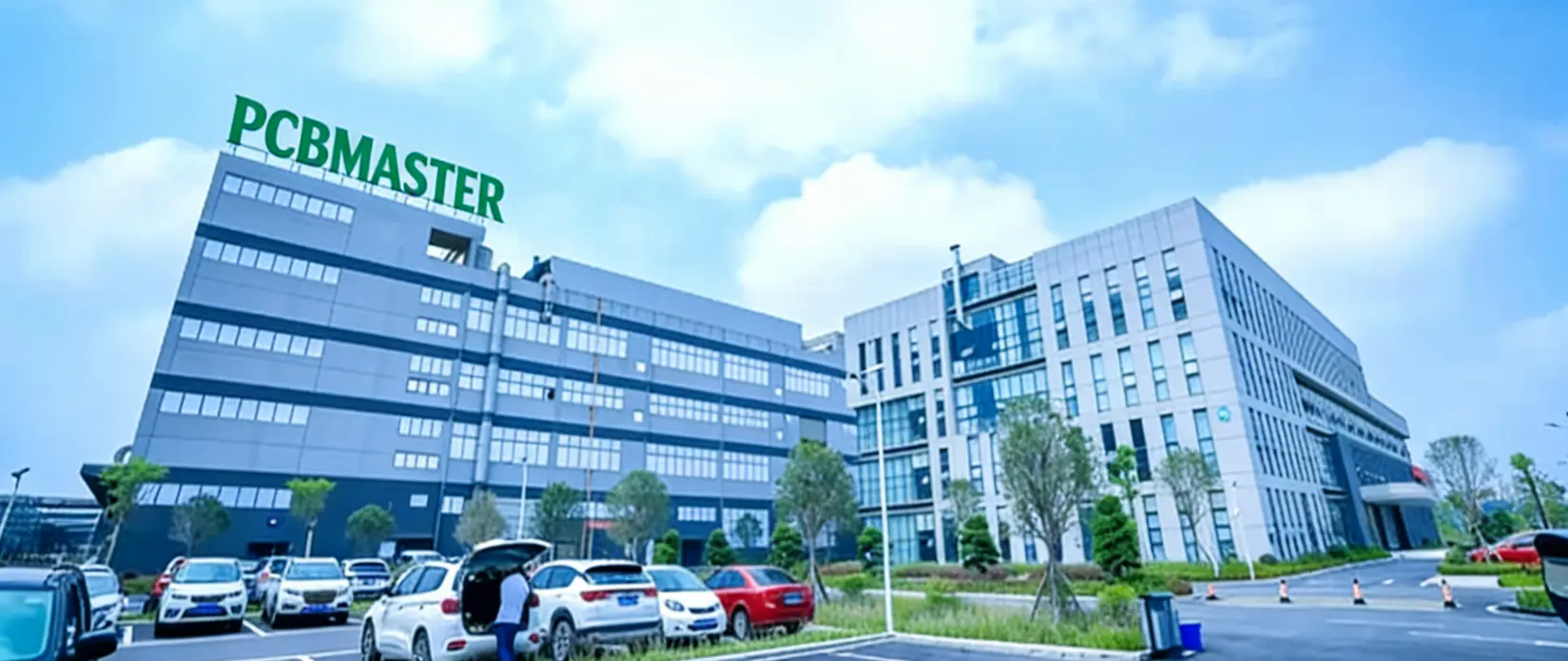
PCB Manufacturing Capabilities From Prototype to Production
From quick-turn prototypes to advanced PCB production, you get the manufacturing, material, engineering, and quality support needed to move your PCB project from design validation to production.
- ✓ 1–4 Layer Quick-Turn PCB Prototypes
- ✓ HDI, High-Speed, High-Frequency & Rigid-Flex
- ✓ Stable Material Supply for Complex PCB Projects
- ✓ Prototype-to-Mass-Production Manufacturing
Por qué PCBMASTER
Why Choose PCBMASTER for PCB Manufacturing?
Your PCB manufacturing requirements can vary by board structure, technology, material, complexity, and production volume. PCBMASTER’s PCB Manufacturing Capabilities combine broad manufacturing coverage, engineering support, material capabilities, precision fabrication, and scalable production to meet different PCB requirements. From quick-turn prototypes to small-batch and volume production, PCBMASTER can support projects with different technical specifications, material requirements, manufacturing complexities, and production stages, backed by engineering review and a stable material supply to help maintain manufacturing continuity as your project develops.
What Are PCB Manufacturing Capabilities?
PCB manufacturing capabilities define the types of PCBs, materials, technologies, and production volumes a manufacturer can support.
Your PCB requirements may vary by layer count, material, board thickness, copper weight, line/space, via structure, impedance, surface finish, board size, quantity, and application. These factors determine the appropriate PCB manufacturing process.
PCB Manufacturing Capability Workflow
PCB Manufacturing Capability Map
| capacidad | Typical Requirement |
|---|---|
| Número de capas | 1 – 64 Capas |
| Tipo de PCB | Rigid / Flexible / Rigid-Flex |
| Tecnología | HDI / High-Speed / High-Frequency |
| materiales | FR-4 / High-Frequency / Flexible / Metal / Ceramic |
| Production | Prototype / Small Batch / Mass Production |
PCB Manufacturing Capacity
Need to know whether your required PCB product and production volume can be supported? PCBMASTER combines prototype manufacturing, advanced PCB production, and volume manufacturing capabilities to support different project stages and production requirements.
0 m²/M
PCB de alta frecuencia
0 m²/M
PCB rígido-flexible
0 m²/M
PCB HDI (Interconectividad de Alta Densidad)
0 m²/M
FPC · 6,000–10,000 m²/M
0 m²/M
PCB de núcleo de metal
Submit your Gerber files and specifications, and PCBMASTER can evaluate the manufacturing requirements and recommend the appropriate PCB manufacturing process for your project.
Explore PCB Manufacturing Capabilities by Product Type
PCBMASTER’s PCB Manufacturing Capabilities cover standard, advanced, flexible, and specialty PCB types. These capabilities support different requirements for board structure, electrical performance, thermal management, mechanical integration, material selection, and production volume.
PCB estándar FR-4
Standard FR-4 PCB manufacturing supports different layer counts, board thicknesses, copper weights, and surface finishes for general electronic applications.
Quick-Turn PCB Prototype
Quick-turn PCB prototype manufacturing supports applicable 1–4 layer designs for design verification, functional testing, and early-stage product development.
PCB multicapa
Multilayer PCB manufacturing supports different layer configurations, stack-ups, via structures, and material requirements for high-density electronic designs.
PCB HDI (Interconectividad de Alta Densidad)
HDI PCB manufacturing supports high-density interconnections using microvias, blind vias, buried vias, and advanced via structures for compact PCB designs.
PCB de alta velocidad
High-speed PCB manufacturing supports controlled-impedance structures, suitable low-loss materials, and fabrication requirements for high-speed signal transmission.
PCB de alta frecuencia
High-frequency PCB manufacturing supports high-frequency and low-loss materials for RF, microwave, wireless, and communication applications.
PCB flexible/FPC
Flexible PCB manufacturing supports lightweight, bendable circuit structures for compact, space-constrained, and mechanically flexible electronic assemblies.
PCB rígido-flexible
Rigid-flex PCB manufacturing combines rigid and flexible sections to support compact three-dimensional layouts and demanding mechanical integration requirements.
Heavy Copper PCB
Heavy copper PCB manufacturing supports higher-current applications through increased copper weights, providing enhanced current-carrying and thermal capabilities.
PCB de núcleo de metal
Metal core PCB manufacturing uses thermally conductive metal substrates for LED, power electronics, and applications requiring efficient heat dissipation.
PCB cerámico
Ceramic PCB manufacturing supports applications requiring high thermal conductivity, temperature resistance, and stable electrical performance.
IC Substrate
IC substrate manufacturing supports precision interconnection structures for advanced semiconductor packaging and high-density electronic applications.
Ready to Find the Right PCB Manufacturing Solution?
PCB Manufacturing Technologies for Your Design Requirements
PCBMASTER’s PCB Manufacturing Capabilities are supported by a range of manufacturing technologies covering imaging, lamination, drilling, plating, routing, surface finishing, inspection, and electrical testing. These technologies enable the fabrication of PCBs with different structural, dimensional, electrical, and manufacturing requirements.
| Manufacturing Technology | Manufacturing Function |
|---|---|
| Capa interna de imágenes | Transfers circuit patterns onto inner-layer materials with controlled precision. |
| Etching | Forms copper circuitry according to specified line and spacing requirements. |
| Controlled Lamination | Bonds multilayer PCB structures under controlled temperature and pressure. |
| A través de la perforación | Creates through-holes and mechanical features for PCB interconnection and assembly. |
| La perforación láser | Forms microvias for HDI and high-density PCB structures. |
| Revestimiento de cobre | Builds conductive copper layers for vias and interlayer connections. |
| Solder Mask Application | Protects exposed circuitry while defining solderable areas on the PCB. |
| Surface Finishing | Applies finishes such as HASL, ENIG, and OSP according to project requirements. |
| Precision Routing | Produces board outlines, slots, cutouts, and other mechanical features. |
| AOI & Electrical Testing | Inspects PCB features and verifies electrical continuity and isolation. |
PCB Materials for PCB Manufacturing
PCBMASTER’s PCB Manufacturing Capabilities cover a range of PCB materials for different electrical, thermal, mechanical, and application requirements. Material options include standard FR-4, high-Tg and halogen-free materials, high-speed and high-frequency laminates, flexible materials, metal substrates, ceramic substrates, and other specialty materials.
Materiales de PCB estándar
- FR-4 — Widely used for general-purpose rigid PCB manufacturing across a broad range of electronic applications.
- High-Tg FR-4 — Supports applications requiring higher thermal resistance and greater thermal reliability.
- Halogen-Free Materials — Suitable for projects with specific environmental, material, or compliance requirements.
High-Speed / High-Frequency PCB Materials
- Rogers-Type Materials — Used for demanding RF and high-frequency PCB applications.
- PTFE-Based Materials — Supports high-frequency designs requiring stable electrical characteristics.
- Low-Loss Laminates — Used for high-speed and high-frequency designs where reduced signal loss is important.
Materiales flexibles de PCB
- Polyimide — Commonly used for flexible PCB and FPC manufacturing where flexibility and dimensional stability are required.
- Flexible Copper-Clad Materials — Supports lightweight, bendable circuit structures for flexible electronic applications.
Thermal / Specialty PCB Materials
- Aluminum — Provides a thermally conductive substrate for applications requiring efficient heat dissipation.
- Copper — Supports PCB applications requiring high thermal conductivity and current-carrying capability.
- Ceramic Substrates — Suitable for applications requiring high thermal conductivity, temperature resistance, and electrical stability.
PCB Material Selection Guide
Different PCB designs require different material characteristics. PCBMASTER can support material selection based on electrical performance, operating temperature, thermal requirements, mechanical constraints, application conditions, and production requirements.
| APLICACIÓN | Recommended Material Direction |
|---|---|
| General Electronics | FR-4 |
| High-Speed | Low-loss laminate |
| RF / Microwave | High-frequency material |
| Flexible Electronics | Polyimide-based material |
| High Thermal Load | Metal / Ceramic substrate |
PCBMASTER can evaluate your material requirements together with your PCB design and manufacturing specifications to determine a suitable material direction for production.
Engineering & DFM Support for PCB Manufacturing
PCB manufacturing capability depends not only on fabrication equipment and processes, but also on the ability to evaluate whether a PCB design can be manufactured as specified. PCBMASTER uses engineering and DFM review to assess design files, materials, stack-ups, impedance requirements, and manufacturing feasibility before production.
Engineering Support Before PCB Manufacturing
| Soporte de Ingeniería | How It Helps Your Project |
|---|---|
| Gerber Review | Checks PCB design files for potential manufacturing issues before production. |
| DFM Review | Identifies design features that may affect fabrication, yield, cost, or production feasibility. |
| Stack-Up Review | Evaluates layer configuration, dielectric structure, copper distribution, and overall stack-up suitability. |
| Material Recommendation | Evaluates material requirements based on electrical, thermal, mechanical, and application conditions. |
| Impedance Requirements | Reviews controlled-impedance requirements and evaluates suitable stack-up and trace parameters. |
| Manufacturing Feasibility | Determines whether specified PCB requirements can be achieved with the required manufacturing processes. |
| Production Optimization | Identifies opportunities to improve manufacturability, production consistency, and cost efficiency. |
From Design Files to PCB Manufacturing
This engineering review process helps identify potential manufacturing issues before fabrication, reducing avoidable redesigns, production delays, and manufacturing risks.
PCB Manufacturing Capabilities From Prototype to Production
From quick-turn prototypes to mass production, PCBMASTER provides the PCB Manufacturing Capabilities to support your project from design to production.
Ready to Manufacture Your PCB?
Submit your Gerber files and project requirements for a PCB manufacturing quote.
Certifications Supporting PCB Manufacturing Capabilities
PCBMASTER’s certifications support its PCB Manufacturing Capabilities by demonstrating its commitment to quality, process control, safety, and environmental requirements.

ISO 9001

IATF 16949

Certificación UL

Conformidad RoHS
PCB Manufacturing Capabilities for Demanding Electronic Applications
Different industries require different PCB structures, materials, technologies, and production specifications. PCBMASTER’s PCB Manufacturing Capabilities address application-specific electrical, thermal, mechanical, density, and interconnection requirements across demanding electronic systems.
AI y centro de datos
PCB Manufacturing Capabilities support high-speed transmission and high-density interconnection, enabling efficient connections between processors, memory, and networking components.
Automoción y EV
HDI, rigid-flex, and heavy-copper manufacturing capabilities support power distribution, sensing, and control, addressing the electrical, thermal, and mechanical demands of EV systems.
Control Industrial
Multilayer PCB manufacturing supports stable signal processing and control circuitry, integrating controllers, sensors, drives, and communication circuits in industrial systems.
COMUNICACIÓN
High-speed and high-frequency PCB manufacturing capabilities support controlled signal transmission and low-loss interconnections, serving RF, processing, and networking circuits.
Electrónica Médica
Multilayer and HDI PCB capabilities support compact circuit integration and signal acquisition, connecting sensors, processors, displays, and communication circuits.
Electrónica de consumo
HDI, flexible, and rigid-flex manufacturing capabilities support high circuit density and compact integration, accommodating processors, sensors, displays, batteries, and wireless modules.
Electrónica de Potencia
Heavy-copper and metal core PCB manufacturing capabilities support high-current transmission and thermal management, serving power supplies, converters, motor controls, and inverters.
Electrónica de seguridad
Multilayer, HDI, and flexible PCB capabilities support compact integration and reliable interconnection, connecting cameras, processors, sensors, storage, and communication modules.
PCB Manufacturing Projects Across Demanding Industries
These PCB manufacturing projects demonstrate how PCBMASTER’s PCB Manufacturing Capabilities are applied to demanding electronic applications. From high-speed server boards and high-frequency communication PCBs to rigid-flex and heavy-copper designs, each project combines specific PCB structures, materials, and manufacturing technologies to address different electrical, thermal, mechanical, and interconnection requirements.
Case 01 — High-Speed Server PCB
20+ Layers | Low-Loss Material | 50Ω Impedance | Back Drilling | High-Speed Interfaces
Case 02 — Rigid-Flex Industrial PCB
6 Layers | Rigid-Flex Structure | Polyimide Flex Section | Controlled Bend Radius | Compact Enclosure
Case 03 — High-Frequency Communication PCB
8 Layers | High-Frequency Laminate | 50Ω Controlled Impedance | Low-Loss RF Paths | RF Components
Case 04 — Heavy Copper Power PCB
4 Layers | 4 oz Copper | High-Current Paths | Thermal Vias | Power MOSFETs
What Customers Say About PCBMASTER’s PCB Manufacturing Capabilities
Different customers evaluate PCB Manufacturing Capabilities from different perspectives, including engineering support, manufacturing consistency, material availability, production scalability, and the ability to handle application-specific PCB requirements.
Review 1 — HDI PCB Manufacturing & Engineering Support
“What made the difference for us was the engineering feedback. We had a fairly dense HDI design, and PCBMASTER pointed out several fabrication risks before we released it to production. That saved us from having to redesign the board after the first build.”
— Michael Turner, Hardware Engineer | Industrial Electronics | Germany
Review 2 — Production Scalability & Material Supply
“For me, the biggest concern was keeping production predictable. We needed the same PCB specification to remain consistent as the order volume increased. The communication around material availability, production status, and quality checks made the transition much easier for our procurement team.”
— Sarah Mitchell, Procurement Manager | Automotive Electronics | USA
Review 3 — High-Frequency PCB Manufacturing & RF Requirements
“I was mainly looking at signal performance. Our communication board uses controlled-impedance RF traces, so I didn’t want a supplier that treated the PCB as a standard commodity board. The technical discussion around the stack-up and material selection was one of the strongest parts of the experience.”
— Kenji Nakamura, RF Design Engineer | Communication Equipment | Japan
Complete Guide to PCB Manufacturing Capabilities
PCBMASTER’s PCB Manufacturing Capabilities go beyond the types of circuit boards a manufacturer can produce. They include the technologies, materials, engineering resources, production processes, quality systems, manufacturing capacity, and supply-chain capabilities required to turn different PCB designs into reliable products.
What Does PCB Manufacturing Include?
Understanding what PCB manufacturing includes is essential when evaluating a manufacturer’s PCB Manufacturing Capabilities. PCB manufacturing covers the engineering, material preparation, fabrication, finishing, inspection, and testing required to turn a PCB design into a finished circuit board. The exact manufacturing requirements depend on the board structure, materials, electrical specifications, and production volume.
A typical PCB manufacturing scope includes:
- Revisión de ingeniería: Reviewing design files and manufacturing requirements before production.
- Preparación de materiales: Selecting and preparing the appropriate laminate, copper foil, prepreg, and other materials.
- Fabricación de PCB: Building the inner and outer layers through imaging, etching, lamination, drilling, plating, and other processes.
- Surface Finishing: Applying the required surface finish to support component assembly and product reliability.
- Inspección y pruebas: Checking dimensions, visual quality, electrical connectivity, and other project-specific requirements.
- Production & Scaling: Supporting the transition from prototype validation to small-batch and volume production.
Therefore, PCB Manufacturing Capabilities are not defined by a single process or machine. They represent a manufacturer’s ability to manage the complete set of technologies, materials, processes, and quality requirements needed for your PCB.
How Do Different PCB Technologies Address Different Design Requirements?
Different PCB manufacturing technologies are developed to solve different electrical, mechanical, thermal, and density challenges. The right technology depends on what your PCB needs to achieve rather than simply choosing the most advanced option.
| Design Requirement | Relevant PCB Technology |
|---|---|
| Higher routing density | HDI / Multilayer PCB |
| High-speed signal transmission | PCB de alta velocidad |
| RF and microwave applications | PCB de alta frecuencia |
| Compact 3D integration | FPC / PCB rígido-flexible |
| High-current applications | Heavy Copper PCB |
| Heat dissipation | Metal Core / Ceramic PCB |
| Space-constrained electronics | HDI / FPC / Rigid-Flex |
| Complex multilayer interconnection | Multilayer / HDI PCB |
The important point is that PCB Manufacturing Capabilities should match the technical requirements of your design rather than being evaluated only by the number of PCB types a manufacturer lists.
How Does Layer Count Affect PCB Manufacturing?
Layer count is an important part of evaluating PCB Manufacturing Capabilities because it directly affects manufacturing complexity, routing density, material usage, process requirements, cost, and production considerations. Adding layers can provide more routing space and improve power and ground distribution, but it also introduces additional manufacturing challenges.
| Factor | Effect of Higher Layer Count |
|---|---|
| Routing Density | Provides more space for complex interconnections |
| Integridad de la señal | Allows better separation of signal, power, and ground structures |
| Manufacturing Complexity | Requires more complex stack-up and lamination control |
| Via Structures | May require blind, buried, or microvias |
| costo | Generally increases with additional materials and processes |
| Production Time | More complex fabrication can require additional process control |
| Yield | Tight registration and multilayer alignment become increasingly important |
Layer count should therefore be determined by the electrical and mechanical requirements of the design, not simply by trying to minimize or maximize the number of layers. A well-designed multilayer PCB stack-up balances routing density, impedance requirements, power distribution, thermal considerations, manufacturability, and cost.
What Factors Affect PCB Manufacturing Cost?
PCB manufacturing cost is determined by the combination of design specifications, materials, manufacturing processes, testing requirements, and production quantity. Understanding these factors is also important when evaluating PCB Manufacturing Capabilities, because different technologies, materials, and process requirements can significantly affect the final cost.
- Número de capas: More layers generally require additional materials and fabrication processes.
- Material: Standard FR-4 and specialty high-frequency, flexible, metal, or ceramic materials have different costs and processing requirements.
- Board Size: Larger panels consume more material and can affect panel utilization.
- Espesor de Cobre: Heavier copper can require additional processing and affect manufacturing time.
- Line/Space: Finer features require tighter process control and more advanced fabrication capability.
- Via Technology: Through vias, blind vias, buried vias, and microvias have different manufacturing requirements.
- Tratamiento de superficie: Different finishes involve different processes and material costs.
- La cantidad: Production volume affects material utilization, setup costs, and manufacturing efficiency.
- Pruebas: Electrical testing and application-specific inspection requirements can add to total manufacturing cost.
This is why comparing PCB suppliers based only on a unit price can be misleading. A lower initial quote may not provide the same material, technology, testing, or engineering scope.
How Does PCB Prototype Manufacturing Differ from Mass Production?
PCB prototype manufacturing and mass production serve different stages of the product development cycle. A typical development path is:
During the prototype stage, the priority is usually to verify the design, identify manufacturing issues, test functionality, and make engineering changes quickly. Production quantities may be limited, while engineering feedback and iteration are particularly important. Once the design has been validated, mass production requires a different level of manufacturing control. Material consistency, process stability, production capacity, repeatability, yield, quality control, and supply continuity become increasingly important.
The ability to support both prototype and volume production is an important part of a manufacturer’s PCB Manufacturing Capabilities. A PCB manufacturer capable of supporting both stages can help reduce the need to change suppliers between prototype and production.
How Does Manufacturability Affect PCB Production?
Manufacturability affects PCB production quality, yield, rework, cost, and delivery performance long before the first board enters fabrication. A PCB can be electrically functional in a design environment but still present manufacturing challenges if its physical specifications are difficult to fabricate consistently.
Design decisions involving:
- Fine line and space
- Tight tolerances
- Via structures
- Copper distribution
- Layer registration
- Board thickness
- Material selection
- Component and mechanical constraints
Good manufacturability helps reduce the risk of: Design Issues → Manufacturing Defects → Rework → Yield Loss → Delays → Additional Cost.
How Do You Evaluate a PCB Manufacturer?
Evaluating PCB Manufacturing Capabilities requires more than checking a manufacturer’s product list or comparing PCB prices. You should assess whether the supplier has the technical, quality, production, and supply-chain capabilities required for your specific project.
| Evaluation Area | What to Check |
|---|---|
| Tecnología | Supported PCB types, layer structures, HDI, high-speed, high-frequency, flexible, rigid-flex, and specialty technologies |
| materiales | Available laminates, specialty substrates, approved material sources, and material consistency |
| Calidad | Inspection, testing, process control, traceability, and quality management |
| Engineering | DFM review, stack-up support, material selection, and manufacturing feasibility analysis |
| capacidad | Prototype, small-batch, and volume production capabilities |
| Lead Time | Prototype and production scheduling capabilities |
| Cadena de Suministro | Material availability, sourcing stability, and production continuity |
| Certificaciones | Relevant quality, safety, automotive, and environmental certifications |
The best PCB manufacturer for your project is not necessarily the one with the largest equipment list. It is the supplier whose PCB Manufacturing Capabilities align with your PCB’s technical requirements, production stage, quality expectations, and supply-chain needs.
Why Does Material Supply Matter in PCB Manufacturing?
Stable material supply is an important part of PCB Manufacturing Capabilities because even advanced fabrication technology cannot compensate for inconsistent or unavailable materials. Material availability can affect production scheduling, manufacturing continuity, product consistency, and the ability to scale a validated PCB design into volume production.
This becomes especially important when your design requires specific:
- FR-4 laminates
- High-frequency and low-loss materials
- Materiales flexibles
- Copper materials
- Metal-core substrates
- Ceramic or other specialty substrates
A stable material supply helps reduce the risk of production interruptions caused by material shortages or unexpected substitutions. It also helps maintain consistency when the same PCB design moves from prototype to repeated production. For PCBMASTER, Stable Material Supply is therefore treated as part of the overall PCB Manufacturing Capabilities. By maintaining material sourcing for standard and specialty PCB requirements, PCBMASTER can better support projects that require consistent materials from initial prototype development through production.
Preguntas frecuentes Capacidades de Fabricación de PCB
¿Tiene más preguntas? Nuestro equipo técnico está listo para ayudarle.
Soporte técnico de contactoReady to Manufacture Your PCB?
Have your Gerber files ready? Submit your PCB design and PCB manufacturing requirements to PCBMASTER. Our engineering team will review your design, evaluate manufacturing feasibility, and prepare a project-specific PCB manufacturing quote based on your requirements.
Obtener una cotización de PCB