








What Is a 10k Resistor? Color Code, Functions, and Common PCB Applications
The 10K resistor is one of the most common components used in electronic circuits. And is often overlooked. You’ll see this resistor value in everything from microcontroller interfaces to sensor modules and LED circuits, whether you’re designing a PCB, troubleshooting a circuit or just learning electronics.
A humble 10k resistor is doing a lot of important work. It stabilises signals, controls current and produces reliable voltage levels. But picking or finding the right one is not always that simple. Its performance in a normal circuit is affected by several factors like color code, tolerance, type of package and its application.
This manual will assist you to understand what a 10k resistor is, how to recognise it, what it does and where will you commonly find it on PCBs. We hope you’ll understand why this little piece is so important in modern electronic design.
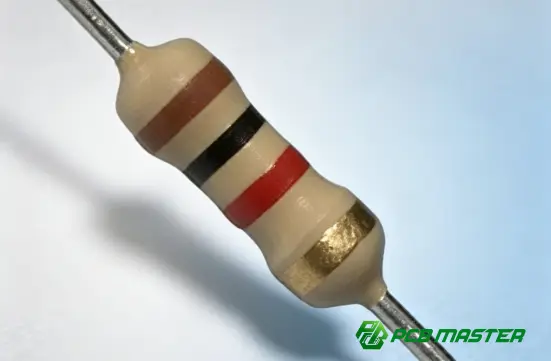
What Is a 10k Resistor?
What is a 10k ohm resistor? The 10K resistor is a resistor that has a resistance of 10,000 ohms (10 kΩ). It is widely used in electronic circuit and PCB to control current, voltage division and signal conditioning.
Definition of a 10k resistor
A 10k resistor is an electronic component that provides 10,000 ohms (Ω) of resistance to the flow of electric current. “K” is short for kilo, which means 1,000. So:
- 1 kΩ = 1,000 Ω
- 10 kΩ = 10,000 Ω
Resistance is measured in ohms (Ω). the more the resistance, the less the current. For example, at the same voltage a 10k resistor will have far less current flowing through it than a 1k resistor. So it is suitable for signal circuits and low current applications.
Fixed resistors make up most of the 10k resistors used in PCB assembly. That is, the resistance value is fixed during manufacture. But a variable resistor ( potentiometer or rheostat ) allows you to change the resistance manually . You will find fixed 10k resistors are far more common as they give predictable and stable circuit behaviour.
Why is 10kΩ one of the most commonly used resistor values?
The 10kΩ is a standard resistor value that provides a good compromise between limiting current and keeping the electrical signals stable in low voltage electronic circuits.
The 10 kΩ is part of an international standard known as the E-series of resistor values. This was created to simplify the production of resistors and the design of circuits. 10k resistors are cheap, readily available and available in just about any resistor package and tolerance so it is a common value.
Another reason engineers like to use a 10k resistor is that it provides a good balance to limit current and keep the signal stable. Less resistance like 1kΩ will draw more current and increase power consumption. But a larger resistance like 100kΩ will greatly reduce the current but can also make a circuit more susceptible to electrical noise. 10kΩ is a good compromise for most digital and analogue circuits.
For example a 10k pullup resistor on a microcontroller input will hold the signal at a nice clean logic HIGH with very little current. This is also a commonly used value in voltage divider circuits, sensor interfaces, push button inputs and transistor biasing. It is one of the most versatile resistor values you will find on modern PCBs.
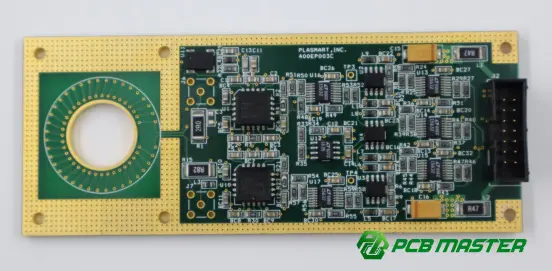
How Does a 10k Resistor Compare with Other Common Resistor Values?
A 10k resistor is a common choice as it offers a good compromise between low value resistors which allow more current and high value resistors which reduce the current but are more susceptible to noise. You can compare it to other values like 1kΩ, 4.7kΩ, and 100kΩ, and it’s easy to figure out when to use a 10k resistor in a circuit .
10k resistor vs. 1k resistor
A 1k resistor will let more current pass than a 10k resistor. A 10k resistor is also better at saving current and is more suitable for signal control applications .
The major difference between a 1K resistor and 10K resistor is the Resistance Value. A 1k resistor has a resistance of 1,000Ω and a 10k resistor has a resistance of 10,000Ω, so the 10k resistor would limit current about ten times more than the 1k resistor at the same voltage.
For example, in an LED circuit we might use a 1k resistor, because it allows enough current through to light up the LED. But in a microcontroller input circuit a 10k pull-up resistor is usually preferred as it keeps the signal stable and uses less power.
| Feature | 1k Resistor | 10k Resistor |
|---|---|---|
| Resistance | 1,000Ω | 10,000Ω |
| Current flow | Higher | Lower |
| Common use | LED current limiting, power circuits | Pull-up/pull-down circuits, signal control |
| Power consumption | Higher | Lower |
10k resistor vs. 4.7k resistor
The 4.7k resistor is a middle-ground resistance value between the 1kΩ and 10kΩ. A 10k resistor is more common where low current consumption and stable signal levels are important .
For example, a 4.7k resistor has a resistance of 4700 ohms. This allows more current to flow than a 10k resistor, but less than a 1k resistor. This is often used in applications where engineers want a compromise between speed of response, the flow of current and the stability of the signal.
For example, in digital circuits you may use a 4.7kΩ or a 10kΩ as a pull-up resistor. A 4.7k pull-up resistor will pull the signal line up more strongly, and will make the signal run faster, especially if the signal line is long. For short PCB traces, a 10k pull-up resistor is generally sufficient and saves power.
| Feature | 10k Resistor | 100k Resistor |
|---|---|---|
| Resistance | 10,000Ω | 100,000Ω |
| Current consumption | Low | Very low |
| Noise sensitivity | Lower | Higher |
| Common use | Digital signals, sensors, voltage dividers | Low-power circuits, high-impedance inputs |
10k resistor vs. 100k resistor
A 100k resistor will draw less current than a 10k resistor. The 10k resistor will tend to be more stable and less noisy than the 100k resistor.
A 100k resistor has a resistance that is 10 times bigger than a 10k resistor . It has a resistance of 100 , 000Ω . It has very high resistance so it draws very little current, and is therefore useful for high impedance circuits and low-power designs.
However , at higher resistance values , the circuits might be more susceptible to electrical noise and leakage current . The 10k resistor is very common for microcontroller pull-up and pull-down applications . For example , a 10k resistor provides a stable logic level . For example, for battery powered devices, where power consumption needs to be minimised, a 100k resistor might be picked.
| Feature | 10k Resistor | 100k Resistor |
|---|---|---|
| Resistance | 10,000Ω | 100,000Ω |
| Current consumption | Low | Very low |
| Noise sensitivity | Lower | Higher |
| Common use | Digital signals, sensors, voltage dividers | Low-power circuits, high-impedance inputs |
When is a 10k resistor the preferred choice?
If you need a resistor that balances out low power consumption, signal stability and easy availability then you should choose a 10k resistor for your circuit.
Engineers will usually choose a 10k resistor for many general-purpose PCB designs because it works well for many common applications and there are no special calculations or adjustments needed.
In the following cases , a 10k resistor is preferred :
- Pull up and pull down resistors: A 10k resistor is used to ensure that digital input signals are in a definite HIGH or LOW state when there is no active signal.
- Voltage divider circuits: You can use a 10k resistor with another resistor to provide stable reference voltages for sensors and analogue inputs.
- Microcontroller circuits: Provides enough resistance to protect the input pins and to allow reliable signal detection.
- Low power electronics: Reduces unnecessary current drain in battery or USB powered devices.
For example, a PCB for a temperature sensor could use a 10k resistor and a thermistor to form a voltage divider. That is why 10kΩ is such a common and useful resistor value in modern electronics. The microcontroller reads the varying voltage and calculates the temperature .
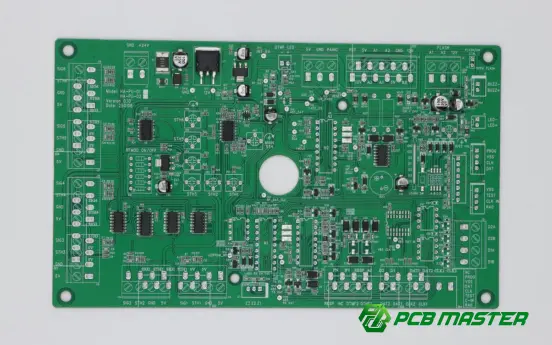
How Can You Identify a 10k Resistor?
You can identify a 10k resistor by color bands , SMD marking code or measuring it’s resistance with a multimeter . The resistor is characterised as either a through-hole component or a s urface mount device (SMD) .
10k resistor color code
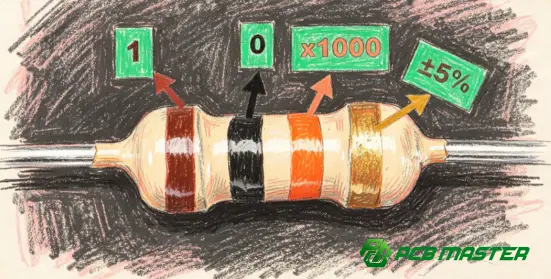
4 band 10k resistor is code Brown-Black-Orange-Gold which is resistance 10,000Ω with tolerance of ±5%.
In case of a 4 band resistor the colors of the bands have special meanings:
- 1st band (Brown): First digit = 1
- 2nd band (Black): Second digit = 0
- 3rd band (Orange): Multiplier = ×1,000
- 4th band (Gold): Tolerance = ±5%
Here's how the calculation works:
10 × 1,000 = 10,000Ω = 10kΩ
So a standard 10k resistor on electronic circuits will have the bands brown, black, orange and gold.
The color code system for a 5 band 10k resistor is more accurate. It is a common sight on resistors with better accuracy and tighter tolerances.
For a typical 5-band 10k resistor:
- 1st band: First digit = 1 (Brown)
- 2nd band: Second digit = 0 (Black)
- 3rd band: Third digit = 0 (Black)
- 4th band: Multiplier = ×100 (Red)
- 5th band: Tolerance (such as Brown for ±1%)
The math is:
100 × 100 = 10,000Ω
A 5 band resistor is generally used in precision circuits where a small difference in resistance can make a difference to the performance of the circuit .
Tolerance Band is the difference between the marked value of resistance and the value of resistance. For example, a 10kΩ resistor with a tolerance of ±5% could be anywhere between:
9.5kΩ and 10.5kΩ
The normal colors of tolerance are:
- Gold:±5%
- Silver:±10%
- Brown:±1%
- Red:±2%
Tolerance can be selected as per the requirement of the circuit. For general PCB applications a typical ±5% resistor is often used. In precision measurement circuits tolerances as tight as +1% may be needed.
Reading SMD 10k resistor markings
A typical SMD 10k resistor will usually be marked with "103" The first pair of numbers are the digit and the third number is the multiplier.
For 3 digit SMD resistor code:
- The first two digits show the resistance value.
- The third digit shows how many zeros to add.
103:
- "10" = first two digits
- "3" = add three zeros
The calculation is:
10 × 1,000 = 10,000Ω = 10kΩ
So a 103 SMD resistor is a 10K resistor.
SMD 10k resistors are widely available with a variety of package sizes to suit the PCB design. Standard packages
- 0201: Ultra-Fine Components for High Density PCB Design
- 0402: Tiny package for a lot of modern electronics
- 0603: SMD resistor package (General purpose)
- 0805: Bigger size, easier to work with, more power handling
For example, a smartphone PCB might use a small 0402 10k resistor, but an industrial control board might use a larger 0805 10k resistor for better handling & reliability.
Measuring a 10k resistor with a multimeter
A multimeter can measure the resistance value directly and it will tell you if a 10k resistor is good If the resistance is close to 10,000Ω then the resistor is approximately 10kΩ.
To measure a 10k resistor we do this :
- Turn off the power supply before testing the resistor.
- Set the multimeter to resistance mode (Ω).
- Connect the probes to both ends of the resistor.
- Read the displayed resistance value.
If the meter reads 10 k Ohm the resistor is good.
The accuracy of the resistor limits the measurement range.
- 10kΩ ±5% resistor: 9.5kΩ to 10.5kΩ
- 10kΩ ±1% resistor: 9.9kΩ to 10.1kΩ
The fact that it is not exactly 10kΩ does not mean that the resistor is bad. The tolerance rating is the allowable deviation.
A couple of things can influence a multimeter reading on a 10K resistor:
- Temperature Effects As the resistor heats up or cools down it will change resistance slightly.
- Circuit Connection Measuring a resistor while it is still in a powered circuit can yield you incorrect readings.
- Contact quality:Shoddy probe contact can cause unstable readings.
- Accuracy of measurement: Accuracy depends on the type of multi-meter.
When testing, try to test the resistor out of the circuit if possible. Make sure the probes are making good contact with the leads of the resistor.
What Does a 10k Resistor Do?
A resistor of 10k controls the current flow, changes the voltages, and stabilises electronic signals in a circuit. It is very popular in PCB designs because of its reliable performance and very low power consumption.
Limiting current in electronic circuits
A 10k resistor is used to provide resistance and to limit the amount of electrical current flowing in a circuit .
When a circuit is applied a voltage , current flows through the conductive path . A resistor limits the flow of current so that too much electricity does not damage the components. Ohm's law says that if the voltage is kept constant, the greater the resistance the smaller the current will be.
For example, a 10k resistor on an LED driver circuit could limit the current going into a signal line or input pin. 10k is a common value for low current control circuits (eg to limit the input current of a microcontroller or to protect a signal pin). In LED circuits, a much lower value resistor is often used to control brightness.
Sometimes in PCB designs 10k current limiting resistors are used between the components to avoid unnecessary power consumption and increase the circuit reliability.
Creating voltage dividers
Use a 10k resistor and another resistor to form a voltage divider to get a desired voltage.
Voltage divider A simple circuit that uses two resistors to divide an input voltage down to a lower voltage level. The output voltage is variable according to the ratio of two resistors.
For example if you take two 10k resistors and connect them in series between a 5V power supply and ground, the voltage at the middle point will be approximately:
5V ÷ 2 = 2.5V
The lower voltage can be used as a reference signal for microcontrollers, sensors and analogue input circuits.
For example a 10k resistor voltage divider is used in temperature sensing circuits, battery monitoring systems, sensor interfaces and other PCB applications that need an easy and low-cost way to measure changing voltages.
Stabilizing digital input signals
A 10k resistor is used to stabilise digital signals by ensuring that input pins are never “ floating ” ( in an undefined state ).
Digital circuits are normally two state . HIGH ( 1 ) , LOW ( 0 ) . However, if an input pin is not tied to a definite voltage level, it can pick up electrical noise and flip back and forth between states randomly. This is known as a floating input .
The input pin is pulled up to the positive supply voltage by a 10k resistor. This resistor ensures the signal is HIGH unless pulled down by some other device. The input pin is pulled LOW to ground via a 10k pulldown resistor.
You often see a 10k pull down resistor in a push button circuit to a microcontroller. When the button is not pressed the resistor holds the input LOW. When you press the button the input goes HIGH . This is to allow the microcontroller to properly recognise the button action.
Protecting sensitive electronic components
In layman terms , 10k resistor will protect sensitive components from electrical stress by limiting current and making it less likely to happen .
Modern electronic devices like microcontrollers, sensors, integrated circuits (ICs) etc. can get damaged due to excess current passing into their input pins. The present feed into these sensitive components is via a 10k resistor in the signal path.
For example, if an external sensor is connected to a microcontroller input, a 10k protection resistor can help reduce the effect of unexpected voltage variations or electrical noise. This adds an additional safety factor but does not alter much the normal transmission of the signal.
10k resistors are generally a good choice for PCB input protection, signal conditioning and interface circuits. They offer good protection, good signal quality and low power consumption.
Where Is a 10k Resistor Commonly Used on PCBs?
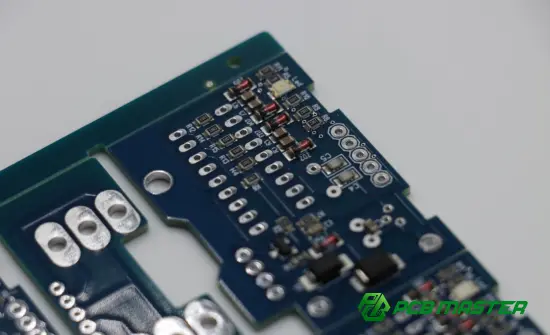
10k resistors are very common on PCBs and used for pull up and pull down circuits, led control, voltage sensing and microcontroller interfaces. It has a moderate resistance value, a good compromise between stable signals and low power consumption, and is therefore a standard choice in many electronic designs.
Pull-up resistor applications
The 10k pull up resistor is there to keep a constant HIGH voltage on the signal line when there is no other device driving the signal.
A pull-up resistor is used to connect a signal line to a positive supply voltage (e.g. 3.3V or 5V). When the switch or output device is open, the resistor pulls the signal high. This keeps the input from floating. This will force the circuit to read a hard value .
Often used for push buttons, reset circuits, communication buses and micro-controller input pins. The high resistance decreases power consumption and provides reliable logic level.
Typical applications of PCB are:-
- Push-button input circuits
- Microcontroller reset pins
- Digital input terminals
- Sensor output connections
Pull-down resistor applications
A 10k pull-down resistor is used to hold a signal line at a constant LOW voltage when no input signal is present.
Pull-down resistor to ground. Signal line The reason for this is that the resistor holds the input at a LOW logic level unless an external voltage is applied. This prevents electrical noise from causing spurious switching.
For example a switch with a push button connected to power supply normally uses a 10k pull down resistor. When the button is let go the resistor pulls the input LOW. press button to apply voltage to input, set it HIGH
Typical uses for PCB include:
- Push-button control circuits
- Digital input pins
- Switch detection circuits
- Logic control systems
LED indicator circuits
In LED indicator circuits, a 10k resistor is often used for signalling or transistor control, but it's not usually the main current limiting resistor for the LED.
Most LEDs need enough current to light up. The series resistor is usually much less than 10kΩ, depending on the voltage supply and LED specs. But 10k is a common resistor value in other parts of LED circuits, such as the base/gate of a transistor to control switching, or for a pull-up or pull-down.
For example a microcontroller driven LED could use:
- A lower-value resistor (such as 220Ω or 330Ω) to limit LED current.
- A 10k resistor to keep the transistor in the OFF state until the control signal is applied.
This configuration can achieve better switching reliability without adding power consumption.
Voltage sensing and analog input circuits
10k is a common value to use in voltage divider circuits to make a voltage that can be measured for analogue inputs .
Most sensors operate by changing their resistance or voltage as conditions change. A 10k resistor is often used in combination with some other resistor or sensing element to form a voltage divider. This output voltage may then be read by a microcontroller analogue input.
For example, 10k resistors are used:
- Thermistors for temperature measurement
- Light-dependent resistors (LDRs) for light detection
- Potentiometers for adjustable voltage inputs
10kΩ is one of the most commonly used resistor values in PCB analogue sensing circuits as it offers a good compromise between current consumption and measurement stability.
Microcontroller and sensor interfaces
A 10k resistor enables microcontrollers and sensors to communicate properly by reducing noise and preventing damage to the input pins .
Microcontrollers need clean electrical signals to read data from sensors and other external devices. Another 10k resistor is often added to the interface circuit to set the logic levels, reduce noise or as part of a sense circuit.
For instance, a temperature sensor connected to a microcontroller might be using a 10k resistor in a voltage divider. This change in sensor resistance results in a change of voltage at the microcontroller input and software can derive the temperature.
Commonly used in:
- Digital sensor inputs
- Analog sensor interfaces
- Reset and enable circuits
- I/O pin pull-up or pull-down networks
Thanks to these applications, the 10k resistor is one of the most used passive components for the design of modern PCBs, embedded systems and IoT devices.
Conclusion
A 10k resistor is a simple, but very important component used in many electronic circuits and PCB designs. It has a resistance of 10,000Ω and is ideal for current limiting, voltage division, digital signal stabilisation and component protection. 10k resistor can be identified by color code , SMD marking ( like " 103 " ) or by measuring it with multimeter .
The choice of package size, tolerance and power rating is also important to ensure reliable circuit performance and long term stability. Whether you are designing a microcontroller board, integrating sensors or building a general purpose PCB choosing the right 10k resistor can result in a better functioning and more reliable device.
Once the circuit design is finalised, quality PCB fabrication and assembly is equally important to ensure consistent performance. PCBMASTER offers professional PCB manufacturing and PCBA services to assist engineers and electronics manufacturers to produce reliable finished products out of reliable circuit designs.
FAQs About 10k Resistors
Can I replace a 10k resistor with a 9.1k or 12k resistor?
Yes but it is contingent upon how it is used. In many general purpose circuits the difference in resistance is fairly small so a 10k resistor can be replaced with a 9.1kΩ or 12kΩ resistor and it will still work. However, in voltage references , in timing circuits or measurement systems , changing the resistance value can influence the performance of the circuit . BEFORE REPLACEMENT, ALWAYS CHECK CIRCUIT REQUIREMENTS.
Why do pull-up resistors often use 10kΩ?
A 10kΩ resistor offers a good compromise between signal stability and low power consumption. It only needs to lower the current draw and maintain a safe logic HIGH on the input. 10k pull-up resistors are often used in microcontrollers, push buttons and digital input circuits for this. Other values such as 4.7kΩ or 100kΩ could also be used but 10kΩ is generally the standard recommendation for many PCB designs.
Is resistor tolerance important for a 10k resistor?
Yes. It relies on the circuit though. Most digital circuits should be fine with a 10k resistor ±5%. However there are some applications such as precision analogue circuits, sensor measurement and voltage reference circuits, where ±1% tolerance resistor may be required to improve the accuracy. The right tolerance will guarantee the circuit works as it should.
How can I tell whether my 10k resistor is damaged?
The easiest way to test it is a multimeter. A good 10k resistor should read around 10,000 ohms, within tolerance. Visible damage signs include burn marks, cracks, discoloration or a broken body. Replace the resistor if the resistance is far out of the allowable range or if there is an open circuit.
Does a 10k resistor have polarity?
No, a standard 10k resistor is not a polarised component. Can be mounted either way round with no loss of performance. This is for 10k resistors, either through hole or SMD. Resistors are not polarised components (like electrolytic capacitors or diodes)
About the Author

Carol Luo
PCB Design EngineerI'm Carol, a PCB Engineer at PCBMASTER with experience in PCB design and manufacturing engineering since 2018. I focus on translating engineering requirements into reliable PCB solutions, with expertise in stack-up design, material selection, and design-for-manufacturing (DFM). I share practical engineering insights from real-world PCB design and production experience.
Visit Carol Luo's Profile