








Is There a Negative Resistor? Understanding Negative Resistance in Electronics
Yes—but not in the way most people imagine. A negative resistor is generally not a conventional passive resistor with a resistance below zero ohms . Instead, the term refers to negative resistance , a property exhibited by certain electronic devices and active circuits where an increase in voltage results in a decrease in current, or vice versa, over a specific operating region. Negative resistance plays an important role in oscillators, microwave electronics, and high-speed circuit design. Understanding how it differs from ordinary resistance helps engineers select the right components for advanced PCB and electronic applications.
What Is a Negative Resistor?
A standard resistor always follows Ohm's Law: as voltage increases, current increases proportionally.
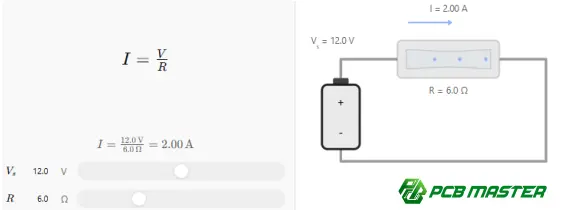
For passive resistors:
- Resistance (R) is always positive.
- They consume electrical energy and convert it into heat.
- Current and voltage always have the same direction relationship.
A negative resistor , however, is not a passive component you can purchase as "-100 Ω." Instead, it refers to a device or circuit exhibiting negative differential resistance (NDR) , where:
- Increasing voltage causes current to decrease over a certain operating range.
- The device can effectively supply energy back to the circuit.
- This behavior only occurs under specific bias conditions.
Does a Physical Negative Resistor Exist?
The short answer is no for passive electronic components.
Conventional resistors are made from conductive materials such as:
- Carbon film
- Metal film
- Thick film
- Wirewound alloys
Because these materials dissipate electrical energy, their resistance cannot become negative.
However, engineers often use the term negative resistor when referring to:
| Type | Exists? | Description |
|---|---|---|
| Passive negative resistor | ❌ No | Violates passive energy dissipation principles |
| Negative resistance device | ✅ Yes | Semiconductor device exhibiting negative differential resistance |
| Active negative resistance circuit | ✅ Yes | Circuit that simulates negative resistance using active components |
What Is Negative Differential Resistance?
Unlike ordinary resistance, negative differential resistance describes the slope of the current-voltage (I-V) curve rather than the overall resistance.
In an NDR region:
- Voltage increases.
- Current decreases.
- The incremental resistance becomes negative.
This unusual characteristic enables circuits to generate oscillations and amplify high-frequency signals.
Devices That Exhibit Negative Resistance
Several semiconductor devices naturally exhibit negative resistance characteristics.
Tunnel Diode
The tunnel diode is the classic example.
Characteristics include:
- Extremely heavy doping
- Quantum tunneling effect
- Very fast switching speed
- Negative resistance region in its I-V curve
Applications:
- Microwave oscillators
- High-speed switching
- Frequency generators
Gunn Diode
Unlike tunnel diodes, Gunn diodes use electron transfer effects rather than a PN junction.
Common applications include:
- Radar systems
- Microwave transmitters
- Motion sensors
- Millimeter-wave communication
IMPATT Diode
Impact Avalanche Transit-Time (IMPATT) diodes also exhibit negative resistance.
Typical uses include:
- High-power microwave generation
- RF transmitters
- Communication equipment
How Is Negative Resistance Created?
Negative resistance can also be synthesized using active electronic components.
Common implementations include:
- Operational amplifiers (Op-Amps)
- Transistors
- Feedback networks
- Negative Impedance Converters (NICs)
These circuits require an external power supply and behave as if they contain a negative resistor.
Applications of Negative Resistance
Although uncommon in everyday electronics, negative resistance is essential in several advanced systems.
RF and Microwave Oscillators
Negative resistance compensates for energy losses, allowing oscillation to continue without an external periodic signal.
Examples:
- Local oscillators
- RF signal generators
- Microwave transmitters
Signal Generation
Many electronic oscillators rely on negative resistance to maintain stable waveforms.
Applications include:
- Clock circuits
- Test equipment
- Frequency synthesizers
High-Speed Communications
Modern communication systems operating at GHz frequencies often employ devices with negative resistance characteristics.
Examples include:
- Satellite communication
- 5G infrastructure
- Radar electronics
Scientific Instruments
Precision laboratory equipment sometimes incorporates negative impedance circuits to improve measurement performance and compensate for losses.
Negative Resistance vs. Negative Impedance
These terms are related but not identical.
| Feature | Negative Resistance | Negative Impedance |
|---|---|---|
| Applies to | Resistance only | Resistance, capacitance, or inductance |
| Implementation | Semiconductor devices or active circuits | Active circuits |
| Frequency range | Often DC or RF | AC and RF systems |
| Typical application | Oscillators | Filters, impedance matching |
Why Can't Ordinary Resistors Have Negative Resistance?
A passive resistor obeys the law of energy conservation.
It always:
- Converts electrical energy into heat.
- Has positive power dissipation.
- Cannot generate electrical energy.
Negative resistance, by contrast, requires an external energy source or a semiconductor operating in a special physical region.
PCB Design Considerations
Designers rarely place a "negative resistor" on a PCB bill of materials. Instead, they integrate devices or circuits that exhibit negative resistance behavior.
When designing high-frequency PCBs, engineers should consider:
- Stable power supplies
- Controlled impedance routing
- Signal integrity
- Thermal management
- Proper grounding
- RF layout optimization
These factors are particularly important when using tunnel diodes, Gunn diodes, or active oscillator circuits.
For manufacturers handling RF, HDI, or microwave PCBs, engineering support and manufacturability review become increasingly important. PCBMASTER provides PCB fabrication and PCB assembly services for high-frequency, HDI, rigid-flex, and multilayer PCB projects, supported by free DFM reviews and experienced engineering teams to help ensure designs can be manufactured reliably.
Common Misconceptions
"Can I buy a -10 Ω resistor?"
No. Passive resistors are manufactured with positive resistance values only.
"Does negative resistance violate Ohm's Law?"
No. Devices exhibiting negative differential resistance still follow their own current-voltage characteristics. Ohm's Law simply does not describe their nonlinear operating region.
"Is negative resistance the same as superconductivity?"
No. Superconductors have zero electrical resistance , not negative resistance.
"Are negative resistance devices common?"
They are specialized components primarily used in RF, microwave, and oscillator circuits rather than general-purpose electronics.
Conclusion
A true passive negative resistor does not exist , but negative resistance is a well-established electrical phenomenon observed in certain semiconductor devices and active circuits. Components such as tunnel diodes and Gunn diodes exhibit negative differential resistance that enables oscillation, microwave generation, and high-speed signal processing.
For engineers developing RF, microwave, or high-speed electronic products, understanding negative resistance is essential for selecting appropriate components and designing stable, manufacturable PCBs. Partnering with an experienced manufacturer such as PCBMASTER can further improve project success through advanced fabrication capabilities, comprehensive DFM support, and reliable PCB and PCBA production.
Tags: #NegativeResistor #NegativeResistance #TunnelDiode #GunnDiode #Electronics #PCBDesign #RFDesign #PCBA #PCBMASTER #ElectronicEngineering
About the Author

Carol Luo
PCB Design EngineerI'm Carol, a PCB Engineer at PCBMASTER with experience in PCB design and manufacturing engineering since 2018. I focus on translating engineering requirements into reliable PCB solutions, with expertise in stack-up design, material selection, and design-for-manufacturing (DFM). I share practical engineering insights from real-world PCB design and production experience.
Visit Carol Luo's Profile