








What Does a Resistor Do? Working Principle, Types, and PCB Applications
A resistor is one of the most basic electronic components found in today's circuits. It is used to regulate current flow, divide voltages, guard sensitive components, and maintain stable circuit operation. Resistors are important in PCB design for consumer electronics and industrial equipment, automotive systems and communication devices. What is a resistor? How do resistors work? What are common resistor types and how are they used in PCB manufacturing? This article explains. As a professional PCB and PCBA manufacturer, PCBMASTER adopts resistor-related design considerations into reliable PCB solutions and provides high quality manufacturing capabilities and strict quality standards to support the industries.
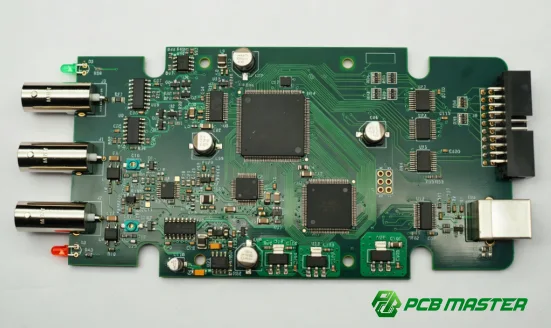
What Does a Resistor Do in an Electronic Circuit?
A resistor is a passive electronic component that resists the flow of electric current. Its main purpose is to control electrical signals by adding a specific amount of resistance to a circuit.
The resistance value (measured in ohms, Ω ) determines the amount of current that can go through the component. Ohm’s Law says that:
V = I × R
where:
- V represents voltage (volts)
- I represents current (amps)
- R represents resistance (ohms)
This relationship means that if the voltage is constant, increasing the resistance reduces the flow of current.
Resistors in PCB assemblies are usually mounted directly on the surface of the circuit board by Surface Mount Technology (SMT) or mounted as through-hole components. They work with integrated circuits (ICs) , capacitors, inductors and other components in combination to produce repeatable electrical performance.
How Does a Resistor Work?
Resistors work by converting electrical energy into heat energy and by restricting the flow of current in a conductive material.
The resistance inside a resistor is caused by the material limiting the movement of the electrons. When current flows through a resistor , some electrical energy is lost as heat . The amount of heat generated depends on the power rating.
P = I² × R
where:
- P = power consumption (watts)
- I = current flowing through the resistor
- R = resistance value
Choosing the correct resistor requires consideration of:
- Resistance value
- Power rating
- Tolerance
- Temperature coefficient
- Operating environment
Resistor choice directly affects the reliability of the circuit, thermal performance and long-term stability for PCB designers and manufacturers.
For example, in the automotive electronics or industrial control systems, the resistors are required to work reliably in the conditions of vibration, temperature change and continuous operation. That’s why manufacturers serving demanding applications often adhere to strict quality systems such as the IATF 16949 automotive quality management standards.
Common Types of Resistors Used in PCB Applications
Different resistor technologies for different electronic applications The common types of resistors used in PCB design are: fixed resistors, variable resistors and special resistors.
Fixed Resistors
Fixed resistors are resistors with a specified resistance value and are the most common type of resistor used in electronic circuits.
Typical examples are:
| Type | Characteristics | Typical PCB Applications |
|---|---|---|
| Carbon Film Resistor | Low cost and general-purpose performance | Consumer electronics |
| Metal Film Resistor | High accuracy and low noise | Precision circuits |
| Thick Film Resistor | Compact and suitable for SMT assembly | PCB surface mounting |
| Thin Film Resistor | High precision and stability | Medical and industrial electronics |
| Wirewound Resistor | Handles high power loads | Power control applications |
Among these, surface mount thick film resistors are widely used in modern PCB assembly because they enable compact designs and automated SMT production.
Variable Resistors
Variable resistors are used to adjust the resistance as per the application.
Common types are:
- Potentiometers– Used for manual adjustment, such as volume controls
- Rheostats– Used for controlling current in higher-power applications
- Digital potentiometers– Controlled electronically in modern systems
These components are often used in control panels, measuring instruments, and variable electronic devices.
Special Resistors
Some resistors are intended for particular electrical jobs.
Examples include:
| Resistor Type | Function |
|---|---|
| Thermistor | Changes resistance based on temperature |
| Photoresistor | Changes resistance according to light intensity |
| Varistor | Protects circuits from voltage surges |
| Current Sense Resistor | Measures current accurately |
These specialised resistors are often incorporated into sophisticated PCB designs that require protection, monitoring or sensing capabilities.
What Are the Main Applications of Resistors on PCBs?
Almost all PCBs contain resistors because they provide critical electrical control functions.
1. Current Limiting
One of the most common uses of resistors is to limit current to a safe value to protect components .
For example:
- Protecting LEDs from overcurrent
- Preventing damage to IC input pins
- Controlling current in sensor circuits
Without proper current limiting , electronic components can overheat or fail permanently .
2. Voltage Division
Voltage divider circuits are often constructed using resistors.
A voltage divider provides a way for designers to obtain a lower voltage from a higher voltage source, which can be useful for:
- Sensor signal processing
- Microcontroller input circuits
- Analog measurement systems
3. Pull-Up and Pull-Down Functions
Resistors are used in the digital PCB designs to generate stable logic states.
A:
- Pull-up resistor connects a signal line to a positive voltage level
- Pull-down resistor connects a signal line to ground
Such configurations prevent floating signals and improve the reliability of the digital circuits.
4. Signal Conditioning
Resistors, along with capacitors and inductors, sculpt the behaviour of a signal.
Applications:
- Filtering unwanted noise
- Adjusting signal levels
- Improving signal integrity
In high-speed PCB design, the choice and placement of the resistor are very important. Improper design will affect the gearbox performance.
5. Circuit Protection
Some resistor types shield sensitive PCB components from electrical stress.
Examples:
- Surge protection using varistors
- Current monitoring using sense resistors
- Temperature monitoring using thermistors
These functions are widely used in automotive electronics, industrial systems and communication equipment.
Key Design Considerations When Using Resistors in PCB Manufacturing
Choosing the right resistor is not just an electrical issue. PCB designers must also consider the requirements of manufacturing and the conditions of application.
Resistance Value and Tolerance
Resistance tolerance is the allowable difference between the actual resistance and the stated value.
Resistors with lower tolerance are used in precision applications:
- More accurate signal control
- Better circuit stability
- Improved product reliability
Power Rating and Thermal Management
Each resistor has a maximum power rating. If this limit is exceeded, the component may overheat and fail.
PCB designers must consider:
- Heat dissipation
- Copper area around components
- Component spacing
- Operating environment
Package Size and Assembly Method
Modern electronics need increasingly smaller PCB designs.
Common resistor packages are:
- 0201
- 0402
- 0603
- 0805
- 1206
Smaller packages allow for miniaturisation. Larger packages may allow for higher power handling.
High-density resistor networks can be reliably assembled through advanced SMT capabilities for PCB and PCBA service providers.
Common Mistakes When Selecting and Using Resistors
Choosing the Wrong Resistance Value
An incorrect resistance value can cause:
- Excessive current
- Incorrect voltage levels
- Circuit malfunction
Engineers should always double check their calculations before PCB production.
Ignoring Power Requirements
The resistor might be the right resistance value, but fail if the power rating is insufficient.
Always determine the expected operating power before selection.
Poor PCB Layout
Incorrect resistor placement can affect:
- Signal quality
- Heat management
- Manufacturing efficiency
A professional PCB engineering review can identify these issues before production.
PCBMASTER provides complimentary engineering file reviews to assist customers in assessing manufacturability, PCB performance, and cost savings prior to production.
PCBMASTER ’ s PCB Manufacturing Expertise for Reliable Resistor Applications
As a professional PCB and PCBA manufacturer, PCBMASTER offers reliable circuit board solutions to customers worldwide in applications that demand accurate and stable resistor integration.
PCBMASTER is ISO 9001, IATF 16949, UL Certification, and RoHS compliant certified. PCBMASTER strictly follows quality management procedures to ensure consistent PCB performance.
The company provides:
- Quick-turn PCB prototypes
- High-frequency PCB manufacturing
- HDI PCB with blind and buried vias
- Flexible PCB (FPC)
- Rigid-Flex PCB
- Metal Core PCB
- Complete PCBA assembly services
PCBMASTER offers professional engineering support to help customers improve their resistor-based circuit PCB designs, including free document reviews, manufacturability analysis, and production guidance.
PCBMASTER provides reliable PCB solutions for automotive electronics, industrial control, communications, consumer electronics and other fields, utilising its 80,000㎡ manufacturing plant, advanced production equipment and complete inspection procedures, such as AOI test and multiple quality checks.
Conclusion: Why Resistors Remain Essential in PCB Design
Resistors might be simple parts, but they appear in just about every electronic system. Resistors play a key role in the proper operation of circuits by controlling current flow, adjusting voltage levels, protecting components, and improving signal stability.
As electronic products are becoming smaller, faster and more complex, the selection of resistors and their implementation on the PCB are requiring more engineering expertise. Partnering with a seasoned PCB manufacturer guarantees that your resistor-based circuits will be high-performing, reliable, and manufacturable.
PCB designers, engineers and manufacturers should consider resistor specs, PCB layout, thermal management and production capabilities together to develop dependable electronic products.
Tags: #PCB #PCBA #Resistor #ElectronicComponents #SMT #PCBDesign #CircuitDesign #PCBManufacturing #PCBMASTER #IndustryInsights
About the Author

Carol Luo
PCB Design EngineerI'm Carol, a PCB Engineer at PCBMASTER with experience in PCB design and manufacturing engineering since 2018. I focus on translating engineering requirements into reliable PCB solutions, with expertise in stack-up design, material selection, and design-for-manufacturing (DFM). I share practical engineering insights from real-world PCB design and production experience.
Visit Carol Luo's Profile