








PCB Antenna Design Guide: Types, Materials, Layout, Manufacturing, and Best Practices
PCB antennas have become a preferred solution for modern wireless products because they combine compact size, low manufacturing cost, and high integration. However, achieving stable RF performance requires much more than simply placing an antenna on a circuit board. Material selection, antenna type, PCB stack-up, grounding strategy, impedance matching, manufacturing accuracy, and testing all directly affect communication range, efficiency, and reliability. This guide explains the major PCB antenna types, design principles, PCB material considerations, layout guidelines, manufacturing challenges, and industry best practices. It also highlights how PCBMASTER supports reliable PCB antenna production through advanced manufacturing capabilities, international quality certifications, and comprehensive engineering support.
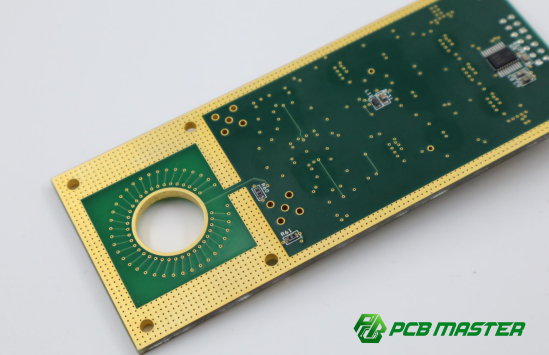
Why PCB Antenna Design Matters
As wireless technologies continue to expand across industries, PCB antennas are widely used in:
- Wi-Fi devices
- Bluetooth products
- IoT sensors
- GPS trackers
- RFID systems
- Smart home devices
- Medical electronics
- Automotive electronics
- Industrial control equipment
- 5G communication devices
Unlike external antennas, PCB antennas are integrated directly into the circuit board, reducing assembly costs while improving product reliability. However, RF signals are extremely sensitive to PCB design, making antenna performance highly dependent on PCB quality.
A well-designed PCB antenna provides:
- Stable wireless communication
- Higher radiation efficiency
- Longer transmission distance
- Lower signal loss
- Better EMC performance
- Smaller product size
Common Types of PCB Antennas
Different applications require different antenna structures.
| Antenna Type | Advantages | Typical Applications |
| Meandered PCB Antenna | Compact size, low cost | Bluetooth, IoT |
| Inverted-F Antenna (IFA) | Good efficiency, compact | Wi-Fi, LTE |
| Planar Inverted-F Antenna (PIFA) | Excellent mobile performance | Smartphones |
| Monopole PCB Antenna | Simple structure | Industrial devices |
| Dipole PCB Antenna | Balanced radiation | Communication modules |
| Patch Antenna | High gain | GPS, Radar |
| Slot Antenna | Easy integration | Embedded systems |
| Loop Antenna | Strong near-field performance | NFC, RFID |
The optimal antenna type depends on operating frequency, enclosure size, communication range, and environmental requirements.
PCB Materials for RF Antenna Applications
The choice of PCB material significantly influences antenna efficiency because dielectric properties directly affect signal propagation.
| PCB Material | Dielectric Constant (Dk) | Typical Applications |
| FR-4 | 4.2–4.8 | Consumer electronics |
| Rogers RO4350B | 3.48 | High-frequency RF |
| Rogers RO4003C | 3.55 | Microwave circuits |
| PTFE (Teflon) | ~2.2 | High-performance RF |
| Ceramic-filled PTFE | Low loss | Aerospace |
Key Material Properties
The most important characteristics include:
- Stable dielectric constant
- Low dielectric loss (Df)
- Controlled impedance capability
- Thermal stability
- Moisture resistance
- Consistent material thickness
For Wi-Fi and Bluetooth products operating at 2.4 GHz, high-quality FR-4 is often sufficient. Higher-frequency applications such as 5G, automotive radar, and satellite communication typically require specialized RF laminates.
PCB Stack-up Considerations
The PCB stack-up affects electromagnetic behavior throughout the RF circuit.
A well-designed RF stack-up should provide:
- Continuous reference ground planes
- Controlled impedance traces
- Stable dielectric thickness
- Minimal signal coupling
- Reduced EMI
Common stack-up examples include:
| Layer Count | Typical Application |
| 2 Layers | Basic IoT products |
| 4 Layers | Wi-Fi modules |
| 6 Layers | Industrial communication |
| 8+ Layers | Automotive & 5G equipment |
Proper layer planning reduces insertion loss while improving antenna consistency.
PCB Antenna Layout Best Practices
Even an excellent antenna design can perform poorly if the PCB layout is incorrect.
Keep-Out Area
The antenna requires sufficient clearance.
Avoid placing:
- Copper pours
- Ground planes
- High-speed traces
- Power circuits
- Metal shielding
inside the antenna keep-out region.
Ground Plane Design
Ground plane size strongly affects antenna resonance.
Design recommendations include:
- Maintain continuous RF ground
- Avoid fragmented grounds
- Use sufficient stitching vias
- Minimize return current loops
Controlled Impedance
RF transmission lines should maintain controlled impedance, commonly 50 Ω , to minimize signal reflections and maximize power transfer.
Component Placement
Keep noisy components away from the antenna.
These include:
- Switching regulators
- Oscillators
- High-speed memory
- Large inductors
- Motors
- High-current traces
Via Design
Excessive vias may introduce impedance discontinuities.
Good practices include:
- Minimize unnecessary RF vias
- Use via fences where appropriate
- Maintain consistent via spacing
Manufacturing Challenges for PCB Antennas
Unlike ordinary PCBs, RF antenna boards demand tighter manufacturing tolerances.
Critical factors include:
- Copper thickness consistency
- Precise trace width
- Accurate dielectric thickness
- Registration accuracy
- Surface roughness
- Low conductor loss
Even minor dimensional variations can shift the resonant frequency and reduce antenna efficiency.
Common Manufacturing Tolerances
| Parameter | Standard PCB | RF PCB Recommendation |
| Trace Width | ±10% | Much tighter tolerance |
| Dielectric Thickness | Moderate | Highly controlled |
| Copper Roughness | Standard | Low-profile copper |
| Registration | Standard | High precision |
| Impedance Control | Optional | Essential |
Testing and Validation
RF performance should always be verified before mass production.
Common testing methods include:
- Vector Network Analyzer (VNA)
- Return Loss (S11)
- VSWR Measurement
- Radiation Pattern Testing
- Gain Measurement
- Anechoic Chamber Testing
- OTA (Over-the-Air) Testing
- EMC Testing
Early validation helps reduce redesign costs and shortens product development cycles.
Common PCB Antenna Design Mistakes
Many RF issues originate from avoidable design errors.
Common mistakes include:
- Insufficient antenna clearance
- Poor grounding strategy
- Incorrect impedance matching
- Using unsuitable PCB materials
- Ignoring enclosure effects
- Routing high-speed signals near the antenna
- Excessive copper beneath the antenna
- Inadequate RF simulation
Addressing these issues during the design phase significantly improves first-pass success rates.
Practical Experience and Design Recommendations
Successful PCB antenna projects require close collaboration between hardware designers, RF engineers, and PCB manufacturers. Engineering reviews before fabrication can identify potential manufacturability issues, optimize PCB stack-ups, and ensure impedance requirements are met before production begins.
For high-frequency and compact wireless products, selecting a manufacturing partner with RF PCB expertise is just as important as the antenna design itself. Consistent process control, advanced inspection equipment, and strict quality management help ensure repeatable antenna performance from prototype through mass production.
PCBMASTER's Manufacturing Expertise for PCB Antenna Projects
As an experienced PCB and PCBA manufacturer serving customers across industries, PCBMASTER provides comprehensive manufacturing solutions for RF and antenna-based electronics.
Backed by ISO 9001 , IATF 16949 , UL Certification , and RoHS Certification , PCBMASTER maintains strict quality management throughout every production stage to support reliable wireless products.
Its manufacturing capabilities include:
- Quick-turn PCB prototypes in as fast as 24 hours
- Production of HDI, High-Frequency, Rigid-Flex, FPC, and Metal Core PCBs
- Free engineering document review to improve manufacturability and reduce project risk
- Controlled manufacturing processes with AOI inspection, three-stage quality inspection, and a 99.5% product yield rate
- An 80,000㎡ self-owned manufacturing facility offering one-stop PCB fabrication, SMT assembly, component sourcing, and design support
- More than 50 professional engineers providing 24-hour technical assistance
- A 99.59% on-time delivery rate, enabling customers to accelerate product development while maintaining supply chain reliability
Whether developing compact IoT devices, automotive electronics, industrial wireless equipment, or advanced RF communication systems, PCBMASTER supports customers with flexible manufacturing options, engineering collaboration, and scalable production from prototype to high-volume manufacturing.
Future Trends in PCB Antenna Technology
Wireless connectivity continues to evolve rapidly with the growth of IoT, Wi-Fi 7, 5G, autonomous vehicles, smart manufacturing, and next-generation consumer electronics. Future PCB antenna designs will increasingly focus on:
- Higher operating frequencies
- Smaller antenna footprints
- Multi-band operation
- MIMO antenna arrays
- AI-assisted RF optimization
- Ultra-low-loss PCB materials
- Advanced HDI structures
- Integrated antenna-in-package (AiP) technologies
Manufacturers capable of delivering precise impedance control, high-frequency materials, advanced PCB fabrication, and reliable quality systems will play an increasingly important role in enabling next-generation wireless products.
Conclusion
PCB antenna performance depends on a combination of intelligent RF design and precise PCB manufacturing. Choosing the appropriate antenna type, selecting suitable materials, optimizing PCB layout, maintaining controlled impedance, and validating performance through comprehensive testing are all essential to achieving reliable wireless communication.
By partnering with an experienced manufacturer such as PCBMASTER , engineers can benefit from advanced manufacturing technologies, rigorous quality assurance, rapid prototyping, and one-stop PCB and PCBA services that help transform RF designs into dependable, production-ready products.
Tags: #PCBAntenna #RFPCB #PCBDesign #HighFrequencyPCB #WirelessCommunication #PCBManufacturing #PCBA #SMT #PCBMASTER #ElectronicsManufacturing #IoT #5G #RFEngineering
About the Author

Carol Luo
PCB Design EngineerI'm Carol, a PCB Engineer at PCBMASTER with experience in PCB design and manufacturing engineering since 2018. I focus on translating engineering requirements into reliable PCB solutions, with expertise in stack-up design, material selection, and design-for-manufacturing (DFM). I share practical engineering insights from real-world PCB design and production experience.
Visit Carol Luo's Profile