








How PCBMASTER Achieves 7-Day Turnaround for Multilayer Rigid-Flex PCBs
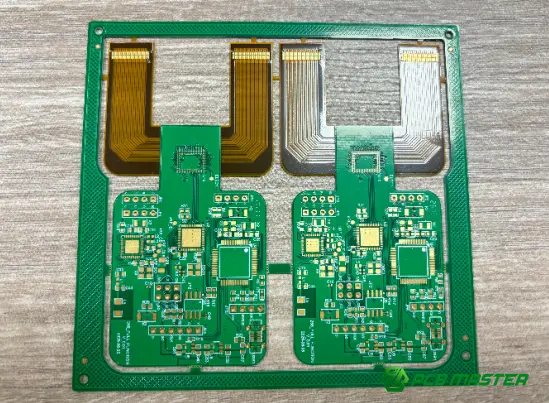
PCBMASTER has achieved 7-day quick-turn shipment for qualified multilayer rigid-flex PCB projects , including complex rigid-flex structures for prototypes and urgent engineering requirements. This turnaround covers more than PCB fabrication. It requires coordinated engineering review, material preparation, manufacturing, inspection, testing, and final shipment within a tightly controlled production window. The key question is: How can a complex multilayer rigid-flex PCB move from engineering review to shipment within seven days?
Why Do Multilayer Rigid-Flex PCB Projects Need Faster Turnaround?
For many electronics projects, PCB manufacturing is not an isolated production step. The delivery of prototype boards directly affects assembly, testing, validation, and subsequent design iterations.
Shorter Product Development Cycles
Electronics development cycles continue to become shorter, putting greater pressure on every stage of the product development process.
For PCB engineers and product development teams, prototype lead time can directly affect downstream milestones. A longer PCB manufacturing cycle may delay assembly and system-level testing, while a shorter turnaround allows engineering teams to obtain physical boards earlier.
Reducing PCB turnaround time can therefore help compress the overall product development cycle.
Faster Prototype Validation
Once a PCB is manufactured, the project typically moves into several additional stages, such as:
- SMT assembly
- Functional testing
- Mechanical validation
- System integration
- Engineering verification
For rigid-flex designs, both electrical and mechanical characteristics may need to be verified. The PCB therefore becomes an important dependency for the entire prototype validation process.
A shorter PCB turnaround allows engineering teams to enter these validation stages sooner.
Faster Design Iteration
A typical development cycle may look like:
PCB Design → Prototype → Testing → Design Revision → New Prototype
The first prototype may reveal electrical, mechanical, layout, or manufacturing-related issues. When that happens, engineering teams need to move quickly into the next design iteration.
Rigid-flex PCBs can make this particularly important because the design must satisfy both electrical requirements and mechanical constraints , including flex areas, bending conditions, and rigid-to-flex transitions.
Shorter PCB turnaround can therefore improve iteration efficiency by reducing the waiting period between design revisions and physical prototypes.
Urgent Engineering and Pre-Production Requirements
Not every quick-turn project is a conventional prototype. Short lead times may also be required for:
- Urgent prototypes
- Engineering changes
- Design verification
- Customer samples
- Pre-production builds
- Replacement PCBs
- Urgent production requirements
For time-sensitive electronics projects, fast rigid-flex PCB turnaround can help keep PCB development aligned with the overall product schedule.
Why Is 7-Day Production Difficult for Multilayer Rigid-Flex PCBs?
A seven-day turnaround is particularly demanding when the project involves multilayer rigid-flex construction.
The challenge comes from the interaction of multiple materials, multilayer structures, precision requirements, specialized processes, and quality controls .
Multilayer Structures Increase Manufacturing Complexity
A multilayer rigid-flex PCB may contain:
- Multiple rigid layers
- Flexible layers
- Rigid-flex transition areas
- Complex interconnections
- Different layer configurations
Increasing the layer count introduces additional manufacturing considerations. Layer-to-layer alignment becomes more demanding, while process control must remain consistent throughout fabrication.
The rigid-to-flex transition area is especially important because rigid and flexible sections must function as an integrated structure while meeting their respective mechanical and electrical requirements.
Multiple PCB Materials Must Be Managed
Rigid-flex manufacturing can involve several material categories, including:
- FR-4
- Polyimide
- FCCL
- Coverlay
- Bonding materials
- Prepreg
- Copper foil
These materials do not behave identically during manufacturing. They can differ in:
- Thermal behavior
- Dimensional stability
- Mechanical characteristics
- Lamination requirements
Consequently, material preparation is not simply a procurement task. Material selection, specification verification, availability, and compatibility all influence the production schedule.
For quick-turn manufacturing, material readiness can become a critical constraint.
Tight Layer Registration and Dimensional Control Are Required
Multilayer rigid-flex fabrication requires control over several dimensional parameters, including:
- Layer-to-layer registration
- Drilling accuracy
- Flex-to-rigid alignment
- Finished dimensions
- Board thickness
- Manufacturing tolerances
Particular attention is required around rigid-to-flex transition areas , where different structural characteristics meet.
A quick-turn schedule cannot simply trade manufacturing precision for production speed. The objective is to shorten the production cycle while maintaining dimensional and structural requirements .
Lamination and Bonding Require Stable Process Control
Rigid-flex PCBs involve specialized lamination and bonding processes. Depending on the construction, manufacturing must control factors such as:
- Lamination
- Bonding
- Pressure
- Temperature
- Curing
- Finished thickness
The integration of rigid and flexible materials makes process stability especially important.
Rigid-flex lamination requires a controlled process window, particularly where rigid and flexible materials are integrated.
Accelerating production without controlling these variables can increase the risk of defects and rework, ultimately working against the original goal of faster delivery.
Multiple Manufacturing Processes Must Fit Into a Short Production Window
A multilayer rigid-flex PCB can pass through a long sequence of manufacturing operations:
Engineering Review ↓ Material Preparation ↓ Inner Layer Fabrication ↓ Flex Processing ↓ Lamination / Bonding ↓ Drilling / Laser Processing ↓ Outer Layer Fabrication ↓ Surface Finishing ↓ Forming / Routing ↓ Electrical Testing ↓ Final Inspection ↓ Shipment
The challenge is not simply speeding up individual processes.
Every process must be coordinated within the same seven-day production window.
Quality Control Cannot Be Compromised for Speed
Quick-turn manufacturing also creates a quality-management challenge.
Potential issues such as:
- Misregistration
- Delamination
- Dimensional deviation
- Surface defects
- Electrical failures
- Rework
can consume production time and undermine the original delivery target.
For this reason, fast production only creates value when quality remains under control .
The core challenge of seven-day multilayer rigid-flex production is therefore simultaneous control of materials, processes, scheduling, and quality .
How Does PCBMASTER Achieve 7-Day Quick Turn for Multilayer Rigid-Flex PCBs?
Achieving a seven-day turnaround requires more than accelerating fabrication. The entire manufacturing workflow must be organized around the required shipment date.
Rapid Engineering Review and DFM Coordination
The seven-day schedule begins before fabrication.
PCBMASTER's engineering review can focus on key manufacturing information such as:
- Layer structure
- Stack-up
- Material specifications
- Via structure
- Minimum feature requirements
- Bend areas
- Board thickness
- Tolerances
- DFM requirements
Early engineering review helps identify potential manufacturing risks before they enter production.
This can reduce the possibility of:
- Engineering delays
- Repeated design clarification
- Production interruptions
- Avoidable rework
The seven-day schedule starts with engineering readiness, not with fabrication.
PCBMASTER also provides free engineering file checking , allowing technical teams to review manufacturability, PCB performance considerations, and potential cost or production issues before manufacturing begins.
Material Readiness and Supply Chain Coordination
Material availability can determine whether a quick-turn project actually starts on schedule.
For multilayer rigid-flex PCBs, the material structure can be more complex than that of a conventional rigid PCB. Material planning therefore needs to account for the required rigid and flexible materials, bonding structures, copper configurations, and other project-specific specifications.
PCBMASTER's approach includes:
- Material planning
- Material specification verification
- Supplier coordination
- Material availability management
- Production preparation
The underlying principle is straightforward:
Material readiness → Production readiness
When required materials are ready before the manufacturing window begins, production can focus on processing rather than waiting for critical inputs.
Priority Production Scheduling
A seven-day project cannot simply enter a conventional production queue and wait for every preceding order to finish.
Quick-turn projects require coordinated production planning, including:
- Priority production scheduling
- Production slot allocation
- Process sequencing
- Cross-department coordination
- Delivery-date tracking
The production route can be planned backward from the required shipment date.
This changes the question from:
How quickly can each individual process run?
to:
How should the complete manufacturing route be organized to meet the shipment target?
Quick-turn production is therefore also a production-management capability.
Integrated Multilayer Rigid-Flex Manufacturing
A multilayer rigid-flex PCB requires coordination across multiple fabrication processes, including:
- Multilayer rigid PCB fabrication
- Flexible PCB fabrication
- Rigid-flex integration
- Drilling
- Laser processing
- Lamination
- Circuit formation
- Surface finishing
- Routing and forming
The value of an integrated manufacturing workflow is not simply that individual processes are available.
It is that multiple manufacturing processes can be coordinated within one production workflow .
PCBMASTER's manufacturing capabilities include rigid-flex PCB production alongside HDI, FPC, high-frequency PCB, metal-core PCB, and other advanced PCB technologies, supporting different project requirements within its own manufacturing operation.
In-Process Inspection and Quality Control
A quick-turn project cannot afford to discover every potential problem at final inspection.
PCBMASTER uses quality-control activities throughout the production process, including:
Process Inspection
- Dimensional inspection
- Layer alignment inspection
- Visual inspection
- Process monitoring
Electrical Testing
- Electrical testing
- Continuity verification
- Isolation verification
Final Quality Control
- Appearance inspection
- Dimensional verification
- Final inspection before shipment
The logic is:
Early Detection → Less Rework → More Predictable Delivery
PCBMASTER states that its products are fully tested before shipment and that its quality system is supported by ISO 9001, IATF 16949, UL certification, and RoHS compliance .
Cross-Functional Engineering, Production, and Quality Coordination
A seven-day turnaround cannot be achieved by one department working independently.
The workflow requires coordination between:
Engineering ↓ Material / Supply Chain ↓ Production ↓ Quality ↓ Shipment
Engineering needs to resolve technical questions quickly. Material teams need to ensure production readiness. Manufacturing needs to protect the planned production window. Quality teams need to identify problems before they become delivery risks.
This creates a common delivery objective across the organization.
Quick-turn manufacturing is ultimately a coordination capability.
What Does PCBMASTER's 7-Day Quick Turn Mean for Customers?
The significance of seven-day turnaround is not simply that a PCB arrives sooner. The larger benefit is the effect that shorter PCB lead time can have on the customer's development schedule.
Shorter Prototype Lead Time
A shorter PCB manufacturing cycle provides earlier access to prototype boards.
This can allow customers to move sooner from:
PCB Design → PCB Prototype → SMT Assembly → Testing
For development teams working against fixed project milestones, removing waiting time between these stages can be valuable.
Faster Product Validation
Once prototype PCBs are available, customers can move more quickly into:
Prototype → Assembly → Testing → Validation
This can reduce the extent to which PCB manufacturing becomes a bottleneck in the overall development schedule.
Faster Design Iterations
If the first prototype reveals:
- Electrical issues
- Mechanical issues
- Layout issues
- Manufacturing-related issues
the engineering team may need to revise the design and produce another prototype.
A shorter turnaround can reduce the waiting period between these iterations and help maintain development momentum.
Lower Development Schedule Risk
For time-sensitive projects, PCB lead time can introduce several types of schedule risk:
| Development Risk | Potential Impact of Faster PCB Turnaround |
|---|---|
| Prototype delay | Earlier access to physical boards |
| Validation delay | Earlier testing and verification |
| Design iteration delay | Faster transition to the next prototype |
| Production schedule uncertainty | Greater predictability around PCB availability |
The objective is not merely to reduce one manufacturing lead time.
It is to reduce the risk that PCB production becomes the critical path for product development .
A Faster Path From PCB Design to Working Prototype
The ultimate value of quick-turn rigid-flex manufacturing is not simply receiving a PCB earlier.
It is moving the entire product development process forward faster.
For projects involving complex multilayer rigid-flex structures, this distinction matters because the PCB is often an essential input for both electrical and mechanical validation.
7-Day Quick Turn Is the Result of a Complete Manufacturing System
Seven-day shipment should not be viewed as the result of one accelerated manufacturing process.
Seven-day shipment is the result; manufacturing readiness is the foundation.
| Capability | Role in 7-Day Quick Turn |
|---|---|
| Engineering readiness | Eliminates avoidable early-stage delays |
| Material readiness | Reduces procurement and material waiting time |
| Production scheduling | Protects the available manufacturing window |
| Integrated fabrication | Keeps multiple manufacturing processes coordinated |
| Quality control | Reduces rework and production risk |
| Cross-functional coordination | Keeps the entire project moving toward the shipment target |
PCBMASTER's 7-day multilayer rigid-flex quick-turn capability reflects the coordination of engineering review, material preparation, production scheduling, manufacturing, inspection, testing, and delivery management.
Its broader manufacturing infrastructure also supports rapid prototyping and advanced PCB production, providing a foundation for projects that require both complex construction and accelerated delivery.
Conclusion — When Your Multilayer Rigid-Flex PCB Project Cannot Wait
Multilayer rigid-flex PCBs combine complex structures, multiple materials, demanding manufacturing processes, and strict quality requirements. Producing them within seven days therefore requires much more than simply accelerating individual fabrication steps.
PCBMASTER has achieved 7-day quick-turn shipment for qualified multilayer rigid-flex PCB projects by coordinating engineering review, material preparation, production scheduling, manufacturing, inspection, testing, and quality control as one integrated workflow.
For customers working under tight development schedules, this capability provides a faster path from PCB design to prototype validation while helping reduce development schedule risk. The key is not sacrificing manufacturing control for speed, but building sufficient engineering and production readiness to make speed predictable.
Have an urgent multilayer rigid-flex PCB project? Contact PCBMASTER to discuss your design requirements, manufacturing complexity, and quick-turn schedule.
Tags: #RigidFlexPCB #MultilayerPCB #RigidFlexPCBManufacturing #PCBManufacturing #QuickTurnPCB #PCBPrototype #PCBMASTER #PCBFabrication #ElectronicsManufacturing #PCBIndustry
About the Author

Carol Luo
PCB Design EngineerI'm Carol, a PCB Engineer at PCBMASTER with experience in PCB design and manufacturing engineering since 2018. I focus on translating engineering requirements into reliable PCB solutions, with expertise in stack-up design, material selection, and design-for-manufacturing (DFM). I share practical engineering insights from real-world PCB design and production experience.
Visit Carol Luo's Profile