








220 Ohm Resistor: Color Code, Value, Specifications, Uses & Applications
The 220 ohm resistor (220Ω resistor) is one of the most common fixed resistors used in electronic circuits. It limits current, protects sensitive components such as LEDs, divides voltage and controls signal levels in analogue and digital applications. Knowing the 220Ω resistor color code, specifications, power ratings and applications helps to ensure reliable circuit performance whether you are designing prototypes, industrial control systems, consumer electronics or automotive devices. PCBMASTER is a professional PCB and PCBA manufacturer that helps customers with component selection, PCB fabrication, SMT assembly and engineering reviews to optimise circuit reliability and manufacturability.
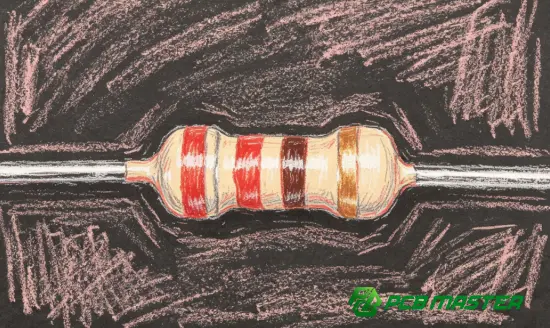
What Is a 220 Ohm Resistor?
220 ohm resistor is electronic passive component with 220 ohm (220Ω) resistance value. Its main job is to control the flow of current, reduce the voltage and protect the electronic components from too much current.
The current through a resistor depends upon the voltage applied to the resistor and its resistance (Ohm’s Law).
I=V ÷ R
For example:
- 5V ÷ 220Ω ≈ 22.7mA
- 12V ÷ 220Ω ≈ 54.5mA
The 220Ω resistor is therefore ideal for LED current limiting, signal conditioning and many low power electronic circuits.
220 Ohm Resistor Color Code
4-Band 220Ω Resistor Color Code
The standard 4-band color code is:
| Band | Color | Value |
|---|---|---|
| 1st | Red | 2 |
| 2nd | Red | 2 |
| Multiplier | Brown | ×10 |
| Tolerance | Gold | ±5% |
Color Code: Red – Red – Brown – Gold
Resistance:
22 × 10 = 220Ω ±5%
5-Band 220Ω Resistor Color Code
For higher precision resistors:
| Band | Color | Value |
|---|---|---|
| 1st | Red | 2 |
| 2nd | Red | 2 |
| 3rd | Black | 0 |
| Multiplier | Black | ×1 |
| Tolerance | Brown | ±1% |
Color Code: Red – Red – Black – Black – Brown
220 Ohm Resistor Specifications
Although specifications vary slightly by manufacturer, the following are the most common.
| Specification | Typical Value |
|---|---|
| Resistance | 220Ω |
| Tolerance | ±1%, ±2%, ±5% |
| Power Rating | 1/8W, 1/4W, 1/2W, 1W, 2W |
| Temperature Coefficient | ±50 to ±200 ppm/°C |
| Maximum Working Voltage | Depends on package and power rating |
| Mounting Type | Through-hole or Surface Mount (SMD) |
| Package Types | Axial, 0402, 0603, 0805, 1206, 1210, 2512 |
Common SMD Codes for 220Ω Resistors
Surface-mount resistors use numerical markings instead of color bands.
| Resistance | SMD Code |
|---|---|
| 220Ω | 221 |
| 220Ω (1% E96 series) | May use manufacturer-specific EIA-96 codes |
The marking 221 means:
- 22
- Multiplier = 10¹
Therefore:
22 × 10 = 220Ω
Power Ratings of 220Ω Resistors
Choosing the correct power rating prevents overheating and improves long-term reliability.
| Power Rating | Typical Application |
|---|---|
| 1/8W | Portable electronics |
| 1/4W | General-purpose circuits |
| 1/2W | Power supplies |
| 1W | Industrial electronics |
| 2W+ | High-current applications |
The resistor power is calculated using:
- P = I²R
- P = V²/R
A safety margin of at least two times the calculated dissipation is generally recommended.
Common Applications of a 220 Ohm Resistor
LED Current Limiting
The most common application is limiting LED current.
Example:
- Supply Voltage: 5V
- LED Forward Voltage: 2V
Current:
(5V − 2V) ÷ 220Ω ≈ 13.6mA
This operating current is suitable for many standard indicator LEDs.
GPIO Protection
Microcontroller output pins (Arduino, STM32, ESP32, Raspberry Pi, etc.) often use 220Ω resistors to:
- Limit output current
- Protect GPIO pins
- Reduce switching noise
Signal Conditioning
220Ω resistors help:
- Reduce signal ringing
- Match impedance in certain interfaces
- Improve communication stability
Pull-Up and Pull-Down Networks
Sometimes you will find 220Ω resistors in use where more drive strength or faster signal transitions are needed. However, higher values such as 4.7kΩ or 10kΩ are more common.
Audio Circuits
Engineers frequently use 220Ω resistors for:
- Output protection
- Bias networks
- Filter circuits
- Audio signal attenuation
Industrial Electronics
Common applications include:
- PLC control boards
- Industrial sensors
- Motor driver circuits
- Communication modules
- Power management boards
220Ω Resistor vs. Other Common Resistor Values
| Resistance | Typical Use |
|---|---|
| 100Ω | Higher current limiting |
| 220Ω | LED protection, GPIO protection, signal conditioning |
| 330Ω | Lower LED current |
| 470Ω | Signal filtering |
| 1kΩ | General-purpose current limiting |
| 10kΩ | Pull-up and pull-down resistors |
Common Mistakes When Using a 220 Ohm Resistor
Selecting an Insufficient Power Rating
If the resistance is right but the power rating is too low, you can get too much heating and reduced reliability.
Ignoring Tolerance
Standard ± 5% parts are not good enough for precision analogue circuits where you need ± 1% resistors.
Overlooking Package Size
Smaller SMD packages like 0402 have lower power dissipation than larger packages like 1206 or 2512.
Misreading Color Bands
The most common source of misidentification of the resistance values is confusion between the Brown and Red bands. When in doubt always test the resistor with a digital multimeter.
Why PCBMASTER Supports Reliable PCB Assembly
But getting the right resistor is only part of designing a reliable electronic product. Good PCB manufacturing, sourcing of components, SMT assembly and quality inspection are equally important.
As a professional PCB and PCBA manufacturer, PCBMASTER offer all-around one-stop manufacturing service to customers worldwide.
| Category | Typical Industry Practice | PCBMASTER Best Practice |
|---|---|---|
| PCB Manufacturing | Limited process capability | Supports quick-turn PCBs, HDI, High-Frequency, FPC, Rigid-Flex, and Metal Core PCBs |
| Quality Assurance | Basic inspection | ISO 9001, IATF 16949, UL, and RoHS certified with 100% electrical testing before shipment |
| Engineering Support | Limited DFM review | Free engineering file review with manufacturability and cost optimization recommendations |
| Delivery | Variable lead times | 24-hour prototype capability and 99.59% on-time delivery rate |
| Manufacturing | Outsourced production | 80,000㎡ self-owned factory providing PCB fabrication, SMT assembly, component sourcing, and PCBA services |
PCBMASTER's Industry Practice and Solutions
PCBMASTER has a wealth of experience in serving customers in the fields of consumer electronics, industrial automation, telecommunications, medical devices and automotive electronics, and providing integrated PCB and PCBA manufacturing solutions from rapid prototypes to high-volume production.
PCBMASTER ensures strict quality control at every stage of production by complying with IATF 16949, ISO 9001, UL Certification, and RoHS compliance. Also for the benefit of customers:
- Free engineering document review before manufacturing
- One-on-one technical support from experienced engineers
- Transparent online quotation with no hidden costs
- Flexible payment options
- Global logistics and fast delivery
- Advanced AOI inspection and three-stage quality control
- Support for complex PCB technologies including HDI, high-frequency, rigid-flex, FPC, and metal-core PCBs .
These features enable customers to mitigate manufacturing risks, accelerate product development cycles and improve overall product reliability.
Conclusion
The 220 ohm resistor is still one of the most useful and widely used passive components in modern electronics. Its resistance-to-practicality ratio makes it a must-have component for countless PCB designs, whether that’s LED current limiting, GPIO protection, industrial control systems or communication equipment.
The right resistance value, tolerance, package size and power rating are important for circuit performance and long-term reliability. And with PCBMASTER ’ s professional PCB fabrication and PCBA assembly service , engineers can accelerate development and ensure consistent manufacturing quality from prototype to mass production.
Tags: #220OhmResistor #ResistorColorCode #PCB #PCBA #SMT #Electronics #PCBMASTER #CircuitDesign #ElectronicComponents #EngineeringKnowledge
About the Author

Carol Luo
PCB Design EngineerI'm Carol, a PCB Engineer at PCBMASTER with experience in PCB design and manufacturing engineering since 2018. I focus on translating engineering requirements into reliable PCB solutions, with expertise in stack-up design, material selection, and design-for-manufacturing (DFM). I share practical engineering insights from real-world PCB design and production experience.
Visit Carol Luo's Profile